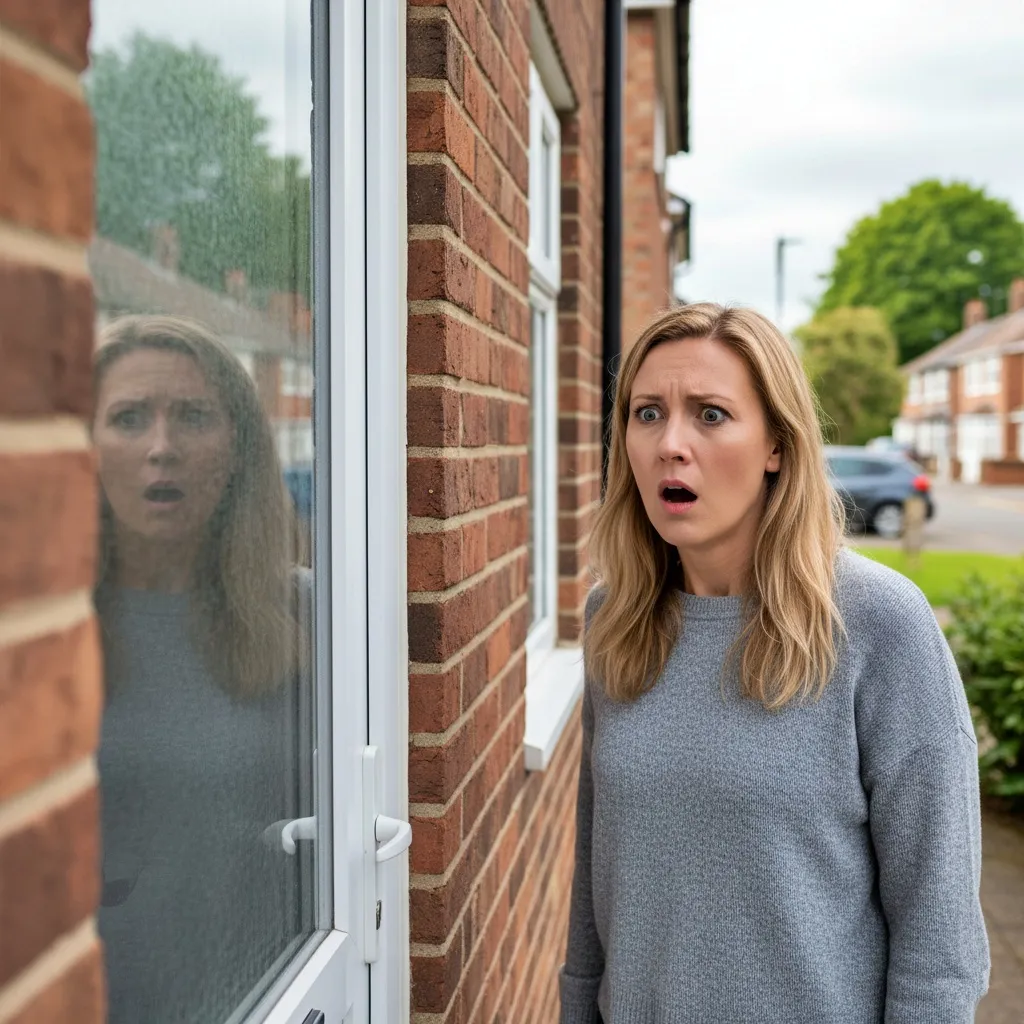
The morning of my husband Patrick’s funeral, I found a letter. It was sitting alone in the mailbox, a plain white envelope with no name and no return address to offer any hint of its sender. Inside, a single sheet of paper held a message typed in cold, impersonal block letters. It told me not to go to my husband’s funeral. It commanded me to check my sister’s house, adding, with a specificity that chilled my blood, that she was not alone.
I stood frozen on the front porch, the new black dress I’d bought for this terrible day feeling like a costume for a play that had just been cancelled. My hands trembled, a nervous, uncontrollable shaking that had nothing to do with the morning’s chill. It was that visceral, gut-clenching feeling you get when some deep, instinctual part of you knows your life is about to be irrevocably shattered, but your conscious mind hasn’t yet caught up to the how and the why.
My first, desperate thought was that it had to be a sick joke. A cruel, heartless prank aimed at me on the worst day of my life. Someone out there, I thought, must have decided it would be amusing to pile more agony onto my mountain of grief. I almost crumpled the letter and threw it straight into the kitchen trash. I came within a breath of doing it. But something stopped me.
The wording was too precise. “She’s not alone.” It didn’t say “check on your sister” or “something’s up with Brenda.” No, it was the pointed, deliberate phrase: “she’s not alone.” It felt as if the writer knew exactly what was happening behind my sister’s closed door. As if they had been a silent witness. I forced myself to glance at my watch. The funeral was in two hours. The black car was already waiting at the curb, a driver in a somber suit standing patiently beside it. Everything was arranged—the casket, the flowers, the post-funeral reception. Patrick’s family was already gathering, and his mother had called just thirty minutes ago, her voice strained, asking why I wasn’t there yet.
And there I stood, paralyzed on my own porch, holding that damnable piece of paper. Brenda lived only a five-minute drive away, in a tiny house she’d rented after her divorce. We were never particularly close, separated by thirteen years and lives that had drifted in different directions. But when she split from her husband two years back, I’d given her a spare key to my place, just in case she ever needed anything. You never know. That key had been sitting forgotten at the bottom of my purse ever since.
I shoved the letter into my pocket and started walking toward Brenda’s house. My pace was frantic, my heels clicking a sharp, staccato rhythm against the pavement. A single thought looped in my mind: This is nonsense. This is insane. I am going to miss my husband’s funeral because of some anonymous lunatic’s prank. But my legs carried me forward regardless, propelled by a dread I couldn’t name.
Brenda’s house looked perfectly normal. The white curtains were drawn, her little front garden was tidy. Nothing seemed amiss. I stopped at the gate and listened. Silence. Perhaps she was still asleep; she always was a night owl. I pulled the key from my purse, my hand shaking so badly I fumbled with the lock. The door, however, swung open smoothly and silently.
The hallway smelled of freshly brewed coffee and, underneath it, something else. The distinct, spicy scent of a man’s cologne. I froze. Brenda hadn’t dated anyone in over a year. She’d told me herself she was done with men, that she wanted to focus on herself. I slipped off my shoes and moved down the hall on tiptoe.
Sounds came from the kitchen—the clatter of dishes, the run of a faucet, cabinets opening and closing. I could hear two voices, one male, one female. My heart hammered against my ribs so violently I was sure they could hear it. I crept to the kitchen door and peered inside. The scene made no sense.
A man sat at the table with his back to me. Dark hair, broad shoulders, a familiar mole on his neck. He wore a t-shirt and sweatpants, looking completely at home. Brenda was at the stove, cooking, dressed in a robe, barefoot, her hair a mess. They looked like a couple who had shared their mornings for years.
Then the man turned his head, and I saw his profile.
It was Patrick.
My husband. The man who was supposed to be in a coffin. The man I was meant to bury in less than two hours. He was alive. He was sitting in my sister’s kitchen, drinking coffee as if it were any other day. I don’t remember breathing. I don’t think I was capable of a coherent thought. My head was filled with a roaring, blinding static, like a television tuned to a dead channel.
Brenda walked up behind him and placed her hands on his shoulders. He covered her hand with his, his touch gentle and practiced, a gesture of deep familiarity. Something two people do when they’ve been together a long, long time. I saw him turn and kiss her hand. I saw her lean down and kiss the top of his head. I saw their easy smiles, their comfort, their intimacy. They were happy. At the very moment I was supposed to be burying my husband, he was in my sister’s kitchen, perfectly content.
I took a step back. Slowly. Carefully. My legs felt like water, my knees threatening to buckle. I somehow made it back to the hallway, put on my shoes, walked outside, and closed the door softly behind me. I stood at the gate, utterly paralyzed, with no idea what to do next. My world had collapsed in the space of five minutes. Everything I believed in, everything I thought I knew about my life, was a lie. Patrick was alive. Patrick was with Brenda. Patrick had betrayed me.
But the worst part, the thought that hollowed me out, was not knowing how long it had been going on. A week? A month? A year? Had they been together this whole time, while I was mourning, planning his funeral, picking out a casket, ordering the memorial lunch? Had they been laughing at me?
I walked home in a daze, moving slowly as if through deep water. People on the street gave me strange looks; I must have appeared insane—a woman in a black funeral dress, wandering aimlessly, eyes vacant. The driver was still waiting outside my house. He was smoking near the car, glancing nervously at his watch.
“Meredith, we should go,” he said when he saw me. “We’re already late.”
I looked at him and couldn’t form a single word. How do you explain that you can’t go to your husband’s funeral because he’s alive and drinking coffee in your sister’s kitchen? How do you say that your entire life is a staged performance and you’re the fool playing the lead?
“Meredith, are you alright?” he asked, stepping closer. “You look pale. Do you feel sick? Should I call a doctor?”
I just shook my head and walked past him into the house. I locked the door, leaned against it, and finally broke down. But these weren’t tears of grief. They were tears of pure, white-hot rage. Of profound humiliation. Of the terrifying freefall of not knowing what to do next.
The phone began to ring and wouldn’t stop. Patrick’s mother. His brother. Friends. Everyone demanding to know where I was. I didn’t answer. I just sat on the hallway floor, listening to the phone scream into the silence. After an hour, the calls stopped. Maybe they thought I’d collapsed. Maybe they thought I was in the hospital. Maybe the funeral went on without me. A funeral for an empty coffin.
I pulled myself up and went to the bedroom. Our bedroom. His clothes were still in the closet. Our photos still hung on the walls. It all looked like a stage set. I sat on the bed and tried to make sense of the last few weeks. Patrick’s illness. His death. The funeral preparations. Had any of it been real?
Patrick had gotten sick a month ago. At first, he said he was just tired. Then came the chest pains. I made him see a doctor, who said it was stress, gave him medication, told him to rest. But Patrick got worse. Then came the ambulance, the hospital, the ICU. The doctor said it was serious heart failure. I spent days and nights there. Patrick was hooked to IVs, pale, weak. We barely spoke; he was always asleep or pretending to be.
Three days ago, I got the call from the hospital. They said Patrick had died in his sleep. His heart gave out. I remember collapsing to the floor. I remember screaming, refusing to believe it. I remember going to the hospital and seeing his body under a white sheet. But now I saw that even that could have been part of the act. Bribed doctors, forged paperwork, someone else’s body in the morgue. Anything is possible with enough money and connections. And Patrick had both. He worked for a construction firm, handled big contracts. He had friends in city offices, hospitals, even the police. If he wanted to disappear, he had the means.
But why? I got up and went to the window. Outside, life went on as if nothing had happened. People ran errands, kids played, dogs chased each other. No one knew my world had ended.
The phone rang again. Brenda’s name flashed on the screen. I stared at it, unsure. What would she say? Pretend to grieve? Ask why I didn’t show up? I answered.
Brenda sounded anxious, frantic. She said she’d been trying to reach me everywhere, that everyone was worried, that the funeral had happened without me and people thought something had happened to me. She said she was on her way over and that we needed to talk. I listened to her voice, trying to discern: did she know I’d seen them? Or did she think her secret was still safe?
She arrived thirty minutes later. I opened the door and saw her there—red eyes, messy hair, a black dress. She looked the part of someone who had just buried a loved one. She hugged me and started crying. She said she understood my grief, that she was barely holding it together too, that Patrick had been like a big brother to her. She said we needed to support each other. I stood in her arms, feeling the anger burn hotter inside me. How could she do this? How could she look me in the eye and lie? But I didn’t say a word. I just nodded and listened, because I had no idea what to do with the knowledge I now held. I didn’t know how to use it yet.
Brenda stayed the whole evening. We sat in the kitchen drinking tea while she talked about the funeral. How beautiful it was. How many people came. How everyone asked about me. She said Patrick’s mother was very upset I wasn’t there, that his brother was furious and called it disrespectful, that their friends were confused and concerned. “Meredith, you have to explain it to them,” Brenda urged. “Call them. Apologize. Tell them you were sick, that you were in shock. They’ll understand.” I nodded, thinking about how perfectly she played her role—the caring sister, concerned about the grieving widow’s reputation. No one would ever suspect that during the funeral, she had been sleeping peacefully.
After Brenda left, I locked the door and sat down to make a list. A list of everything I needed to figure out. A list of questions that needed answers. How long have Patrick and Brenda been together? Who else knows Patrick is alive? How did they fake his death? Why did they do it? What are they planning next? And the biggest question of all: what am I supposed to do with this knowledge?
I could go to the police. But who would believe me? They’d say I’d gone mad from grief. And if Patrick bribed the doctors, he has an official death certificate. He has paperwork. Witnesses. I could go back to Brenda’s and cause a scene. Confront them, demand answers. But what would that change? They’d just say I was crazy. Or I could pretend I didn’t know a thing. Keep playing the grieving widow. Quietly gather evidence. Find out the whole truth, and then strike so hard they’d have no way to cover it up.
That last option felt like the only sane one. I hid the letter in my jewelry box and got into bed. But I couldn’t sleep. I lay there in the dark, thinking about how tomorrow would be the start of a new life. A life where I’d pretend I didn’t know the truth. A life where I’d be planning revenge.