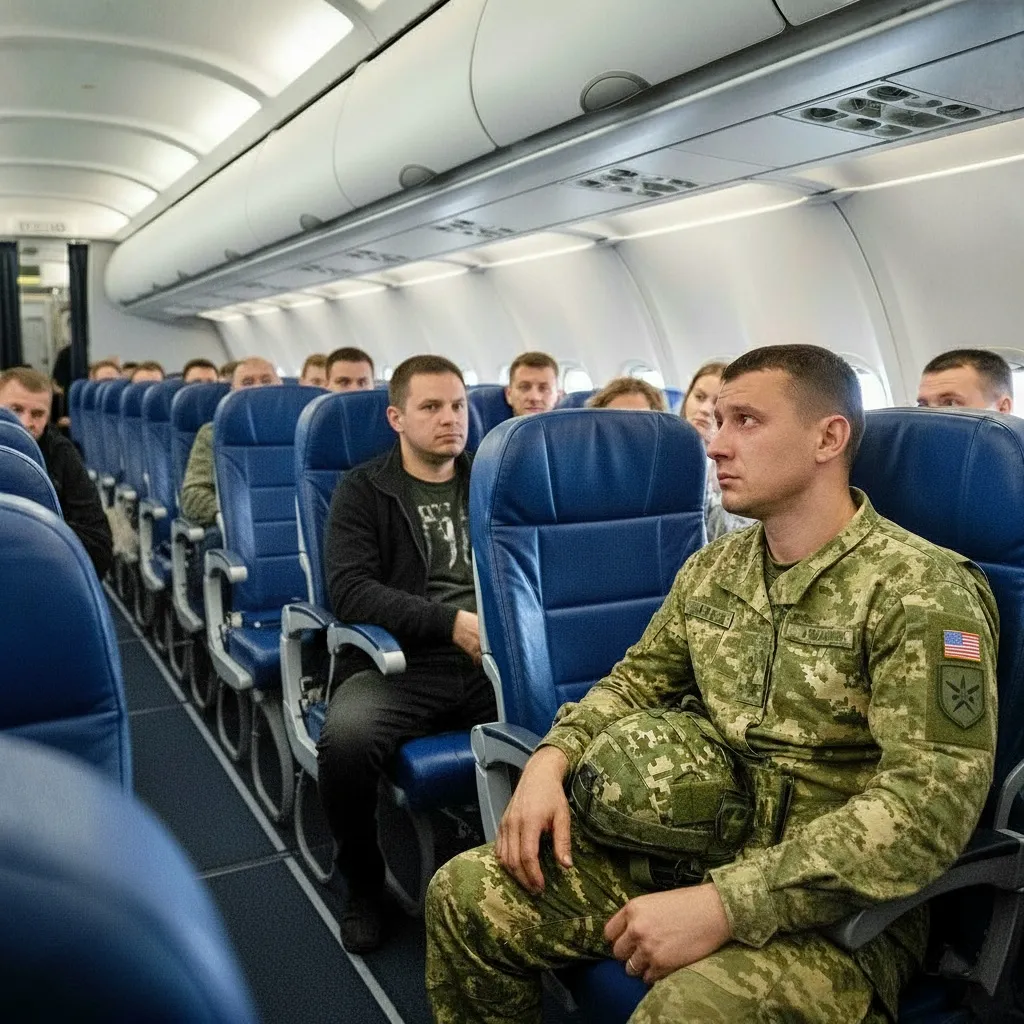
The next day, the cabin filled with the familiar, dull roar of passengers settling in. It was a late shuttle, a short hop from Philadelphia to Boston—the kind of routine trip where no one expected surprises. Among those boarding, a tall man in a crisp military uniform stood out. His U.S. Army OCP camouflage was instantly recognizable. He moved with a quiet purpose, eliciting involuntary respect even as he tried to keep a low profile. Offering a brief nod to the flight attendants, he made his way to his seat.
A couple of rows ahead, a woman in her fifties, wearing a high-end designer blazer, radiated an air of self-importance. She adjusted the expensive handbag on her lap, glancing around as if mentally sorting the passengers by status. Her gaze lingered on the soldier as he stowed his backpack. Her expression shifted—a faint, barely perceptible smirk—before she turned back to her phone. As he sat down, she turned halfway and said, just loud enough for her neighbors to hear, “You’d think they’d seat people like that separately. Really, a uniform… It doesn’t mean what it used to.”
A sudden tension thickened the air. Passengers exchanged uneasy looks, unsure how to respond to such a blatant lack of tact. The soldier himself seemed oblivious, or perhaps he had chosen to ignore it; he was focused on fastening his seatbelt. Her words lingered, heavy and awkward. No one dared to call her out. The jab felt completely uncalled for, a needless poison in the cabin.
The plane climbed to cruising altitude, but the discomfort didn’t dissipate; it hung in the air, thick and electric like static. When the “fasten seatbelt” sign dinged off, the woman’s irritation only seemed to mount. She shifted, casting disapproving glances toward the soldier that were impossible to miss. “It’s odd, don’t you think?” she whispered to her seatmate, an older man in a bright polo shirt who looked profoundly uncomfortable. “Shouldn’t they be flying on military transports? My grandfather fought in the war. He knew what real service meant.” The man just shrugged, unwilling to engage, but she wasn’t deterred. “I’m just saying, anyone can wear the outfit nowadays. It doesn’t automatically make you a hero.”
Her words carried further than she might have intended—or perhaps that was her goal. A woman across the aisle looked up from her book, her brow furrowed. A young couple two rows back exchanged an uneasy glance. The soldier, however, remained perfectly still. His attention was riveted on an old, worn-looking notebook in his lap. He was writing something—maybe a letter, maybe just notes—and the task consumed him entirely. He didn’t flinch or look in her direction.
His lack of reaction frustrated her even more. She pressed the call button. A young flight attendant, her name tag reading “Emily,” arrived promptly. “Yes, ma’am, how can I help?”
“I’d like to change seats,” the woman declared, gesturing vaguely toward the soldier. “I’d prefer to sit somewhere… quieter.”
Emily’s professional smile tightened. “I’m very sorry, ma’am, but it’s a completely full flight. ..