
Seven miles remained until the next town. Maybe there would be a shelter there. Maybe not. The uncertainty was the only thing Leah could count on these days. The wind whipped across the desolate stretch of highway, cutting through her thin coat, but she kept putting one foot in front of the other, the gravel crunching rhythmically beneath her worn boots.
Leah’s phone vibrated in her pocket. She pulled it out, squinting against the glare. An unknown number flashed on the screen. She almost ignored it. Was it another collection agency looking for money she didn’t have? Was it Travis again, calling from a burner phone to scream at her? But something—a gut instinct or perhaps just desperation—made her slide her thumb across the screen.
“Hello?” Her voice cracked from disuse and the dry, cold air.
“Is this Leah Winters?” a man’s voice asked on the other end. It was calm, professional, and completely unfamiliar.
Leah pulled her daughter, Maya, closer to her side as the wind picked up speed. “Who’s asking?” she replied defensively.
“My name is James Dorian. I represent the estate of Elaine Roth. I’ve been trying to reach you for weeks, Ms. Winters.” He paused, letting the words hang in the air before delivering the punchline. “You’ve inherited fifty million dollars.”
Leah let out a sharp, incredulous laugh. It sounded brittle in the open air. “Very funny. Who put you up to this?”
“I assure you, this is not a joke,” the man said, his tone unwavering.
The absurdity of the moment sent Leah’s mind reeling back to where this nightmare had begun. Three months earlier, she had stood in the kitchen of what had once been their family home. The electricity had been off for two days, and the February chill had transformed the house into a glorified refrigerator. She could still see her breath misting in the air as she recalled that evening.
Maya had been sitting at the kitchen table, drawing by the weak, flickering light of a battery-powered camping lantern. “Can I color your hair purple in my picture, Mommy?” Maya had asked, her innocence a stark contrast to the freezing room.
Leah had forced a smile, trying to mask her anxiety. “You can make it rainbow if you want, sweet girl.” She glanced nervously at the clock on the wall, the hands moving agonizingly slow. Travis would be home soon. Hopefully, he would have his first paycheck from the new job. That money was their only lifeline.
“When’s Daddy coming home?” Maya asked without looking up from her paper.
“Soon, baby,” Leah whispered. “Why don’t you finish your picture for now?”
Moments later, the front door slammed shut, shaking the frame. Heavy footsteps thudded down the hallway. There was no greeting. That was never a good sign.
“Where’s dinner?” Travis’s voice carried from the hallway, loud and edged with aggression.
“Heating up beans,” Leah called back, trying to keep her voice steady. “The power’s still out.”
Travis appeared in the doorway, his face flushed and angry. “Called the power company today. Know what they said? Bill’s three months past due.”
“I know,” Leah said, her stomach twisting into a knot. “I’ve been waiting for your—”
“My what? My paycheck?” He threw his keys against the wall with a violent clatter. “Got fired. That bastard Donovan said I was late too many times.”
Maya hunched smaller over her drawing, trying to disappear into the chair.
“I’m sorry,” Leah said automatically. It was a reflex, a word she used to deflect his rage.
“Sorry doesn’t pay bills,” Travis snapped. He stalked to the refrigerator and yanked it open, then slammed it shut when he remembered there was no power, no light, and nothing inside worth taking. “What’s for dinner besides beans?”
“Crackers,” Leah said softly. “I can make them into little pizzas for Maya.”
“Crackers. Perfect.” He paced the small room, his energy volatile. His eyes landed on the paper in front of his daughter. “What’s this garbage?”
Maya instinctively pulled the paper closer to her chest. “It’s us. As a family.”
“Let me see that.” He snatched it from her small hands before she could protest.
“Travis, please,” Leah stepped forward, placing herself between him and the child.
“This is what you think of me?” He pointed to the stick figure he was holding, jabbing his finger at the angry eyes Maya had drawn. “What do you tell her?” The silence stretched, thick and suffocating. “No one said anything? Don’t lie to me.”
He crumpled the drawing in his fist and threw it at the wall. “This is what I come home to? A freezing house, no food, and my kid drawing me like some monster?”
From the laundry basket in the corner, baby Nico began to cry, the tension finally waking him.
“Now the baby starts,” Travis growled. He grabbed a ceramic mug from the counter and hurled it across the room. It shattered against the wall, inches from Maya’s head. Shards of pottery rained down onto the table. Maya didn’t scream. She didn’t cry. She just stared at the broken pieces with a resignation no eight-year-old should possess.
Something broke inside Leah, too. It was a quiet, final snap.
“I’m taking the kids. To my mother’s,” she said. Her mother had been dead for three years, but in the heat of the moment, it was the only excuse she could think of.
“Fine,” Travis sneered, turning his back on them. “Run to Mommy. You’ll be back.”
He stormed out of the room, the front door slamming so hard a picture frame fell from the wall and cracked. Leah moved instantly. The paralysis of fear was gone, replaced by the adrenaline of survival.
“Maya. Get your backpack. The purple one,” Leah commanded gently but firmly. “Pack your favorite book and two changes of clothes.”
Maya looked up, eyes wide. “Are we really going to Grandma’s?”
“No, sweetheart. We’re going,” Leah said, grabbing the diaper bag.
“Where?”
Leah had no answer. “We’re going on an adventure.”
While Maya packed, Leah gathered what she could. Formula. Diapers. Wipes. The baby sling. She grabbed a handful of granola bars from the pantry. Then, she ran to the bathroom and reached into the back of the cabinet, pulling out an empty tampon box. Inside was the emergency cash she’d been hiding for months. Two hundred and thirty-seven dollars.
She grabbed her phone charger and Maya’s sketch pad and colored pencils. As she turned to leave the bedroom, her fingers brushed against something cool in the back of the drawer. Her old sterling silver pendant, a gift from her grandmother. She slipped it into her pocket and lifted Nico from his basket. He nuzzled against her, still whimpering.
“It’s okay, baby boy,” she whispered, strapping him to her chest in the baby carrier. She helped Maya zip up her backpack.
“What about your things, Mommy?” Maya asked, looking at Leah’s empty hands.
“I have everything I need right here,” Leah said, looking at her children. They slipped out the back door just as the rain began to fall.
By nightfall, they had reached downtown. The rain had soaked through their coats, chilling them to the bone, and Nico was fussing against Leah’s chest. They found temporary shelter in a twenty-four-hour laundromat. The warmth hit them like a blessing, thick with the smell of detergent and humidity.
“Can we stay here forever?” Maya asked, looking at the tumbling clothes in the dryers.
“Just for tonight, baby. Tomorrow we’ll figure things out,” Leah promised.
She changed Nico on a plastic chair in the corner, fed him a bottle, and settled both children on a bench. Once they were asleep, Leah retreated to the narrow space behind a row of humming dryers. Only then did she allow herself to break down. She sobbed silent, body-wracking cries that no one could hear over the tumbling machines, mourning the life she had lost and terrified of the one she was starting.
Morning came harsh and bright. The laundromat attendant eyed them suspiciously as they gathered their meager belongings. “You can’t sleep here,” he said, though not unkindly. “The manager will have my job.”
“We’re just leaving,” Leah assured him, hoisting her backpack. “Thank you.”
Outside, the reality of their situation hit her with full force. No home. No plan. Just two children depending on her and $237 that wouldn’t last a week. Their first stop was the city’s family shelter on 8th Street. Leah had passed it many times, never imagining she’d be seeking its services.
“I need a place for myself and my children,” she told the intake worker behind the glass partition.
“Any ID? Social security cards for you and the children? Birth certificates?” the worker asked monotonously.
“No, I—we left in a hurry,” Leah stammered.
“Running from domestic violence?”
Leah nodded, her throat tight.
“I’m sorry, but we need some documentation to process you. It’s a policy,” the worker said, closing the folder. “You might try Sacred Heart on Wilson Avenue. They sometimes make exceptions.”
They went to Sacred Heart. Then three more shelters. Three more rejections. By late afternoon, they had walked miles, and Leah’s arms ached from carrying Nico.
“I’m hungry, Mommy,” Maya said quietly.
“I know, sweetheart. Let’s find something to eat.”
They stopped at a fast-food restaurant. Leah ordered the cheapest meal on the menu and split it between herself and Maya, saving a few fries wrapped in a napkin for later. Nico, at least, had formula. As they sat in the hard plastic booth, Leah noticed Maya’s shoes. They were too small, the sides splitting where her growing feet pressed against the fabric.
“Do they hurt?” Leah asked, her heart breaking a little more.
“Only when we walk a lot,” Maya admitted.
“We’ll find you new ones soon,” Leah lied.
Night approached again. They rode buses back and forth across the city, staying warm, staying awake. Maya fell asleep against Leah’s arm. Nico mercifully slept, too. Leah’s eyes burned with exhaustion, but she forced herself to remain alert. The city transformed at night; shadows took on menacing shapes, and every stranger looked like a threat.
On their third circuit of the bus route, a woman sat down beside Leah. She was perhaps in her late thirties, with tired eyes but a sharp gaze.
“First night?” the woman asked.
“Excuse me?” Leah stiffened.
“On the street? I can tell.” The woman gestured to Leah’s backpack, to her sleeping children. “You don’t have the look yet.”
“What look?”
“The one that says you’ve accepted this.” She extended a hand. “I’m Sienna.”
Cautiously, Leah shook it. “Leah. And this is Maya and Nico.”
“You need a safer place than this bus,” Sienna said, lowering her voice. “Drivers notice. Bus routes end.”
“We’re just traveling,” Leah said weakly.
Sienna raised an eyebrow. “With no luggage except a diaper bag? In the middle of the night?” She shook her head. “Look, I’m not judging. I’ve been there. You need options.”
“I’ve tried the shelters,” Leah admitted.
“Let me guess. No ID? No documents?”
Leah nodded.
“The system’s broken that way. Catch-22. Can’t get help without papers. Can’t get papers without an address.” Sienna reached into her pocket and pulled out a wrinkled flyer. “Streetmarks runs a warming station when it drops below 40 degrees. No questions asked. It’s not ideal. But it’s better than here.”
“Thank you.” Leah took the flyer, tears threatening to spill.
“One more thing,” Sienna said, standing up as the bus neared her stop. “Whatever you do, keep those kids in school if you can. CPS gets involved quickly once they’re flagged for attendance.”
The next two weeks passed in a blur of survival. They stayed at Streetmarks when the temperature dropped. They huddled in twenty-four-hour establishments when it didn’t. Leah learned the rhythms of street life: which libraries had the cleanest bathrooms, which food banks gave the most substantial packages, which police officers looked the other way when they saw a mother and children lingering too long in a park.
Her cash dwindled. Maya missed school because they couldn’t keep her clothes clean enough. Nico developed a persistent cough.
One night when Streetmarks was full, they found themselves back at Sacred Heart Church. The shelter portion was closed—no beds available. But the chapel remained open for evening prayer. They slipped inside, finding a pew in the back. The warmth and quiet were a balm to their frayed nerves.
“Can I draw?” Maya whispered.
“Of course, baby.” Leah settled Nico on her lap.
As Maya sketched, an elderly volunteer approached. “The service is over, dear. We’re closing soon.”
“Please,” Leah said softly. “Just a little longer. It’s so cold outside.”
The woman hesitated, glancing at Nico. “The chapel closes at nine. But the restrooms in the back hall stay unlocked.” She winked. “It was the closest thing to kindness they’d encountered in days.”
When the chapel emptied, Leah led Maya to the women’s restroom in the back hall. It was small but clean, with a changing table and a heater vent that pumped blessed warmth into the space.
“We’ll stay here tonight,” she told Maya. “But we have to be very quiet. Like hide and seek.”
Maya nodded solemnly. They made a nest of paper towels on the floor. Leah used her backpack as a pillow for Maya and cradled Nico against her chest. For the first time in days, they slept soundly.
Until the door banged open at 6 AM.
A custodian stared at them, broom in hand. “You can’t be here,” he said, startled.
“We’re just leaving,” Leah said, scrambling up. “I’m so sorry.”
“I could lose my job,” the man said anxiously. “Wait here.”
He returned with a parish administrator, a stern-faced woman who crossed her arms as she surveyed the scene. “This is a house of worship, not a hotel,” she scolded. “We have proper channels for assistance.”
“I tried those channels,” Leah said, her voice steady despite her shaking hands. “No beds, no room, no exceptions.”
“Nevertheless, you can’t stay here. It’s against policy.” The administrator’s gaze flickered to Maya, then hardened. “There are rules.”
“Please,” Leah began.
But the woman held up her hand. “I’m sorry, but you’ll have to leave. Now.”
As they were escorted out, the custodian slipped Maya a breakfast bar. “Where are we going now, Mommy?” Maya asked as the heavy door clicked shut behind them.
Leah had no answer. After being ejected from Sacred Heart, Leah felt something shift inside her. The fragile hope she’d been nurturing—that someone would help, that the system would catch them—evaporated like morning dew.
They spent that day at the public library, where Leah used the computers to search for jobs, housing, anything. Maya sat beside her, unusually quiet, coloring with the stubby pencils provided at the children’s section.
“Mommy, look,” Maya said.
She held up a drawing. It showed three stick figures—Leah, Maya, and baby Nico—standing in front of what looked like a castle.
“That’s beautiful,” Leah said, studying it. “Is that a castle?”
“It’s our new house. When we get one.” She pointed to a rainbow arching over the structure. “See? It has electricity and everything.”
“It’s perfect, sweetheart,” Leah whispered.
That night, they slept in a twenty-four-hour diner, ordering the cheapest items on the menu and stretching them over hours. The waitress, a middle-aged woman with tired eyes, brought extra crackers for Maya and refilled Leah’s coffee cup without charging. “Just don’t fall asleep, honey,” she whispered as she passed. “Manager checks cameras.”
By the third week of homelessness, Leah had developed a routine. Mornings at the library or the community center. Afternoons searching for day work—holding signs, distributing flyers, anything that paid cash and didn’t ask questions. Evenings finding safe places to hunker down. She reconnected with Sienna, who taught her which parking garages had blind spots in their security, which cafeterias tossed out decent food at closing time.
Then came the night Nico’s cough transformed into something more sinister. They had found shelter in the laundromat again, the same attendant turning a blind eye after his supervisor left. Leah had washed their clothes with borrowed detergent, and they were curled together on a bench, warm for the first time in days.
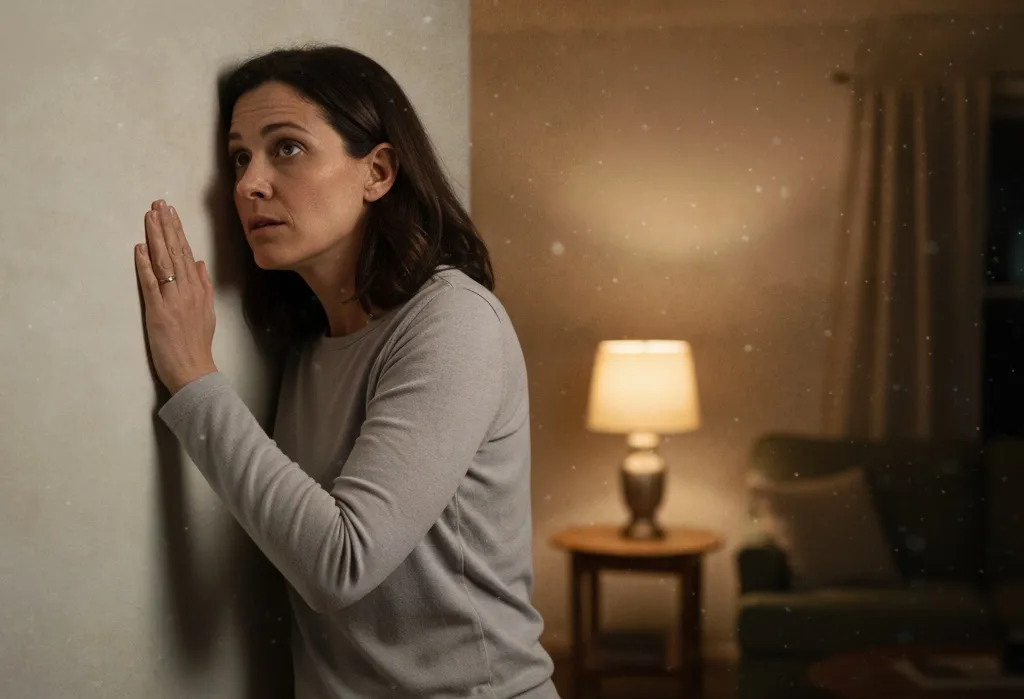
She woke to Nico’s labored breathing. His small body burned against hers.
“Nico?” Panic shot through her. She pressed a hand to his forehead. It was like touching a hot stove.
The laundromat attendant approached. “Everything okay?”
“My baby, he’s burning up,” Leah’s voice cracked. “Do you have a thermometer? Any medicine?”
“There’s an urgent care three blocks east. Opens at seven.”
Leah checked her phone. Three a.m. More than three hours to wait. She gathered their belongings with shaking hands.
“Where are we going?” Maya asked, rubbing sleep from her eyes.
“Nico’s sick. We need to find help.”
Outside, the late March night was unseasonably cold. Leah wrapped Nico in her own scarf, tucking him securely against her chest. His breathing came in rapid, shallow pants. “Can you walk, Maya? We need to hurry.”
Maya nodded, taking Leah’s hand. They set off toward the hospital instead of the urgent care. Nico needed help now.
The emergency room was fluorescent bright and half full despite the hour. Leah approached the intake desk, Nico whimpering against her. “My baby is sick. He’s burning up.”
“Insurance card and ID, please,” the receptionist said without looking up.
“I don’t… We don’t have insurance. But he’s really sick.” Leah’s voice took on a pleading edge. “Please.”
“We need some form of payment or insurance, ma’am. It’s a policy. You can try the county clinic. They open at eight.”
“He can’t wait until eight,” Leah’s control slipped. “He’s seven months old with a fever. Please. I’m begging you.”
“Let me get the triage nurse to at least check him.”
The triage nurse confirmed what Leah already knew. Nico had a dangerously high fever. But without insurance or the ability to pay the required deposit, the hospital would only stabilize him, not admit him.
“He needs antibiotics,” the nurse explained in a whisper. “But I can’t prescribe them. You’ll need to see a doctor. And I can’t see a doctor without money.”
“Try the county clinic,” she advised sympathetically. “Tell them it’s urgent.”
They left the hospital with nothing but instructions to keep Nico cool and hydrated. Leah felt like screaming. Instead, she walked to the county clinic to wait outside its locked doors in the predawn chill. Maya sat on the concrete, leaning against Leah’s legs. She hadn’t complained once.
“Is Nico going to be OK?” she asked.
“Yes,” Leah said firmly. “I promise.”
They waited for hours. Nico alternated between fitful sleep and fretful crying. When the clinic finally opened, they were first in line. The wait inside was another two hours. By then, Leah had been awake for more than 24 hours straight. Maya had fallen asleep against her arm. Nico’s fever seemed to have risen further.
When they finally saw a doctor, a young woman with kind eyes and a harried manner, the diagnosis came quickly. “Ear infection. Turning into pneumonia. He needs antibiotics immediately,” the doctor said, writing a prescription.
“I don’t have insurance,” Leah said, shame burning her cheeks. “Or much money.”
The doctor paused. “The pharmacy next door has a discount program. I’ll mark this as urgent.” She hesitated, then reached into her desk and pulled out a sample pack. “This will get you started for the first day.”
Leah almost wept with gratitude. With the prescription filled using the last of her hidden cash, they made their way to the public library. Nico had taken his first dose of medicine but still felt frighteningly hot against Leah’s chest. Maya trudged beside her, dark circles under her eyes.
Leah found a secluded corner in the children’s section where Maya could rest on a beanbag chair. She paced with Nico, willing the antibiotics to work, watching his labored breathing. The children’s librarian, an older woman with silver-rimmed glasses, approached.
“Is everything all right, dear? Your little one seems under the weather.”
“He has an ear infection,” Leah explained. “The doctor gave him medicine. He’ll be okay.”
“There’s a family room behind the reference desk for nursing mothers,” the librarian offered. “It has a rocking chair and a little more privacy. You’re welcome to use it.”
It was another small kindness in a sea of indifference. The family room was barely bigger than a closet, but it had a rocking chair, a changing table, and a door that closed. Leah settled Maya on a cushion in the corner with a picture book, then sat in the rocker with Nico, gently swaying.
Exhaustion finally claimed her. Despite her best efforts, her eyes closed, and her head drooped.
She woke to Maya’s frightened voice. “Mommy! Mommy! Wake up!”
Leah jolted upright. “What’s wrong, Maya?”
“You wouldn’t wake up.” Tears filled Maya’s eyes. “I kept calling you.”
Leah’s heart raced. “I’m so sorry, baby. I was just very tired. Is Nico okay?” She looked down at her son. “I think he’s a little better.”
The door opened, and the librarian peered in. “Everything all right? It’s almost closing time.”
“Yes. Thank you. We’re just leaving.” Leah struggled to her feet, legs numb from the awkward position. The room spun violently. She steadied herself against the wall.
“Are you okay?” The librarian stepped closer, concern etching her features.
“Just tired. We had a long night at the—” Leah’s knees buckled. She clutched Nico tighter as she sank to the floor, the world fading to black.
“Mommy!” Maya cried.
The librarian rushed forward, carefully taking Nico from Leah’s arms. “I’m calling an ambulance.”
“No. Please,” Leah protested weakly. “No money for an ambulance.”
She awoke to fluorescent lights and the rhythmic beep of monitors. A hospital room. Panic surged. “My children?”
“They’re fine,” a nurse assured her instantly. “Your daughter is with Child Protective Services, and your son is in pediatrics getting his antibiotics.”
“CPS?” Terror flooded Leah’s system. “No, you don’t understand. It’s standard procedure when a parent collapses in public with minors,” the nurse explained. “They’re not taking your children. They just need to ensure their safety while you recover.”
“Recover from what?”
“Extreme dehydration and exhaustion. When’s the last time you ate or drank anything substantial?”
Leah couldn’t remember.
“That’s what I thought,” the nurse said, adjusting Leah’s IV. “You’re also anemic. The doctor wants to keep you overnight.”
“I can’t afford…”
“A social worker will talk to you about that. For now, rest.”
The social worker came an hour later. “Ms. Winters? I’m Gloria from Hospital Services. We need to discuss your situation.”
Leah steeled herself for judgment, for accusations of neglect.
“You’ve been homeless for how long?” Gloria asked.
“Almost three weeks. And before that? You left a domestic violence situation?”
Leah nodded.
“Have you filed for emergency assistance, TANF, SNAP benefits?”
“I tried, but without ID or an address…” Leah trailed off.
Gloria sighed. “The system fails the people who need it most.” She looked up from her clipboard. “I’m going to help you navigate this. We can get emergency housing for you and your children. It won’t be ideal, but it’s a start.”
“What about my children now? When can I see them?”
“The CPS worker will bring them by the morning. Your son is doing well. The antibiotics are working.” Gloria hesitated. “There’s something else. Someone posted about your situation on social media. The librarian, I believe. It generated quite a response.”
“What do you mean?”
Gloria showed her a phone. On the screen was a post from the Silver Ridge Public Library: Today, a young mother collapsed in our family room from exhaustion while caring for her sick infant and child. They’ve been homeless for weeks after fleeing domestic violence. Our systems continue to fail the most vulnerable. She’s at Memorial Hospital now. Please keep her in your thoughts.
The post had thousands of shares and comments.
“Many are offering help. Some offer prayers. A few offering judgment. People want to donate,” Gloria said.
“I don’t know what to say,” Leah finally managed.
“You don’t have to say anything,” Gloria replied. “Just focus on getting better.”
The next morning, a CPS worker named Rene brought Maya and Nico to her room. Maya ran to the bed, climbing up to hug Leah tightly. “I was so scared, Mommy.”
“I know, baby. I’m so sorry.” Leah breathed in her daughter’s scent, tears flowing freely. “I’m okay now.”
Nico, looking markedly better, reached for her from the CPS worker’s arms. Leah took him, kissing his forehead. His skin was cool.
“The fever broke,” the worker said. “He’s responding well to treatment.”
“Thank God,” Leah whispered.
“I want to be clear. We are not seeking to separate you from your children,” Rene said. “We understand your situation. But we do need to ensure they have safe, stable housing.”
“I understand,” Leah said. “Gloria tells me you’re being placed in emergency housing?”
“Yes, for two weeks. Then…” Leah had no answer for what came next.
“One step at a time,” the worker advised. “I’ll be checking in regularly.”
Later that day, Leah was discharged. Gloria drove them to a small efficiency apartment managed by a non-profit. It had one room, a tiny kitchenette, and a bathroom. But it was clean, warm, and most importantly, theirs for the next two weeks.
“All the donations are here,” Gloria said, gesturing to several boxes. “Gift cards, clothes, supplies.”
Leah was overwhelmed by the generosity of strangers. She found new shoes for Maya, clothes for Nico, personal care items she’d been doing without, and gift cards to grocery stores, department stores, restaurants, totaling over $1,000.
“People are good,” Gloria said, looking at Leah’s face.
After Gloria left, Leah sat on the edge of the bed—a real bed—watching Maya explore their temporary home.
“Can we stay here forever?” Maya asked.
“Not forever, baby, but for now. And something better will come along.”
That night, clean and fed, they slept without fear for the first time in weeks. Leah’s dreams were still anxious—running down endless corridors, searching for shelter—but whenever she woke, the relief of seeing her children safe beside her pushed the nightmares back.
The next morning, while Maya drew at the small table and Nico napped, Leah’s phone rang. Unknown number. Her pulse quickened. Travis? She answered cautiously. “Hello?”
“Is this Leah Winters?” A man’s formal voice.
“Yes. Who’s calling?”
“My name is James Dorian. I’m an attorney with Blackwell & Associates. I’ve been trying to reach you for some time. It’s regarding the estate of Elaine Roth.”
“I don’t know any Elaine Roth,” Leah said, confused.
“Nevertheless, she knew you. Ms. Roth passed away six weeks ago, and her will specifically names you as her primary beneficiary.”
“There must be a mistake.”
“No mistake, Ms. Winters. I’ve been attempting to locate you since Ms. Roth’s passing. Your recent publicity made it possible.”
“I don’t understand. What exactly did this woman leave me?”
“Ms. Roth’s estate is valued at approximately $50 million. Assets include real estate, investment portfolios, and liquid capital. All of which, according to her explicit wishes, now belong to you.”
Leah laughed, a sound of pure disbelief. “This is a joke, right?”
“I assure you it is not. I’d like to meet with you as soon as possible to begin the transfer process. Would tomorrow be convenient?”
“Tomorrow?” Leah’s mind raced. “I guess so. But I still don’t…”
“Ms. Roth left a letter for you. I think it will explain much of your confusion. Shall we say 10 o’clock? I can come to you. Or send a car if you prefer.”
“A car, I suppose.”
After hanging up, she sat perfectly still, the phone clutched in her hand.
Maya looked up from her drawing. “Who was that, Mommy?”
“I’m not sure,” Leah answered truthfully. “Someone who might be able to help us.”
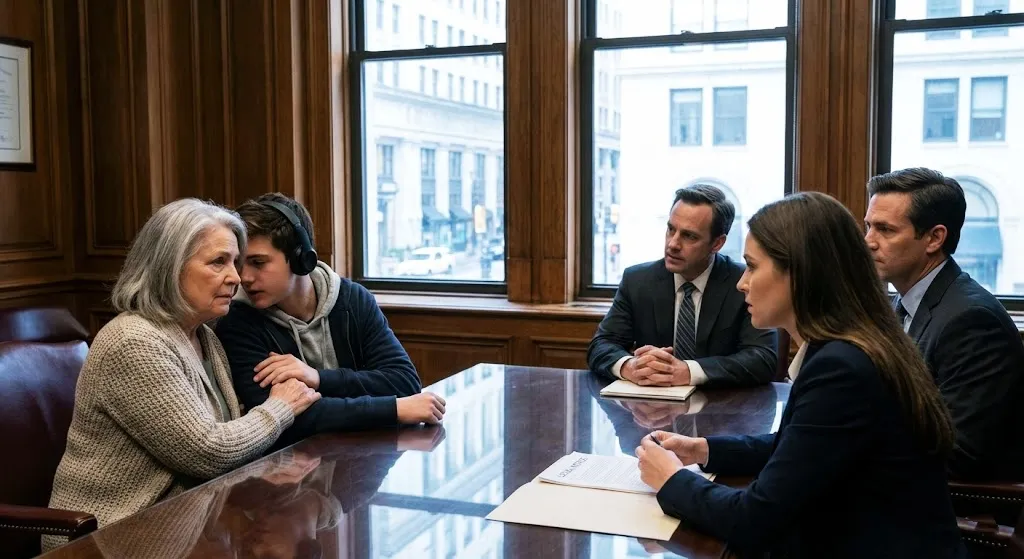
The next morning, precisely at 10, a sleek black car pulled up outside the efficiency. A man in his fifties, impeccably dressed in a tailored suit, stepped out. He carried a leather briefcase. Leah opened the door before he could knock.
“Ms. Winters?” He extended a hand. “James Dorian.”
Leah shook it, studying him. “Please, come in.” She gestured to the small space, suddenly acutely aware of its humble nature. “It’s not much, but…”
“No apologies necessary.” Dorian stepped inside, nodding to Maya. “You must be Maya. It’s nice to meet you. Are you the man who called Mommy yesterday?”
“I am indeed.” He looked at Leah. “Is there somewhere we can speak privately?”
The efficiency had no separate rooms. “Maya, would you mind drawing in the bathroom for a little while? Like a special art studio?”
“Can I take the blue marker?”
“Of course.”
Once Maya was settled with the door closed, Leah turned to Dorian. “Before we start, I need to know. Is this real? Because if it’s not, if this is some kind of cruel joke, it’s…”
“It is very real.” Dorian opened his briefcase and removed a sealed envelope. “This is from Elaine. I think you should read it first.”
Leah took the envelope. Her name was written on the front in elegant cursive. She opened it with trembling fingers and began to read.
Dear Leah,
By the time you read this, I will be gone from this world. You won’t remember me, but I have never forgotten you. Five years ago, on the coldest day of winter, you were working at the Silver Moon Bakery on Palmer Street. I was 78 years old, recently widowed, and feeling utterly alone.
I had forgotten my gloves that day, and my hands were so cold I could barely hold my cane. You noticed. You came from behind the counter, helped me to a seat, and wrapped my hands around a hot mug of tea—on the house, you insisted.
When my taxi didn’t arrive, you wrapped your own scarf around my neck—a lovely blue one you had knitted yourself—and walked me three blocks to my apartment, even though it meant you would be late returning from your break. You told me about your dreams of art school, about the children’s books you hoped to illustrate someday.
What you didn’t know was that I had just come from my lawyer’s office, where I had been preparing to change my will. My husband George was gone, we never had children, and I had no close family left. I had been planning to leave everything to various charities. But in that moment of kindness—a moment that meant nothing to you but everything to me—I found my heir.
In you, I saw something rare: genuine compassion without expectation of reward. Over the years, I’ve kept tabs on you. I know about Travis. I know about Maya and Nico. I’ve tried to help in small, anonymous ways. The scholarship offer you received but couldn’t accept because Travis wouldn’t let you return to school? That was from my foundation. The children’s book festival that invited you to display your work? I was on the board.
I had planned to reveal myself to you this spring, to offer you a proper introduction and explanation. Fate, it seems, had other plans. My health declined rapidly these past months. So now, I leave you everything, with no strings attached.
My lawyer, James Dorian, a good man you can trust, will help you navigate this transition. My only request—not a condition, but a hope—is that you use this chance to become the person you were meant to be before life’s hardships intervened.
Draw again. Create. Show Maya that dreams can come true.
With fondness and faith,
Elaine Roth
P.S. I kept your blue scarf all these years. James will return it to you.
Leah lowered the letter, tears streaming down her face. Memories rushed back: the bakery where she’d worked before Maya was born, the elderly woman shaking with cold, the walk through snowdrifts to a stately old apartment building.
“I remember her,” she whispered. “She ordered Earl Grey tea with lemon. No sugar.”
Dorian nodded. He withdrew a faded blue scarf from his briefcase. “She treasured this. Said it was her lucky charm. I can’t believe she kept it.”
“Elaine was sentimental that way. She spoke of you often, especially in her final months. She worried she’d waited too long to contact you.”
“But why me? One act of kindness?”
“Elaine had a difficult life before she met George. She understood struggle. And she recognized something in you that reminded her of herself.”
“Fifty million dollars, though? It’s incomprehensible.”
“It’s actually closer to fifty-three now. The markets have been kind.” Dorian pulled out a folder. “I’ve prepared an overview of the assets. The estate includes Elaine’s main residence in the Hudson Valley, a Manhattan apartment, and a summer cottage in Maine. There are investment portfolios, art collections, and several charitable foundations you’ll now control.”
“It’s too much,” she finally said. “I don’t know the first thing about managing this kind of wealth.”
“That’s why I’m here,” Dorian reassured her. “Elaine anticipated your concerns. I’ve been instructed to assist you for as long as you need. We have a team of financial advisors, property managers, and household staff who’ve been with Elaine for years. They’re at your disposal.”
“Household staff,” Leah repeated. Three weeks ago, she’d been sleeping in a laundromat. Now people worked for her?
“When can we access the funds?” The practical question felt surreal.
“Immediately for basic needs. I’ve brought a temporary credit card linked to Elaine’s account. The formal asset transfer will take a few weeks, but there will be no delays in providing for you and your children.”
Maya’s voice came from the bathroom. “Mommy, can I come out now? I finished all my paper.”
“Yes, baby, come see.”
Maya emerged, holding several drawings. She hesitated, looking between Leah and Dorian.
“It’s okay,” Leah said, smiling through her tears. “Mr. Dorian has brought us some good news.”
“What news?” Maya asked.
Leah looked at Dorian, unsure how to explain. He stepped in smoothly. “Maya, a very kind lady named Elaine thought your mom was so special that she wanted to give her a wonderful gift. Part of that gift is a beautiful house with lots of room for you to play and draw.”
Maya’s eyes widened. “Like in my picture? With electricity and everything?”
“Even better,” Dorian said. “It has a big garden and a special room just for art.”
“Can we go see it?” Maya asked.
“Tomorrow, if your mom agrees? I can send a car in the morning.”
Leah nodded. “Tomorrow.”
After Dorian left, leaving the credit card, the blue scarf, and a mountain of paperwork, Leah sat with Maya on the bed, Nico playing on a blanket beside them.
“Are we rich now, Mommy?” Maya asked.
“It seems like we are. Yes.” Leah stroked Maya’s hair. “But what matters is that we’re safe. And together.”
“Will we have to see Daddy again?”
“No, baby. Not if you don’t want to. I don’t want to.”
That evening, Leah used the credit card for the first time, ordering dinner delivery from a family restaurant nearby. The simple act felt momentous. When the food arrived, the delicious smells filled their small efficiency. Maya clapped her hands in delight. As they ate, Leah’s mind whirled with possibilities. Art school. She could finish her degree now. Maya could go to a good school. Nico would never know hunger or cold.
That night, she stayed awake long after the children slept, reading and re-reading Elaine’s letter. Use this chance to become the person you were meant to be before life’s hardships intervened. The words both inspired and terrified her.
Morning came with a tentative knock at their door. Gloria, the social worker, stood there with a bemused expression.
“I just got a call from a lawyer named James Dorian. He says you’re checking out today. Permanently.”
Leah invited her in, explaining the situation in halting sentences that sounded unbelievable even to her own ears.
“50 million?” Gloria repeated, eyes wide. “From a woman you met once?”
“I know it sounds crazy. I still can’t quite believe it myself.”
“In 27 years of social work, I’ve never… This is like a fairy tale.”
“I think I’m in shock,” Leah admitted. “Yesterday, I was worried about finding our next meal. Today, I own three houses.”
“Four,” Gloria corrected, smiling. “Dorian mentioned a property in France, too.”
They both laughed, the absurdity of it breaking through the tension.
“What will you do first?” Gloria asked.
“Get my children settled. Find stability. After that,” she shrugged, “I have no idea.”
“Well, I’d say you don’t need my services anymore. But call if you ever want to talk. This kind of change, even good change, can be disorienting.” Gloria stood, gathering her purse. “And if you’re ever looking to donate to causes that help women in your former situation, I have a list.”
“I’ll remember that,” Leah promised.
At precisely 10 o’clock, a black SUV arrived. The driver, a composed woman in her 40s, introduced herself as Helen. “Mr. Dorian sent me to take you to Stone Hollow.”
“Stone Hollow?” Leah asked.
“Miss Roth’s primary residence. Your home now,” Helen explained.
They gathered their meager belongings. Everything they owned still fit in one backpack and a tote bag. Maya clutched her sketchbook and a stuffed rabbit someone had donated. Nico, strapped to Leah’s chest, watched the world with curious eyes. The SUV was luxurious, with leather seats and a partition that gave them privacy. Maya marveled at the buttons that controlled the windows, the temperature, even the color of the interior lights.
“Is this our car now?” she asked.
“No, but we might get one like it someday,” Leah answered.
The drive took them through the city, across the bridge, and into gradually more pastoral landscapes. Concrete gave way to trees. Crowded streets became winding roads. Maya pressed her face to the window, pointing at horses, streams, and grand houses set back from the road.
Finally, Helen turned onto a long, tree-lined drive. At the end stood Stone Hollow, a gracious old estate of weathered gray stone and gleaming windows. It wasn’t ostentatious by mansion standards, but it exuded warmth and history.
“Welcome home,” Helen said.
Leah stepped from the car, Maya’s hand tight in hers. Nico secure against her chest. The front door opened, and a small group of people emerged. Dorian and what must be the household staff.
“Ms. Winters.” Dorian greeted her. “Welcome to Stone Hollow.” He introduced the others: Mrs. Chen, the housekeeper; Eduardo, the groundskeeper; Sophie, the cook; and Thomas, who managed the property’s day-to-day operations. All had worked for Elaine for years, and all regarded Leah with a mixture of curiosity and kindness.
“We’ve prepared the east wing for you and the children,” Mrs. Chen said. “Ms. Roth left specific instructions about your accommodations.”
The east wing turned out to be a spacious suite of rooms. A master bedroom with an adjoining sitting room for Leah, a charming room with a canopy bed for Maya, and a fully equipped nursery for Nico. Maya’s room featured shelves filled with children’s books, art supplies arranged on a child-sized desk, and a window seat overlooking the gardens. On the wall hung a framed illustration: a princess with Maya’s dark hair and eyes.
“It’s me!” Maya exclaimed, running to examine it.
Leah looked closer. In the corner was a signature. L. Winters, 2016. Her breath caught. It was hers. An illustration she’d submitted to a small art exhibition when Maya was just a baby. Travis had mocked it, calling it childish. How had Elaine acquired it?
“Ms. Roth attended that exhibition,” Dorian said softly. “She purchased this piece through an intermediary.”
One entire wall was an art studio. Easels. Drafting tables. Supplies of every kind. Canvases of various sizes leaned against the wall. A computer setup with design software occupied another corner.
“Elaine believed you would want to resume your artwork,” Dorian explained. “She had this setup based on your early interests.”
“I haven’t drawn anything but doodles for Maya in years.”
“Perhaps now is the time to start again,” Dorian suggested gently.
After the tour, they gathered in the kitchen—a warm, sunny room where Sophie had prepared lunch. Maya sat on a stool at the island counter, swinging her legs, while Nico napped in a portable crib Mrs. Chen had set up nearby.
“There’s something else you should see,” Dorian said once they’d eaten.
He led them to a room off the main hall. A library with floor-to-ceiling bookshelves and a large desk at its center. Behind the desk hung a portrait of a woman in her 60s, elegant in a blue dress with kind eyes and silver hair.
“Elaine,” Leah breathed, recognizing her immediately despite the years that had passed.
“Yes,” Dorian confirmed. “Painted for her 70th birthday.” He moved to the desk and pressed a hidden button beneath its surface. A panel in the bookshelf slid open, revealing a hidden cabinet. Inside were dozens of files, meticulously labeled.
“Elaine kept records of her involvement in your life,” Dorian said, selecting a file and handing it to Leah.
Inside were newspaper clippings about the Silver Moon Bakery, photocopies of Leah’s art school application, a program from the Children’s Book Festival where her work had been displayed, and photographs taken from a distance—respectful but revealing. Leah walking Maya to preschool. Leah outside Travis’s business, looking worried. Leah at the grocery store, heavily pregnant with Nico.
“She was watching me?” Leah asked.
“Not in a sinister way,” Dorian hastened to explain. “She hired a service—ethically, discreetly—to keep her informed about your welfare. She worried about you.”
Leah flipped through more papers. Receipts from anonymous donations to women’s shelters where Leah had sought help. A check made out to the hospital where Nico was born, covering bills Leah didn’t even know had been paid.
“She was helping me all along,” Leah realized.
“Elaine was a very private person. Her own life had been difficult before she met George. She understood what it was like to feel trapped.”
“I wish I could thank her.”
“In her mind, you already did. That day at the bakery.” Dorian closed the cabinet. “She believed in ripple effects. One kindness leads to another. She hoped what she’s given you would allow you to create ripples of your own.”
That evening, after a dinner more delicious than anything she’d eaten in years, Leah tucked Maya into her new canopy bed. The little girl was wide-eyed with wonder.
“Is this our real home now, Mommy?” she asked.
“Yes, sweetheart. This is our home.”
“And no more buses and laundry places?”
“No more,” Leah promised, smoothing Maya’s hair. “From now on, you’ll have a warm bed every night.”
“And you won’t be scared anymore?”
“I’m not scared anymore,” she said softly. “Not of where we’ll sleep or what we’ll eat.”
“What about Daddy? Will he find us?”
“He doesn’t know where we are,” she reassured Maya. “And now we have people to help protect us.”
It was true. With Dorian’s guidance, she’d already begun the process of filing for divorce and sole custody. Money changed everything, including access to immediate legal protection.
After Maya fell asleep, Leah checked on Nico, then wandered through the house that was now inexplicably hers. In the kitchen, she found Sophie preparing meals for the next day.
“Can’t sleep?” the cook asked.
“It’s all so surreal,” Leah admitted. “Yesterday, I was homeless. Tonight, I’m in a mansion.”
“Ms. Roth would be pleased. She spoke of you often these past months.”
“What was she like, really?”
“Strong. Stubborn sometimes. Generous, but private. She had a difficult early life. An abusive father. An early marriage that ended badly. When she met George, her second husband, it was like watching someone bloom after a long winter.”
The parallels to Leah’s own life were unmistakable.
“She kept that blue scarf of yours on her bedside table,” Sophie continued. “Said it reminded her that kindness exists when you least expect it.”
The next few days passed in a blur of adjustments and revelations. Leah learned the rhythms of Stone Hollow: breakfast in the sunny morning room, the quietude of the gardens, the way light moved across the river visible from her bedroom. Maya blossomed, running through the spacious halls, exploring the grounds with Eduardo, who showed her the vegetable garden and promised to teach her about growing things. Nico, now fully recovered from his illness, discovered the joy of carpet crawling after weeks of confinement in Leah’s arms.
Dorian visited daily, guiding Leah through the complexities of her new financial reality. Bank accounts were established. Trusts for the children were arranged. The legal machinery to protect her from Travis was set in motion.
“There’s one more thing,” Dorian said on the fourth day, as they sat in the library reviewing documents. “Elaine left a video message for you. I’ve been instructed to share it once you’ve settled in.”
He produced a laptop, opened it, and pressed play. Elaine’s face filled the screen—older than in the portrait, thinner, but with the same kind eyes.
“Hello, Leah,” the recorded Elaine said. “If you’re watching this, then we never got the chance to meet properly. I’m sorry for that. I had hoped to explain all this to you in person.”
Leah leaned closer, drinking in the sight of her mysterious benefactor.
“You’re probably wondering why. Why you? Why so much? Why the secrecy? The simple answer is that you showed kindness when it mattered. The longer answer is that I see myself in you. The young woman trapped in a bad situation, dreams deferred, talent wasted. I was fortunate enough to find my second chance with George. Not everyone gets that opportunity. I wanted to be your George, in a manner of speaking—to give you the chance to become who you were meant to be.”
Tears welled in Leah’s eyes.
“There’s no obligation attached to this inheritance, but I do have a request. The old Sacred Heart Church on Wilson Avenue—I believe you’re familiar with it.” Elaine smiled sadly, as if knowing the painful memory it might evoke. “I tried to purchase it years ago, but the diocese wouldn’t sell it. Now, with my passing, they might reconsider. That building could become something important. A shelter. A community center. A place where other women like you aren’t turned away in their hour of need.”
Leah gasped softly. The church that had ejected them, where they’d hidden in the bathroom for one precious night of warmth.
“Consider it, that’s all I ask. The rest is yours to decide. Live well, Leah. Show Maya and Nico what strength looks like. And perhaps, someday, you’ll be someone else’s Elaine. The ripples continue, you see.”
“She knew,” Leah whispered as the screen went black. “Somehow, she knew we’d seek shelter there.”
“Elaine had a network of people who kept her informed about the shelters and services in the city,” Dorian explained. “When the social media post about you went viral, one of her contacts recognized your name from her files. They were able to piece together some of your journey.”
“She wanted me to buy the church that turned us away,” Leah mused. “To turn it into a real shelter.”
“It would be a fitting tribute,” Dorian agreed.
“I want to do it.”
That night, Leah stood at her bedroom window, gazing at the moonlight on the Hudson. Her reflection in the glass was barely recognizable. Clean clothes, hair freshly cut that afternoon by a stylist who’d come to the house, cheeks beginning to fill out after just a few days of regular meals.
She turned from the window and approached the art studio corner of her sitting room. Her hand hovered over a sketchbook, then finally picked up a pencil. For the first time in years, she began to draw.
Six months later, the sign above the entrance read “The Roth House.”
Leah stood on the front steps of what used to be Sacred Heart Church. The gothic stone facade remained, but the doors were new—wide, welcoming, and unlocked. Beside her stood Maya, holding the ribbon-cutting scissors, and Nico, now walking unsteadily on his own two feet, holding onto Eduardo’s hand.
A small crowd had gathered: local officials, journalists, Dorian, Gloria, and Sienna—the woman from the bus who was now the program director of the shelter.
Leah stepped up to the microphone. She scanned the crowd, spotting a familiar face near the back—a woman with a backpack and a tired-looking child, watching with cautious hope.
“Six months ago,” Leah began, her voice strong and clear, “I stood outside these doors in the rain with my children. We were turned away because of a policy. Today, we open these doors with a new promise: no one is turned away. No ID required. No questions asked. Just shelter, safety, and a chance to start over.”
She looked at the stained-glass window she had commissioned for the entryway. It depicted a young woman wrapping a blue scarf around an older woman’s neck.
“This place exists because of the kindness of a stranger named Elaine Roth,” Leah continued. “She believed that one act of kindness creates ripples that can change the world. This house is her ripple. And now, it is ours.”
As the applause broke out and Maya cut the ribbon, Leah felt a weight lift from her soul. She wasn’t just the woman who had survived. She was the woman who was building a future.
And somewhere, she knew, Elaine was smiling.