The morning sun filtered through my garage windows in Highlands Ranch as I prepared for my Saturday fishing trip to Cherry Creek Reservoir. At 61, these solitary excursions had become my sanctuary since losing Sarah three years ago. I was organizing my gear when Ryan appeared in the doorway.
Something about his posture immediately caught my attention. His shoulders were tense, movements too deliberate, like someone trying hard to appear relaxed while fighting internal panic. Morning, Dad, he said his voice carrying artificial brightness.
Getting ready for your fishing trip? I nodded, sorting through my lures. Cherry Creek should be perfect today. Ryan stepped closer, and every instinct I possessed screamed that something was wrong.
His eyes kept darting to my tackle box, then away, then back again. As a former Denver police detective, I had spent three decades reading body language. Mind if I take a look at your setup? He asked, moving toward the box before I could respond.
I watched him carefully. His breathing was shallow, sweat beating his forehead despite the cool October morning. When he thought I wasn’t looking, he glanced toward the small storage compartment where I kept extra hooks.
That’s when I saw it. Ryan’s right hand moved with practiced precision toward his jacket pocket, withdrawing something small wrapped in black tissue paper. The movement was so quick, so furtive, that if I hadn’t been watching with trained eyes, I might have missed it entirely.
He placed the object deep in the tackle box’s main compartment, nestling it between my spoon lures and lead weights. The whole sequence took less than ten seconds, but it felt like watching a slow-motion crime unfold in my own garage. My heart pounded, but I forced myself to remain calm, continuing to organize my fishing line, as if nothing had happened.
Ryan stepped back, wiping his hands on his jeans in a gesture that seemed more about removing evidence than cleaning them. Well, I should let you get back to it, he said, already moving toward the door. Have a great time, Dad.
Catch some big ones. I watched him disappear into the house, his footsteps echoing up the stairs. The garage fell silent except for distant traffic and my own heavy breathing.
I stared at my tackle box, as if it had transformed into something dangerous. Whatever Ryan had hidden inside, he clearly didn’t want me to find it immediately, but he also seemed to expect that I would find it eventually. The contradiction made no sense, unless he wanted me to find it when it was too late to do anything about it.
The realization hit like a physical blow. My own son had just planted something in my possession, something he expected would cause me serious trouble. I thought about recent months, Ryan’s increasing desperation about money, his mood swings, the way he avoided eye contact during conversations, signs I had attributed to unemployment stress and lingering grief from losing Sarah, signs I had explained away because I loved him.
But 30 years of police work had taught me that love could blind you to truth, and the truth was sitting in my tackle box, wrapped in black tissue paper like a gift I never wanted to receive. Something wasn’t right about my son’s behavior, and I had a sinking feeling that whatever he had hidden in my fishing gear was going to change everything between us forever. Standing in my garage, staring at the tackle box that now felt like a ticking bomb, my mind drifted back to the night before.
Maybe I should have seen this coming. The signs had been there during dinner, written across Ryan’s face in desperation I had chosen to ignore. Friday evening had started normally.
I grilled chicken while Ryan set the table inside. The October air carried the scent of changing leaves. And for a moment, it almost felt like old days when Sarah would emerge from the kitchen, complaining that I was taking too long with the But Sarah wasn’t there.
The empty chair at our dining table served as a constant reminder of everything we had lost three years ago. Ryan had been unusually quiet, pushing food around his plate more than eating. His hands trembled when he reached for his water glass, but I attributed it to job search stress.
Dad, I need to talk to you about something, he finally said, voice barely above a whisper. I recognized that tone immediately, the same voice he had used as a teenager when he needed money for school trips. But Ryan was 27 now, and these conversations had become far too frequent.
What’s going on, son? He took a deep breath, fingers drumming nervously against the table. I’m in trouble, financial trouble. I need $50,000.
The number hit me like a slap. I set down my fork, studying his face in the dim overhead light. His eyes were bloodshot, dark circles making him look older than his years.
When had he gotten so thin? $50,000? I repeated, trying to keep my voice level. Ryan, that’s more money than I have in savings. What kind of trouble? His jaw clenched, and I saw something flash across his features.
Anger, maybe. Or desperation so deep it had transformed into something darker. Does it matter? He snapped.
I’m your son. I need help. Of course it matters.
I’ve been helping you for months. Rent money, car payment, groceries. Where is all this money going? Ryan stood abruptly, his chair scraping against the hardwood floor.
You don’t understand. These people, they’re not patient. They’re not going to wait for me to figure things out.
What people, Ryan? But he was already walking away, heading toward the stairs. Forget it. I’ll figure something else out.
I called after him, but the only response was his bedroom door slamming shut. I sat alone at the table, surrounded by half-eaten food and growing certainty that my son was involved in something far worse than unemployment. The rest of the evening passed in uncomfortable silence.
I cleaned dishes, watched news, went through my normal routine while Ryan remained locked in his room. I could hear him pacing above me, occasionally talking on the phone in hushed, urgent tones. Now, standing in my garage 12 hours later, those hushed phone calls took on sinister new meaning.
Ryan hadn’t been looking for legitimate help last night. He had been testing me, seeing if I would willingly hand over the money he needed. When I refused, he had moved to plan B. Whatever was wrapped in that black tissue paper in my tackle box was Ryan’s insurance policy.
His way of getting what he needed, regardless of what it cost me. I thought about Sarah, about what she would say if she could see us now. She had always been the peacemaker in our family, finding compromise where I saw only black and white.
But even Sarah would have struggled with this. My son was planning something that would destroy me, and I was the only one who could stop it. Now, it made sense why he had been so nervous around my fishing gear.
The trap was already set, I couldn’t put it off any longer. Whatever Ryan had hidden in my tackle box was eating at me like acid, and I needed to know what I was dealing with. My hands shook as I approached the box.
30 years of police training warring with fatherly denial. The metal clasps opened with familiar clicks that had once brought me comfort. This tackle box had been my refuge from the darkness I had seen in my police career.
Now it felt contaminated. I lifted the top tray, revealing the main compartment. There, nestled between my favorite silver spoon and lead sinkers, was the black tissue paper Ryan had so carefully placed.
My heart hammered as I unwrapped it with trembling fingers. The tissue fell away to reveal a clear plastic baggie containing white powder. Even without testing, I knew exactly what I was looking at.
I had seen enough fentanyl in evidence rooms to recognize it instantly. The bag was heavy, maybe 2 ounces. Street value of $15, maybe $20,000.
More than enough to constitute intent to distribute under federal law. More than enough to destroy what remained of my life. I sank onto my workbench, the baggie feeling like molten lead in my palm.
The garage spun around me as the full scope of Ryan’s betrayal crashed down like an avalanche. My son was a drug addict. The signs I had missed suddenly blazed in my memory like neon warnings.
The weight loss, bloodshot eyes, mood swings I had attributed to grief and unemployment, the trembling hands, desperate need for money, hushed phone calls at all hours. How long had this been going on? How had I, a man who spent three decades catching criminals, failed to see that my own son had become one? But worse than the addiction was the betrayal. Ryan hadn’t hidden drugs in my tackle box by accident.
This was deliberate, calculated. He wanted me to find this fentanyl, but not until it was too late. Not until someone else found it first.
The realization hit me like a physical blow. Ryan was planning to frame me. I thought about Sarah, about the promises I had made at her deathbed to take care of our son.
He’s lost without me, Thomas, she had whispered. Promise me you’ll be patient with him. Patient.
I had been patient for three years while Ryan spiraled into addiction under my nose. Patient while he drained my savings with endless emergencies. Patient while he transformed from the sweet boy Sarah raised into someone I no longer recognized.
Tears I hadn’t shed since Sarah’s funeral burned my eyes as I stared at the fentanyl. This wasn’t just about money anymore. This was about survival.
My survival. If Ryan’s plan worked, I would be arrested for drug trafficking. At 61, a federal conviction would mean spending my final years in prison while Ryan inherited everything Sarah and I had worked our entire lives to build.
The boy I had taught to fish in this very garage, the son I had loved unconditionally, was willing to destroy me to save himself. I wrapped the fentanyl back in its tissue paper, my hands steadier now as cold determination replaced shock. Ryan thought he was playing chess with someone who didn’t know the rules, but he had forgotten that his father had spent 30 years staying one step ahead of criminals.
If my own son wanted to play this game, he was about to discover that I had learned a few moves he never expected. My son was trying to frame me, and he never saw this coming. The fentanyl sat on my workbench like evidence in a case I never wanted to solve, but 30 years of detective work had taught me that emotions were luxury I couldn’t afford.
If Ryan was planning to frame me, I needed to understand why. I walked into the house and climbed the stairs toward Ryan’s room. As I reached the landing, I heard his voice through the closed door, urgent and pleading.
I told you, Marco. I just need another week. My dad’s being difficult about the money, but I’m working on it.
Marco. I pressed my back against the hallway wall, every instinct from my police days telling me to listen carefully. No, no, please don’t do that.
Look, I have a plan. By tomorrow night, I’ll have everything you need. 50,000.
Just like we agreed. 50,000. The same amount Ryan had demanded at dinner.
My blood ran cold as pieces began falling into place. The conversation continued, Ryan’s voice growing more desperate. You don’t understand, Marco.
If something happens to me, you’ll never get your money. Just give me until Sunday. I heard movement in the room, then Ryan’s voice again, this time making a different call.
Elena. It’s Ryan. Yeah, I know the payment’s overdue on the house loan, but I’m getting the money tomorrow.
You won’t have to start foreclosure proceedings. My knees nearly buckled. House loan.
Foreclosure. Ryan had used my home as collateral for something, and I knew nothing about it. 20 minutes later, Ryan emerged from his room dressed in his interview clothes, looking composed despite the panic I had heard in his voice.
Heading out for that job interview, Dad. He called down to me. Wish me luck.
I waited until I heard his car pull out of the driveway, then I got to work. 30 years of police training had taught me how to investigate, and my own son wasn’t going to outsmart me. Ryan’s room told the story in scattered documents he had tried to hide.
Bank statements showed massive cash withdrawals over the past six months. Credit card bills revealed cash advances totaling $30,000, most taken at Prairie Wind Casino. But it was the loan agreement that made my hands shake.
Elena Vasquez, licensed moneylender, had provided Ryan with $80,000 using my house as collateral. My signature had been forged on documents that put everything I owned at risk. I found gambling receipts stuffed in his dresser drawer, betting slips showing losses that mounted week after week, phone numbers written on scraps of paper, including one labeled Marco, emergency only.
The timeline became crystal clear. Ryan had been gambling away money he didn’t have. When the casino debts mounted, he had borrowed from Elena Vasquez, forging my signature to use the house as collateral.
When that money ran out, he had turned to Marco Santos for drugs, probably planning to sell them to pay his other debts. Now both creditors were closing in. Marco wanted $50,000 by Sunday, or Ryan would face consequences that went far beyond financial ruin.
Elena would foreclose on my house if her loan wasn’t repaid within days. And Ryan, trapped between two dangerous people, had decided to sacrifice his father to save himself. The framing wasn’t just about getting money.
It was about eliminating the only person who could stop him from losing everything I had worked my entire life to build. I sat surrounded by evidence of my son’s betrayal, feeling something cold settle in my chest. The house I’d worked 30 years for was already gone, signed away by forged documents and lies.
Sitting in Ryan’s room, surrounded by evidence of his betrayal, I felt the last traces of fatherly sentiment drain away. This wasn’t about helping a troubled son anymore. This was about survival.
I photographed the loan documents and gambling receipts with my phone before returning them to their hiding places. If this went to court, I would need proof that Ryan had forged my signature and stolen my house. But first, I had to deal with the immediate threat.
The fentanyl in my tackle box was a loaded gun pointed at my future, and I wasn’t going to let Ryan pull the trigger. I walked back to the garage, my steps steady and purposeful. 30 years of police work had taught me that the best defense was often a good offense.
Ryan thought he was playing chess with an amateur, but he was about to discover that his father had learned a few moves during his career. The fentanyl sat exactly where I had left it, wrapped in black tissue paper. I picked it up, feeling its weight in my palm.
Two ounces of white powder that could destroy my life or save it, depending on where it ended up. Through the garage window, I could see Ryan’s Honda Civic parked in the driveway. A 10-year-old car I had helped him buy when he graduated college.
Back when I still believed he would make something of himself. I heard the front door open and Ryan’s voice calling out, Dad, my car’s making weird noises again. I’m going to take Uber to the interview to be safe.
Don’t want to risk breaking down. Perfect. Another lie to add to his collection.
But this worked in my favor. Good thinking, son, I called back. Better safe than sorry.
I waited until I heard the Uber arrive and Ryan’s footsteps fade down the front walkway. Then I found his car keys hanging on the hook by the back door, where he always left them. The Honda’s trunk opened with a soft click.
Inside were jumper cables, a spare tire, an old gym bag he hadn’t used in months. I moved the gym bag aside and placed the fentanyl underneath it, nestled against the wheel well where it would be easy to find, but not immediately visible. As I closed the trunk, I thought about Sarah and what she would say if she could see me now.
She had always believed in second chances, in the power of love to redeem even the worst mistakes. But Sarah had never faced a son willing to destroy his father to save himself. I returned the keys to their hook and walked back to my garage.
My tackle box sat open on the workbench, innocent now without its deadly cargo. I cleaned every surface Ryan might have touched, removing any trace of what had been hidden there. The irony wasn’t lost on me.
For three years I had been trying to save a son who was already lost. Now I was trying to save myself from the son I had failed to save. My phone buzzed with a text message from Ryan.
Interview went great. Should hear back Monday. Thanks for believing in me, Dad.
The casual lie might have hurt me yesterday. Today, it simply confirmed what I already knew. Ryan had crossed a line from which there was no return.
I thought about the phone calls I had overheard, the desperation in Ryan’s voice as he pleaded with Marco and Elena for more time. He had promised them money by tomorrow night, money he planned to get by destroying me. But plans had a way of backfiring when you underestimated your opponent.
I cleaned my tackle box thoroughly, reorganizing my lures and sinkers until everything looked exactly as it should. An old cop preparing for a peaceful fishing trip. Nothing more.
Ryan would return home expecting to find his trap perfectly set. Instead, he would find that the trap had been reset, and he was no longer the hunter. Now we would see who was really the better strategist.
Ryan returned home just after six, looking more confident than I had seen him in months. He walked through the front door with a spring in his step, as if his problems had suddenly lifted. How did the interview go? I asked from my recliner, keeping my voice casual.
Really well, Dad. They seemed impressed. He hung his jacket on a kitchen chair, movements relaxed and natural.
I think this could be the break I’ve been waiting for. I watched him carefully, noting how his eyes avoided the garage direction. He was performing, and it was convincing.
If I hadn’t known better, I might have believed him. That’s wonderful, son. When will you hear back? By Monday.
Ryan moved toward the stairs, then paused. I’m pretty tired. Think I’ll rest before dinner.
I nodded, returning attention to the television. But I listened to every sound from upstairs, every creak, every muffled conversation through his door. It didn’t take long.
Within 20 minutes, I heard Ryan’s voice, urgent and excited. Yes, I need to report drug trafficking. My name is Ryan Miller, and I have evidence that my father is dealing fentanyl.
My heart hammered, but I forced myself to remain still. This was it. The moment Ryan had been building toward.
Thomas Miller, 61 years old. He’s been hiding drugs in his fishing tackle box. I saw him with a large quantity of fentanyl this morning.
I could hear the satisfaction in his voice, the relief of someone who thought his problems were about to be solved. He gave our address, described the tackle box location, even provided details about my supposed criminal associates. Yes, I’ll stay on the line.
Please hurry. I’m afraid he might try to move the drugs. The irony would have been funny if it weren’t so tragic.
Ryan was right to fear the drugs might be moved. He just didn’t know they already had been. I heard him end the call, then immediately dial another number.
Marco, it’s Ryan. Yeah, it’s done. The cops are on their way to arrest my dad.
You’ll have your money by tomorrow. Then a third call. Elena, everything’s going according to plan.
Once he’s arrested, I’ll have access to everything. Your loan will be paid in full. I sat in my living room, listening to my son orchestrate my destruction with criminal efficiency.
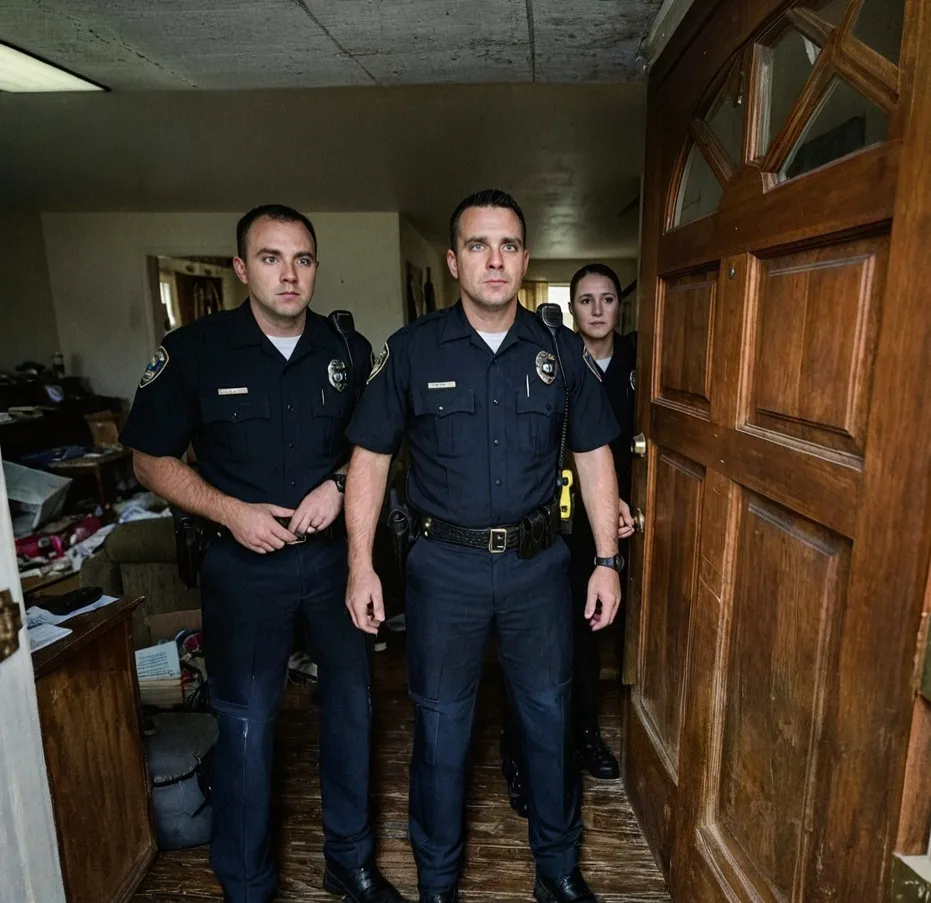
Part of me was impressed by his thoroughness. The rest of me felt sick. Fifteen minutes later, I saw the first police car pull into my driveway, followed by two more vehicles and an unmarked sedan.
Through the window, I recognized Detective Sarah Rodriguez, my former colleague from Denver Police. Ryan came downstairs, his face a mask of concerned innocence. Dad, there are police cars outside.
What’s going on? His performance was flawless. If I hadn’t heard his phone calls, I might have believed his confusion was genuine. The doorbell rang, sharp and authoritative.
This was it. Ryan moved toward the door, but I stood up first. I’ll get it, son.
As I walked toward the front door, I caught Ryan’s reflection in the hallway mirror. For just a moment, when he thought I wasn’t looking, his mask slipped. The expression underneath was cold, calculating, and completely without remorse.
The agents were about to arrive, and my son had no idea his perfect plan was about to backfire completely. I opened the front door to find Detective Sarah Rodriguez standing on my porch, flanked by two DEA agents in tactical gear. Behind her, more officers secured my property perimeter.
Hello, Thomas, Sarah said, her voice professional but regretful. We need to talk. Of course, Sarah.
Come in. Ryan stepped forward, his face showing concerned confusion. Detective Rodriguez, what’s this about? Is my father in trouble? Sarah’s eyes moved between us, reading dynamics with 20-year veteran skill.
We received a report about drug trafficking at this address. We have a warrant to search the premises. Drug trafficking? Ryan’s voice carried perfect shock.
That’s impossible. My father would never— It’s all right, son, I said calmly. Let them do their job.
The lead DEA agent, a stern man in his 40s, stepped forward. Mr. Miller, we have information that you’ve been storing fentanyl in your fishing tackle box. Ryan’s eyes lit up with helpful cooperation.
Oh, that’s in the garage. I can show you exactly where it is. I followed the group to my garage, watching Ryan’s confident stride.
He was so certain of victory, so sure his plan was unfolding perfectly. There it is, Ryan pointed to my tackle box. Dad was working with it this morning, acting really nervous.
The DEA agent approached with practice caution, photographing from multiple angles before opening the clasps. Ryan moved closer, anticipation radiating from every gesture. The agent lifted the top tray, revealing my organized collection of lures and sinkers.
He methodically searched each compartment, removing items and examining them carefully. Nothing. The agent looked up, confusion creasing his features.
Mr. Miller, we’re not finding any controlled substances. Ryan’s face went white. That’s impossible.
I saw him put something in there this morning. Check again. Son, I said quietly, what exactly did you think you saw? Ryan’s composure began cracking.
There was something wrapped in black tissue paper. I’m sure of it. Sarah Rodriguez studied Ryan with new interest.
You seem very certain about your father’s tackle box contents. Why is that? Ryan’s mouth opened and closed like a fish out of water. I just, I was trying to help.
I thought I saw something suspicious. The lead agent finished examining the tackle box. Nothing here.
Should we expand the search? Wait, Sarah said, detective instincts engaged. Ryan, you called in this tip, didn’t you? Ryan’s face flushed red. I was just being a concerned citizen.
If I was wrong. Let’s search your vehicle. Sarah interrupted, tone no longer friendly.
My car? Ryan’s voice cracked. Why would you search my car? I’m the one who reported this. But agents were already moving toward the Honda Civic.
Ryan followed. Confident stride replaced by nervous shuffling. The trunk opened with a soft click.
The lead agent moved aside the gym bag and spare tire, then stopped. His hand emerged holding a clear plastic baggie filled with white powder wrapped in familiar black tissue paper. Ryan Miller, Sarah said, voice cold as steel.
You’re under arrest for possession of fentanyl with intent to distribute and filing a false police report. Ryan’s face went through shock, panic, then desperate calculation. This is a setup.
My father planted that there. He’s trying to frame me. Really? Sarah asked.
Then why did you call us to search his tackle box instead of your car? As handcuffs clicked around Ryan’s wrists, he looked at me with pure hatred. You did this. You moved it.
I met his eyes steadily. Son, I have no idea what you’re talking about. The look of shock on my son’s face said it all.
He had never expected his father to be the better strategist. Three weeks later, I sat in Denver County Courthouse watching my son face the consequences of his choices. Ryan appeared smaller in his orange jumpsuit, the confidence that had defined him completely stripped away.
The federal prosecutor laid out the case with clinical precision. Two ounces of fentanyl, street value $20,000, intent to distribute, filing a false police report, attempting to frame a family member. Your Honor, the prosecutor continued, Mr. Ryan Miller not only possessed illegal narcotics, but orchestrated an elaborate scheme to destroy his own father’s life.
Ryan’s court-appointed attorney cited addiction, desperation, and family trauma from losing his mother. But the evidence was overwhelming, and Ryan’s recorded phone calls to Marco and Elena had sealed his fate. When Judge Harrison asked if Ryan had anything to say, my son stood slowly.
I want to apologize to my father, he said, voice barely audible. I was desperate, and I made terrible choices. I never meant for things to go this far.
I sat in the gallery, feeling nothing but emptiness. The apology felt hollow, performed for the judge rather than spoken from the heart. Ryan Miller, Judge Harrison said, You are sentenced to five years in federal prison for drug trafficking and conspiracy.
The gavel’s sound echoed through the courtroom like a door slamming shut on 30 years of fatherhood. But Ryan’s arrest had solved only part of my problems. Elena Vasquez still held forged documents claiming ownership of my house.
Marco Santos had disappeared after Ryan’s arrest, avoiding police attention. I spent weeks working with my attorney to prove the loan documents were fraudulent. The forged signature was obvious once experts examined it, and Ryan’s confession helped establish the deception timeline.
The good news, my lawyer explained, is that fraudulent documents are void. Your house was never legally at risk. Elena Vasquez has fled the state to avoid prosecution.
Detective Rodriguez kept me informed about the ongoing investigation. We’re working with federal marshals to track down both Elena and Marco. Ryan’s cooperation might reduce his sentence, but he’s looking at serving at least three years.
Three years minimum. My son would be 30 when released. I would be 64 if I lived that long.
The house felt different now, emptier in ways that had nothing to do with Ryan’s physical absence. I walked through rooms where we had shared meals, watched television, argued about responsibility. The memories felt contaminated by knowledge of his betrayal.
Two months after Ryan’s sentencing, I made a decision that would have been unthinkable before. I put the house on the market. Are you sure, Thomas? Sarah Rodriguez asked.
This is your home. Sarah’s home. Sarah’s gone, I replied.
And the son I raised doesn’t exist anymore. It’s time to start over. The realtor said I could expect a quick sale in Denver’s hot market.
I began sorting through 30 years of accumulated memories, deciding what deserved a place in my new life and what belonged to the past. Some chapters ended with celebration. Others ended with relief.
This one ended with acceptance that family could betray the deepest trust. But survival meant choosing your own well-being over obligation to those who would destroy you. Six months later, I stood on the balcony of my new apartment in Boulder, Colorado, watching the sunrise paint the Rocky Mountains in gold and crimson.
The view was spectacular. Nothing like the suburban streets of Highlands Ranch where I had spent 30 years building a life that ultimately belonged to someone else. The house sold within two weeks.
After paying off the mortgage and legal fees, I had enough to buy this small place outright and start fresh. No debt, no obligations, no family members who might betray me for their own gain. I kept only what mattered.
Sarah’s photographs, my fishing gear, and the hard-earned wisdom that love without boundaries becomes enablement. And enablement destroys both giver and receiver. Ryan had written me twice from federal prison.
Both letters remained unopened on my kitchen counter. Some bridges, once burned, were better left as ash. Detective Rodriguez visited last month with updates.
Marco Santos had been arrested in Phoenix, facing charges that would keep him imprisoned longer than Ryan. Elena Vasquez remained a fugitive, but her loan sharking operation was dismantled. Do you ever regret how it ended? Sarah asked as we shared coffee in my new living room.
I regret that it had to end that way, I replied. But I don’t regret protecting myself from someone who would have destroyed me without hesitation. The truth was simpler than regret or forgiveness.
I had raised a son who became a stranger, loved someone who saw that love as weakness to exploit. When faced with the choice between his survival and mine, Ryan chose his own. I simply made the same choice.
My tackle box sat in the corner, cleaned and reorganized, waiting for weekend trips to mountain lakes, where the water ran clear and the fish didn’t lie about their intentions. Simple pleasures for a man who had learned to value simplicity. Sometimes the people closest to us become the greatest threats to our well-being.
Sometimes protecting yourself means accepting that family can be the enemy. Sometimes the hardest lesson in life is learning when to walk away from those you love most. I had spent 61 years learning that lesson.
Ryan had the rest of his life to learn it too. Through Thomas’ journey, we discover that authentic love requires wisdom, not just sacrifice. Grandpa’s stories throughout history teach us that enabling harmful behavior isn’t compassion, it’s complicity.
God designed families to nurture growth, not to shelter destruction. When betrayal stories unfold within our own homes, we face the hardest test of faith, choosing God’s call to wisdom over our emotional attachments. Betrayal stories like Thomas’ and Ryan’s reveal how addiction and desperation can transform loved ones into strangers.
Yet God never abandons us in these dark valleys. He provides discernment to recognize when love has become manipulation, when family loyalty has become self-destruction. Thomas’ police training wasn’t just career preparation, it was God’s way of equipping him for this ultimate test.
Grandpa’s stories often speak of tough love, of drawing lines that seem harsh but preserve what matters most. God’s love for us includes teaching us to value the life he gave us enough to protect it, even from family. When Ryan chose fentanyl over character, when he chose deception over honesty, God had already placed within Thomas the strength to respond with justice rather than enablement.