Those words, spoken with uncharacteristic intensity, were among the few demands my husband Joshua ever made during our twenty-four years of marriage. I had always respected his wishes, even when curiosity gnawed at me during the rare moments he would mention his Canadian childhood—a life he had seemingly locked away in a box and thrown into the deep ocean. He spoke of the place with a mixture of nostalgia and deep, vibrating dread that stopped any questions in my throat.
But now, Joshua was gone. A heart attack, massive and unforgiving, had taken him at fifty-two. I was left a widow with a hollow space in my chest where certainty used to live, navigating a world that felt suddenly sharper and colder without his quiet presence to buffer it.
“Mrs. Mitchell?”
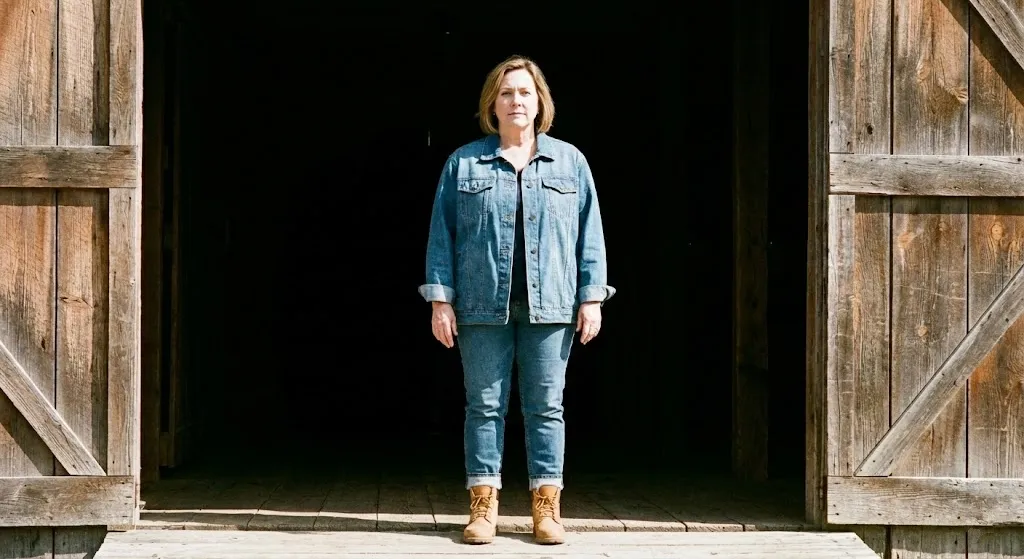
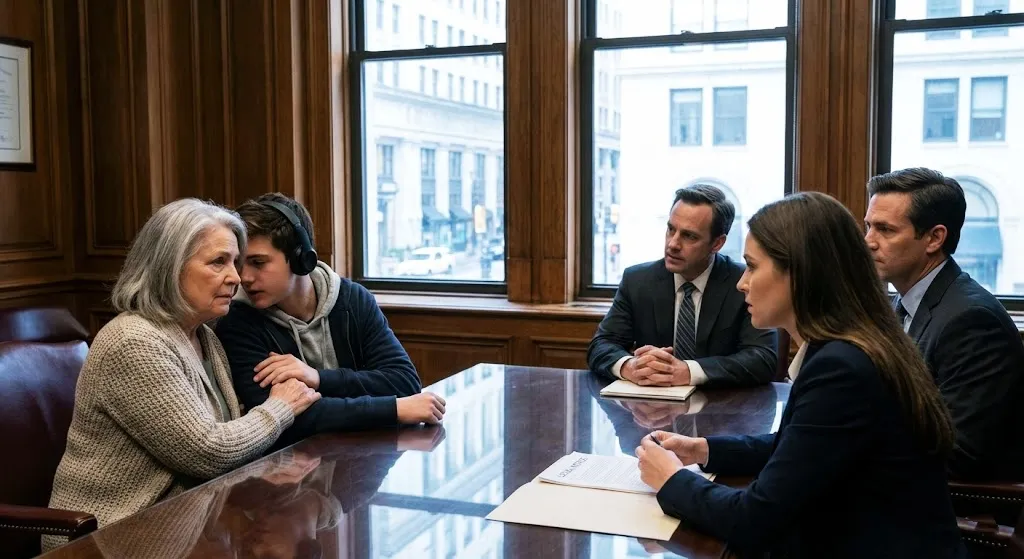
The voice of Joshua’s attorney, Mr. Winters, pulled me from my thoughts. We sat in his wood-paneled office two weeks after the funeral. The air smelled of lemon polish and old paper. The finality of death had been reduced to a stack of legal documents and the scratching of a pen.
“There is one more item,” Winters said softly, his eyes filled with a sympathy that felt professional yet genuine. He opened a drawer and slid a small, velvet-lined box across his mahogany desk.
Inside lay an antique brass key attached to a maple leaf keychain and a sealed envelope with my name written in Joshua’s precise, angular handwriting. Seeing his script sent a fresh wave of grief crashing over me.
“What is this?” I asked, the heavy key cool against my palm.
“Three years ago, your husband purchased a property in Alberta, Canada. According to his strict instructions, you were only to be informed of its existence after his passing.” Mr. Winters adjusted his glasses, looking uncomfortable. “The deed has been transferred to your name. All property taxes are paid for the next five years.”
“A property in Canada?” I struggled to process the information. “Joshua didn’t own any property outside of our home. We lived on an engineer’s salary and a teacher’s wage. We were comfortable, certainly, but we weren’t wealthy enough to buy foreign estates.”
“It’s called Maple Creek Farm. Apparently, it was his childhood home. The deed shows it changed hands several times before he repurchased it under a blind trust.”
The farm. The place he had forbidden me to visit. The place that made his gentle face harden whenever it was mentioned.
“Mrs. Mitchell, there is something else,” Winters lowered his voice, leaning forward. “The property has become… complicated. Since the purchase, significant oil deposits were discovered in the region. Your husband declined multiple offers from energy companies to survey the land. He sat on a potential fortune and told no one.”
My head spun. Joshua had never mentioned oil, money, or real estate. I opened the envelope with trembling fingers, desperate for his voice.
My dearest Catherine,
If you are reading this, I have left you too soon. I am sorry. There is so much I should have told you, but I was a coward. I couldn’t bring myself to face the past while I was trying to build our future.
The farm is yours now. I have spent the last three years transforming it from the broken place of my childhood into something beautiful. Something worthy of you. I know I made you promise never to go there, but I am releasing you from that vow. In fact, I am asking you to go. Just once. Before you decide what to do with it.
On the desk in the main house is a laptop. The password is the date we met. I love you, Cat, more than you will ever know.
— Joshua.
I tucked the key into my pocket, a strange, cold determination settling over me. “I’m going to Canada, Mr. Winters.”
“Of course,” the lawyer nodded. “But I should warn you: Joshua’s family in Canada has contested the will. His brothers claim he was not mentally competent when he repurchased the family property. They are claiming undue influence.”
“That is ridiculous. Joshua was the most rational person I have ever known.”
“Nevertheless, given the potential oil value, they have filed objections. It may get ugly.”
Forty-eight hours later, after a hasty flight and a long drive through the sprawling Alberta countryside, I stood before imposing wooden gates marked Maple Creek Farm.
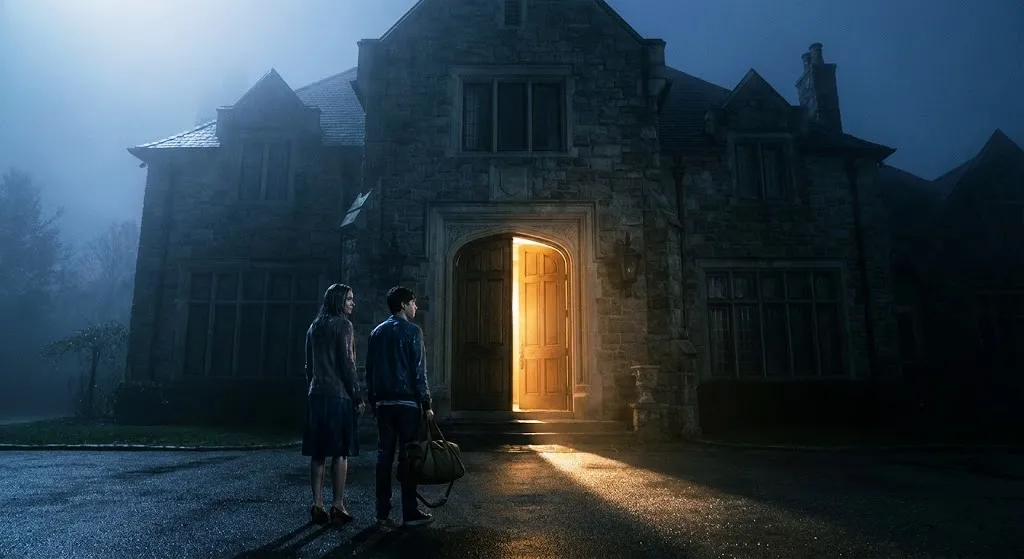
Beyond them stretched a property far grander than the ruin I had imagined. Rolling hills, stands of maple trees turning brilliant gold with autumn, and in the distance, a pristine farmhouse painted a soft cream white. This was no broken-down shack; this was an estate, maintained with meticulous care.
As I drove up the winding gravel driveway, my heart pounded. What secrets had Joshua kept here?
The farmhouse was a stunning two-story structure, restored with love. I unlocked the front door and stepped into the entryway, gasping aloud.
The great room was soaring, with exposed beams and a stone fireplace that looked like it had been scrubbed by hand. But it was the art that stole my breath. Everywhere I looked, there were horses. Paintings of stallions in full gallop, bronze sculptures capturing muscle and motion, framed photographs of wild mustangs. It was a gallery dedicated to my lifelong passion—one Joshua had supported but never fully shared, as he had no interest in riding.
He hadn’t just bought a house; he had built a shrine to the things I loved.
On a desk by the window sat a silver laptop. But before I could touch it, the crunch of tires on gravel announced an arrival.
A black SUV pulled up behind my rental. Three men emerged, moving with a synchronized confidence that spoke of shared history. They bore the unmistakable sharp jawline and dark hair that Joshua had carried, but their faces were harder, colder. The Mitchell brothers.
I locked the door just as the oldest—a silver-haired man who looked like a cruel reflection of my husband—rapped sharply on the glass.
“Mrs. Mitchell! We know you’re in there. We need to talk.”
I backed away. Joshua’s warning about his family had always been vague, but his fear was palpable. I ignored the knocking, my hands shaking as I opened the laptop. I entered the password: 05151998.
The screen flared to life, revealing a folder labeled For Catherine. Inside were hundreds of video files, dated from the day after his funeral extending a full year into the future.
I clicked the first one.
Joshua’s face filled the screen. He looked healthy, vibrant—clearly recorded months ago in this very room.
“Hello, Cat. If you’re watching this, I’m gone, and you’ve come to the farm.” He smiled, that crooked grin I missed so desperately. “I’ve made a video for every day of your first year without me. But first, the hard truth.”
His expression sobered, the light leaving his eyes. “Three years ago, I was diagnosed with Hypertrophic Cardiomyopathy. It’s genetic. The doctors gave me two to five years. I chose not to tell you or Jenna because I didn’t want our remaining time to be shadowed by a death watch. I wanted to live as your husband, not your patient.”
Tears pricked my eyes. He knew. All those late nights working, the business trips—he wasn’t working; he was here. Building this.
“I bought the farm from my father before he died,” Joshua continued. “He was broke. My brothers didn’t care about the land then—it was worthless scrub. But now that oil has been found nearby, they will come for it. They will try to take it from you.”
The banging on the door stopped. I glanced out the window. The men were on their phones, pacing like wolves.
“In the wall safe behind the painting of the Friesian horse is a blue folder,” the video continued. “It proves I was of sound mind. It also contains the deed.” He paused, his face growing grave. “Beneath that blue folder is a thick, sealed envelope marked in red ink: ‘For Robert. To be delivered only if he asks for a life.’ I pray you never have to open it, Cat, but keep it safe.”
I found the safe. The blue folder was there, as promised. And beneath it, the ominous red-marked envelope. A chill ran down my spine as I touched it. I didn’t understand what it meant, but I tucked it deep into my inner coat pocket, feeling its weight against my ribs.
“Mrs. Mitchell! This is the RCMP!”
I opened the door. A young constable stood there, flanked by the three brothers.
“Mrs. Mitchell, I’m Constable Wilson. These gentlemen have a court order requesting an inspection regarding a competence dispute.”
I stood tall, channeling a strength I didn’t know I had. “Officer, my husband anticipated this harassment. Here is the deed, the medical clearance from his neurologist dated the day of the purchase, and a restraining order prepared by his attorney against Robert, Alan, and David Mitchell.”
I handed over the documents. The Constable reviewed the papers, his eyebrows raising.
“This looks to be in order, gentlemen,” the officer said, turning to the brothers. “You have no grounds to be here. This is private property.”
Robert Mitchell, the oldest, stepped forward, his face flushing with anger. “She’s a foreigner. She has no idea what this land is worth. This is Mitchell land.”
“I know exactly what it’s worth,” I lied, keeping my voice steady. “Now get off my property.”
That night, sleep was impossible. I met Ellis, the stable manager Joshua had hired—a quiet, weathered man who had served time but whom Joshua had given a second chance. He showed me the horses, including a black Friesian named Midnight that looked exactly like a painting I had admired twenty years ago.
“Your husband was a planner, Ma’am,” Ellis told me as we secured the stables against the biting wind. “He knew they’d come. He set up an office in the old barn loft. It’s not much to look at, but it’s secure.”
He led me there. Inside a reinforced room were filing cabinets containing decades of financial records on his brothers—evidence of tax evasion, fraud, and illegal loans.
The next morning, the betrayal hit closer to home. My daughter, Jenna, arrived. She drove a rental car, looking exhausted and angry. But she wasn’t alone. Robert Mitchell’s SUV followed her in.
“Mom!” Jenna stormed into the house, her eyes red. “Why didn’t you tell me? Uncle Robert says Dad hid this place from us to cut us out of the fortune! He says Dad was having a breakdown!”
“Uncle Robert?” I looked at the man smirking behind her. They had intercepted her at the airport. They were using her grief and confusion against me.
“Jenna, please,” I said, trying to reach for her hand. “Come inside. Alone.”
“We just want what’s fair, Catherine,” Robert said smoothly, stepping onto the porch. “A split. Three ways. We keep the family land, you get a payout. Jenna agrees it’s the only way to heal the family rift.”
“Get out,” I said coldly.
Once they left, retreating down the driveway, Jenna turned on me. “They offered us millions, Mom! Why are you being so stubborn? Dad lied to us! He kept a whole life secret!”
“Because they are liars, Jenna. And your father didn’t lie to hurt us. He lied to protect us.” I handed her the tablet. “Watch.”
I played a video Joshua had labeled For Jenna.
In it, Joshua explained not just the illness, but the abuse he suffered as a child. He looked directly into the camera lens, his eyes pleading for understanding. “They pinned their own debts on Jonathan Mitchell,” he said, his voice hard. “They forged my signature on fraudulent loans that would have sent me to prison. That is why Jonathan had to disappear. That is why I legally changed my name to Joshua and crossed the border. I had to leave my name behind to save my life.”
Jenna watched, sobbing. As the video ended, she looked up, her anger replaced by horror. “He protected us,” she whispered. “He became someone else to keep us safe.”
“We have a fight on our hands,” I told her, embracing her. “But your father gave us the weapons.”
The final confrontation regarding the property happened three days later. We agreed to a meeting in the dining room. The brothers brought an oil executive from Northern Extraction, a man named Wells who looked at the farmhouse as if it were already a demolition site.
“The offer is simple,” Robert said, sliding a contract across the table. “We know the eastern ridge has oil. We will split the royalties. We have the mineral rights history.”
“Interesting,” I said, my voice calm. “Because according to the geological surveys Joshua commissioned…” I pressed a button on a remote, lowering a projection screen Ellis had set up. A detailed map appeared. “The oil isn’t on the eastern ridge. That’s a minor pocket. The massive deposit—the one worth hundreds of millions—is under the western rocky scrub. The land you specifically excluded from your proposal to keep for yourselves.”
Wells, the oil executive, straightened up, his eyes narrowing at Robert. “Is that verified?”
“By three independent geologists,” I said, sliding the reports across the table. “And since I own the land, I choose who drills. And it won’t be you.”
Robert stood up, furious, the veins in his neck bulging. “You can’t do this! We are family! That oil belongs to the Mitchell name!”
“Family?” I laughed, a bitter sound that echoed in the large room. “You wanted to cheat your own niece. You wanted to rob a widow.” I turned to the executive. “Mr. Wells, I suggest you leave. My attorney has already sent these geological reports to your competitors at Western Plains Energy. They are offering a contract that includes environmental restoration.”
The brothers left in disgrace, their alliance shattering in the driveway as Wells drove off in a rage.
Six months passed. We won the legal battles. The oil revenue secured our future, though I insisted on strict environmental controls, much to the confusion of the industry. The farm blossomed. I began to ride Midnight every morning, feeling closer to Joshua in the saddle than anywhere else.
It was deep winter when the brothers returned. This time, there were no lawyers. Just Robert, looking frail and grey, accompanied by Alan.
“What do you want?” I asked, standing in the doorway, blocking their entry. The red-marked letter in my pocket felt heavy, as if it were generating its own heat.
“I have the heart condition,” Robert admitted, his voice rasping. “Hypertrophic Cardiomyopathy. Same as Joshua. I need a transplant. My heart is failing.”
He looked at Jenna, who stood behind me, her face pale. “We have a rare tissue type. Family is the best chance for a match. The waiting list is too long.”
The audacity took my breath away. After everything—the fraud, the lies, the attempt to steal our future—they wanted my daughter’s liver or partial donation.
“You want me to test?” Jenna asked, incredulous.
“We’re… we are family,” Robert rasped, a flicker of his old manipulative spark trying to catch fire before dying out in the face of his overwhelming fear. “Blood is what matters in the end. You understand that, don’t you? I’m dying, Catherine. Surely that supersedes business.”
I reached into my pocket. “Joshua left one last letter. He told me to give it to you only if you came begging for life.”
I handed Robert the envelope. He tore it open with shaking hands. As he read, his face went white, then red. He swayed on his feet, clutching the doorframe.
“What is it?” Alan asked, grabbing his brother’s arm.
“It says…” Robert’s voice failed him. He looked up at me, his eyes hollow. “It says our father had a second family. In Saskatoon. Two other children he kept secret.”
“What?” Alan snatched the letter.
“Joshua found them,” I explained, my voice steady. “He tracked them down years ago. A brother and a sister. They share your blood type. They are your match.”
Robert stared at me, the paper trembling in his hand. “Why didn’t he tell us?”
“Because he wanted you to have a choice,” I said. “You can go to them, apologize for your father’s sins, and ask for help humbly. Or you can die waiting for a donation from the niece you tried to rob.”
I opened the door wide to the snowy afternoon. “Go find your family, Robert. Leave mine alone.”
I watched from the window as they retreated. Robert didn’t just get in the car. He stopped halfway, leaning heavily against the hood of his SUV, his head hanging low between his shoulders. Alan was shouting something at him, gesturing wildly at the house, but Robert just shook his head—a silent, rhythmic motion of a man inside whom something essential had finally broken.
Then, slowly, they got in the car and drove away into the white silence of the Canadian winter. We never saw them again.
That evening, I sat in the art studio Joshua had built for me—a room flooded with northern light, smelling of turpentine and possibility. I picked up a paintbrush for the first time in twenty years.
On the laptop, the daily video played.
“Hello, my love,” Joshua’s voice filled the room, warm and alive. “If you’re watching this, you’ve weathered the storm. The farm is safe. Jenna is safe. And you… I hope you are painting again.”
I looked at the canvas, where the outline of the western hills—the hills that had saved us—was beginning to take shape in bold strokes of oil.
“You gave me a life, Joshua,” I whispered to the screen, dipping my brush into the paint. “And now, I’m going to live it.”
The forbidden farm was no longer a place of secrets. It was home.