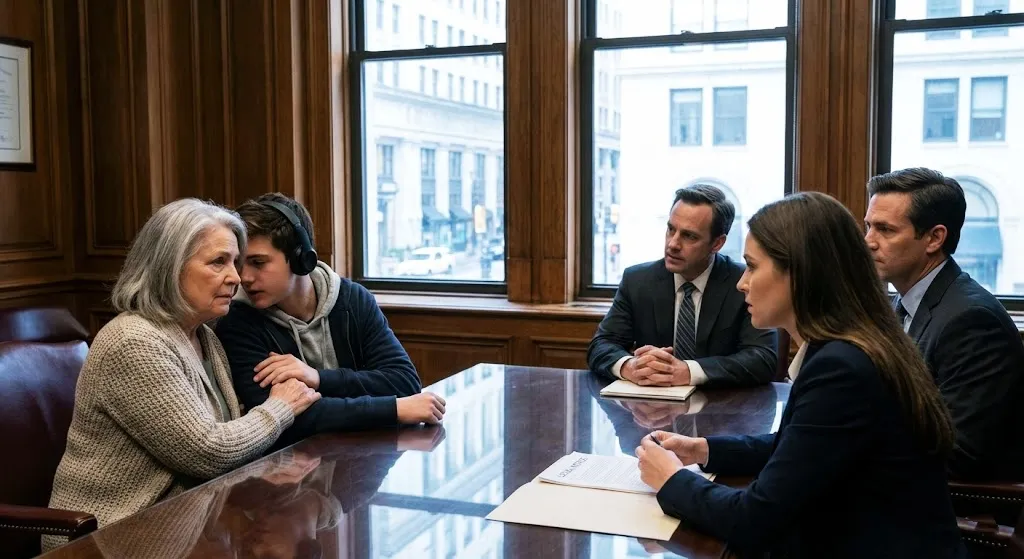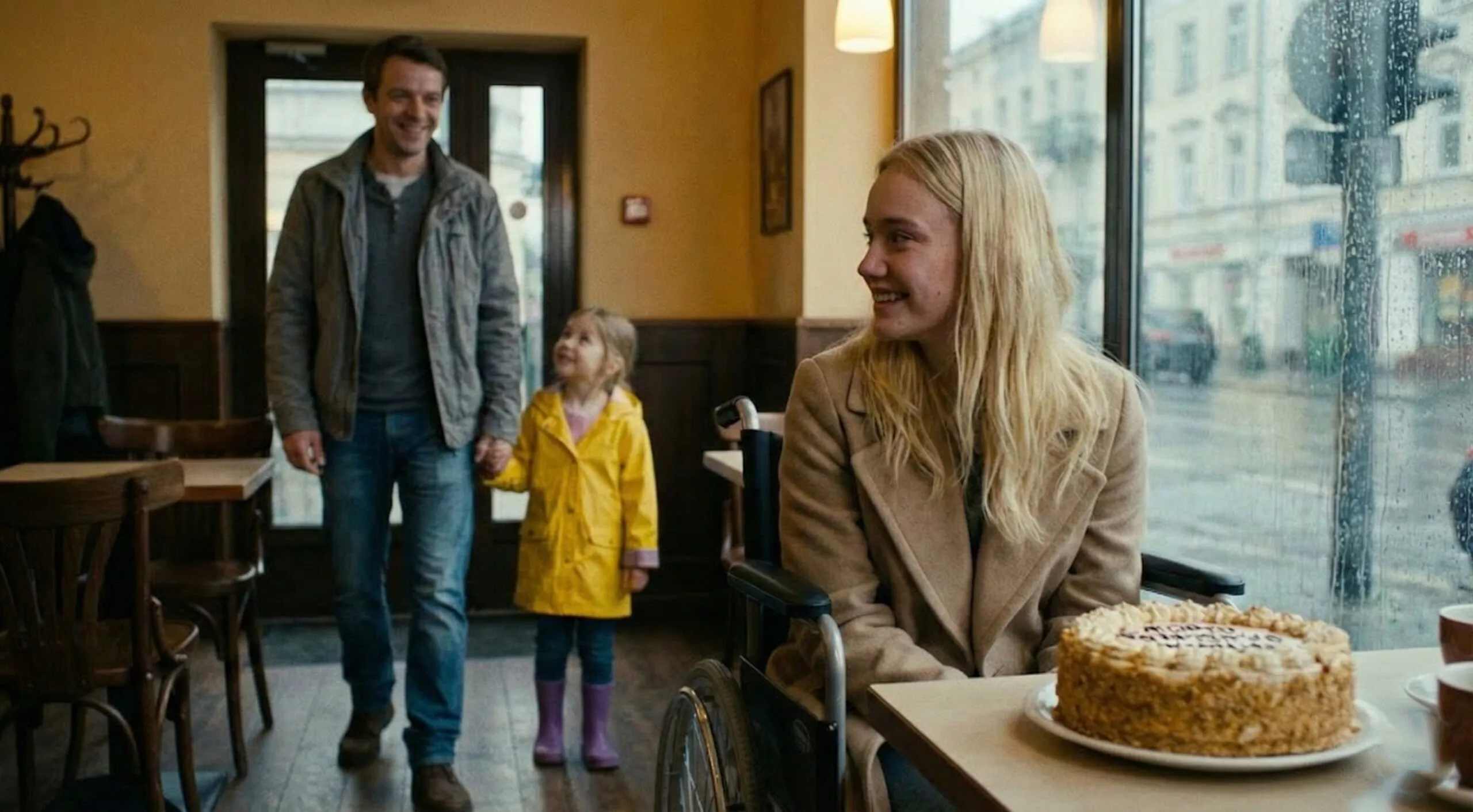
Jason Baker had long since stopped trusting the world. He couldn’t afford to, not after the things he had lost, not after the people he had buried, and certainly not after watching his young son return from the hospital in a wheelchair, his legs motionless. Jason possessed money, high walls, and surveillance cameras monitoring every corridor, but the one thing he didn’t possess was peace.
When Victoria Clark entered his life, she was quiet and soft-spoken, yet something within Jason immediately braced for disaster. She seemed too calm, too kind, and entirely too perfect. He had seen this act before; every maid prior to her had arrived with a bright smile and departed with something that didn’t belong to them…

Consequently, he watched her. He didn’t just observe her with his eyes; he tracked her through hidden lenses installed in nearly every room of the estate, including the therapy room where his son spent the majority of his time. He told himself these measures were for safety, but if he were being honest, the root cause was fear. Then, one night, the dynamic shifted.
He watched through the monitor as she knelt beside his son, not with the demeanor of a maid or an employee, but as if she had been sent for a higher purpose. When she whispered to the boy and he smiled in return, Jason’s world seemed to grind to a halt. In that fleeting moment, he didn’t just see a woman; he saw grace.
The mountain air was razor-sharp that morning, the kind of cold that bit at your lungs and made the surrounding silence feel heavier than the snow itself. From the exterior, Jason Baker’s estate appeared picture-perfect. Stone walls were framed by towering pines, the long driveways were dusted with fresh white powder, and the windows reflected nothing but the vast, empty sky. Inside, however, was a different story.
Inside, the house was quiet in a way that suggested abandonment rather than peace. Jason stood in the kitchen, gripping a mug of untouched coffee, staring through the glass doors as the sun began to break through the tree line. Somewhere down the hall, floorboards creaked—likely the nurse checking on Eric—but Jason didn’t turn his head. He didn’t like surprises.
Not anymore. Since the accident, he had transformed control into a necessary survival skill. The mansion was wired like a bank vault, equipped with motion sensors, digital locks, and a private security firm on standby. Every hallway, shared room, and entrance was under constant video surveillance. The bathrooms were the only exception, and that was solely because his lawyers had insisted on it.
He told himself it was for safety, but deep down, he knew the truth. It was about control. He believed that if he could control the house, perhaps the chaos would remain outside. Maybe grief wouldn’t find a way to infiltrate his life again. The reality, however, was that the house was no longer a home.
It was a shield, a polished, hollow fortress. There were no photographs on the walls, no music in the air, and no warmth. There was only silence, broken by the soft whir of machines keeping Eric comfortable in the therapy room. His son used to sprint through these halls in socks that were too big for his feet, laughing, falling, and getting back up. Now, Eric barely spoke.
The boy spent his days in a motorized chair by the window, watching the snow fall as if it were an event occurring on a different planet. Jason loved him more than anything, but he no longer knew how to reach him. The terror of losing what little he had left had turned Jason into a man he barely recognized.
Every maid, nurse, and assistant came with rigorous background checks and a strict set of rules: no photos, no unsupervised time, and absolutely no personal questions. Despite these precautions, five employees had come and gone in a single year. One had stolen a watch; another had leaked photos of Eric’s therapy equipment to a gossip blog.
One had even vanished overnight, having gained access to Jason’s banking passwords. Each betrayal carved another scar into his spirit, reminding him that trust was a luxury he could not afford. So, when Victoria Clark walked through the front door—clean-cut, soft-voiced, and respectful—Jason barely looked up from his file. To him, she wasn’t a person; she was simply another risk to be managed.
She listened carefully as he laid out the law. “No personal interaction with my son unless necessary. No storytelling, no questions, no distractions from your tasks.” Victoria nodded once. “Yes, sir.” Her voice was gentle and measured, the kind of tone you would expect to hear in a chapel rather than a stranger’s mansion.
Something about that gentleness unsettled him. Later that night, when the house had settled into silence, Jason pulled up the live camera feeds on his laptop. He watched her moving down the hallway with slow, deliberate steps. She wasn’t snooping or lingering; she was simply doing her job.
Yet, he continued to watch, just as he always did. He watched her straighten the pillows in the living room. He watched her fold a blanket that didn’t belong to her. He watched her pause outside Eric’s door and wait a moment before entering.
He fast-forwarded, rewound, and zoomed in, scouring the footage for something—anything—that would prove his instincts right. It was far easier to suspect her than to believe that someone like her could walk into their pain and mean no harm. But nothing suspicious appeared.
He saw only soft movements, quiet hands, and a presence that seemed to breathe life back into rooms that hadn’t inhaled in months. Still, he kept watching. Fear does not surrender easily, and hearts that have been shattered do not trust grace the first time it knocks. What Jason didn’t know yet was that God had already entered the house. He hadn’t come loudly; He came with quiet footsteps, through the hands of a woman no one saw coming.
Victoria had arrived on a Tuesday morning, the sort of day where the air sits heavy and clouds hover indecisively above the trees. She entered quietly, carrying just one small suitcase and wearing a soft brown coat that looked as though it had weathered many winters. The car that dropped her off didn’t wait.
She didn’t look back. Jason met her in the foyer, offering no smile, just a clipboard, a sharp glance, and the list of rules he had recited too many times. “No personal calls while on the property, no visitors, no photos. You’re not here to bond; you’re here to work.”
Victoria nodded. “Understood.” She didn’t flinch, nor did she try to impress him. She simply stood there, calm and steady, like someone who had learned to live without the need for approval. Jason watched her for a moment too long before turning and walking away.
He didn’t ask where she came from, nor did he care. He only cared about what people hid behind their polite smiles. Later that day, the house manager walked Victoria through her duties: cleaning, light meal prep, tidying Eric’s room, and assisting the nurse when required.
When she entered the therapy room for the first time, she paused at the door. The room was cavernous but dimly lit, with soft grey walls and shelves stocked with untouched toys and medical supplies. A wheelchair sat near the window where Eric was stationed, staring outside, his small hands resting in his lap.
He didn’t turn when she walked in, didn’t speak, and didn’t blink. Victoria didn’t try to force an interaction. She simply walked to the shelf, adjusted a few books, and whispered gently, “I’ll be around if you need anything.”
Eric didn’t answer, and she didn’t expect him to. She knew that kind of silence. It was a silence that wasn’t just quiet but wounded. She understood that sometimes, the most sacred thing you can do in the presence of pain is not to interrupt it.
That night, Jason sat in his office, his face illuminated by the glow of his monitors. He clicked through each camera feed with practiced focus: living room empty, kitchen clean, hallway clear. Then he saw Victoria. She was walking slowly, carrying a folded blanket in her arms, moving with a kind of reverence.
She didn’t move like someone tiptoeing out of fear, but like someone who respected a space that didn’t belong to her. She knelt by the hallway shelf, refolded the blanket—neater this time—and set it down. Then she stood and walked to the end of the hall, where Eric’s therapy room waited behind a partially closed door.
Jason leaned closer to the screen. Victoria paused at the threshold, knocked softly, waited, and then entered quietly. Jason turned up the volume. There were no words, just soft footsteps, the quiet mechanical wheeze of Eric’s chair, and then, barely above a whisper, her voice.
“You look warm enough, but let me know if you need another blanket.” There was no reply. Jason lowered the volume and sat back. He watched the screen for another two minutes, expecting something—a mistake, a lie, a moment that didn’t match the script.
All he saw was her reaching for a book, dusting the cover, and setting it by the windowsill, close enough for Eric to reach if he ever wanted to. Jason closed the laptop, his jaw tight and his eyes heavy with exhaustion. He didn’t trust it. He didn’t trust her.
People always revealed their true colors eventually. But what he didn’t know, what he couldn’t see yet, was that this woman—this stranger who spoke in whispers and moved like a prayer—wasn’t here to perform. She was here to serve. Sometimes, God sends healers in uniforms that the world doesn’t honor; sometimes love walks in quietly, without asking to be seen.
The cold in the house wasn’t a result of the weather. It was the kind of cold that settles in after too much grief, the kind that lingers in the spaces between people who have stopped trying to speak. Eric hadn’t smiled in months, but he didn’t cry either. He just watched the world through the window like a boy trapped behind glass.
The nurses did their best, and therapists came and went, while Jason stayed behind his screens, convincing himself that mere presence was enough. Victoria never tried to fill the silence with idle chatter. She respected it, but she didn’t avoid it either.
On her third morning, she walked into the therapy room holding a small tray containing tea for herself and warm water with a hint of lemon for Eric. “I don’t know if you like lemon,” she said softly, “but I figured we’d try.” Eric didn’t look up.
She placed the tray gently on the side table and turned to tidy the bookshelf, keeping her back to him, her voice absent. This wasn’t because she didn’t care, but because she understood something most people didn’t: sometimes, presence is more powerful than conversation. After a while, she picked up one of the stuffed animals from the shelf—a small, slightly worn bear.
She turned it over in her hands, brushing off some lint, then knelt beside the window and placed the bear gently on the edge of Eric’s tray. “Your friend was collecting dust,” she whispered. “Figured he could use a little sunlight too.”
She didn’t wait for a response, but she noticed, just barely, that Eric’s fingers twitched when she turned away. Later that evening, Jason sat in his office. The fireplace beside him crackled, but the warmth failed to reach him. He tapped through the security feeds again out of routine: living room, kitchen, guest hallway, therapy room.
He stopped. On the screen, Victoria sat cross-legged on the floor near Eric’s chair, holding a book in her lap. She wasn’t reading it aloud; she was just turning the pages slowly, waiting quietly like a mother waiting for a restless child to lean in on his own. Then, something happened.
Jason leaned forward. Eric looked at her. It wasn’t a long look, nor was it dramatic, but it was clear. She didn’t react or make a show of it; she just turned another page and murmured, “This one’s about a bear who wanted to climb a mountain. Nobody thought he could, but he kept going anyway.”
Jason stared at the screen. A minute later, Victoria adjusted the blanket on Eric’s legs, carefully and gently. Her hand brushed his knee, and Jason saw it: his son didn’t flinch. That hadn’t happened in a long time.
He fast-forwarded the footage to another day, another afternoon. This time, Victoria was placing a toy truck near Eric’s foot. “Won a race?” she asked with a smile, nudging it forward across the hardwood floor. Eric didn’t answer, but Jason heard it—a sound so faint he almost missed it.
It was a small breath, half a giggle, quickly buried but undeniably real. Jason paused the video. His hand hovered over the mouse, his throat tightening. What was this? Was it manipulation, a game, or something far more dangerous to his carefully built walls?
He closed the laptop slowly, leaned back in his chair, and stared at the ceiling. She wasn’t doing anything wrong. She was doing something worse. She was waking something up inside his son, and inside Jason too—something he had buried so deep he forgot it had a name: Hope.
Something had shifted, not loudly or all at once, but quietly, like a draft slipping under a closed door. It started with a sound—a short, breathy laugh that escaped Eric’s mouth before he could stop it. Victoria had been reading a picture book about a clumsy elephant and made the animal’s voice sound like an old man trying to whistle.
Jason heard it through the speakers and froze. The camera feed was grainy, but it was clear enough to show it: Eric was smiling. It wasn’t a big smile, and it wasn’t forced. It was just there—soft and unsure, as if he didn’t quite trust it himself.
Jason leaned in, his heart stammering, and for a split second, he smiled too. But then it vanished, because hope feels dangerous when you haven’t held it in a while. That evening, Jason didn’t join dinner. He rarely did, telling himself he had emails to finish and calls to return.
The truth was simpler: he didn’t know how to sit in a room where his son might be happy again without feeling like he didn’t deserve it. He watched from the monitors instead, silently observing as Victoria helped the nurse serve a simple meal of mashed potatoes, grilled chicken, and apple slices arranged in the shape of a sun.
Jason scoffed when he saw it. “Too much effort,” he thought. “Too much time spent trying to make sadness into something cute.” But then, on the screen, Eric picked up a slice of apple slowly. He turned it in his fingers, then looked at Victoria.
“Thank you,” he whispered. Jason’s stomach tightened, and he turned off the feed.
The next day, Jason asked the head of security to double-check Victoria’s background report. “Again?” the man asked. “It came back clean, sir.”
“Check again,” Jason commanded. “Go deeper. School records. Old jobs. Anything she didn’t mention. I want to know what she’s not saying.” He didn’t say it out loud, but the thought echoed loudly inside his mind: No one is that kind without a reason.
Down the hall, Victoria sat beside Eric as he built a simple block tower. His hands trembled sometimes, but he didn’t quit. “Looks great,” she said, keeping her voice low. “Want me to hand you the blue one?”
Eric nodded. She placed it in his palm gently. Her hand stayed a second longer than it needed to, and in that second, something passed between them. It wasn’t words or therapy; it was just presence—steady, kind, and undemanding. Eric didn’t pull away.
Later, Jason walked into the room without knocking. Victoria straightened, a little startled. “I was just helping with…”
“I saw,” Jason interrupted. His voice wasn’t angry, but it was cold and controlled. “You don’t need to entertain him. That’s not your job.”
“I wasn’t entertaining him,” Victoria replied gently. “I was seeing him.”
Jason’s jaw tightened. He looked down at his son, who quickly looked away. “I hired you to clean, that’s all.”
Victoria nodded once, slowly. “Of course.” Jason turned and walked out, leaving the air behind him colder than it had been when he entered.
That night, Jason couldn’t sleep. He lay in bed, the ceiling fan humming above, and the memory replayed in his mind: Eric smiling, saying thank you, reaching for a block with his own hands. The sound of his own son’s voice after all those months of silence rang in Jason’s ears like music from another life.
He wanted to believe it. He wanted to hold on to it. But he was afraid—afraid that if he let his guard down, it would all fall apart again. He feared that hope was just a setup for heartbreak. So, instead of praying like he used to, he clenched his fists beneath the covers and whispered, “She’s hiding something. I know she is.”
But in the room down the hall, a little boy dreamed with a toy bear beside him, and for the first time in months, he didn’t dream of falling.
The house was quiet again, but it wasn’t the same kind of quiet as before. This quiet felt heavier, like the air itself was holding its breath. Jason stood outside the door to the guest wing. It was late, past midnight, and the hallway lights had dimmed to a soft amber.
Victoria’s room was at the far end—small and neatly kept, the kind of room someone with nothing to hide might live in. But Jason’s mind wasn’t settled. In fact, it had never been louder. The way she looked at Eric, the way Eric responded, and the way warmth had crept back into a house meant for silence didn’t sit right.
No one just walks in and brings life back like that, not without a motive or a reason. His hand hovered over the doorknob. He told himself it was necessary, that any father would do this. He turned the knob.
Inside, everything was in its place: a folded blanket at the end of the bed, a worn journal stacked beside a Bible on the nightstand, and a teacup, half-washed, sitting by the sink. There was nothing fancy and nothing personal, except for a small wooden box tucked carefully into the drawer of the nightstand.
Jason hesitated, then opened it. Inside lay a silver locket, old but well-kept, the kind worn often—not for fashion, but for memory. He opened it slowly. On one side was a faded photo of a woman in hospital scrubs standing just outside a building Jason instantly recognized: the same hospital where his wife and son had been taken after the accident.
On the other side of the locket was a tiny folded note. The paper was delicate, the ink smudged with time. He unfolded it. “To Victoria, thank you for helping me through the hardest night of my life.”
The handwriting hit him like a physical blow to the chest. He knew it. He knew it because it belonged to his wife. Jason sank onto the edge of the bed, his hands trembling. The locket lay open in his palm like a question he wasn’t ready to answer.
Back in his study, Jason played the memories of the hospital over in his mind. He recalled that night—the crash, the chaos, the doctors and nurses, and the voices that blurred together. But somewhere in that haze, a woman had taken his wife’s hand and sat beside her while Jason paced the waiting room, unable to breathe. Could it have been her? Could Victoria have been there?
The next morning, Jason didn’t sleep. He didn’t eat. He didn’t speak to anyone. He simply waited in the living room until Victoria returned from the market, carrying a paper bag of apples and crackers.
“Victoria,” he said as she stepped inside. She stopped and looked at him, not startled, just patient.
“Yes?”
He held up the locket. Her eyes softened. She didn’t deny it, nor did she try to explain. Jason’s voice came out low and rough. “Where did you get this?”
She looked down at her hands, then met his gaze again. “I was working the night of the crash,” she said quietly. “I held her hand before she went in for surgery. She was scared. She asked me to pray with her.”
Jason blinked, his throat burning.
“She said, if anything happened, would I keep an eye on her son someday, just… somehow. And then she gave me that note.”
Silence filled the room. Jason couldn’t speak or move because everything he thought he knew about her, about God, and about control was breaking apart in that single moment. What he felt most wasn’t anger; it was grief. Grief for what he’d shut out. Grief for what he hadn’t seen.
He saw Eric’s laughter, Victoria’s kindness, and God’s mercy whispering through all of it. He set the locket on the table and stood, his voice barely above a whisper. “Why didn’t you tell me?”
“Because I didn’t come here to remind you of what you lost,” she said. “I came because she asked me to love what was left.”
The locket sat untouched on the table. Jason hadn’t moved it; he couldn’t. It felt heavier than silver, as if it held something sacred he wasn’t ready to carry. He barely slept that night. His mind ran in circles between memory and suspicion, between what he felt and what he feared.
Victoria’s voice kept echoing: “She asked me to love what was left.” What did that even mean? By morning, something inside him cracked—not from logic, but from fear. He feared that this woman had been in his life long before she knocked on his door. He feared that he hadn’t invited her, that she had been sent.
And maybe… maybe he didn’t trust anything he didn’t choose. He found her in the therapy room with Eric. She was kneeling again, adjusting the boy’s socks, humming something low and gentle. Eric was watching her, not blankly or distantly, but watching her like a child watches someone they feel safe with.
Jason’s chest tightened. He stepped into the room. Victoria looked up, and her hands froze. Jason didn’t yell; he didn’t need to. His voice was quiet—too quiet.
“You came here with an agenda.”
Victoria stood slowly. “Jason…”
“Don’t say my name like you know me.” Eric turned toward his father, confusion evident on his face. Jason pointed to the locket now dangling from her neck. “You came here because of that. Because of her. You knew exactly what you were doing.”
Victoria’s eyes filled with tears, but she didn’t defend herself. “I didn’t ask for this,” she said softly. “I just…”
“You got close to my son under false pretenses.”
“He needed someone,” she said. “So did you.”
Jason’s hands curled into fists at his sides. “Don’t talk like you understand me.”
“I don’t have to understand you,” she said, her eyes glistening. “But I was there. I sat with her. I prayed with her. And I made a promise I couldn’t forget.”
“You made a promise to a dying woman,” Jason snapped. “Not to me. You don’t belong here.”
The words hung in the air like smoke from a fire that couldn’t be undone. Victoria turned to Eric, her voice barely a whisper. “I’ll come back if I can. I just need him to know this wasn’t his fault.”
Eric’s lower lip trembled. “Don’t leave,” he said, his voice small.
Jason closed his eyes. That sound—his son’s voice, not weak, but pleading—hit him harder than anything she’d said, but he stayed silent. Victoria nodded once, not to Jason, but to Eric. Then she left. No bags, no protest, just quiet steps down the hallway and the soft click of the front door closing behind her.
That night, the house felt different again. Not silent—hollow. Jason wandered through the rooms like a man trying to remember something he couldn’t name. He walked into the therapy room. The bear was still on the windowsill, the block tower half-built, and Eric’s blanket folded neatly in the corner, untouched.
Jason sat in the chair beside his son’s empty wheelchair and buried his face in his hands. For the first time in months, maybe years, he didn’t feel in control. He felt lost. Down the hall, Eric refused to eat and refused to speak. When the nurse came in, he said one thing: “She’s the only one who saw me.” Then he turned away.
Jason stood outside in the snow, under a sky full of stars he hadn’t looked at in years. He felt the cold in his bones. And for the first time since the accident, he whispered a prayer. Not for forgiveness, not for strength, just for a second chance.
The house was quieter than it had ever been. Not peaceful. Not still. Just empty. Victoria was gone, and though no one spoke about it, her absence settled over the place like fog. The nurses moved softer, the staff spoke in whispers, and Eric barely moved at all.
He didn’t ask for books. He didn’t play with the bear. He didn’t look out the window. Jason tried to tell himself it was fine, that things would go back to normal, but even he didn’t believe that anymore. He sat in his office each night, surrounded by silence, watching old security footage on a loop.
He didn’t watch because he didn’t know what had happened, but because he couldn’t stop watching the parts where life had started to return: Eric’s smile, Victoria’s quiet patience, the way she tucked the blanket just right, like someone who genuinely cared. He watched them again and again, as if somehow it would change the ending. It didn’t.
Three days after she left, the investigator called. Jason almost didn’t pick up, but something in him reached for the phone like it was the last thread he had left. The man on the other end sounded tired.
“I went back through everything,” he said. “School records, employment, hospital logs. It’s all there.”
Jason didn’t answer; he just waited.
“She worked in the ER at St. Luke’s, night shift. She was on staff the night of the accident. Her name is on your wife’s intake chart. She was there.”
Jason closed his eyes.
“She didn’t lie,” the investigator added. “Not about any of it.”
Jason swallowed hard. “There was a note in the locket.”
“We verified the handwriting,” the man said. “It matches your wife’s journals. She wrote it.”
The call ended. Jason didn’t move. The locket was still on the table beside him. He picked it up now, slowly, and opened it again. There was that same photo, that same soft, fading message: “Thank you for helping me through the hardest night of my life.”
He read it three times, then four, and finally, the walls fell. He walked into the nursery-turned-therapy room, not with authority, but like a man entering a sacred space he didn’t understand anymore. Eric was in his chair, staring at nothing, the block tower still half-built on the floor beside him.
Jason knelt down. For the first time, he didn’t speak. He just looked at his son, looking long enough to feel the ache of all the moments he’d missed. Eric glanced at him, his eyes dull, and in the quiet, Jason said softly, brokenly, “I was wrong.”
Eric blinked.
“I thought I was protecting you,” Jason continued. “I thought keeping everyone out was the safest thing I could do.” He reached out and picked up the bear from the windowsill. It still smelled like lavender. “But I sent away the one person who saw you, who didn’t walk past your pain.”
Jason’s voice cracked. “And I think she saw me too, even when I didn’t want to be seen.”
Eric didn’t speak, but his lip trembled. His small hand reached just slightly toward the bear. Jason placed it in his lap. “I’m going to make it right,” he whispered.
That night, Jason drove. There was no driver and no security team—just him behind the wheel, past midnight, driving through the mountain roads into Denver. He didn’t even know what he’d say and hadn’t rehearsed an apology. All he knew was this: he had pushed away grace. And now, by the mercy of God, he was going to ask if it would come back.
It was almost dawn when Jason parked outside the apartment complex. The city looked different than he remembered—less sharp, less distant. Maybe it wasn’t the city that had changed; maybe it was him. He sat in the car for a long time, no words rehearsed, no speech prepared, only the locket in his hand and a heaviness in his chest that didn’t feel like fear anymore. It felt like surrender.
The building was simple: old bricks, clean windows, and a small wooden cross nailed above the front door. He hadn’t noticed that before. Victoria opened the door on the second knock. She was dressed in a sweater and jeans, hair pulled back, no makeup—just herself. She didn’t look surprised, and she didn’t look angry. She just looked tired.
Jason didn’t speak right away. He couldn’t. He held out the locket, still open in his hand. “I didn’t come to explain,” he said quietly. “I came to ask forgiveness.”
Victoria looked at the locket, then up at him.
“I was wrong,” he continued, “about everything. About you, about trust, about what my son needed.” His voice caught. “About what I needed.”
She didn’t reach for the locket; she just listened.
“I thought the cameras would protect us, that if I watched closely enough, I could stop anything bad from happening again.” He looked down. “But they didn’t show me what mattered most.”
For a moment, neither of them said anything. Then Victoria stepped aside slowly. “Come in.”
The apartment was small, warm, and lived-in. A candle flickered on the kitchen counter, and a folded blanket sat on the couch. There was peace here, but not the kind you could buy; it was the kind you carried with you. Jason sat on the edge of a chair like a guest in a holy place.
“I saw the footage again,” he said. “The way you looked at him, the way he came alive with you.” He rubbed his hands together. “I thought if I controlled everything I could keep the pain away, but all I did was keep love out.”
Victoria’s eyes filled, but she didn’t let the tears fall. “I didn’t come to your house to fix anything,” she said. “I came because I promised her I would look after what mattered most. And somewhere along the way, I saw the boy, I saw the father, and I stayed because I cared.”
Jason nodded slowly. “She wrote about you,” he said. “In her journal. Said you reminded her of hope.”
Victoria’s lip trembled, and she looked away.
“I’m not asking you to come back right away,” he said. “But Eric misses you, and I…” He paused, swallowing hard. “I miss who I was when you were there.”
She turned toward him now, finally. “I didn’t leave to punish you,” she said. “I left because trust has to go both ways.”
He nodded. “I know.”
They sat in the silence for a moment longer—not tense, just full. Then Jason stood. “I’ll wait, however long it takes.” He placed the locket gently on the table and turned to go. As he reached the door, she spoke softly.
“How is he?”
Jason turned back. “Quieter, but stronger, I think. Like he’s waiting for something to come home.”
Three days later, the front door of the mountain house opened. Victoria stepped inside with her bag in one hand, the other pressed to her chest. She didn’t say anything at first. Eric’s face lit up like morning. He reached toward her, and for the first time since she left, his voice came steady.
“You came back.”
She knelt beside him. “Only if you’re still ready to walk to that window.”
He nodded. Just behind them in the doorway, Jason stood watching—not from a screen, not behind a wall, but in person, present, whole, and grateful.
The cameras were gone. Jason had them taken down the day after Victoria returned. Every lens, every wire, every silent watcher was removed. He didn’t need them anymore. Not to protect, and not to see, because now, he was present.
The house felt different—not louder, but alive. The quiet was no longer heavy; it was full. It was full of stories being read out loud, full of gentle laughter echoing down the hall, and full of small, sacred sounds that had once gone missing. In the mornings, Victoria sat with Eric by the big front window, the one that faced the valley.
She brought him hot cocoa in a red mug with a chipped rim and wrapped a blanket across his lap like it was a ritual. Jason watched them sometimes, not from behind a screen, but from the hallway, leaning against the wall like a man slowly learning how to breathe again. He’d bring the cocoa himself now and then. He didn’t say much, but his presence said enough.
Eric was changing. He asked more questions now. He laughed openly. He reached for things. Victoria encouraged small movements, little exercises—not because a miracle was promised, but because progress was possible.
One afternoon, she placed her hands gently on his arms. “You still want to make it to that window?” she asked.
Eric nodded. Jason stood by the door, his heart in his throat. With quiet determination, Eric pressed his palms to the arms of the chair and lifted just slightly. It wasn’t far, and it wasn’t long, but it was enough. Jason’s breath caught, not from fear or sadness, but from gratitude, because for the first time in a long, long time, his son was moving toward something again.
That evening, Jason invited the house staff to gather in the great room. There were no instructions, no orders, just a warm fire, soft music, and something new in his voice.
“I know this house hasn’t always felt like home,” he began, “not even to me.” He glanced at Victoria and Eric, seated side by side near the hearth. “But something happened here. Something I didn’t plan, something I couldn’t control.” He paused. “Grace walked in when I wasn’t ready for it, and it waited patiently until I was.”
There were no grand declarations and no speeches, just a man changed. A boy was healing, and a woman remained quiet, steady, and holding the room together without ever asking for recognition. In the weeks that followed, the mansion softened. Pictures returned to the walls, laughter returned to the halls, and the man who once lived behind locks and screens now walked from room to room with open hands.
He started praying again, not like before with desperation, but with peace. He didn’t ask God to change what happened; he thanked Him for who had come.
On a warm afternoon near the end of winter, Eric and Victoria sat again by the window. This time, Jason pulled up a chair beside them. Eric leaned against her shoulder, tired from therapy but proud.
“You think Mom would be proud?” he asked.
Victoria looked at him gently. “I think she never stopped being proud.”
Jason closed his eyes. The words settled in his chest like balm. He didn’t speak, but Victoria reached across the boy’s lap, took Jason’s hand in hers, and held it there. Three people, one room, and the kind of love that didn’t need to be explained.
The house was breathing again, not because it had been fixed, but because someone had stayed long enough to love it back to life. And for the first time, Jason understood. It wasn’t the cameras that let him see; it was the breaking, it was the stillness, and it was the grace.
She wasn’t just the help. She was the answer—the one he didn’t ask for, but the one God sent anyway. Maybe that’s what grace really is: not loud, not obvious, but steady, faithful, and quiet enough to miss, until it changes everything.