The day began with the quiet predictability that defined the small hillside town. A delicate, translucent mist hugged the cobblestone streets, lingering like a held breath, while the amber light of the rising sun filtered softly through the stained-glass windows of Maple and Steam.
The weathered little coffee shop was nestled unobtrusively between a laundromat and a flower shop on Main Street, a fixture of the neighborhood. Inside, the air was thick and warming, heavy with the scent of cinnamon and freshly ground beans. June Ellison, twenty-six years old, stood behind the counter, sweeping her honey-blonde hair back into a practical half-up twist and securing it with a simple white plastic clip.
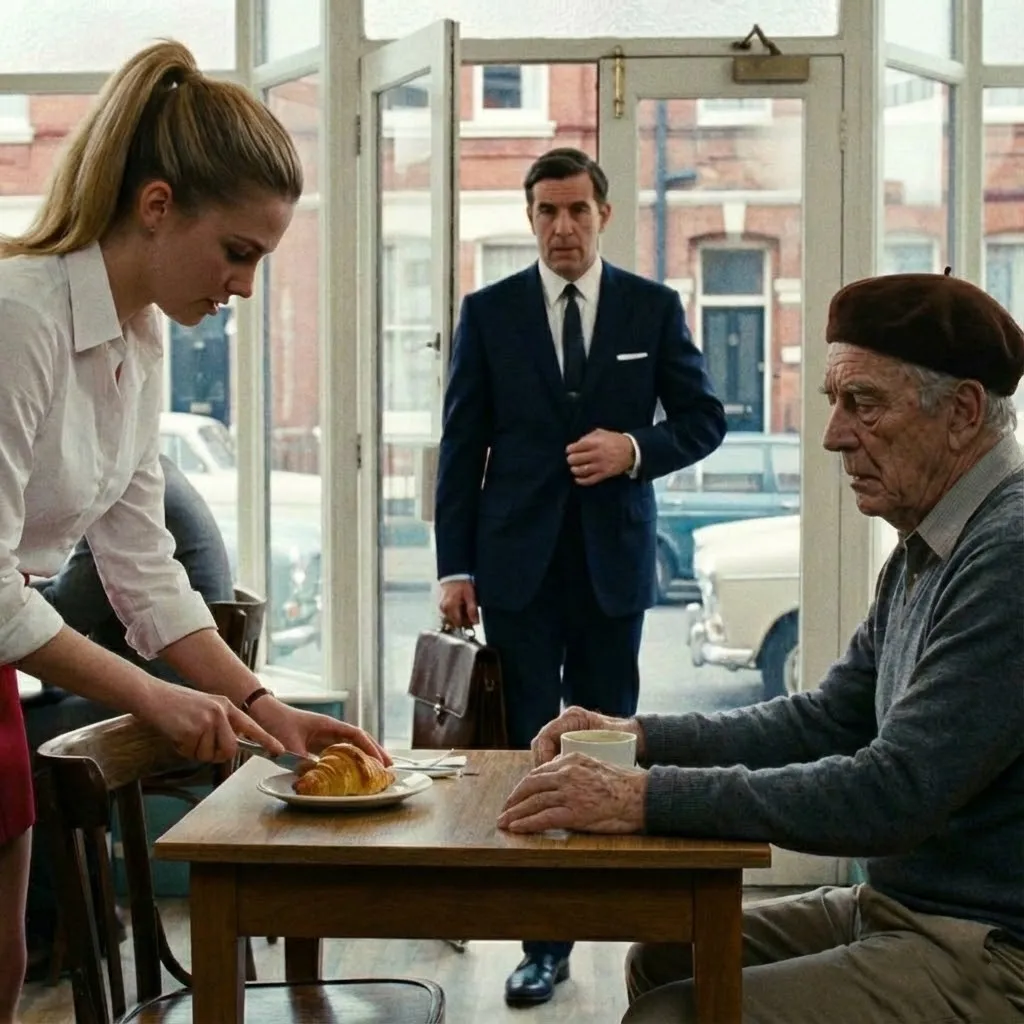
She wore her usual uniform, a cream blouse paired with a brown apron that hugged her frame, the sleeves rolled up just past her elbows to keep them out of the way. Her hands moved with practiced instinct, measuring grounds, steaming milk, and pouring water. Yet, despite the rhythm of her work, her eyes flickered toward the front door at exactly 7:10 a.m. It had become a silent ritual, a heartbeat in her morning routine, though she would never have admitted it aloud.
June was not a woman who craved noise or the bustle of crowds. She had always preferred the company of pages over parties, often spending her breaks scribbling quiet thoughts into a pocket-sized notebook she kept hidden in her apron. Once, she had dreamed of becoming a writer, of weaving worlds out of words, but when her mother fell ill, that dream had folded under the crushing weight of medical bills and the necessity of part-time jobs.
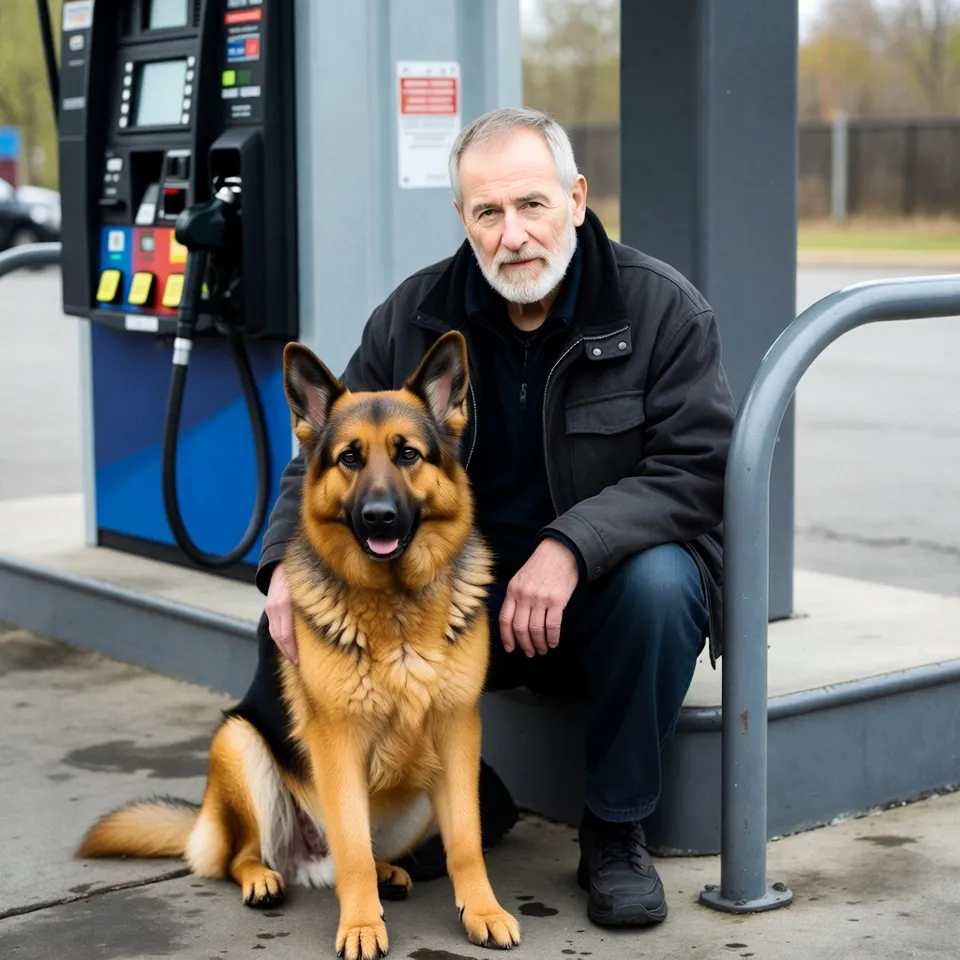
Now, she worked the early shifts at Maple and Steam, trading her paragraphs for pastries. At precisely 7:12 a.m., the bell above the door jingled with a familiar cheer, announcing the arrival of Martin Gale. Seventy-nine years old, thin, and slightly hunched, he was a figure of consistency, always clad in the same gray cardigan.
His shoes were scuffed and worn at the edges, and he wore a chestnut beret that was always tilted slightly too far back, lending him a touch of old-world charm. His eyes, though clouded now with the haze of age, still held a distinct light. “Morning, Mr. M,” June called out with a welcoming smile, her hand already reaching for the carton of almond milk.
“Morning, sunshine,” Martin replied, his voice rasping slightly with a morning hoarseness. “Chilly one today, eh?” June nodded toward the chair where he had once again left his scarf draped instead of around his neck. “Cold enough to need two scarves,” she teased gently. Martin chuckled and made his way to Table 3, situated by the east-facing window where the morning sunlight always found him first.
He never had to place an order. His drink—an almond milk latte, low foam, no sugar—appeared on the table before he could even reach for the menu. June always made sure to warm the cup beforehand.
He carried a small, leather-bound notebook with him everywhere. In it, he jotted down phrases, quotes, and snippets of conversation he overheard in the shop. “It’s for the book I’ll never finish,” he had said once, tapping the cover. “But if I stop listening, I might as well stop living.” June, in turn, had developed a habit of sliding tiny notes under his saucer. Hope your morning is golden, Mr. M. Your squirrel in the library story? Still giggling.
Table three is warmer when you’re here. Sometimes he would chuckle softly at the words. Other times, he would blink at the note with a look of wonder, as if it were the first piece of handwriting he had ever seen.
“June,” he would say, pausing mid-sip, “have I told you about my grandson, Aiden? Works in the city, architect, sharp as a tack, still single.” June would smile politely, wiping down the counter. “You might have mentioned him once or twice.”
“Oh, I think you’d like him,” Martin would grin, his eyes crinkling. “Good heart. Doesn’t always show it, but it’s there.” She never gave it much thought. To her, Martin was simply a sweet old man, lonely for company. Their chats were brief and familiar—sweet, but not deeply close. She viewed him as part of the shop’s rhythm, as essential as the ring of the door bell or the hum of the espresso machine.
Then, one Friday, the rhythm broke. 7:10 came and went. Then 7:15. June still made his latte, placing it faithfully on Table 3. By eight o’clock, the foam had collapsed, and the drink had gone cold.
June cleared the cup in silence, fighting off a creeping sense of unease. She told herself not to worry. Maybe he was under the weather. Maybe he had an appointment or had simply forgotten what day it was. But when Monday arrived and there was still no sign of Martin, the feeling in her chest grew heavier.
She realized she didn’t have his phone number, but she remembered a paper bag he had once left behind from the bakery down the street. Scrawled on the side was: Martin Gale, 241 Willow Street. That night, June sat alone in the back kitchen, the walls smelling faintly of spent coffee grounds and lemon cleaner. She flipped through her notebook until she found a small entry from weeks ago. Old man with stories, almond milk, always grateful, always forgets his scarf, makes the morning feel less lonely.
She read the line twice, her eyes lingering on the ink. Quietly, she whispered into the empty room, “If he never comes back, who finishes the story?”
The morning light had barely begun to stretch across the faded floorboards of Maple and Steam when the front door opened with a chime that felt strangely formal. June was behind the counter, wiping down the pastry case, her movements distracted. Her eyes flicked toward Table 3, which remained stubbornly empty. She almost missed the tall man who had just walked in.
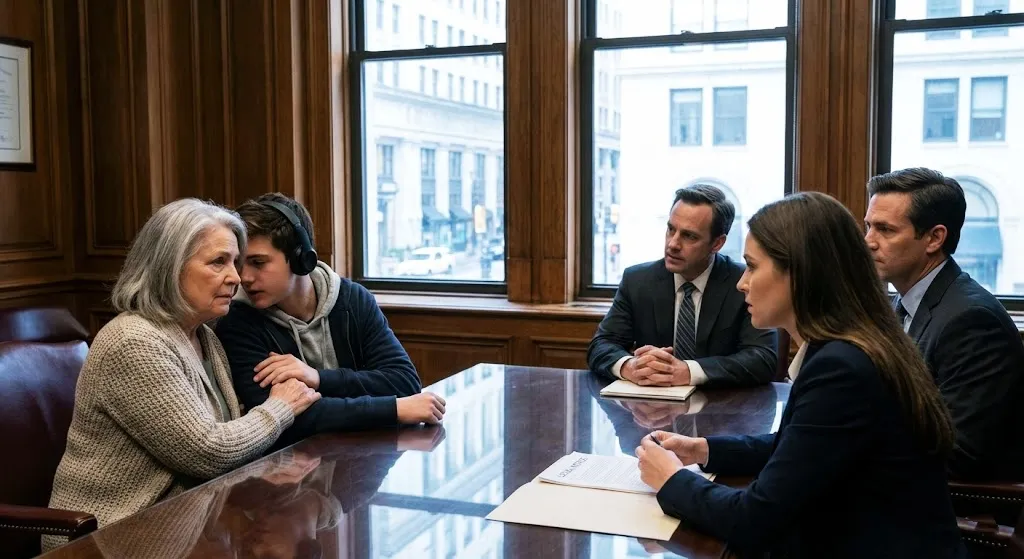
He wore a dark, tailored suit, and his expression was unreadable. Two men followed close behind him, carrying leather folders—lawyers, perhaps, but definitely not locals. June straightened up, wiping her hands. This was not the kind of crowd that usually frequented the shop, especially not before 8 a.m. The tall man’s eyes scanned the room before settling on her.
He approached the counter with a steady gait. “Are you June Ellison?” he asked, his voice calm. She nodded slowly. “Yes.” “I’m Aiden Gale. Martin Gale is my grandfather.” Something in the way he said the name made her breath catch in her throat.
Before she could reply, he reached into his coat pocket and pulled out a cream-colored envelope. Her name was written on the front in a slanted, shaky handwriting she recognized immediately. Mr. M. Aiden handed it to her without a word.
June opened the envelope, her fingers trembling slightly. Inside was a single handwritten page, the ink looping gently on the paper, sounding just like his voice. Dear June, thank you for making my mornings feel like more than just passing time. I no longer have the strength to walk to the cafe each day, but my heart still sits at Table 3. I have lived on memories, and you gave me new ones, more beautiful than many I’ve held for a lifetime. I do not have much to leave behind, but there is one small thing I want to give you, so that this place does not lose its soul. Mr. M.
June’s vision blurred with sudden tears. She looked up, stunned. One of the lawyers stepped forward, opening a folder. “Two months ago, Mr. Martin Gale quietly purchased this cafe. In the event that he could no longer attend, he requested that ownership and operations be transferred to Miss June Ellison.”
June blinked, processing the words. “No, I’m just a part-time waitress. I bring him coffee, that’s all.” Aiden nodded, his expression softening. “I thought the same, until he started telling me about you.” His voice held no drama, just a quiet conviction. “He talked about how you remembered his drink, the notes you left under the saucer, how you never treated him like someone old or broken—just human.”
“That meant more to him than I ever realized,” Aiden added. The cafe was still; no one else had come in yet. June held the letter tightly, her thoughts swirling with a mixture of gratitude, shock, and sorrow. As the lawyers moved aside to handle the paperwork, Aiden walked slowly around the shop. His eyes lingered on the framed photos, the mismatched mugs, and the sunlight warming the cushion at Table 3.
He sighed, looking around. “This place feels more like my grandfather than his house ever did.” June remained silent, her chest tightening not from the prospect of ownership, but from the immense trust Martin had placed in her. It was a quiet, deliberate trust.
When Aiden returned to the counter, he paused. “I know this is a lot, but if you’re open to it…” he hesitated, searching for the right words. “I’d like to help. Not take over. Just be here. For the cafe. For him.” It wasn’t a business pitch; it was something sincere and human.
June walked out from behind the counter and sat down at Table 3. The letter lay in her lap. Across from her sat a latte—almond milk, no foam—prepared out of habit. She whispered, “If you could still come, Mr. M, I think you’d scold me for crying in front of your grandson.” Then she looked up at Aiden, her voice calm. “I’ll keep the cafe going. And I think he’d be happy if his grandson came by for coffee once in a while.”
Aiden smiled—not a wide grin, but an honest one. That morning, June made two lattes. One for the man who always sat at Table 3, and one for the man who now stood beside it. Across the street, in a parked car, Martin Gale sat quietly in the passenger seat, watching through the cafe window. He smiled, his eyes warm. Another morning, a new beginning.
In the days that followed, the rhythm of the shop didn’t return to normal, not exactly. June still opened Maple and Steam every morning just before sunrise, but now she brewed two lattes instead of one. She still swept the same scuffed floor, adjusted the old chalkboard sign out front, and wiped the same smudge off the pastry case glass, but something had shifted.
There was a new presence in the cafe, and he always arrived at 7:10 sharp. Aiden Gale came in quietly, without fanfare. The suit was gone, replaced by a gray sweater, dark jeans, and rain-damp shoes. He always took the seat near the front window, directly across from Table 3, and he always ordered nothing, just nodding when June slid a coffee across the counter.
He rarely spoke unless spoken to, but he watched everything, his gaze calm and observant, taking in the small details. He noticed when a chair leg wobbled and fixed it before anyone sat down. He rebalanced the creaky coat rack. One morning, June walked in to find the flickering light in the hallway working perfectly again. She never asked, and he never explained.
Once, during a sudden downpour, June arrived early to find Aiden standing outside, soaked through, holding a clipboard. A repair truck was parked nearby. “You could have called,” she said, unlocking the door. “I didn’t want to wake you,” he replied, brushing rain from his hair. “The roofer was early, I thought I’d wait.” She said nothing, but later, she left a fresh towel by his usual seat.
June watched him closely in those first weeks. She wasn’t sure how to feel. Aiden was nothing like Mr. Martin. He didn’t tell stories, didn’t lose his keys, and didn’t chuckle at his own forgetfulness. He was sharp and composed, a man who carried silence like it was part of his wardrobe. But slowly, her unease gave way to something else.
One afternoon, as the cafe emptied out between the lunch rush and the evening lull, Aiden rolled up his sleeves and offered to help her clean the old display cabinet near the register. It had been gathering dust for months, filled with mismatched teacups, glass jars of sugar cubes, and a crooked framed photo of Maple and Steam from decades ago.
As they wiped down the shelves together, their hands sometimes bumped. They moved carefully, quietly. “Mr. Martin once said this cafe was like a music box,” June said softly. “That everything in here holds a memory, even the chipped mugs.”
Aiden didn’t laugh. He ran his thumb gently along the edge of a saucer and said, “Now I understand why he came here every day. It feels like something stays still here, even when everything else moves too fast.” June didn’t reply, but for the first time, she saw something in him—a stillness that mirrored hers. It wasn’t cold; it was just quiet.
They finished the cabinet in silence, the kind that felt more like companionship than awkwardness. That evening, after closing, June returned to the counter to clean. There, beside Aiden’s empty cup, was a folded napkin with a doodle of an unfinished architectural sketch. Below it, in her handwriting, was a note she had slipped under his saucer without saying a word. Wishing you a blueprint that draws itself perfectly today. Jay. It was the first note she had written to someone other than Mr. Martin.
She didn’t know what made her do it. Maybe it was the way Aiden had looked at the cafe like it was worth preserving. Maybe it was the way he fixed things without asking for thanks. Or maybe, just maybe, it was the way his presence never tried to fill the space Mr. Martin had left, but instead, quietly made room for something new. Either way, the days were no longer the same, and she wasn’t sure she wanted them to be.
The invitation came in the form of a phone call, one that surprised June more than it should have. “Would you come by for lunch this Saturday?” Mr. Martin’s voice was softer than usual, as if he were unsure he was allowed to ask. June hesitated only a moment. “Of course, Mr. M. I’d love to.”
That Saturday, she brought along a small paper bag tied with twine. Inside was a warm pear tart, slightly lopsided but made from scratch—his favorite. The morning sun followed her to Willow Street, where Mr. Martin’s brick house sat nestled behind ivy and maple trees just beginning to turn gold.
The moment the door opened, June was enveloped in the scent of old wood, faded books, and something like lavender. “You brought the whole morning with you,” Mr. Martin said, clasping both her hands and beaming. “My sunshine, June.”
His house was a time capsule. The living room held shelves full of books with yellowed pages. A vintage radio played classical music softly, and a framed black-and-white photo of a smiling young woman sat on the mantle. His wife, June guessed. A pair of slippers waited by a worn armchair. Everything had its place. Quiet, but not lonely. Not today.
In the kitchen, Mr. Martin insisted on making tea himself, though June offered to help. “Routine is what keeps me from floating away,” he chuckled, sounding a little out of breath. June set the tart on the table, sliced it carefully, and watched him take the first bite with closed eyes and a content sigh. They ate in peace, trading stories between sips of tea.
He asked about her mother. She asked about the woman in the photo. His eyes lit up. “Her name was Margaret,” he said. “She used to dance barefoot in the kitchen when the radio played.” June smiled warmly. “I think I would have liked her.” “She would have loved you,” he said simply.
Just as they finished, the front door creaked open. Footsteps echoed—slow, then faster. Aiden’s voice called out, “Sorry I’m late.” He stopped at the kitchen doorway, surprised to see June already there. Her sleeves were rolled up, her hair pulled into a loose twist. She sat cross-legged on the floor with Mr. Martin, folding paper boats, thin notebook pages scattered like leaves around them.
Mr. Martin looked up and waved a wrinkled boat. “Still remember how to do this, Aiden?” Aiden leaned against the doorframe, quiet. Something about the scene struck him deeply. The boats. The tea. June’s laugh echoing through a house that had been quiet for too long. “No,” he said softly. “But it looks like she does.”
Later, they moved to the porch, where the sun slanted low across the steps. Mr. Martin dozed in his chair, a blanket draped over his lap. June stood to leave but paused. She reached for the wool scarf Mr. Martin had kicked under the chair and gently wrapped it around his neck, tucking it neatly above his sweater. It was a small gesture, thoughtful and familiar.
Aiden noticed the way her fingers lingered a second longer, saw the look on her face—not pity or obligation, just care. The kind that comes from noticing, remembering, and being present. Something in his chest tightened, not painfully, but enough to make him go still. No one had done that since his grandmother, and he hadn’t even noticed the scarf had fallen.
June turned and caught him watching. She smiled, though it didn’t reach her eyes fully; she had no idea what she’d stirred. Aiden looked away and cleared his throat. “Thank you for coming,” he said, sounding a little too formal. She tilted her head. “He invited me. I just brought the tart.”
“No,” Aiden said, his voice softer now. “You brought something else.” He didn’t name it—maybe he couldn’t—but it lingered in the air as she walked down the steps, the sunlight catching in her hair like gold thread woven into a crown. Alone again, Aiden sat beside his grandfather, who stirred slightly and mumbled, “She’s got good hands, doesn’t she?” Aiden said nothing, but in his mind, something shifted. For the first time in a long while, the house didn’t feel so still.
Rain had been falling since late afternoon, steady and soft. By the time June finished cleaning Maple and Steam, the cafe was quiet, lit only by warm yellow light and the muted rhythm of raindrops drumming against the windows. She was wiping the last table when a knock startled her. Aiden stood outside, under the awning, slightly soaked despite the umbrella in his hand. His coat was damp, his hair tousled by the wind.
In his other hand, he held a paper bag, warm and slightly crumpled. “I figured,” he said with a slight smile as she opened the door, “you forgot dinner again.” June blinked at him for a beat, then stepped aside to let him in. He laid the bag on the counter and unpacked a container of steaming tomato basil soup, two soft rolls, and a silver thermos. “The lady at the deli said it’s the perfect pairing for a rainy night,” he added.
June let out a soft, surprised laugh. “Thank you.” They settled at her favorite table near the window. The world outside had blurred into mist and reflections. Inside, golden light pooled across the wooden table, and the clink of spoons against bowls was the only sound for a while.
Then June spoke, her voice low. “Did you always want to be an architect?” Aiden looked up. “Since I was eleven. I liked building things. Tree houses, Lego towers. I thought if I built something strong enough, it might stay.”
She stirred her soup gently. “I used to want to be a writer.” He raised an eyebrow. “Used to?”
“I haven’t written in years. I won a short story contest in high school, statewide. Thought it meant something. But then my mom got sick, my dad left, and bills needed paying.” She gave a small shrug. “Writing stopped.”
Aiden didn’t interrupt. He listened, fully and silently. She glanced down at her cup. “Some dreams don’t die. They just… wait. Quietly. Until life gives you space to hear them again.”
After a beat, Aiden reached into his coat pocket and slid something across the table. It was a plastic-wrapped newspaper clipping, old and yellowed but carefully preserved. June’s name was printed in bold beneath the headline of her award-winning story. June stared, stunned.
“I found it in my grandfather’s mailbox,” Aiden said. “Maybe he meant to give it to you. Maybe he didn’t know how.” Her fingers traced the edge of the plastic. Her throat tightened. “I… I don’t know what to say.”
“You don’t have to.” She looked up. Aiden wasn’t trying to impress her; he just wanted to show her something that mattered. It was thoughtful, quiet, and real. “Thank you,” she whispered, her voice catching.
Aiden leaned back slightly. “I used to think my grandfather pushed people away. When my dad left, I blamed him. Said it was because of the pressure, the coldness. I thought he was the reason things broke.” He paused. “But after coming here, I saw someone else. Through you.”
June stayed still, listening. “You never defended him,” Aiden said. “But every time you folded that handkerchief or left a note under his cup, I saw a man who mattered. A man worth remembering.” He lowered his eyes. “Maybe he didn’t know how to hold on to the people he loved, just like I didn’t.”
June didn’t answer with words. Instead, she reached for the teapot and poured him another cup. The silence that followed wasn’t awkward. It was warm, full. Their eyes met, and this time, neither looked away.
When the rain lightened, Aiden stood to leave. He lingered at the door a moment, then walked out into the fading drizzle. The next morning, June came in early to open the cafe. Everything was quiet until she reached Table 3. There, under Mr. Martin’s usual cup, lay a folded note. Simple, careful handwriting. Thank you for helping me see the man I thought I had lost. Aiden.
It was another rainy afternoon at Maple and Steam, the kind that made the wooden floors creak and the windows fog up with the heavy sigh of the season. June stayed after closing, humming softly to herself as she cleaned behind the counter. The lights had been flickering all day—just enough to be annoying, but not enough to feel urgent.
Still, something about the uneven glow above the register made her uneasy. She pulled a small stepstool closer and opened the old fuse box behind the bar. The wires looked tangled and dusty. She reached for the outlet underneath the counter, brushing her hand lightly against it.
A sudden jolt zipped through her arm. She yelped, stumbling backward and knocking into the coffee grinder behind her. Her heart pounded as she clutched her wrist, stunned more than hurt. But before she could regain her balance, a firm arm wrapped around her waist, pulling her away from the wall.
It was Aiden. He had just walked in and seen it happen. Without thinking, he had lunged forward, grabbing her and yanking her to safety, his own hand scraping against the exposed metal. They collapsed together onto the floor, breathless. June blinked, disoriented, then saw his hand—red and raw.
Her breath caught. “You’re hurt,” she whispered. “It’s fine,” he said, wincing slightly. “Just a burn.” “You didn’t have to—” she stopped, her voice cracking. “You didn’t have to do that.”
“I know,” Aiden said quietly, still catching his breath. “But I’m part of this place now, right?” Her lip trembled. Something in her cracked open. She reached for the first aid kit, but Aiden gently caught her hand. “You don’t have to fix it all alone,” he said. “Just sit here, that’s enough.”
So she did. On the cold tile floor, beside him, two souls beneath buzzing lights and the faint aroma of burnt coffee.
In the days that followed, things between them shifted, subtly but unmistakably. The next Saturday, June invited Aiden to visit Mr. Martin’s house with her. His face lit up more than she expected. They arrived mid-morning with groceries, gardening gloves, and a stack of books from the local library.
Mr. Martin greeted them with his usual warmth, his thin hands trembling as he clasped June’s. “You brought the sunshine with you,” he said. “And my grandson, too. What a rich morning this is.” They trimmed the bushes in the front yard while Mr. Martin sipped tea from the porch. Later, Aiden cooked scrambled eggs and toast, while June made apple compote the way Mr. Martin liked it. After lunch, the old man dozed off on his recliner, a book resting on his chest. June and Aiden sat in the quiet, sharing soft smiles—the kind that said more than words could.
Back at the cafe, something new had begun to bloom. Every morning, before June arrived, a small bouquet of fresh wildflowers would appear on Table 3. Next to it, a folded note written in careful handwriting: For Mr. M, from J and A.She never saw Aiden place them, but every time she walked in and found the table bathed in golden light, the flowers gently leaning toward the window, she would smile softly, as if holding a secret between her and the morning.
There were no grand gestures, no dramatic confessions, only small things—like how he refilled the sugar jars without being asked, or how she left him a napkin on his table every Friday with a note that read: May your designs be solid, and your coffee stronger. No one else noticed. But they did. And that was enough, for now.
It was a quiet Friday afternoon when the bell above the cafe door chimed with a sharper note than usual. June glanced up from the register, wiping her hands on her apron, expecting the usual—maybe a regular, maybe a new traveler passing through town. Instead, a tall woman stepped in, poised and elegant, dressed in a tailored navy coat and heels that were not quite made for the worn wooden floors of Maple and Steam.
Her perfume followed her in, too crisp for the soft scents of cinnamon and old books that filled the cafe. June watched as the woman’s eyes swept the room with practiced ease before landing on the corner table.
“Aiden,” the woman called, smiling. He looked up from his laptop. Surprise flickered across his face, followed by something unreadable. He stood, walked toward her, and they embraced—brief, familiar. They sat down. Their voices didn’t carry at first. But when June passed by with a tray of croissants, she heard fragments.
“Still can’t believe you’re here.”
“Neither can I.”
“This place, it’s… different. Not what I pictured you falling in love with.”
Then a soft laugh from the woman. “Then again, maybe I’m looking at the reason.”
A glance was cast in June’s direction, measured and smiling, but with a flicker of something else behind the eyes. “The blonde behind the counter?” she said, her voice velvet-edged. “She’s the reason, isn’t she?”
June didn’t stop walking, but her heartbeat shifted. Her grip tightened slightly on the tray. Later that afternoon, the woman left with a final wave. Aiden returned to his seat but didn’t open his laptop again. And June, for the first time in weeks, did not ask if he wanted a refill.
The days that followed were quieter. June still brought his coffee just the way he liked it, but there were no notes, no soft jokes, no shared stories. She stopped meeting his eyes. She turned down his offer to walk her home when it rained again.
And Aiden noticed. He lingered longer at the doorway, hesitated before speaking, and checked the clock every morning, hoping she’d meet him with the old warmth. But it didn’t come. And he didn’t know how to ask why.
One evening, Mr. Martin asked Aiden to stop by. He handed him a weathered envelope, yellowed at the corners. “I wrote this for your father,” he said. “But I never sent it.”
Aiden opened it in silence. It wasn’t long. But every line struck deep. I demanded too much. Meant well, but gave little room for who he was. I wanted a legacy, not a life. He left, and I called it rebellion. But truth was, I didn’t know how to hold on without squeezing too tight. Between being right and being kind, I chose wrong too many times.
Aiden sat still for a long while. When he finally looked up, his voice was thick. “You regret it.” Mr. Martin nodded. “I see that now,” Aiden whispered. “And I don’t want to live with that same weight.”
It was raining again the next day. A soft, steady autumn rain. June was closing when she heard the bell. Aiden stood in the doorway, soaked, his hair dripping into his eyes, a small object in his hand. He walked forward and opened his palm.
It was Mr. Martin’s handkerchief, neatly folded. The one June had pressed into the old man’s hands morning after morning. “I never understood why you kept folding it,” Aiden said, “why you tucked it into his coat, even when he forgot it.” He placed it on the counter between them. “You helped him feel remembered. You helped him feel held.” Then, his voice softer, “You helped me see who he really was.”
June swallowed hard, her eyes glistening. “You used to keep him warm,” Aiden added. “Maybe now it’s my turn to hold on to what matters.” There was no grand confession, no plea. Just one gesture, one soaked man, one folded cloth. June reached for the handkerchief, holding it to her chest. Then she looked up, the rain streaking the windows behind him, tears glinting in her lashes. And she smiled—just a little, just enough.
The sun filtered through gold and amber leaves, casting a honeyed glow over the quiet town. The soft rustle of paper banners and the scent of fresh coffee mingled in the crisp autumn air. Behind the Maple and Steam cafe, a small wooden door creaked open, revealing a newly built extension. The sign above read in hand-painted cursive: Mr. M’s Reading Room.
Inside, the space was warm and inviting. Wooden bookshelves hugged the walls, stacked with novels and journals. A long reading table stretched down the center, flanked by mismatched chairs. In one corner sat a writing desk and a collection of ink pens. Near the window stood a shelf of free coffee mugs and a carafe labeled: Pour, Sit, Read, Repeat.
June stood near the doorway, her hands clasped. She wore her usual cream blouse and brown apron. But today, a pale scarf was tied around her neck—soft wool, like something a certain old man might have forgotten. Aidan approached her quietly. “They’re waiting for your story,” he said with a smile.
In the center of the room, inside a glass frame, was a single typed page titled: The Man at Table 3 by June Ellison. A small card beneath it read: Memories don’t live in photos. They live in where you sat, with whom, and when.
A few minutes later, the cafe buzzed with quiet joy. Locals wandered through the new space, sipping coffee and thumbing through books. Lisa, a little girl in a pink dress, dashed in with a bakery box in her hands. “I brought apricot muffins for Mr. Martin,” she chirped.
At Table 3, he was already seated. Mr. Martin looked thinner, his frame more fragile. But his eyes were bright, sparkling the way memory can bring life to old bones. He smiled as Lisa climbed onto the chair beside him. “Thank you, young lady,” he said, his voice raspier but no less warm.
June and Aidan joined them. For a moment, the world stilled. Sunlight slanted through the window, painting gold on the floor. Outside, leaves fell like blessings. Inside, four people sat at Table 3: the man who remembered, the girl who helped him do so, the man learning how to hold on, and a child who would someday grow into stories of her own.
Later, as the sun dipped low, Aidan reached into his coat pocket and pulled out a small black box. June blinked, half nervous. “Is that…?” He chuckled. “No, not that.”
Inside was a silver fountain pen, elegant, aged, and newly polished. He offered it to her. “I know you’ve got more stories to write. Maybe this helps start the next one.” June looked up at him, puzzled and smiling.
He leaned in, his eyes gentler than she’d ever seen. “You helped this town rewrite what mornings feel like. You helped me rewrite what I thought family meant.” His voice softened. “I won’t promise forever—that’s not how I live anymore.” She nodded slowly. “But I do promise, if you brew the coffee tomorrow, I’ll be sitting right here, waiting to read the next page.”
Her lips quivered, then curved. Tears gathered again, but this time, they were joyful. She laughed, a sound light and real, and whispered, “Then you better bring a blank notebook.”
He laughed too, and they sat back, shoulders touching. Outside, the wind rustled the turning trees. Inside, the world felt healed. It wasn’t a fairy tale, but it was enough. It was real. It was a cup of coffee in autumn, warm, quiet, and just right.