It all began with a simple, quiet desire to do the right thing. If only for my own peace of mind.
That morning, Anisa Malinina woke up with a clear and firm resolution. Today. It had to be today.
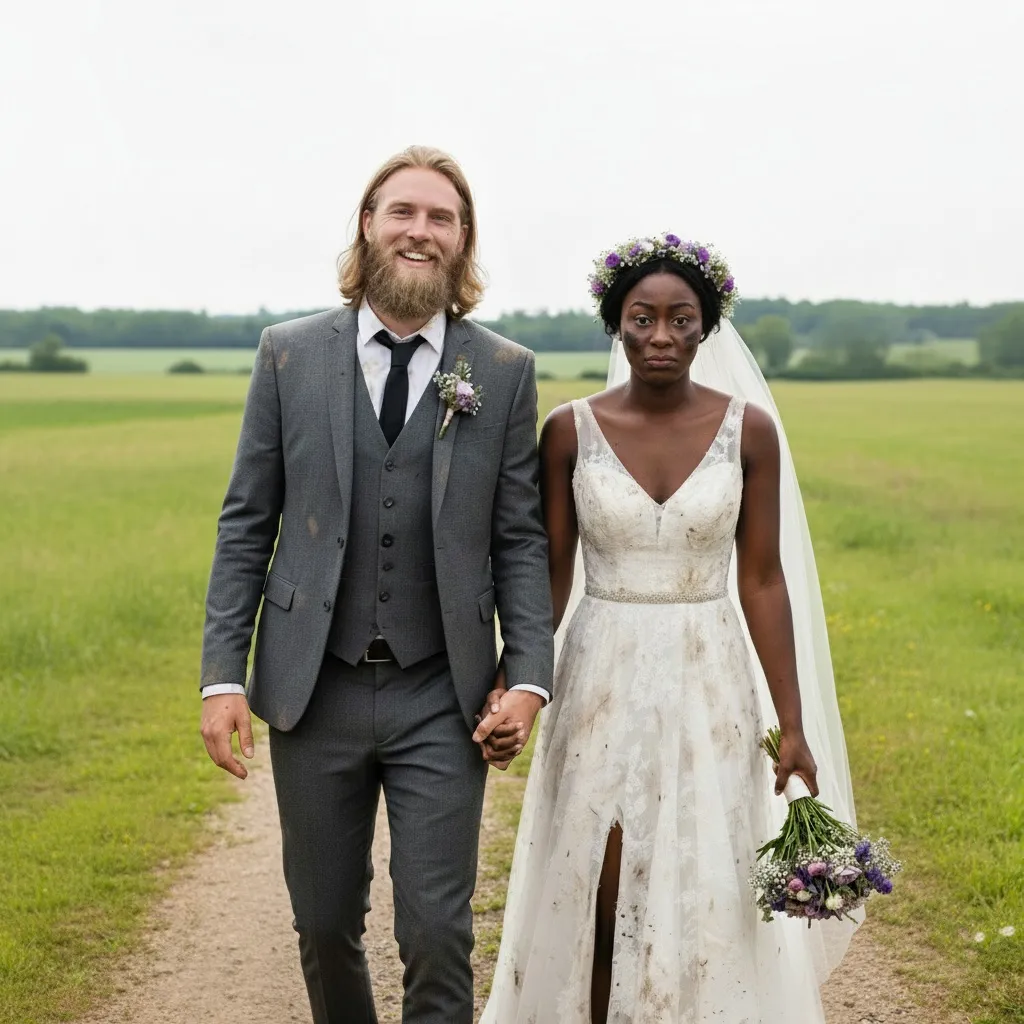
Five years. The date felt significant, almost like an anniversary. Five years since her husband, David, had become a widower.
Five years since his first wife, Kira Dobrynina, had died in a car accident. Over breakfast, David was his usual self, a little distracted, his mind already filled with blueprints and construction projects. He stirred sugar into his teacup, gazing out the window at the grey morning light.
Anisa watched his hands—strong, capable, an engineer’s hands—and felt the familiar mix of tenderness and a faint, lingering sadness. She was his second wife, his quiet harbor after the storm. That’s what he had called her.
And she had believed him. “Do you have a busy day at the factory?” he asked, not turning his head. “Yes, the usual,” Anisa replied.
The lie came easily, because it was only half a lie. There was always plenty to do at the sewing factory she managed. She needed to inspect the new cutting department and meet with suppliers for materials.
“I might be late.” “Alright. Don’t overwork yourself.” He finally looked at her, and in his eyes was that same caring expression that had made her fall in love with him in the first place.
She didn’t tell him where she was really going after work. This was her private affair, her own self-imposed ritual. David never spoke of Kira.
Not a word. There were no photographs in the house; her things had long been given away or thrown out. It was as if he had surgically removed that part of his life, leaving behind only a neat but noticeable scar. He never visited her grave.
At least, not in Anisa’s presence. He said it was too painful, that he wanted to remember her alive. Anisa never pressed him.
She understood that everyone grieves in their own way. But for herself, she had decided this was something she had to do. Not for David.
Not for the dead woman she had never known. But for herself. To finally close that invisible door.
She had taken another woman’s place, and even though she had done so honestly, two years after the tragedy, she still felt like she was living in a house where one room was forever locked. By placing flowers on her grave, it was as if she could say, “I am here. I respect your past.”
“Now, I am the one who takes care of him.” It felt like the right, the mature thing to do. The workday flew by in a blur of activity.
Phone calls, invoices, disputes with workshop foremen, the smell of fabric and machine oil. Here, at the factory, Anisa was in her element. She was Anisa Malinina, the director, a person of respect.
Here, everything was logical, governed by rules and schedules. Here, there was no room for the ghosts of the past. But the thought of the trip ahead was like a splinter in her mind, and she kept glancing at the clock.
At five o’clock, she dismissed her secretary, gathered her papers into her briefcase, and left her office. Instead of heading home, she turned onto the main street and stopped at a flower shop. Inside, it smelled damp, with the sweet, heavy scent of roses.
A young shop assistant looked at her with curiosity. “Can I help you find something?” “I need white lilies.” “For a special occasion? A wedding?” “No,” Anisa replied curtly.
“Just a bouquet.” She chose five large, almost wax-like blooms on long stems. The girl wrapped them in simple, unadorned craft paper.
After paying, Anisa stepped back outside. A cold wind immediately tried to snatch the bouquet from her hands. She held the flowers tighter against her grey coat and walked to her car.
The drive to the old city cemetery took about twenty minutes. She drove slowly, as if postponing the moment. The city faded behind her, industrial landscapes giving way to a neighborhood of private homes, and then just open fields.
The cemetery was on the outskirts, on a small hill exposed to all the winds. She parked her car by the massive cast-iron gates and got out. The silence was deafening.
Only the wind rustled in the bare branches of old trees, and a crow cawed somewhere in the distance. Anisa had never liked cemeteries. They emanated a sense of hopelessness and oblivion.
She didn’t know the exact location of the grave. David had once, right at the beginning of their relationship, mentioned that the Dobrynin family plot was near the entrance, under a large birch tree. Anisa walked along the main path, peering intently at the rows of headstones.
There were old, tilting crosses, overgrown with moss. New ones, made of shiny black marble, with laser-engraved portraits. With every step, a strange feeling grew inside her.
It was as if she were an intruder here, an impostor on forbidden territory. The bouquet in her hands felt out of place, almost offensive. And then she saw it.
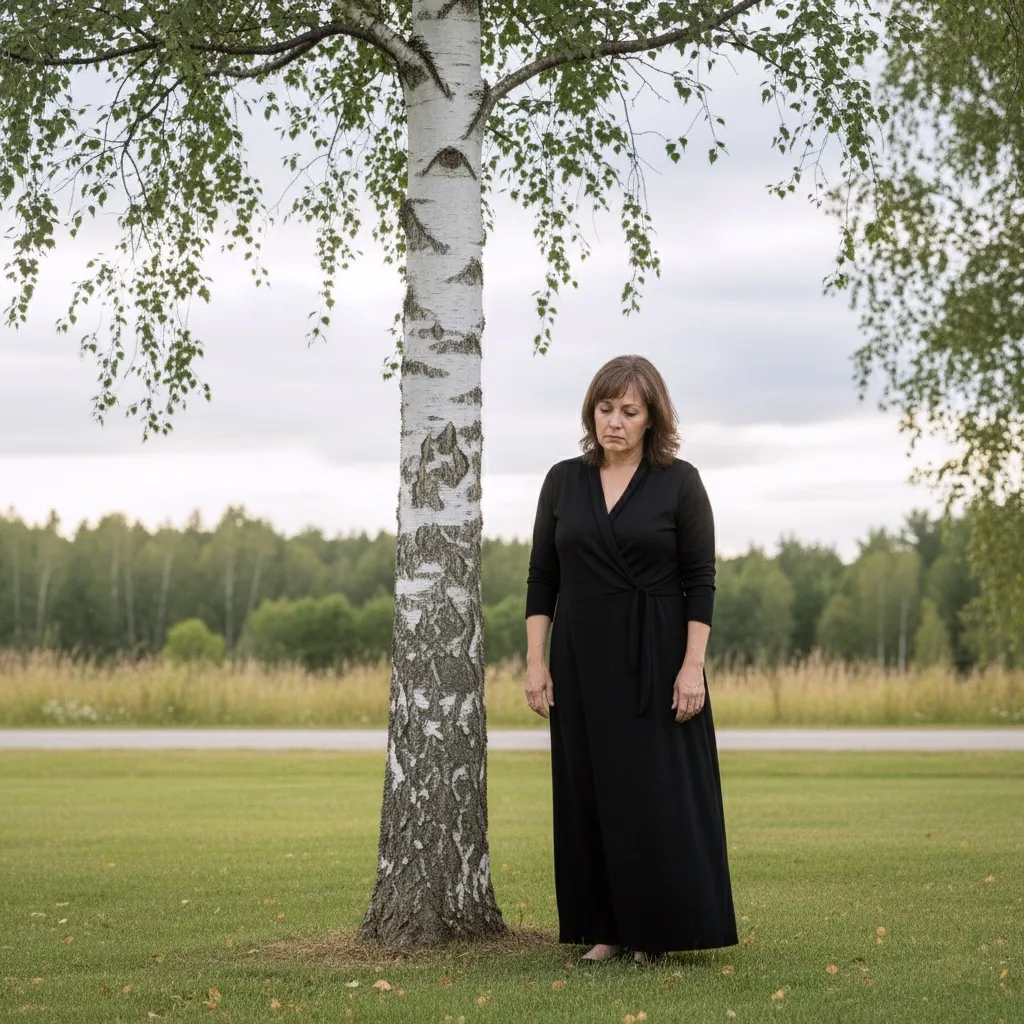
A large, sprawling birch tree, its white bark standing out against the dark earth and grey stones. Beneath it were several graves, enclosed by a single, low fence. The Dobrynin plot.
Anisa slowed her pace. Her heart began to beat faster. Kira’s grave was the one at the end, the newest.
That was immediately clear. A well-tended mound, neatly edged with turf. And a large headstone, made from a single piece of grey granite.
Simple, severe, without any frills. Only three words were carved into it: Dobrynina Kira Igorevna. “And dates,” Anisa whispered to herself, stepping closer.
The feeling of anxiety intensified, turning into a cold, hard knot in her stomach. Something was wrong. She couldn’t quite grasp what it was.
Everything looked too well-kept. Too new. For a grave that was five years old.
There wasn’t a speck of dust or a fallen leaf on the ground, even though the area around it was carpeted with the birch tree’s golden leaves. It was as if someone had tidied it up just yesterday. She forced herself to take the final step.
She reached out to place the flowers on the cold granite. Her gaze slid over the numbers carved into the stone. First, the name. Then the date of birth.
It all matched what David had told her. And then—then her eyes stumbled upon the second date. The date of death.
The blood in her veins ran cold. Anisa blinked. Then again. No, she couldn’t be mistaken.
The numbers were carved clearly and deeply. She read them again, her lips moving soundlessly. She had expected to see a year that was five years in the past.
But the stone held a different truth. It bore a date from the previous week. Exactly seven days ago.
The world tilted. The air left her lungs with a soft hiss. Anisa staggered back.
Stumbling over some invisible obstacle, her fingers went limp of their own accord. The bouquet of white lilies fell to the ground, and the heavy, waxen flowers landed with a dull thud, scattering across the cold, muddy earth at the foot of the headstone. She didn’t remember getting back to her car.
Her legs moved on their own, mechanically, while her mind tried to reject what her eyes had seen. She sat behind the wheel but didn’t start the engine. Her hands, resting on the steering wheel, trembled finely.
She stared straight ahead, at the grey crosses and bare tree branches, but all she could see were the numbers carved in granite. Last week. A lie.
It had all been a lie. Five years of mourning, of grief, of sympathy—all of it built on a foundation of deceit. The man she shared a bed with.
The home, the life. He had lied to her. He had been lying from the very first day they met.
A wave of icy rage rose inside her, so powerful it stole her breath for a moment. She had to do something. She couldn’t just drive away.
This madness, this absurdity, demanded proof. Otherwise, she wouldn’t believe herself; she’d think she’d lost her mind right there on that soggy ground. With a shaking hand, she pulled her phone from her bag.
Her fingers fumbled, missing the camera icon several times. Finally, she managed to tap it open. Anisa got out of the car and, not feeling the icy wind that cut through her coat, walked back to the grave.
She walked quickly, almost running, afraid the inscription would change, vanish, evaporate like a bad dream. But it was still there. Clear, merciless, real.
Anisa raised the camera, trying to steady her hand. She took one picture. Then another, a close-up, focusing only on the name and the dates.
And one more, a wider shot of the headstone beneath the birch tree, with the scattered white lilies, already touched by mud, at its base. Evidence. She returned to the car, slammed the door, and locked it.
Only then did the tension release her. Her body was seized by a tremor that came not from the cold, but from deep within. She sat like that for about ten minutes, staring at the phone’s screen, at the photograph that was dismantling her entire life.
Then she started the engine and drove home. Home, to the apartment that had suddenly stopped feeling like her own. She drove on autopilot the whole way, not noticing traffic lights or other cars.
One thought hammered in her head: why? Why was it necessary to lie about this? If Kira had only just died, where had she been all these five years? And why had David kept up the lie? What had really happened? The questions multiplied, each more terrifying than the last, and there were no answers for any of them. When she entered the apartment, David was already home. He was sitting in the kitchen reading a newspaper; something was bubbling cozily in a pot on the stove….