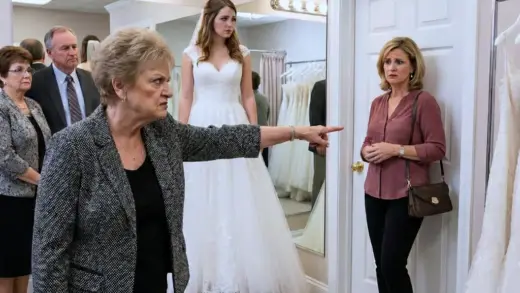
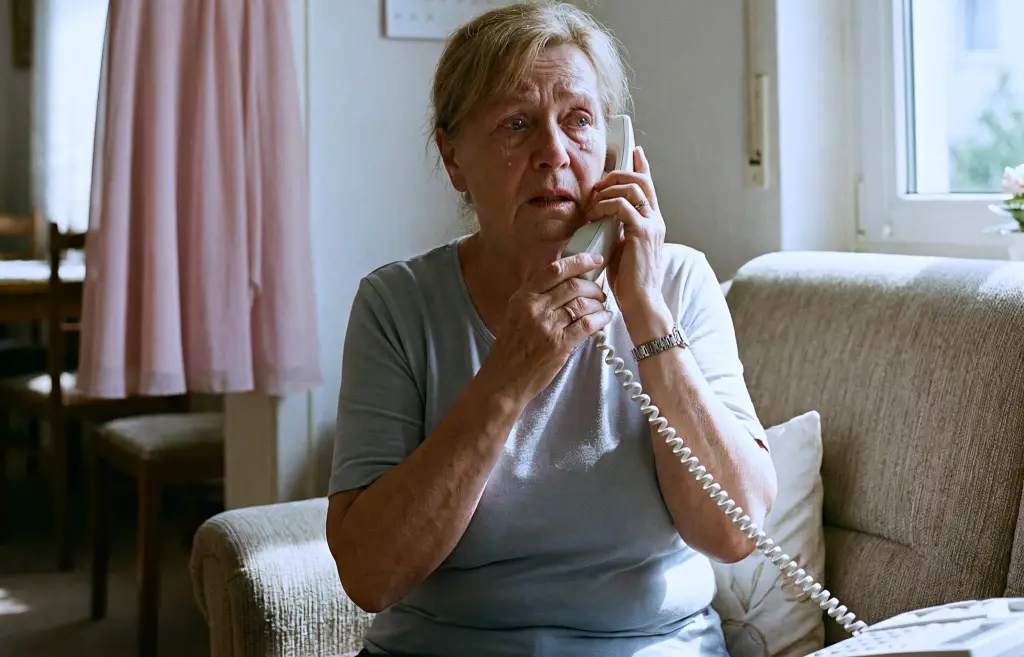
When I picked up the phone to ask my son, Max, about the date of his upcoming nuptials, it was actually my daughter-in-law, Lena, who answered. She looked me metaphorically right in the eye through the receiver and said with a chilling, cheerful smile in her voice, “Oh, we already got married yesterday. We only invited special people.” The words hit me like a bucket of ice water dumped over my head in the middle of winter.
Special people. The phrase echoed in my mind. I, who for three years had diligently paid their monthly rent of $500, bought every single piece of furniture sitting in their house, and filled their refrigerator whenever they were too broke to eat, was not considered a “special person.”
I stood there frozen in the living room of my own home, gripping the phone as if it suddenly weighed a thousand pounds. In my mind’s eye, I could see my son avoiding my gaze while Lena made herself comfortable on the sofa I had paid for. The pale pink dress I had carefully selected for their wedding hung uselessly in my closet, alongside a new pair of shoes and the shattered illusion of being part of the most important day of my only son’s life. I had spent $200 on that dress, smiling to myself as I imagined how nice I would look in Max’s wedding photos—photos in which I would never appear.
For weeks, I had been planning every detail. I had quietly set money aside to present them with a $1,000 wedding check. I had even called my sister, Diana, all the way in Chicago to share the good news. I had scrubbed my house from top to bottom, foolishly thinking they might come over to celebrate with me after the ceremony. All of that collapsed in a single second with those four poisoned words: only special people.
Max finally came to the phone, and in a rehearsed, hollow voice, he said, “Mom, it was an intimate thing, very small, just the two of us and the witnesses.”
But I knew it was a lie. I saw the photos on social media later that evening. I saw Lena’s parents proudly posing next to the bride and groom. I saw her siblings toasting with champagne. I saw Lena’s white dress, which I had helped finance with the $800 I had given her just last month for her “personal expenses.” I saw everything I wasn’t supposed to see.
A week later, exactly seven days after that humiliation, Lena called me. Her tone was completely different this time. She was no longer the confident, dismissive woman who had excluded me from her wedding. Now, she sounded desperate, almost pleading.
“Renate, the rent is overdue,” she said. “The landlord is pressuring us. He says if we don’t pay this week, he will kick us out. You forgot to make the transfer.”
Her voice trembled slightly, as if the world were ending. I remained silent for a few seconds, letting the air hang heavy between us. I remembered all the times I had rushed to the bank to make that transfer. I thought of all the times I had canceled my own plans to ensure they had a roof over their heads. I thought of the beans and rice I had eaten for dinner so I could give them money for their desires. And now, after they had excluded me from the most important moment of their lives, they had the audacity to call me as if nothing had happened.
“Lena,” I said with a calmness that surprised even me. “Didn’t I warn you that I only help special people?”
The silence on the other end of the line was so deep I could hear the thumping of my own heart. For the first time in years, it was not I who was trembling, but her.
“Renate, I don’t understand,” she stammered. “We were always special to you. You’re like a second mom to me.”
Lies. All lies. It was wrapped in that sweet voice she only used when she needed something. It was the same voice she had used to ask me for money for the wedding dress, for the honeymoon, for the rings—all of which I had helped finance without knowing I would never see the ceremony where they were exchanged.
For so many years, I had lived with this constant feeling of walking on eggshells. I weighed every word, every gesture, and every gift, hoping to receive just a crumb of affection from my own son. I was the perfect mother, the obliging mother-in-law, the silent provider who never protested when they treated me like I was invisible. But that phrase, only special people, awakened something in me that had been dormant for far too long.
I had already calculated in my head how much money I had spent on them in those three years. Between rent, food, gifts, emergencies, and whims, it was over $20,000. That was money I had taken from my retirement, from my savings, from the funds my late husband had left so I could live my last years in peace. And what was it all for? To be treated like a stranger on my own son’s wedding day.
That night, after I hung up, I sat on my bed and cried. But they weren’t tears of sadness. They were tears of anger, of accumulated frustration, of years of silently endured humiliation. I cried for all the times they made me feel that my love was a burden, my presence a hindrance, and my money the only thing I had to offer. I cried for the foolish mother I had been, for the woman who had lost herself trying to be indispensable to those who considered her dispensable.
When I woke up the next morning, something inside me had changed. It was not just the pain of betrayal; it was something deeper, colder. I stood up and looked at myself in the bathroom mirror. I saw the same tired eyes as always, the same wrinkles that told stories of years of giving love without getting it back. But there was something else in my gaze—a hardness I didn’t recognize, a determination that had been buried under years of compliance.
I went to the kitchen and made coffee, just as I had every morning for forty years. But this time, I didn’t think about calling Max to ask how he had slept. I didn’t check my phone in anticipation of a message from him apologizing for the previous day’s humiliation. For the first time in a long time, I was my own priority.
I sat at the table where I had so often planned surprises for them, counted bills for their expenses, and cried silently when they treated me with indifference. Now, this table would be a witness to something completely different. I took out my checkbook and my bank statements, and I started to do the math. I wanted to see, in exact numbers, the extent of my own foolishness.
Monthly rent of $500 multiplied by 36 months was $18,000. Food and supplies, approximately $200 a month, was another $7,200. Birthday gifts, Christmas gifts, anniversary gifts—at least $3,000. Lena’s medical emergencies came to $800. The car loan they never paid me back for was $2,500. The air conditioner repair in their apartment was $600. The living room furniture was $1,200.
The total came to $33,400. That was the exact sum of my generosity.
I stared at the number. $33,400. I had wasted that amount from my husband’s inheritance, from my pension, from the savings I had put aside penny by penny for decades of honest work. All that money thrown out the window to keep two adults comfortable who couldn’t even pretend to respect me.
The phone rang, and I saw Max’s name on the screen. Normally, my heart would have pounded as I ran to answer, hoping he would finally apologize and explain that everything had been a misunderstanding. But this time, I let it ring. Once, twice, three times. Finally, it fell silent, and I continued drinking my coffee as if nothing had happened. Ten minutes later, it rang again. This time, it was Lena. I let it ring, too.
Then a text came from Max: “Mom, please answer. We need to talk.” I deleted the message without replying.
At two o’clock in the afternoon, I decided to go for a walk. I hadn’t done that in months without a specific purpose, without an errand related to them. It was always the bank for transfers, the supermarket to buy them something they needed, or the pharmacy for Lena’s medications. Today, I went for a walk just because I wanted to. I walked past the park where I had often taken Max as a child. I remembered that sweet boy who hugged me tight and said I was the best mom in the world. When had he become this man who treated me like an ATM with feelings? When did I start confusing love with money? When did I start to believe I had to buy my own son’s affection?
I arrived at the bank where I had so often made automatic transfers and stopped in front of the door. The branch manager, Mr. Klein, saw me through the glass and waved. I had known him for years. He had processed every one of my transfers to Max and Lena. He had watched my account drain month after month to fill theirs.
I went inside and walked directly to his office. “Mr. Klein,” I told him, “I need to cancel the automatic transfers I have programmed.”
He looked at me, surprised. For three years, these transfers had been as regular as the sunrise. “Are you sure, Mrs. Richter? Did something happen?”
His concern was genuine—more genuine than any interest Max had shown in me in recent months. “What happened is that I finally opened my eyes,” I replied. “I want to cancel everything, and I also want information on how to protect my accounts. I don’t want anyone else to have access to my money.”
While Mr. Klein processed the cancellations, my phone didn’t stop ringing. Max, Lena, Max again. It was as if they had developed radar to detect when their source of income was in danger. I turned the phone off completely.
“Mrs. Richter,” Mr. Klein said as he handed me the papers, “I apologize for intruding, but in all these years, I have seen you be very generous with your family. I hope you are not being pressured to make these changes.”
His words touched me deeply. This man, who barely knew me beyond bank transactions, showed more genuine concern for my well-being than my own son. “I’m not being pressured, Mr. Klein. On the contrary, I have finally stopped pressuring myself.”
When I left the bank, I felt strangely light, as if I had left an enormous burden in that office. For the first time in years, my money was entirely mine. I had no financial obligations to people who saw me as a resource instead of a person.
I went home and thought about all the things I hadn’t done to please Max and Lena. The trips I hadn’t taken to save money for them. The friends I no longer saw because I was always available for their emergencies. The hobbies I had given up because every dollar I spent on myself was one dollar less for their needs.
When I got home, I found three cars parked in front of my door: Max’s, Lena’s, and one I didn’t recognize. I could see movement inside my house through the windows. My blood ran cold. They had keys. I had given them keys because I trusted them, because I thought they would one day take care of me just as I had taken care of them.
I took a deep breath before opening the door. It was time for the first real confrontation of my new life.
I opened the door to my house and saw a scene I will never forget. Max was sitting on my sofa with his head in his hands. Lena was pacing back and forth like a caged animal, and an older man I didn’t know was going through papers on my dining table. My papers. My personal documents.
“What is happening here?” I asked in a voice that sounded louder than I expected.
All three of them looked at me as if I were the intruder in my own house. Lena was the first to speak, and her voice had that desperate urgency I had already heard on the phone. “Renate, thank God you’re here. We need to talk. Mr. Fisher is from the law firm we consulted about your situation.”
“My situation?” The question came out of my mouth with a calm that surprised me. “What situation? I’m doing perfectly fine.”
Max finally lifted his head and looked at me with those eyes that once belonged to an innocent child and now only reflected financial panic. “Mom, we went to the bank, and they told us you canceled all the transfers. Mr. Klein explained that you also blocked our access to your accounts. We don’t understand why you did that.”