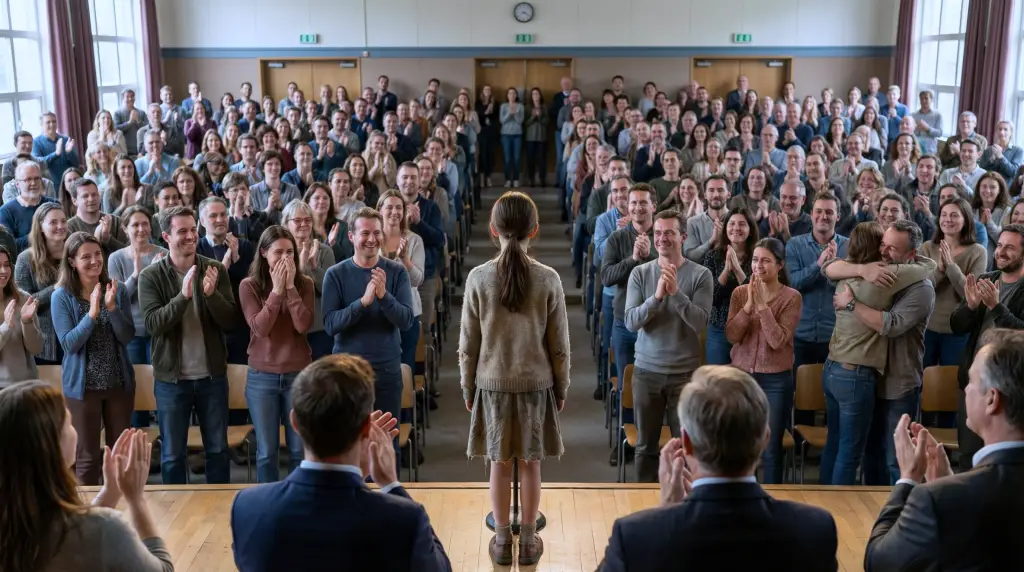
In the sprawling, dusty outskirts of Lubbock, Texas, where the horizon seemed to stretch on forever, a worn-down trailer park sat baking under the relentless southern sun. Here, amidst the patchwork of rusty tin roofs that glimmered with a harsh, metallic heat, lived a twelve-year-old girl named Sophie Lane.
Her mornings did not begin with the luxury of sleeping in or the frantic joy of picking out cute outfits like the other girls in her class. Instead, Sophie’s day started in the dark, quiet hours of 5 a.m., waking not to play video games, but to the reality of labor.
She would rub the sleep from her eyes and head out to help her mother, Joanne, clean the small local bakery where they worked part-time. Joanne was a thin woman, her frame whittled down by years of hard work, yet she possessed a wiry, undeniable strength. She often paused amidst the smell of yeast and floor cleaner to tell her daughter, “You don’t have to be rich to live kindly.”
Sophie didn’t have many friends; in fact, she mostly walked through her days as a ghost. Her old school uniform, visibly patched at the seams where the fabric had given way, and her shoes, scuffed and worn down at the heels, made her an easy, glaring target for the teasing that plagued the hallways of Winslow Elementary.
She usually sequestered herself in the back row of the classroom, quiet and reserved, trying to make herself as small as possible. Yet, for those who looked closely, her brown eyes always held something deep and resonant, as if they carried songs she only dared to hum within the safety of her own mind.
The rhythm of her invisible life was interrupted one Monday morning when the principal’s voice crackled through the static of the PA system.
“Welcome to Talent Week,” the voice announced, booming off the linoleum floors. “If anyone would like to sign up to perform, please add your name to the list outside the office by Wednesday. Auditions will be held Thursday, and the showcase is Friday night.”
The classroom instantly buzzed with kinetic excitement. Students turned in their seats, whispering and boasting. Some kids bragged loudly about performing trending TikTok dances, while others made plans to play the piano or bring in their drum sets.
Sophie, as always, stayed silent, her eyes fixed on her desk. But that night, the atmosphere in the trailer changed. After washing the dishes with her mother, the suds warm on her hands, Sophie sat listening to an old cassette tape her mother had recorded of lullabies years ago.
The magnetic tape hissed softly, carrying the melody of a simpler time. Sophie picked up a pencil, the wood feeling heavy in her hand, and wrote her name on a small slip of paper.
She whispered to the empty air, “I’ll sing that song.”
Then, turning to her mother, she added, “Mom, the one you used to sing when I was sick… Scarborough Fair.”
The next day, Tuesday, she stood still in front of the bulletin board outside the school office. The hallway was a river of noise, but Sophie felt a singular, terrifying focus. Her hands trembled as she reached out. The signup list was already long, filled with confident scrawls and bold letters.
With a deep breath that rattled in her chest, she wrote her name on the very last line: Sophie Lane, singing.
Less than ten minutes later, the inevitable giggles echoed down the hallway.
“Sophie signed up to sing?” a voice sneered, dripping with amusement. “Must be a comedy act.”
“Maybe she’ll sing through a rice cooker,” another chimed in, followed by a chorus of cruel laughter.
Sophie heard every word. They landed like stones, but she didn’t cry. She just lowered her head, shielding her face, and walked away, clutching the little notebook where she had neatly written the lyrics in her tilted, careful handwriting.
That evening, the trailer was quiet. Her mother found her practicing alone in her room, her voice shaky but possessing a clarity as pure as a spring thaw on the wind.
Joanne quietly opened the door, said nothing, and eventually sat down beside her daughter on the edge of the bed.
“You know,” she said softly, her eyes distant, “I once dreamed of standing on a stage, too. But then Grandma got sick, and I had to leave school to take care of her.”