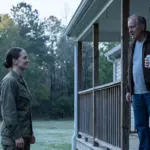
The silence stretched, thick and suffocating. But as I stood there staring at the two men who shared my blood, the pieces of the puzzle rapidly snapped together in my mind. This betrayal was not a sudden accident or a spur-of-the-moment lapse in judgment. They had not merely stumbled into this catastrophic theft; they had orchestrated it. They simply had not planned it with a fraction of the intelligence they believed they possessed.
The warning signs had been flickering for three long months. I had been stationed in Okinawa, navigating the halfway point of a standard six-month rotation. Shore duty was far from glamorous—it consisted mostly of towering stacks of administrative paperwork and deeply ingrained routines—but it offered a rare predictability, which was a profound luxury in the Marine Corps. I had dedicated my quiet off-hours to calling home, relentlessly checking on my property to ensure the winter pipes had not burst and that the foundation remained secure.
I had owned that beautiful piece of property for eight years. I had purchased it entirely by myself immediately following my second deployment, aggressively scraping together every last cent I had saved from my hazard pay. I had poured my soul into that structure, renovating it room by grueling room on my own dime. I spent countless midnight hours tearing up decades-old, rotting carpets and painting the drywall until the skin on my palms was raw and blistered. That house was supposed to be my ultimate stability. It was my anchor in a chaotic world. It was my guaranteed future.
Yet, during every single phone call home throughout that overseas rotation, the atmosphere had felt undeniably wrong. My father would answer the receiver sounding incredibly irritated, speaking to me as if my weekly check-in was a massive inconvenience interrupting something of vital importance. Chad—the family’s eternal, exhausting project of “finding himself”—had predictably moved back into our father’s place after being terminated from yet another entry-level job. Whenever I gently pressed my father on what steps Chad was taking to regain his footing in the world, Dad would instantly throw up a defensive wall.
“He just needs a little time,” my father would lecture me over the crackling international line. “He is working on it. Don’t be so judgmental, Maria.”
Through the receiver, I would frequently catch the clattering of unwashed dishes in the background, or the low murmurs of voices I did not recognize. On one specific occasion, I distinctly heard someone in the same room yell out, “Did she send the money yet?” before the line was abruptly disconnected two seconds later. I had forced myself not to overanalyze it. I desperately tried to grant them grace. After all, I had spent the entirety of my adult life absent from their daily orbit, relentlessly training, deploying, and moving from military base to military base. I had convinced myself that I simply no longer understood the domestic rhythm of life back in Washington.
But two weeks before my scheduled homecoming, a message had arrived that should have served as my definitive warning. It was a shockingly brief text message from my father.
“Call us before you come home”
There was no punctuation at the end. No context. No explanation. I had stood in the sweltering island humidity, staring blankly at the glowing screen for a long time, feeling that distinct, icy twist in my gut that every Marine intimately understands. It is the primal, biological instinct that screams that the environment is wrong, that an ambush is quietly lying in wait. But duty hours at the command center had been absolutely relentless that week. By the time I finally secured a quiet moment to dial his number, the call had gone directly to an automated voicemail. I tried twice. Both times, silence.
I had rationalized it away, telling myself it could not be a genuine crisis. My commercial flight was already booked. My hard-earned leave was officially approved. I was going to be home soon enough to handle whatever minor drama they had concocted.
And now, here I was. Standing motionless in my own driveway, staring deeply into the eyes of the people who were supposed to be my unconditional protectors, realizing with crystal clarity that they had liquidated the roof over my head to magically erase my older brother’s crushing debts. I did not possess the specific, verified details of the financial disaster just yet, but I did not need to. I could see the suffocating guilt swimming in the corners of their eyes, masked thinly by the sheer shamelessness in their rigid posture.
My brother lifted his aluminum beer can toward me once again, performing a grotesque pantomime of celebrating a hard-won victory.
“Don’t look so shocked, sis,” Chad sneered, entirely unbothered. “You were gone. Dad had power of attorney. Easy process. You’ll get over it.”
I felt the dense muscles in my jaw tighten until my teeth ached, but the cold smile never wavered from my face. If anything, the corners of my mouth curled upward even further.
“Is that what he told you?” I asked softly, keeping my volume dangerously low.
My father’s graying eyebrows knitted together in a display of profound confusion.
“What is that supposed to mean?” my father demanded.