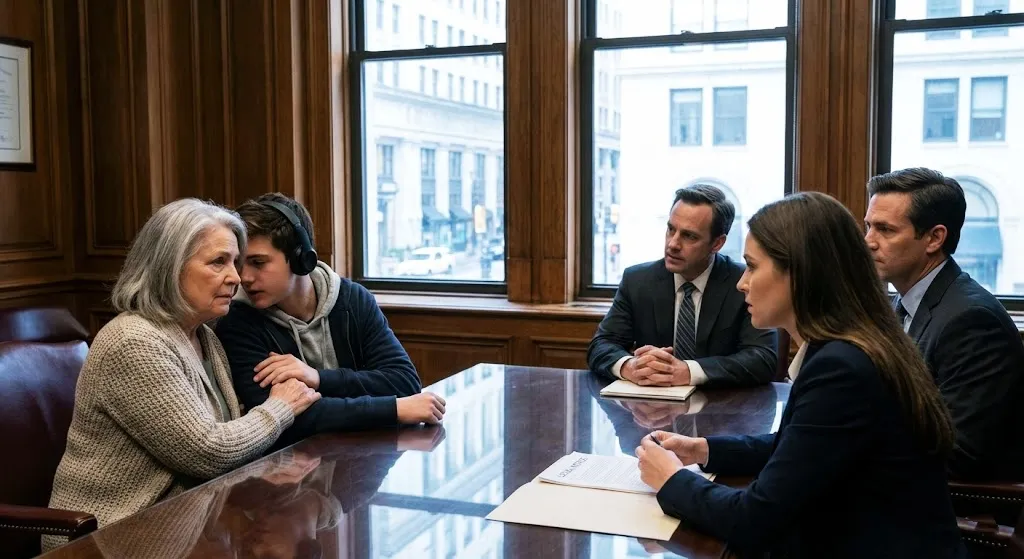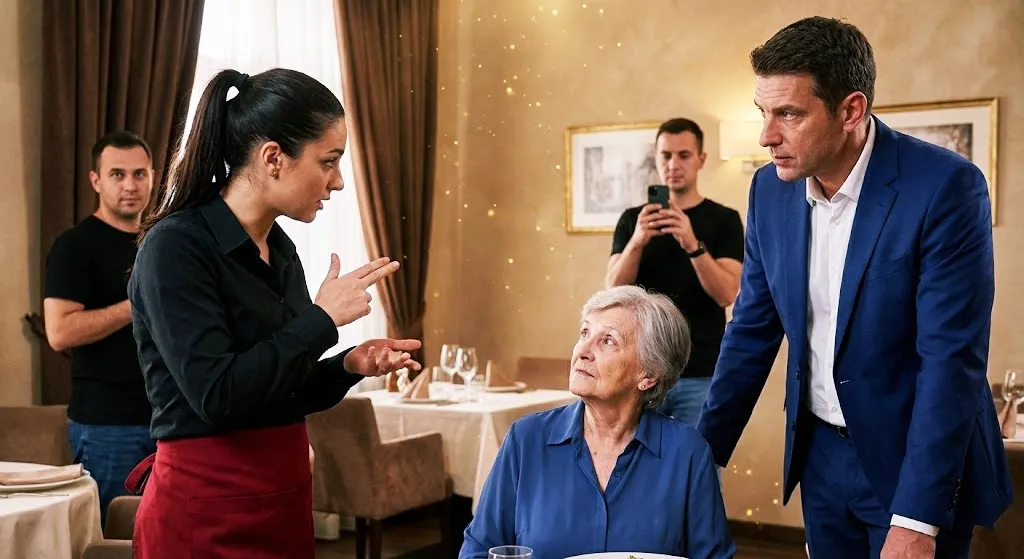
Angela took a breath. “Your boys aren’t statistics, Mr. Grant. They’re not case studies or data points. They’re children. And children deserve someone who sees them, not their diagnosis.”
Andrew felt heat rise in his chest. “You think you know better than doctors who’ve studied this for decades.”
“I think I know that giving up on a child is the only way to ensure defeat.”
Silence. Andrew’s hands were shaking. From anger or something else, he couldn’t tell.
“You’re filling their heads with false hope,” he said quietly. “When this doesn’t work—and it won’t—they’ll be devastated.”
Angela looked at him for a long moment. Something shifted in her eyes. Not pity. Something deeper. “They’re two years old, Mr. Grant. They don’t know what false hope is. They only know what they feel. And right now, they feel someone believing in them.”
She paused. Maybe for the first time. Her words hit him like a physical blow.
Andrew opened his mouth. Closed it. Angela turned back to Adam, kneeling beside his wheelchair.
“You hired me to care for them,” she said softly, not looking at Andrew. “That’s what I’m doing.”
She resumed the leg movements. Gentle. Patient. Consistent.
Andrew stood there, watching her ignore him. His mind screamed to fire her. Right now. Call the agency and have her replaced by morning. But his feet wouldn’t move. Because deep down, in a place he’d locked away, a voice whispered something he didn’t want to hear.
What if she’s right?
Andrew turned and walked out. He didn’t say another word. But he didn’t fire her either.
That night, Andrew couldn’t sleep. He sat at his desk with a termination letter open on his laptop. The cursor blinked at the end of the first sentence. Patient and unforgiving.
Dear Miss Bailey, effective immediately. Your services are no longer required.
He’d written those words eleven times before. Different names. Same outcome. His fingers knew the rhythm. Type the letter. Call the agency. Sign the paperwork. Move on. But tonight, his hands wouldn’t cooperate.
Andrew stared at the screen until his eyes ached. Then he minimized the document and pulled up the security footage. The house was quiet. Lights dimmed. Everyone should have been asleep hours ago. But the therapy room camera showed a soft glow coming from inside. Angela was still there.
Andrew leaned closer to the monitor. She sat on the floor in the center of the room, cross-legged, surrounded by three wheelchairs arranged in a half-circle. A small lamp on the shelf cast warm shadows across her face.
On the screen, Angela rubbed the back of her neck, rolling her head to relieve the stiffness of sitting on the floor for hours. She looked exhausted—human, finite—but she didn’t leave. The boys were supposed to be in their medical beds by now. The night nurse should have transferred them an hour ago. But there they were, still with her.
Angela wasn’t doing exercises, wasn’t following any protocol. She was just sitting with them, humming a melody Andrew didn’t recognize. Something old and gentle, like a song passed down through generations. Andrew turned up the volume. Her voice came through the speakers, soft and clear.
She reached up and touched Philip’s hand where it rested on his armrest. Didn’t grab it, just laid her fingers over his. “You did so good today,” she whispered. “I’m so proud of you. Do you know that? I’m proud of you.”
Philip’s fingers curled slightly—just a small movement, but intentional. Andrew’s throat tightened. Angela held his hand for a long moment, then moved to Eric. She adjusted his blanket, tucking the edges around his small legs, even though it didn’t need adjusting. Her hands moved with such gentleness, such care, like he was made of something precious.
“Sweet boy,” she murmured, smoothing his hair back from his forehead. “You’re so much stronger than anyone knows. I see it. Even if they don’t, I see it.”
Eric’s eyes were closed, but Andrew noticed his breathing had changed. Slower, calmer, the way a child breathes when they feel safe. Then Angela turned to Adam, the smallest of the three, the one who kept his eyes shut most of the day, like the world was too much to take in. Angela lifted his tiny hand and pressed it against her cheek. Her eyes closed, and her face tightened for a brief second, as if she were remembering a loss of her own.
“I see you,” she whispered. “All of you. Every piece. You’re not broken, baby. You’re just waiting. And I’ll wait with you, as long as it takes.”
A tear slipped down her cheek. Andrew stared at the screen. This woman, this stranger. She was sitting in his house at eleven o’clock at night, crying over his sons, talking to them like they understood, like they mattered. When was the last time he’d done that? When was the last time he’d just sat with them—not as a worried father calculating costs, not as a man reviewing therapy reports—just as their dad, just being present? He couldn’t remember.
The realization hit him like a fist to the chest. Andrew closed the laptop slowly. The termination letter sat unfinished in its window, waiting. He should send it. Logic demanded it. Angela was dangerous. She was filling his sons with hope that would shatter them. She was defying doctors who’d studied these conditions for decades. She was breaking every rule he’d established to protect his family.
But another voice spoke, quieter, deeper. What if she sees something you stopped looking for?
Andrew stood up and walked to the window. The garden sat dark below, moonlight catching the edges of untrimmed hedges. He thought of Sarah. What would she say if she could see him now, see what he’d become? A man who watched his sons through screens, a man so afraid of losing more that he’d stopped being present for what remained. She would hate this. She would hate him….