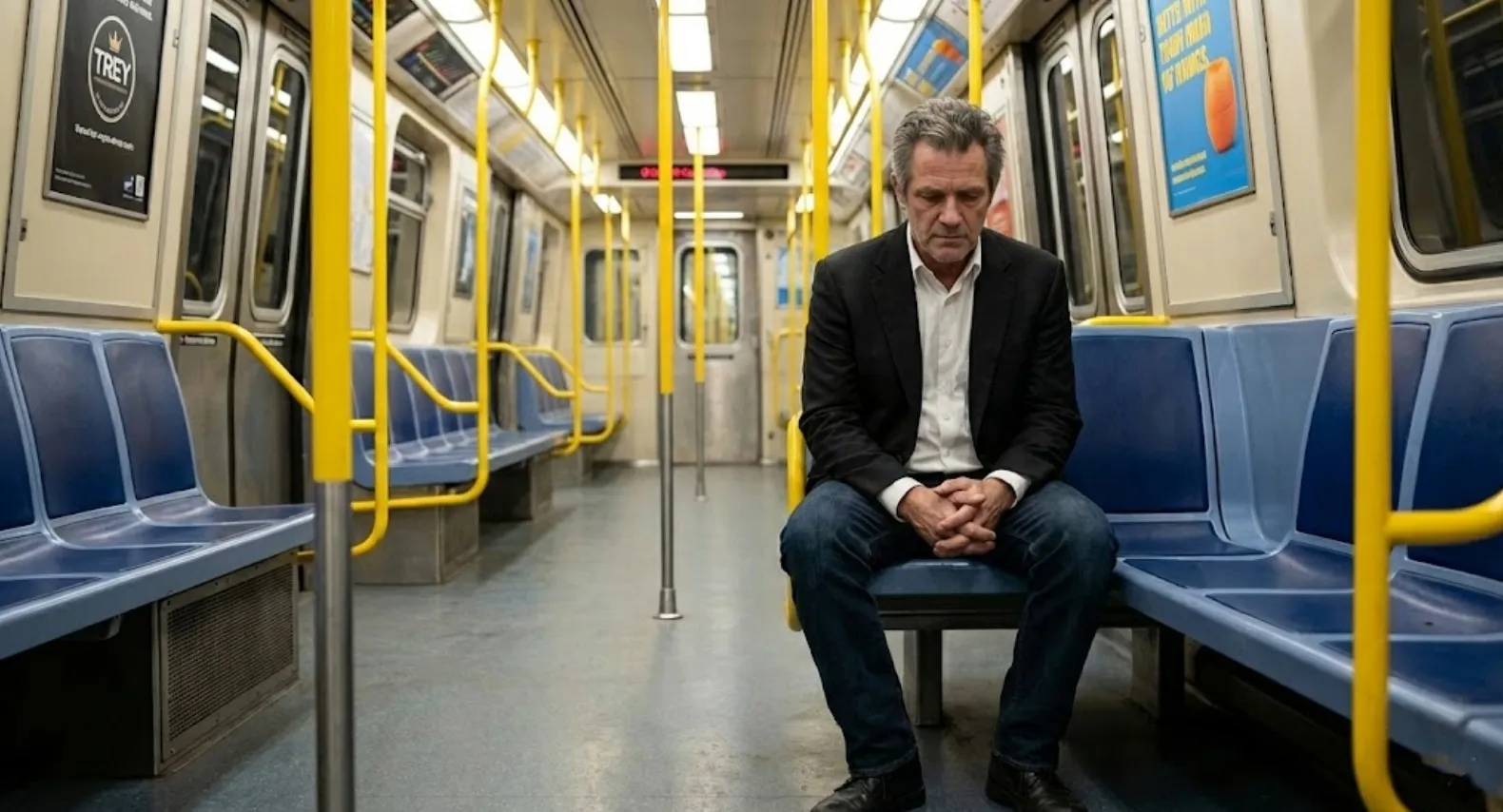
Andrew didn’t sleep that night. Or the next. He wandered his house like a ghost, passing rooms he’d stopped entering years ago: the formal dining room where he and Sarah had planned to host holiday dinners, the sunroom where she’d wanted to read while the boys played, the nursery with the yellow walls and the animal mural she’d painted herself. He opened that door for the first time in 18 months. Dust covered everything. The three cribs still stood in their half-circle, a mobile of stars and moons hung motionless above them. Sarah’s rocking chair sat in the corner, a folded blanket draped over its arm. Andrew stood in the doorway, unable to step inside. This was supposed to be their life. He closed the door and walked away.
Friday morning, he skipped his office entirely. Instead, he sat in the hallway outside the therapy room, back against the wall, listening. Angela was inside with the boys. He could hear her voice through the door.
“That’s it, Philip. Just like that. See? Your legs know what to do. We just have to remind them.”
Andrew closed his eyes.
“Eric, baby. Look at you. You’re holding that toy so tight. You’re so strong.”
His throat ached.
“Adam, sweet boy. You watching your brothers? You’re learning, aren’t you? Taking it all in.”
Andrew pressed his palms against his eyes. What had he done? For two years, he’d hidden behind screens and spreadsheets. He’d paid people to love his sons because he was too broken to do it himself. He’d accepted their limitations as permanent because accepting defeat was easier than fighting for hope. And all the while, his boys had been waiting. Waiting for someone to see them. Angela saw them. A stranger saw what their own father had been too blind to notice.
Andrew heard laughter through the door. Small and breathy, but real. One of the boys. Maybe Philip. Maybe all three. His heart cracked. He should be in there. He should be the one making them laugh. He should be the one moving their legs and holding their hands and telling them they could do impossible things. But he didn’t know how anymore. Sarah had taken that part of him when she died.
Andrew stood up slowly. His legs felt weak. He walked back to his office, but he didn’t turn on the monitors. Instead, he sat at his desk and stared at the photo he kept in his drawer. Sarah. Eight months pregnant. Glowing. Her hands rested on her belly, and she was looking at the camera with so much hope it hurt to see.
“I’m sorry,” Andrew whispered. “Sorry for giving up. Sorry for hiding. Sorry for letting fear win.”
He put the photo back and opened his laptop. Not to watch footage this time. He searched for pediatric neurologists. Specialists in early intervention. Therapists who believed in neuroplasticity. He made a list of names. Phone numbers. Emails. If Angela could do this much in four weeks with nothing but faith and consistency, what could happen with real support? Real resources? Real belief? Andrew stared at the list. For the first time in two years, he felt something stir in his chest. Not quite hope. But close. Something like possibility.
He closed the laptop and stood up. It was almost afternoon. Almost time for the boys’ rest period. Almost time. Andrew took a breath. He wasn’t ready to walk into that room yet. Wasn’t ready to face what he’d become or what he’d failed to be. But maybe tomorrow. Maybe tomorrow he’d try.
He didn’t know that tomorrow would change everything. That in less than 24 hours, he’d open his phone and witness something that would bring him to his knees. That his whole world was about to shatter and rebuild itself in a single moment. But for now, Andrew sat in his quiet office, holding the smallest seed of belief. And somewhere down the hall, Angela was teaching his sons to walk.
Thursday afternoon. Andrew sat in his office, laptop open, reviewing quarterly reports for his company. Numbers blurred on the screen. He couldn’t focus. His mind kept drifting to the therapy room. It was almost three o’clock. Angela would be finishing the boys’ afternoon exercises. He’d watched the routine so many times he had it memorized. Music first, then motor pattern training. Then the reaching exercises.
His phone buzzed. Motion alert. Living room.
Andrew frowned. The boys were supposed to be in the therapy room at this hour. He picked up his phone and opened the security app, expecting to see Angela moving them for a snack or a change of scenery.
The image took a moment to register. Three wheelchairs sat against the wall. Empty.
Andrew’s heart hammered against his ribs. His first thought was panic. Something happened. An emergency. The nurse had to rush them somewhere. Then he saw them. Center of the living room. Hardwood floor, gleaming in the afternoon light. Philip. Eric. Adam.
Standing.
Andrew’s breath stopped. His three sons. His paralyzed sons. The boys the doctors said would never stand. They were upright, wobbly, shaking. But standing on their own two feet.
Angela knelt in front of them, about five feet away. Her arms stretched wide open. Tears streamed down her face.
“Come on, babies,” she whispered. “Come to me. You can do it. One step.”
Andrew couldn’t breathe. Philip moved first. His small foot lifted from the ground. Hovered. Then landed again. An inch forward. A step. Andrew’s hand flew to his mouth.
Eric went next. More cautious. His legs trembled violently. But he moved. One foot. Then the other. Two steps. A sound escaped Andrew’s throat—something between a gasp and a sob.
Adam. The smallest. The one who kept his eyes closed. He stood there. Shaking. Arms out for balance. Angela reached toward him.
“You can do it, sweet boy. I’m right here.”…