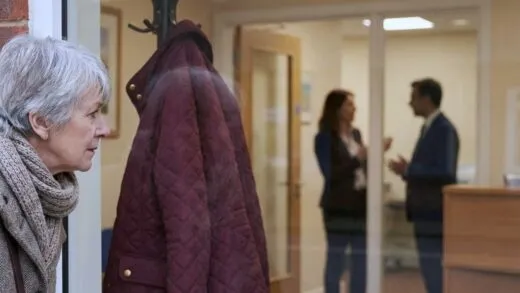
Linda stared at the document for a long moment, then snatched the pen and signed with a sharp, angry stroke. The mediator collected the papers.
“Thank you,” she said. “We’ll finalize this.”
As we stood, my father lingered. “Can we talk?” he asked me quietly.
I shook my head. “Not today.”
Linda walked past us without a word, her heels echoing down the hallway, each step heavy with something like defeat. Outside, the air was cool and clear. I took a breath and felt something loosen inside me—not relief exactly, but completion.
I hadn’t won. I had concluded. And sometimes that was better.
The silence afterward was unfamiliar. It wasn’t the awkward kind that followed arguments or the brittle quiet that settled over a room when someone refused to apologize. This was different.
It was clean and unoccupied, like a space that had finally been cleared of furniture you never chose in the first place. I returned to base two days later. The drive was long, stretching through flat highways and early morning fog.
I kept the radio off. I wanted to hear my own thoughts, to test how they sounded now that I wasn’t constantly defending myself inside my head. They were quieter.
My father sent one message that week. Just a few words: I hope you’re okay.
I didn’t respond. Not because I was angry—anger would have required energy I no longer wanted to give—but because the message was incomplete. Hope without accountability was just another form of avoidance.
I had spent years filling in gaps for him. I was done doing that. Linda didn’t reach out at all.
I learned later, through a relative who still thought updates were helpful, that she was telling people I’d become cold. She said that the military had changed me and that I’d turned money into something ugly. I let her have that story.
People like Linda needed narratives. They needed to be wronged, misunderstood, and diminished by forces beyond their control. I didn’t need to correct her.
Anyone who mattered had already seen enough. What surprised me most was how little I missed the house. I’d expected grief, nostalgia, or a sense of loss for the place where I’d grown up.
But when I thought about it, the house I missed hadn’t existed for a long time. Not since my mother died. Everything after that had been a version edited by someone else.
On my first free weekend back, I drove to the cemetery. It was quiet, the grass trimmed neatly, the headstones catching the afternoon light. I brought nothing with me—no flowers, no prepared words.
I didn’t need them. I stood in front of my mother’s grave and told her the truth.
“I handled it,” I said softly. “I didn’t let them take what wasn’t theirs.”
I thought about the girl I’d been when she died, how desperate I’d been to keep things together. I thought about how willing I’d been to disappear to make space for other people’s comfort. I wished I could tell her that it hadn’t been weakness.
It was just youth and love misdirected.
“I learned how to say no,” I said, “and how to mean it.”
The wind moved through the trees, gentle and steady. For the first time in years, I didn’t feel like I was waiting for permission to breathe. Life settled into a new rhythm after that.
My finances stayed exactly where they belonged. My name stayed off everything that wasn’t mine. The fraud file was closed, marked resolved.
The folder labeled Evidence went into storage, untouched but available. It wasn’t a threat, just a reminder. My father tried once more a few months later, a voicemail this time.
He sounded tired, older. “I should have protected you,” he said. “I didn’t. I’m sorry.”
I listened to it twice. Then I archived it. Apologies didn’t rebuild trust; they acknowledged damage after it was done.
I wasn’t cruel enough to deny him the chance to reflect, but I wasn’t obligated to resume a relationship just because he finally understood the cost of his silence. Some lessons arrived late. That didn’t make them my responsibility.
The military gave me structure. My mother gave me values. And this experience—unwanted, exhausting, necessary—gave me something else entirely: boundaries.
Not walls, not punishments, just clear lines drawn with intention. I didn’t walk away with satisfaction. There was no victory lap, no dramatic sense of triumph.
What I gained was quieter than that. I gained ownership of my life. I gained the understanding that respect didn’t require permission and that being difficult was sometimes just another word for being unwilling to be used.
Most of all, I learned that family wasn’t defined by access. It was defined by care. And care, real care, never needed to be extracted.