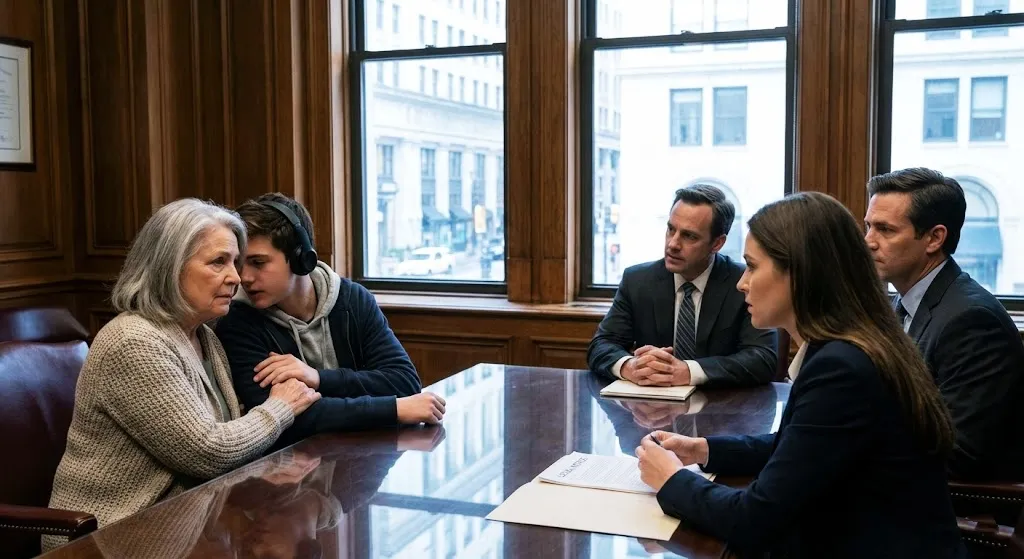
He remembered his own childhood, one filled with hardship, and feared a repeat of that life for these children. So, in the morning, he took them to the nearest hospital, which is where the next chapter of their lives began. One family, seeing a notice about the found infants, felt they couldn’t just look away.
They were a middle-aged couple, Carlos and Sofia, who had been dreaming of a child for many years. Carlos ran a successful real estate business, while Sofia managed charitable projects. Their home was enormous and luxurious, looking like something straight out of a glossy magazine.
Fine art adorned the walls, and fixtures made of rare materials cast a soft light. They adopted one of the infants, confident they could give him everything his little heart could possibly desire. They called him a gift from heaven and surrounded him with affection from the very first day.
The second child ended up in a local children’s home, placed there by social services. The home was housed in an old building with a leaking roof and cold walls. The air smelled of dampness, and even the toys looked worn out and tired.
Here, children were used to waiting in lines, a shortage of toys, and minimal attention from the staff. For the new baby, this marked the start of a difficult, yet significant, life. He was welcomed by the sounds of other children crying and the occasional smiles from volunteers who stopped by to help.
Time passed. The wealthy boy, whom they named Manuel, grew up surrounded by luxury. His playroom was filled with plush toys, expensive books, and building sets that he could change out weekly if he wanted.
Sofia hired the best tutors to teach him music, art, and languages. But beneath all this care, Manuel slowly began to feel that the world revolved around him. He didn’t understand the word “no” and was certain that his every whim should be instantly fulfilled.
Carlos saw the boy as an extension of himself, often saying, “Our son deserves the very best.” Meanwhile, the boy left at the home was given the name Alejandro. His toys were battered little cars with missing wheels, which he learned to fix himself.
The caregivers rarely had time to give him individual attention, so he learned to look after himself from an early age. Yet, despite the disadvantages, Alejandro grew into a kind and compassionate kid. His dreams were always big; he wanted to become an engineer so he could build a house that didn’t leak like the children’s home.
In the evenings, he would stare out the window at the stars and think, “Somewhere out there, there’s another world. And I have to see it.” The contrast between their two lives grew sharper every day.
Manuel grew accustomed to a world that was always under his control. His days were filled with tennis lessons, piano practice, and trips on the family yacht. Alejandro, conversely, learned to find joy in the simple things—a friend’s smile, or a sunbeam managing to cut through a dirty window.
Each of them walked his own path, completely unaware of the other’s existence. Sofia and Carlos genuinely celebrated Manuel’s achievements. “Look at how talented he is!” Sofia would say, watching the boy play the piano.
Deep down, however, she worried that he was growing up too spoiled. But Carlos would just laugh it off. “Darling, he’ll grow out of it. Confidence is a good thing.”
Manuel, for his part, believed he achieved success through his own efforts and rarely thanked his parents. Over at the children’s home, the staff noticed that Alejandro had become a role model for the other kids.
He helped the younger ones tie their shoes, shared the rare sweets brought by volunteers, and even invented simple games to cheer everyone up.
“He’s such a good kid,” one of the caregivers often said, “but I hate that he doesn’t have a family.” Alejandro frequently wondered what his parents might have looked like, but he had learned to live with that empty feeling.
These two worlds developed in parallel, like two banks of the same river. They were so different, yet connected by an invisible thread. Life continued to move forward, preparing new challenges for them both.
The city felt huge and impersonal, but fate has a way of bringing people together, even in the loudest chaos. It was a metropolis of contrasts, where the noise of expensive restaurants existed alongside the silence of narrow alleys. Old factories crowded the outskirts, while glittering skyscrapers rose up in the center.
People hurried through the streets, rushing to their own destinations, oblivious to one another. And somewhere in this vast mix, years later, Manuel and Alejandro ended up in the same city, though neither knew it.
Manuel, now a successful entrepreneur and owner of a restaurant chain, took pride in his independence and accomplishments. His days were scheduled down to the minute: negotiations with suppliers, tasting new dishes, and managing his staff…