We talked for another hour, carefully navigating twenty years of hurt and misunderstanding. It wasn’t forgiveness; that would take time, if it came at all. But it was a beginning. A recognition that we were both different people than we had been in that courtroom six months ago.
As we prepared to leave, Trevor hesitated.
“Marsha, there is something else. I have been going to therapy, trying to understand why I was so angry for so long. And I realized something.”
I waited.
“I wasn’t angry at you for taking Dad’s love away from me. I was angry at you for showing me what real love looked like and realizing I had never learned how to give it.”
The words hit me like a physical blow. After twenty years of believing Trevor hated me, the truth was somehow more devastating. He had been afraid of me.
“Trevor…”
“I watched you take care of him when he was sick. I watched you put his needs first, always. I watched you sacrifice things you wanted for things we needed. And I knew I wasn’t capable of that kind of selflessness. It made me feel small and selfish. And instead of trying to grow into someone better, I just resented you for being everything I wasn’t.”
I felt tears pricking at my eyes. “You were a child, Trevor. You weren’t supposed to know how to love like that yet.”
“But I am not a child anymore. And if there is any chance—any chance at all—that we could figure out how to be a family… even this late, even after everything I have done… I would like to try.”
I looked at this man who had been my stepson for twenty years but had never really been my family. And I saw something I had never seen before. Genuine vulnerability. Genuine desire to change.
“It would take time,” I said carefully. “There is a lot of hurt to work through.”
“I have time. And if you are willing, I would like to start with getting to know the woman who was important enough for my father to change his entire will to protect.”
I stood to leave, slinging my purse over my shoulder. At the door, I turned back.
“Trevor… your father loved you. He never stopped loving you, not even when he was disappointed in you. I hope you know that.”
His eyes filled with tears. “I am starting to.”
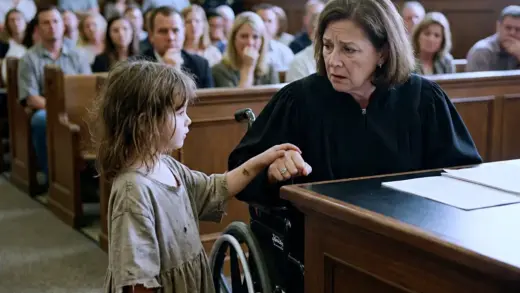
Six months later, I stood in the same courtroom where everything had changed, this time representing a seventy-two-year-old woman whose stepchildren were trying to have her declared incompetent. The opposing counsel was young, cocky, clearly believing this would be an easy victory against an elderly widow.
They had no idea who they were dealing with.
As I rose to deliver my opening statement, I felt the full weight of my authority, my experience, and my purpose settle around me like armor. I was Judge Margaret Stone, Attorney at Law, protector of the underestimated and defender of the dismissed. And I was exactly where I belonged.
“Your Honor, ladies and gentlemen of the jury,” I began, my voice carrying the confidence of a woman who had found her way back to herself. “This case is about more than an inheritance. It is about a society that assumes a woman’s worth diminishes with age, that believes a widow’s grief makes her an easy target for exploitation.”
I paused, letting my eyes sweep across the courtroom. “Today, we are going to prove them wrong.”
Behind me, in the gallery, sat Mrs. Morrison, whose case I had won three months earlier. Next to her was Mrs. Chen, the neighbor who had testified against me but had later become one of my strongest advocates.
And in the back row, wearing a simple suit and looking nervous but proud, sat Trevor. My family. Not the one I had been born into or married into, but the one I had built through battle, through loss, and through the decision to stop hiding who I really was.
The phoenix had risen from the ashes, and she was ready to fight.