Grief is not a sharp knife. That’s a lie they tell you in movies. A knife wound heals, or it kills you. Grief is more like rust. It is a slow, chemical oxidation that eats away at the iron of your life, year after year. The structure remains standing, looking solid from a distance, but touch it, and it flakes away into orange dust.
I had been rusting for twenty years.
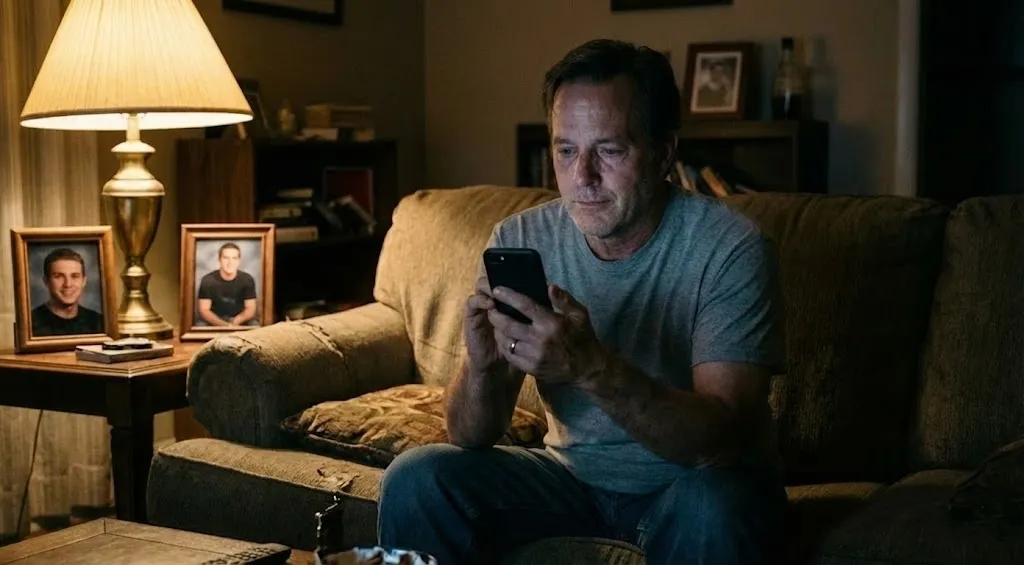
My son, Michael James Porter, died on November 3, 2005. He was nineteen. I kept his phone number in my contacts list, transferring it from phone to phone, upgrade to upgrade. From a Motorola Razr to an iPhone 4, then a 6, then an 11. It was a digital tombstone I carried in my pocket. Every month, I paid the bill. Thirty-five dollars and ninety-nine cents to keep a line active that connected to nowhere. It was my tithe to his memory.
On October 14th, at 2:47 AM, the rust broke.
My phone buzzed against the nightstand. The vibration was a harsh, angry sound in the silence of my empty house. I rolled over, squinting against the darkness, expecting a spam call or a wrong number.
The screen lit up. Two words.
**Incoming Call: Michael.**
I stopped breathing. My heart hammered a frantic, erratic rhythm that was physically painful against my ribs. I stared at the screen, certain I was dreaming, certain that if I blinked, the name would change to “Unknown” or “Scam Likely.” But it remained. *Michael.*
My hand shook as I slid the green icon across the screen. I pressed the phone to my ear, unable to speak. I just listened to the hiss of the open line, the vast, terrifying static of the impossible.
“Dad?”
The voice was quiet. Tentative. It cracked on the vowel.
It was a man’s voice. Deeper than the boy I remembered. Rougher. But the cadence—the way the word lifted at the end, turning a statement into a question—was identical. It was the voice that had asked me for car keys, for homework help, for money for the movies.
“Who is this?” I whispered. The air in my lungs felt like broken glass.
“Dad, I… I don’t know what’s happening,” the voice said. It sounded terrified. “I found this phone. It was in a shoebox in the closet. I turned it on and… I don’t know how it has a signal. Your number was the only one on the SIM card. Dad, why does the calendar on the wall say 2025?”
I sat up, gripping the sheets until my knuckles turned white. “Michael? Is that you?”
“I think so,” he stammered. “But I… I looked in the mirror. Dad, I’m old. I look old. And my head… God, my head feels like it’s splitting open.”
“Where are you?” I demanded. My voice was loud now, filling the dark room. “Tell me exactly where you are.”
“I don’t know,” he sobbed. A sound of pure, childlike panic from a grown man’s throat. “It’s an apartment. It smells like mold. There’s a uniform on the chair. It says ‘Moorfield Manufacturing.’ The name on the tag says ‘Marcus.’ Dad, who is Marcus?”
“Stay there,” I said. I was already out of bed, hopping on one leg as I pulled on my jeans. “Don’t hang up. Find an address. Look at the mail. Look out the window.”
I heard the sound of paper rustling. “There’s an electric bill,” he said, his voice shaking. “It says… 4247 Riverside Avenue, Apartment 8. Moorfield, West Virginia.”
West Virginia. Two states away. Five hundred miles from the cemetery where I had visited his grave every Sunday for two decades.
“I’m coming,” I said. “I’m leaving right now. Don’t open the door for anyone but me. Do you hear me? Anyone.”
“Dad, I’m scared,” he whispered.
“I know,” I said, tears finally spilling hot and fast down my face. “I’m coming.”
***
The drive was a fugue state. I don’t remember the interstate, the tolls, or the sunrise. My mind was a chaotic storm of memories and impossible questions.
I replayed the night of November 3, 2005. The knock on the door. The police cruiser. The drive to the hospital. The officer had looked me in the eye, his own face pale under the brim of his hat, and told me my son was gone. He said it was over in a second. He said the truck had obliterated the car, and there was no pain.
I remembered the identification. They hadn’t let me see him at first. They said it was better to remember him as he was. But I insisted. I was his father. I had to know.
They showed me a body covered in a sheet, revealing only part of the face. It was swollen, bruised, ravaged by the windshield glass. But I saw the hair. I saw the familiar shape of the jaw. I saw the varsity jacket he loved, the blue wool with the white leather sleeves, torn and bloodied. I saw his wallet on the side table, his driver’s license inside it.
I had nodded. I had signed the papers. I had buried him.
So who was waiting for me in West Virginia?
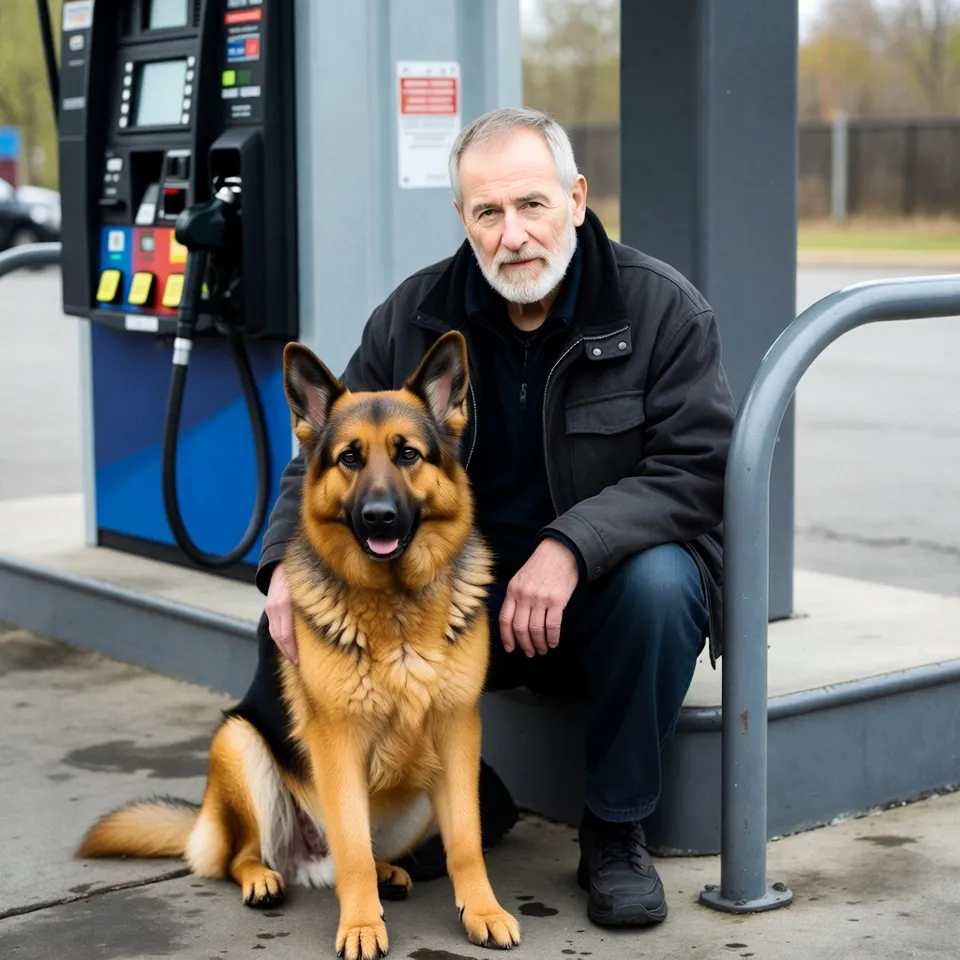
I pulled into a gas station halfway there, my hands shaking so badly I could barely hold the coffee cup. I needed information before I arrived. I sat in my car and typed the name into my phone’s browser: *Marcus Powell, Moorfield WV.*
Results appeared. A digital footprint of a stranger.
*Marcus Powell, 39. Employee at Moorfield Packaging.*
There was a grainy photo from a company newsletter. “Employee of the Month: Marcus Powell.”
I zoomed in. The man in the photo was bearded, heavier, wearing safety goggles on his forehead. He looked tired. He looked like a man who worked hard and slept little.
But the eyes.
I dropped the phone. It hit the center console, and the screen cracked. Those were Michael’s eyes. It was Michael’s face, weathered by twenty years of a life I knew nothing about.
***
Moorfield was a town that had seen better days. The main street was lined with shuttered storefronts and “For Lease” signs. The address led me to a brick tenement building on the edge of the industrial district. The windows were grimy, and the air smelled of diesel and wet pavement.
I parked my car and sat for a moment, gripping the steering wheel. I was terrified. I was terrified that this was a cruel hoax. I was terrified that it was real.
I climbed the stairs to the third floor. Apartment 8. The paint on the door was peeling. I raised my hand and knocked.
Silence. Then, the sound of a deadbolt sliding back.
The door opened four inches, held by a security chain. An eye peered out. A blue eye, red-rimmed and wide with fear.
“Michael?” I said.
The door slammed shut. I heard the chain rattle, and then it opened fully.
He stood there. He was taller than I remembered, or maybe I had just shrunk with age. He was wearing a stained t-shirt and grey sweatpants. He looked exhausted, unshaven, and utterly lost.
For a long moment, we just stared at each other. The silence was a physical weight, pressing the air out of the room.
“You look older too,” he said finally. His voice was the man’s voice from the phone, deep and resonant.
“It’s been twenty years, son,” I said.
He flinched at the word *son*. He stepped back, allowing me to enter.
The apartment was depressing. It was clean, but bare. No personality. No photos on the walls. Just cheap furniture and the basics of survival. On the coffee table sat a Nokia phone—the brick model Michael had owned in 2005. It was plugged into a modern wall adapter with a frayed cord.
“I found it last night,” he said, gesturing to the phone. “I was looking for… I had a headache. A bad one. I fell. I think I hit my head on the sink.” He touched a bruise blooming on his temple. “When I woke up, the fog was gone. Or… the fog was *there*, but in reverse.”
He looked around the room with a mix of confusion and disgust. “I remember you. I remember Mom. I remember the accident. But this…” He picked up the uniform shirt with the name *Marcus* stitched on it. “I have memories of this too. I remember working the line at the factory. I remember paying the rent on this place. I remember drinking beer on this couch alone.”
He looked at me, his eyes desperate. “But those memories feel like I watched them in a movie. They don’t feel like *mine*. I know how to operate a forklift, Dad. I know the code to the breakroom. But I don’t know *why* I’m here. I’m Michael. I’m supposed to be nineteen.”
I sat beside him and wrapped my arms around his shoulders. He felt solid. Real. He smelled of cigarettes—Michael never smoked—and cheap soap. I held him, and we wept together in that dim room. We wept for the lost time, for the cruelty of a random, rainy night.
***
“But the body,” I said, an hour later. We were drinking stale coffee from chipped mugs. “I buried you, Michael. I saw the body. You were wearing your varsity jacket. Your wallet was in the pocket.”
Michael frowned, his brow furrowing as he tried to drag memories out of the dark. “The jacket…” he whispered. “It was raining. That night. Do you remember?”
“Yes. It was a storm.”
“I was driving home from Jessica’s house. I was at the stoplight near the on-ramp. There was a guy standing there. A kid. He looked freezing. He didn’t have a coat. He was just soaking wet, shivering.”
Michael’s eyes went distant. “I told him to hop in. I said I’d drive him to the gas station. He got in. He was shaking so bad his teeth were chattering. I felt sorry for him. I took off my jacket… my varsity jacket… and told him to put it on to warm up. He put it on. He was thankful. He said his name was Chris.”
My blood ran cold.
“The truck,” Michael said, his voice dropping to a whisper. “I saw the headlights coming from the right. I tried to brake. The truck… it slammed into the passenger side. Right where Chris was sitting.”
I closed my eyes, visualizing the physics of the crash. The impact on the passenger side. The hitchhiker, wearing Michael’s jacket, carrying Michael’s ID in the pocket, taking the full force of the semi-truck.
“The police told me the impact was catastrophic,” I murmured. “They meant for the passenger. But they assumed…”
“I must have been thrown,” Michael said. “Or I crawled out. I don’t know. I remember noise. Sirens. Then… nothing. Just waking up in a hospital room days later, with a nurse asking me my name, and me not knowing the answer.”
“And because you had no ID,” I realized, the horror of the bureaucratic failure dawning on me, “and because the body in the car was wearing your jacket and had your wallet… they assumed the dead boy was you. And the confused, injured boy found wandering down the road was just a John Doe.”
Two victims. One identified erroneously. One lost in the system.
“Who was he?” Michael asked. “The kid I picked up?”
“I don’t know,” I said. “But for twenty years, I’ve been bringing flowers to his grave.”
***
The system did not want to let go of its dead.
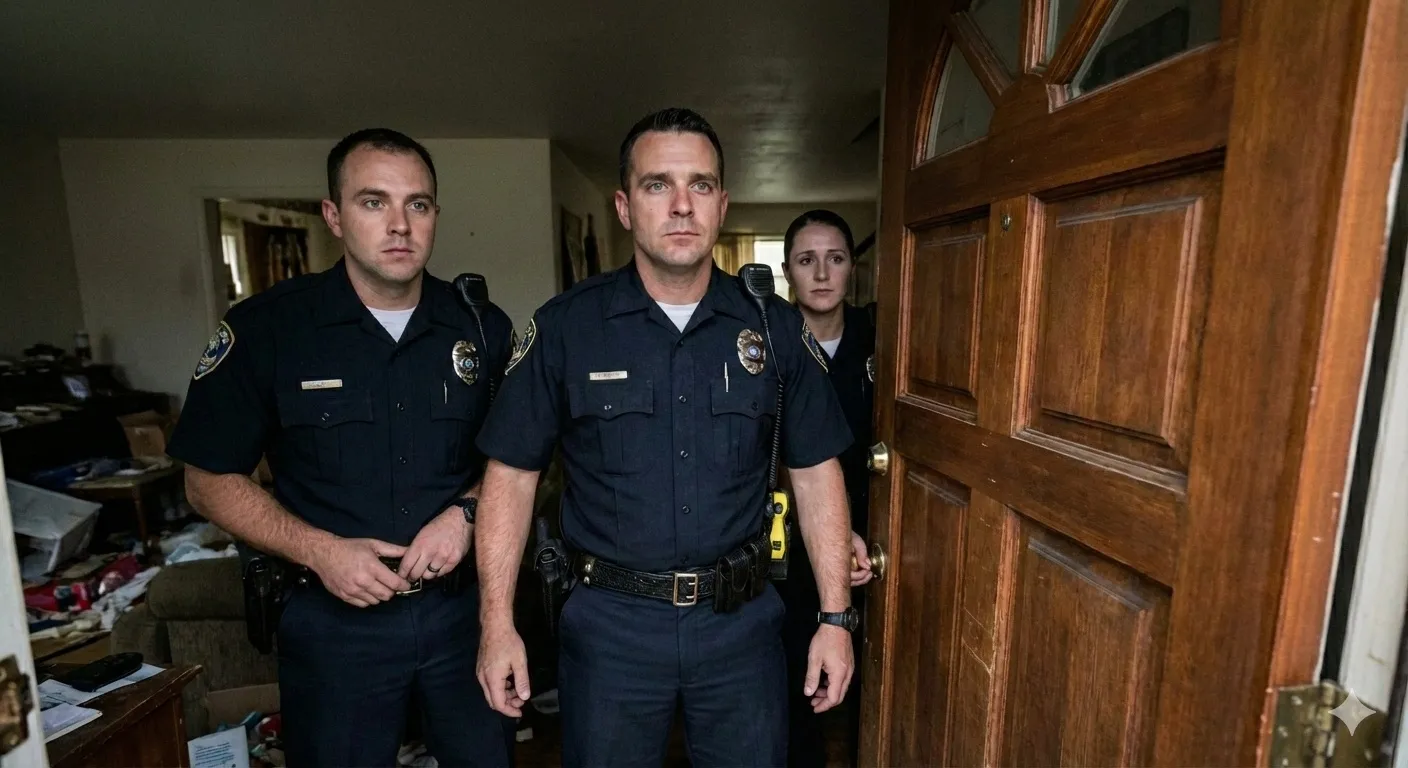
When we walked into the police station in Moorfield the next morning, the officer at the desk looked at Michael’s ID—the one that said Marcus Powell—and then at me.
“Sir, you’re saying this man is your son who died in 2005?” The officer’s tone was skeptical, bordering on hostile. “That’s a hell of a story.”
“It’s the truth,” I said. “We need a DNA test. We need to open the case.”
“We can’t just open a twenty-year-old closed fatality because you have a hunch,” the officer said, sliding Marcus’s ID back across the counter. “Mr. Powell here is a documented citizen. He has a social security number. He pays taxes.”
“A social security number assigned to a John Doe!” Michael snapped. It was the first time I saw *Marcus* come out—a harder, angrier edge than Michael ever had. “Look up my medical records from County General. November 2005. Admission as an unidentified male.”
It took three days just to get a detective to listen. Then came the lawyers. I had to hire a specialist in Charleston to file an emergency petition for exhumation. The hospital initially refused to release the old records, citing privacy laws for “Marcus Powell” that conflicted with the death certificate of “Michael Porter.”
The DNA test was the longest forty-eight hours of my life.
We sat in a motel room in Charleston, waiting. Michael paced the floor, smoking cigarette after cigarette.
“What if we’re wrong?” he asked on the second night. “What if I’m just crazy? What if Marcus is real and Michael is just a dream?”
“You’re not crazy,” I said. “You’re my son.”
“I don’t feel like your son,” he said, stopping by the window. “I feel like a fraud. Dad, I’ve done things… Marcus has done things. I’ve been in bar fights. I’ve been arrested for public intoxication. I’ve lived a hard life. Michael was a good kid. Marcus is… broken.”
“We’re all broken,” I said. “That’s what living does to you.”
When the call finally came, it was the detective. His voice was different this time. Subdued. Apologetic.
*99.9% match.*
The bureaucracy crumbled. The mistake was undeniable. The hospital board went into damage control mode. The police opened an internal review. But none of that mattered.
We found out who was in the grave. His name was Christopher Hayes. He was eighteen years old, a runaway from Ohio. His parents had filed a missing person report, but it had never been cross-referenced with the car accident victim in another state.
I had to make that call. I had to call the Hayes family and tell them that their son had not run away to California, as they had hoped. I had to tell them that I had been taking care of him for twenty years.
***
Bringing Michael home was not the happy ending the movies promise.
He moved back into his old room, but he didn’t fit there anymore. He was a 39-year-old man sleeping in a teenager’s shrine. The posters of Linkin Park and the dusty Xbox seemed like artifacts from an alien civilization.
My wife—his mother—came to see him a week after we returned. We had divorced three years after the funeral. She had remarried, built a fortress around her heart, and had two other children.
She stood in the hallway, looking at the man who wore her son’s face but carried the weight of a stranger.
“Michael?” she whispered.
He stepped forward to hug her, but she flinched. It was subtle, but it cut like a knife. She let him hold her, but she didn’t melt into him. She stood stiffly, patting his back.
“I can’t,” she told me later, in the kitchen, while Michael smoked on the porch. Her hands were shaking. “David, I can’t do this. I buried him. I spent ten years in therapy accepting that he was gone. I built a life on the fact that he was gone.”
“He’s right there,” I said, pointing to the window.
“No,” she said, tears streaming down her face. “That’s a man I don’t know. My Michael is nineteen. My Michael is safe in my memory. This… this feels like a violation. It feels like a ghost haunting me.”
She left an hour later. She calls him sometimes, on holidays. But she hasn’t come back.
***
Michael struggles. The duality of his mind is a constant war.
He has the memories of a teenager—innocent, hopeful, planning for college. And he has the muscle memory and scars of a factory worker who spent two decades in a gray fog.
“I hate Marcus,” he told me one night. We were sitting on the back deck. “I hate that he wasted twenty years. I hate that he didn’t try harder to remember.”
“Marcus survived,” I said. “Marcus got up every day, went to work, and kept you alive until you could come back. Don’t hate him. Thank him.”
He looked at his hands—calloused, rough, stained with oil that never quite washed off.
“I tried to get a job at the garage today,” he said. “They asked for experience. I told them about the factory. I knew exactly how to fix their lift. It was… easy. My hands knew what to do before my brain did.”
He clenched his fist. “Maybe Marcus wasn’t useless.”
“No,” I said. “He wasn’t.”
I went inside and brought out the photo album. Not the old one. A new one.
It had photos of the last three months. Michael and I fishing. Michael fixing my dishwasher. Michael eating Thanksgiving dinner.
“We can’t get the twenty years back,” I said. “That time is gone. It was stolen from us. And I hate the universe for that. I hate the incompetence, the luck, the rain, everything.”
I sat beside him. “But we have now. You’re thirty-nine, Mike. You’ve got half your life left. Maybe more.”
He opened the album. He traced the photo of himself. “I think I’ll take the job at the garage,” he said softly. “I’m good at fixing things.”
“I know you are.”
“Thanks, Dad.”
“For what?”
“For answering the phone. It was 3 AM. Most people wouldn’t have answered.”
I looked at my own phone, sitting on the table. The screen was dark.
“I was waiting,” I said. “I didn’t know it, but I was waiting for twenty years.”
The rust was still there—the pockmarks on my life, the brittleness of the lost decades. You can’t scour that away. But looking at him, solid and alive in the flickering light of the porch lamp, I knew the oxidation had finally stopped. The iron held.