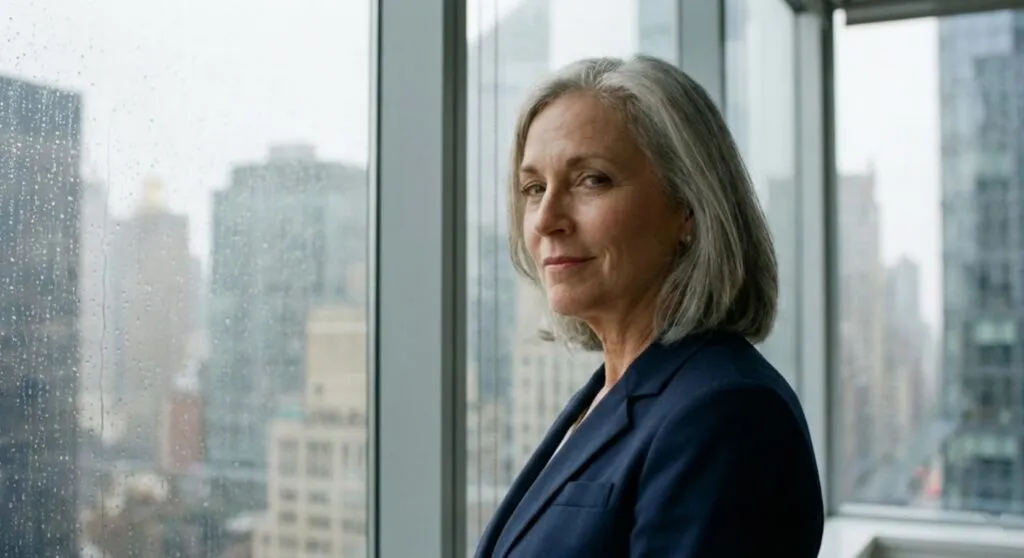
Two months ago, I was Margaret Sullivan. I defined myself by the prepositions in my life: wife of Robert, mother toVictoria. When Robert’s heart failed at seventy-one, the grammar of my existence fell apart. I didn’t feel like my world was ending; I felt like I had become invisible.
Victoria didn’t swoop in like a vulture. That would have been easier to spot. She arrived like a highly efficient project manager dealing with a distressed asset. She wore her grief in tasteful black cashmere, her efficiency acting as a shield against true emotion.
“Mom, you’re forgetting to eat,” she would say, moving plates around my kitchen with the authority of someone who already owned the place. “You’re overwhelmed. The maintenance on this place… it’s cruel to expect you to handle it.”
It wasn’t an attack. It was a slow, methodical erosion of my competence. When she and her husband, Kevin, started bringing up the “living arrangements,” it was always framed as kindness. Kevin, an investment banker whose ambition sat on him like a tight suit, would speak in soft, reasonable tones about “liquidity” and “downsizing.”
I see now that I was the perfect victim. I had spent forty-three years deferring to Robert on all financial matters. I was the homemaker, the peacekeeper, the soft landing. Victoria, who had always resented my passivity—she adored her father’s strength and merely tolerated my “weakness”—saw an opportunity. She didn’t hate me. She just didn’t respect me. To her, I was a redundancy in the family business.
The displacement happened on a rainy Tuesday, six weeks after the funeral. It wasn’t a discussion; it was an ambush disguised as an intervention.
Victoria and Kevin arrived not with dinner, but with suitcases. “We’ve made an executive decision,” Victoria said, standing in the hallway of the house I had curated for four decades. “Kevin’s commute is destroying him, and you are drowning here. We’re moving in to manage the estate. We’ve found a lovely efficiency apartment for you at the Sunset Inn while we finalize the paperwork for the assisted living facility on Maple Street.”
“Move in?” I was still wearing Robert’s old cardigan, clutching a mug of tea. “Victoria, this is my home.”
“It’s an asset, Mom,” Kevin corrected, not making eye contact. “And according to the estate plan Victoria has been managing, title transfer is already pending. You’re listed as a dependent. This is for your own good.”
“I don’t understand,” I stammered. “Robert’s will…”
“Dad knew you couldn’t handle the money,” Victoria cut in, her voice sharp with a lifetime of hidden condescension. “He left everything to me to manage. You get a stipend. Please, don’t make this harder than it needs to be. You’re embarrassing yourself.”
That was the dagger. You’re embarrassing yourself. The fear of making a scene, of being the “difficult old woman,” paralyzed me. I let them pack my bags. I let them drive me to the motel.
The Sunset Inn was a place where hope went to die. The room smelled of industrial cleaner and stale cigarette smoke. The carpet was sticky. When Victoria left, handing me two hundred dollars cash like I was a dismissed housekeeper, she didn’t even hug me.
“We’ll transfer your allowance once the accounts settle,” she said.
That night was the longest of my life. I sat on the sagging mattress, listening to the muffled arguments of the couple in the next room and the hum of the ice machine outside. I counted the two hundred dollars three times. Then I counted my blood pressure pills. I realized, with a cold, terrifying clarity, that I could die in this room and it might be days before anyone noticed.
I walked into the bathroom and looked at myself in the mirror. Gray hair, swollen eyes, a face etched with confusion. Is she right? the voice in my head whispered. Am I useless? Did Robert really think so little of me that he handed me over to them like a pet to be fed?
I cried until my chest ached. I curled up in the chair because I couldn’t bring myself to get under the sheets. But somewhere around 3:00 a.m., as the tears ran dry, a memory surfaced.
Six months ago. Robert in his study. He had called me in, put on his reading glasses, and made me sit down. Margaret, pay attention, he had said. The lawyer, Harrison. The blue binder. If anything happens, you go to Harrison.
Robert was controlling, yes. But he was possessive. He wouldn’t have given his money to Kevin, a man he privately called “a hollow suit.” And he wouldn’t have left me destitute.
The next morning, I washed my face with cold water. I looked terrible, but I felt a spark of something that wasn’t grief. It was suspicion.
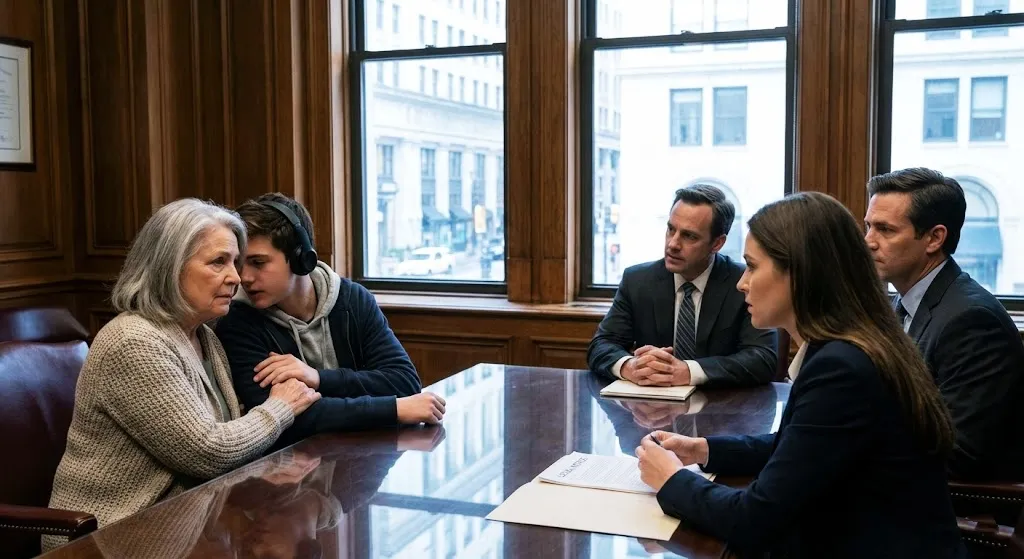
I took three buses to get to Harrison Fitzgerald’s office downtown. Harrison was an old-school attorney, the kind who still used dictaphones and mahogany desks. When I walked in, his receptionist gasped.
Harrison rushed out, looking genuinely stricken. “Margaret? My God, Victoria told us you had suffered a stroke. She said you were in a memory care unit and unable to receive visitors.”
“I am not in memory care, Harrison,” I said, my voice shaking slightly. “I am in a forty-nine-dollar motel room. And I need to see my husband’s will.”
We went into his office. He pulled the file. He didn’t just show me the document; he read it to me.
I was the sole beneficiary. The house, the savings, the investment portfolio—all of it, totaling nearly thirty-three million dollars—was mine. Victoria was left a bequest of five hundred thousand dollars, a generous sum, but nothing compared to the empire she had tried to seize.
“She showed me papers,” I whispered. “She had a will. It had his signature.”
Harrison’s face went deadly pale. “Then she forged it. And if she’s accessing the accounts, she’s committing wire fraud and grand larceny.”
“She’s in the house,” I said. “She’s moving her furniture in right now.”
Harrison didn’t call the FBI. He called a forensic accountant and the District Attorney’s fraud unit. This wasn’t a movie; it was a paper trail. And paper trails are easy to follow when you’re greedy.
Over the next three weeks, while I stayed in a clean hotel room paid for by the firm, Harrison and the investigators built their case. They found the printing shop Kevin used to mock up the fake will. They tracked the unauthorized transfers from Robert’s accounts to a shell company in the Caymans registered to Kevin. They found the forged power of attorney documents.
They hadn’t just stolen my money; they had erased my legal existence.
The confrontation happened on a Thursday. I insisted on being there. Harrison advised against it, but I needed to see them. I needed to know why.
We met at the house. My house. The police were waiting down the street, ready to execute the warrant, but Harrison gave me ten minutes.
I walked in with my key. Victoria was in the living room, directing movers who were carrying out Robert’s favorite leather armchair. She looked up, annoyed, holding a glass of white wine.
“Mom? How did you get here? I told you we’d come visit on Sunday.”
“Put the chair down,” I told the movers. They looked at Victoria. “Put it down and leave,” I said, my voice finding a register I hadn’t used since Victoria was a teenager. “Now.”
The movers fled. Victoria set her glass down, her face tightening. Kevin walked in from the kitchen, looking smug.
“Margaret, you’re creating a scene,” Kevin sighed. “We’re really trying to make this transition smooth for you.”
“Why did you do it?” I asked, looking only at my daughter. “The money? Was it just the money?”
Victoria laughed, a brittle, ugly sound. “Oh, stop playing the victim, Mom. It’s pathetic. Dad built this fortune. Kevin and I know how to grow it. You? You’d just let it sit there. You’ve never earned a dollar in your life. You were just… present.”
“I was his wife,” I said. “I was your mother.”
“You were a passenger!” she screamed, the veneer finally cracking. “You spent forty years arranging flowers and agreeing with him. I was the one who went to business school. I was the one who understood him. I deserved this! He should have left it to me!”
“So you stole it,” I said softly. “You forged his signature. You threw me out like garbage because you thought I was too stupid to fight back.”
“We protected the legacy!” Kevin shouted.
“You protected nothing,” Harrison said, stepping into the room. “You committed four counts of forgery, wire fraud, and elder abuse.”
Victoria went white. “Harrison? What are you doing here?”
“Watching you destroy your life,” he said.
The police entered a moment later. It wasn’t dynamic. It was humiliating. Kevin tried to run out the back and was tackled in the garden. Victoria didn’t run. She stood frozen, watching me with a look of absolute betrayal, as if I were the one breaking the rules.
“Mom, tell them,” she begged as the officer cuffed her. “Tell them it’s a misunderstanding. I’m your daughter. You can’t let them take me.”
I looked at her—the child I had nursed, the girl I had driven to ballet, the woman who had left me to rot in a motel room.
“You’re right,” I said, tears finally spilling over. “You are my daughter. And that is the only reason I’m not happy about this. But I won’t stop it.”
The legal process was a grind. There was no immunity deal, no secret agent twist. Just the grinding gears of the justice system. The evidence was overwhelming. The judge, a stern woman who had seen too many cases of elder financial abuse, showed no leniency.
Kevin got seven years. Victoria got five.
The day after the sentencing, I went back to the house. It was empty. The police had allowed me to remove Victoria’s things, but the house still smelled of her—her perfume, her ambition, her cruelty.
I walked into the kitchen. The silence was deafening. I made a cup of tea and sat at the table where we used to have family breakfasts. I looked at the garden Robert had loved.
I had the money. I had the house. I had “won.”
But as I sat there, the weight of the victory crushed me. I had lost my husband to death and my daughter to greed. I was the wealthy matriarch of a graveyard.
I screamed. I let the mug smash against the wall and I screamed until my throat was raw, mourning not just the loss, but the lie. The lie that love is enough to protect you. The lie that family is safe.
That was six months ago.
I didn’t sell the house. I renovated it. I turned Robert’s study into a painting studio, something I had wanted to do in my twenties but never “found the time” for. I hired a gardener. I joined a board for a charity that helps seniors navigate financial fraud.
I visit Victoria once a month. We talk through thick glass. She looks older. She’s stopped blaming me, mostly. Last week, she asked how the garden was doing. It was a small thing, but it was real.
I am not a heroine. I am not a “boss.” I am a woman who survived the people she loved. I paint every day now. The pictures are often dark, moody landscapes, storms breaking over the horizon. But lately, in the corners of the canvas, I’ve started using brighter colors. Yellow. Azure. The colors of a morning after a long, terrible night.
I am alone in this big house. But I am not invisible anymore. And for now, that has to be enough.