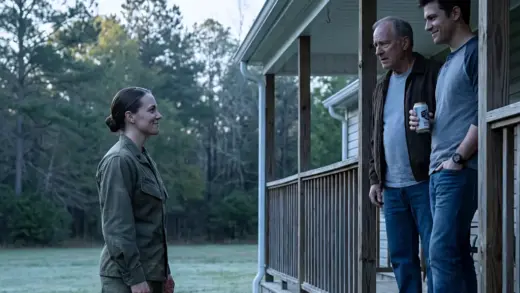
The kitchen was warm. The coffee maker hissed its final breath. The smell of pumpkin pie still hung in the air like a ghost of something sweet. And yet, I felt frozen. Marla said nothing. I stared at Kendra, this grown woman I had helped mold into an adult. I felt something inside me go quiet and heavy, like a stone dropping into a deep well.
I whispered, because I didn’t trust my voice to be any louder. “Okay,” I said. “I got it.”
Kendra blinked, almost surprised that I hadn’t started a fight. Marla kept staring at the counter as if the laminate pattern could save her. I walked past them, down the hallway into the bedroom, and grabbed my jacket. My hands were steady, but my stomach was twisting like a wire being pulled until it snaps.
Behind me, Kendra called out. “We’re leaving tomorrow morning. Don’t be weird about it.”
I didn’t answer. In my trade, when a line is dead, you stop feeding it power. And something inside me had just gone completely dead.
The next morning, I found out they didn’t just want me quiet. They wanted me invisible. And the pounding on my apartment door—hard enough to rattle the cheap frame—told me they weren’t finished using me yet. The knocking didn’t stop when I stayed silent. It got louder, sharp and angry, the kind of knocking that assumes you owe somebody a debt.
I stood in the narrow kitchen of the apartment I had rented off Alpine Road, standing barefoot on the cold laminate floor, watching the second hand on the wall clock sweep past the twelve. Tick, tick, tick. The radiator clanked in the corner like it had strong opinions on the matter. Somewhere upstairs, a neighbor’s TV laughed at a joke I couldn’t hear.
I already knew who was at the door. I opened it anyway.
Marla pushed past me first, coat half-zipped, eyes blazing as if she had rehearsed a speech in the car ride over. Kendra followed, jaw tight, phone already in her hand like a piece of evidence.
“What is wrong with you?” Marla demanded the second the door clicked shut behind them.
I stepped back to give them space. The apartment smelled faintly of last night’s coffee and the industrial lemon cleaner the building management used in the hallways. It wasn’t much of a home yet. A secondhand couch. A small table. My boots lined up by the door, toes pointing out—a habit drilled into me by years of not wanting to trip in the dark.
Kendra crossed her arms over her chest. “You didn’t answer my texts.”
“I got them,” I said.
“Then why didn’t you respond?” Marla jumped in. “You have been acting strange, Frank. Silent. Cold.”
I looked at her. “I said ‘okay.'”
“That is not an answer!” she snapped. “That is nothing. You are acting like we did something wrong.”
Kendra let out a sharp, incredulous laugh. “Yeah, like we betrayed you or something.”
The word hung there in the stagnant air. Betrayed. My chest tightened, and for a second, I felt that pressure build behind my eyes, the kind that arrives right before you say something you can never take back. I could feel it climbing up my throat—seventeen years worth of swallowed comments lining up, ready to charge out all at once.
I thought of standing watch in the Navy, late eighties, Lake Michigan wind whipping across the deck during training drills. You learn to keep your jaw set. You learn that losing your cool doesn’t warm you up and it doesn’t get you home any faster. I took a breath instead.
“What do you want?” I asked.
Marla threw her hands up in frustration. “We want to understand why you are being like this!”
“Like what?”
“Like we erased you,” Kendra said, sarcasm dripping from every syllable.
I met her eyes. “You did.”
The silence cracked across the room like a breaker flipping. Marla stared at me. “Frank…”
“You went to meet his family,” I said, my voice calm and steady. “You took Darren. You told them he was your father, and you told me not to come.”
Kendra scoffed. “It was just one meeting.”
“Those meetings matter,” I said. “They are where people decide who you are.”
Marla shook her head. “You are making this bigger than it is.”
I felt something twist inside me. “Am I?”
Kendra stepped forward. “Evan’s family is image-conscious. They asked about stability, about background. It was easier this way.”
“Easier for who?” I asked.
She hesitated. Just a beat, but it was enough. “For everyone,” she said finally.
There it was. Marla rubbed her temples as if I were giving her a migraine. “Frank, we needed this to go smoothly.”
I let out a short breath. “You needed my name, not me.”
Neither of them denied it. I looked around the apartment—the bare walls, the ticking clock, the coat rack with exactly one jacket hanging from it. I had moved out three weeks earlier, telling myself it was temporary. “Space,” Marla had called it. As if you could box up seventeen years and stack it in a corner like old magazines.
Kendra gestured around the dismal room. “See? This is what I mean. This vibe… it wouldn’t have fit.”
Something snapped then. Not loudly, but internally. Like a load-bearing wire finally giving up the ghost.
“I have worked the same trade for thirty years,” I said, my voice low. “I show up on time. I pay my bills. I raised you when your dad was gone. If that doesn’t ‘fit,’ that is not my problem.”
Marla’s face hardened. “You don’t get to guilt trip her.”
“I’m not,” I said. “I’m stating facts.”
Kendra rolled her eyes. “Evan’s parents didn’t even ask about you.”
That landed heavier than anything else she had said. “They didn’t ask,” I repeated.
“No,” she said. “Because they were told you weren’t really involved.”
I stared at her. “Told by who?”
She looked away. Marla’s lips parted, then closed. Suddenly, the room felt very small.
“You told them,” I said to Marla.
Marla’s voice dropped. “I simplified.”
I laughed once, a sharp, humorless sound. “You erased me.”
Marla snapped back. “I was protecting Kendra!”
“From what?” I asked. “Me?”
Kendra grabbed her purse, signaling she was done. “This is pointless. You’re acting like a martyr.”
I felt that surge again. Anger, heat, words lining up to fire. For a split second, I wanted to shout. I wanted to list every late night, every utility bill paid, every ride given in blinding snowstorms. Instead, I stepped aside and opened the door.
“I am done with this conversation,” I said.
Marla stared at me like she didn’t recognize the man standing there. “You’re just walking away?”
“Yes.”
Kendra scoffed. “Real mature.”
They brushed past me, a rush of cold air entering from the hallway as they left. Then the door slammed. I locked it. The silence that followed was loud. The clock, the radiator, my own breathing. I stood there longer than I should have, staring at the door as if it might explain itself.
Then I grabbed my jacket and my keys and headed out. The wind outside cut straight through me. Rockford in late November doesn’t care how you feel. The snow hadn’t fully fallen yet, but the ground was slick with half-frozen slush, gray and ugly under the amber streetlights.
I drove without thinking, muscle memory taking over until I pulled into the parking lot of VFW Post 1460 on East State Street. The neon sign buzzed faintly. Inside, it was warm in that tired, familiar way—old heat, old smells. Beer, coffee, and cigarette smoke baked into the drywall from decades ago, back when people smoked everywhere and nobody apologized for it.
A few guys sat at the scattered tables, coats slung over the backs of chairs. Flags lined the walls, colors faded but still standing. Someone laughed low at the bar. Miller spotted me and slid a mug across the laminate table without a word. Black coffee, strong enough to remind you that you were alive.
“You all right, Frank?” he asked.
I wrapped my hands around the ceramic mug, feeling the heat seep into my frozen fingers. “Yeah,” I said. “Just family stuff.”
Miller nodded like he understood more than I had said. He didn’t push. At the VFW, nobody pokes at wounds that aren’t bleeding openly. We sat there in companionable silence. Outside the window, snow started to fall—light at first, drifting down onto East State Street like it had nowhere better to be.
I watched it for a long time. That’s when my phone buzzed. Unknown number. I stared at it, debated ignoring it, then answered.
“Hello?”
“Mr. Hollis?” a woman’s voice asked. It was polite, careful, educated. “This is Linda Caldwell. Evan’s mother.”
My grip tightened on the mug handle. “Yes,” I said. “This is Frank.”
There was a pause on the line. “I hope I’m not calling at a bad time.”
I looked around the VFW. The flags, the quiet men, the simple dignity of the place. “No,” I said. “It’s fine.”
She took a breath. “I wanted to ask you something. We were told… well, we were told you were just a roommate. That you weren’t really part of the family structure.”
The words slid under my ribs like a sliver of ice. Just a roommate. For the first time since Kendra had spoken that sentence in my kitchen, I knew that staying quiet wasn’t going to fix anything.
I didn’t answer Linda Caldwell right away. The VFW’s coffee urn hissed behind me, a tired sound, like it had been boiling the same water since the Reagan administration. Someone at the bar cleared their throat. A chair scraped against the floor. Normal sounds, ordinary life. And still, that sentence sat there between us.
Roommate.
“I have never been anyone’s roommate,” I said finally. My voice sounded steadier than I felt. “I married Marla when her daughter was nine years old. I raised her.”
There was another pause, this one longer and heavier.
“I see,” Mrs. Caldwell said slowly. “That is not how it was explained to us.”
I closed my eyes for a second, not in anger, but in tired recognition. “I figured,” I said.
She cleared her throat. “Evan values honesty. So do we. I didn’t mean to stir anything up, Mr. Hollis, but I thought you should know.”
“I appreciate the call,” I said. And I meant it.
When we hung up, I sat there staring into the black depth of my coffee until the surface stopped shaking. Miller leaned back in his chair nearby.
“Everything all right?”
“Depends on how you define ‘all right,'” I said.
He nodded once. “Fair enough.”
I stayed another half hour, watching the snow thicken outside the windows, transforming the grime of the city into something temporarily clean. Then I drove home, slow and careful. The roads were already slick, the kind of conditions that punish impatience.
Back at the apartment, I hung my jacket on the hook by the door and lined up my boots. I didn’t turn on the TV. I didn’t want noise. I wanted to think. I pulled my small pocket calendar from my jacket, the one I had carried for years. Old habit—write things down. Dates, payments, hours. Proof that you showed up.
I sat at the rickety table and opened the drawer where I kept the boring stuff. Tax folders, old envelopes, receipts rubber-banded together—a life reduced to paper. I wasn’t looking for leverage. I was looking for the truth.