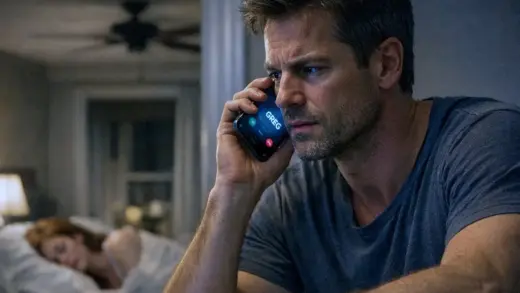
She started to cry then. I didn’t raise my voice. I didn’t soften it either.
“I am not doing this anymore,” I said. “I am not pretending I am optional.”
We hung up without saying goodbye.
Two days later, I sat across from a loan officer at Members Plus Credit Union, the same place I had signed papers for years without thinking twice. The fluorescent lights hummed overhead. Outside, snow had turned the parking lot into a gray soup of slush and tire tracks.
“I’m not looking to punish anyone,” I said, hands folded on the desk. “I just want things clean.”
The woman nodded. “That’s usually the smartest way.”
We went over accounts, obligations, where my name still carried weight and where it shouldn’t anymore. I made one decision that surprised even me. I didn’t pull the emergency account I had set aside for Kendra years ago. I signed it over fully. No strings, no speeches.
“She’s going to need it,” I said simply. “But she won’t need me tied to it.”
Walking out of that building, the cold hit hard. The wind off the Rock River cut straight through my jacket, and for a second, I stood there letting it. In the Navy, you learn the difference between the cold that hurts and the cold that wakes you up. This was the waking up kind.
That night, alone in my apartment, the silence felt heavier than before. The radiator clanked. The clock ticked. I thought about long nights on the ship when everyone else slept, and the only thing keeping you company was the dark water and your own thoughts. I had never felt lonely then. This was different.
My phone buzzed on the table. A text. Unknown number.
“Frank, this is Evan. I’m sorry to reach out like this, but I think you deserve to hear something directly.”
I stared at the message for a long moment before replying. “Go ahead.”
Three dots appeared, disappeared, appeared again.
“I didn’t know. Not really. And once I did, I couldn’t pretend it didn’t matter.”
I set the phone face down and closed my eyes. Whatever was coming next, I knew one thing for certain. Telling the truth had cost me my marriage as I knew it. But for the first time in a long while, I could breathe.
I met Evan two weeks later at a diner off North Main Street, the kind of place that never bothered to remodel because the coffee was hot and nobody rushed you out the door. Snow lined the curb outside in uneven piles, gray at the edges. Inside, it smelled like bacon grease, toast, and burnt coffee—the good kind of ordinary.
I was already there when he walked in. Sitting in a booth by the window, my jacket hung on the hook, my pocket calendar tucked back where it always lived. Habit. Proof to myself that I still belonged somewhere in time.
Evan spotted me and hesitated, like he wasn’t sure if I had changed my mind. Then he walked over.
“Mr. Hollis,” he said.
“Frank,” I corrected gently. “Sit.”
He slid into the booth across from me, hands clasped tight in front of him. He looked tired. Not angry, just worn down by disappointment.
“I wanted to say this face to face,” he said. “I respect you. More than… more than her biological dad.”
I didn’t answer right away. The waitress came by, topped off my coffee, and gave Evan a look like she could tell this wasn’t a casual breakfast. When she left, I spoke.
“Respect isn’t something you say to make things better. It’s something you live with.”
He nodded. “That’s why I’m here.”
He told me his family had put the wedding on hold. Not canceled, not moved forward. Just stopped.
“We care about honesty,” he said. “If a marriage starts with a lie, it doesn’t stand much of a chance.”
I watched a snowplow crawl past outside, the blade scraping sparks where it hit uneven pavement.
“Kendra is scared,” he added. “She doesn’t know how to fix what she broke.”
I stirred my coffee slowly. “Some things don’t get fixed the way people want.”
He swallowed. “She asked me to tell you. She’s sorry.”
That landed softer than I expected.
“She didn’t know how to say it herself,” he continued. “So she sent this.”
He slid his phone across the table. A short message sat on the screen.
“Thanks for everything.”
I didn’t know how to hold both truths at once—the betrayal and the gratitude. I stared at it longer than I needed to.
“Sometimes,” I said quietly, “people think choosing one story means erasing another. That’s not how it works.”
Evan nodded. “I’m still figuring things out.”
“So am I,” I said.
We finished our coffee in silence. Not awkward, just honest. When I walked out into the cold afterward, the air felt sharp but clean. The kind that clears your head. I pulled my jacket tighter and stood there for a moment, watching my breath drift away.
Marla called later that night. I didn’t answer. I wasn’t angry anymore. I was just done living in the space where my worth depended on someone else deciding to say my name.
Weeks passed, then months. I settled into a smaller rhythm. Work. Coffee. Evenings quiet enough to hear myself think. I fixed things around the apartment that didn’t need fixing, just to remind myself I still could.
One morning, sitting in that same diner, I opened my pocket calendar and started planning ahead. Not big things, just normal ones. Oil change. Doctor’s appointment. A fishing trip I had been putting off for years. Life, unremarkable and solid.
I thought about all the nights I stayed up waiting for Kendra to get home. All the bills paid without thanks. All the moments nobody saw. And I realized something that felt like peace.
Being a father was never about a title. It was about showing up. Staying steady. Holding the line when it would have been easier to walk away. Even if, in the end, no one clapped.