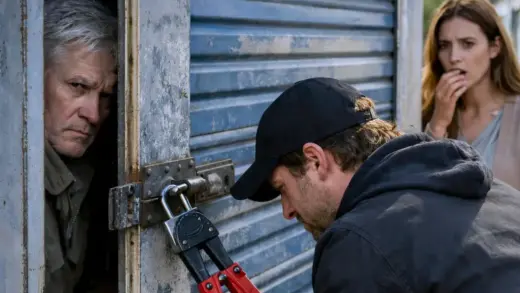

My wife let out a piercing shriek at exactly 2:00 a.m., waking me with a demand for $22,000 to cover her son’s emergency hospital bill. I calmly told her to contact the boy’s biological father, disconnected the call, and by the time the sun came up, the police were reading my name from a felony report. That long night began in my own bed in Toledo, Ohio, accompanied by the rhythm of the furnace clicking on and off, sounding like it couldn’t quite decide if it wanted to keep running or just quit.
The February chill pressed hard against the glass of the windows, making the floorboards cold enough to bite right through a pair of wool socks. Our house was a simple, single-story ranch located on a quiet street just off Alexis Road. It was a modest place, fully paid off, the kind of home that older men like to boast about because owning it means nobody has a claim on you except the county tax assessor.
Elaine wasn’t in bed beside me that night. She had drifted off to sleep on the living room couch where she had settled after dinner, her eyes fixed on her smartphone screen. The other side of our mattress remained empty and cool to the touch, and I forced myself not to analyze the meaning of that distance. Seventeen years of marriage teaches a man how to swallow his questions and keep moving.
My phone began to buzz on the nightstand, vibrating against the wood. It buzzed once, then twice, before the screen illuminated the dark room with a single name: Elaine. I squinted at the digital clock glowing red in the darkness. It read 2:17 a.m.
I picked up and answered. “Frank?”
She immediately hit me with a wall of panic. “Frank, oh my God, you have to help. Kyle is in the hospital. He’s been hurt bad. They are telling me he might just have to suffer through the night in agony if we don’t pay the deposit immediately.”
In the background of the call, I could hear the distinct hum of fluorescent lighting, a public address system echoing, and the squeak of a gurney wheel on linoleum tile. They were definitely hospital sounds, or at the very least, they were the specific sounds someone would play if they wanted you to believe they were in a hospital.
“Where are you right now?” I asked, sitting up.
“I’m right here with him,” she said, her voice sounding breathless and sharp all at once. “They need cash, Frank. They need $22,000 right now.”
I sat fully upright, the bedroom air smelling faintly of old wood and the menthol rub I had applied to my aching shoulders earlier that evening. “$22,000?”
“Yes, they told me that if we can’t put down the deposit, they aren’t allowed to administer the stronger pain medication. He is going to be stuck with the entire bill if we don’t act.”
Kyle Benson was 29 years old, Elaine’s only child. When I first met the boy, he was 12, as skinny as a fence post, and made entirely of elbows and teenage attitude. I was the one who taught him how to throw a baseball properly in the backyard, and later, I taught him how to drive a car in the empty church parking lot after Sunday service ended.
I never formally adopted him. Elaine always insisted we would handle the paperwork later. Later never actually arrived, but the bills certainly did. There was a dead car battery at the Meijer parking lot. A mix-up with his rent. A new job opportunity that required expensive tools he didn’t own.
Every single time, Elaine would look at me with those watery, pleading eyes and say, “He’s really trying, Frank,” as if trying was the exact same thing as actually doing.
I swung my legs out from under the covers and placed my feet on the freezing floor. “What exactly happened to him?”
“It was a fight,” she said, the words coming out too quickly. “At a casino. He got jumped by someone. He is in absolute agony.”
Casino. My stomach muscles tightened instinctively. Kyle liked casinos in the same way some men enjoy fishing; he claimed it was relaxing. He often told me he had a “system.” I had heard that specific word before from guys on the assembly line who had lost their entire paychecks by Wednesday afternoon.
“Which hospital is he in?” I asked.
“Barton,” she answered, then added the location almost too fast. “South Lake Tahoe.”
Tahoe. I stared at the dark window, watching the street light turn the piles of dirty snow into gray lumps. My pickup truck was sitting in the driveway, road salt crusted along the wheel wells. Real life was right here in Toledo. This emergency was happening 800 miles away.
Elaine kept talking, filling the silence. “My Zelle limit is completely maxed out. The cards are all declining, Frank. It’s complicated. I need you to send the money. Wire it, Venmo it, do anything. I will pay you back on Monday. I swear it.”
“Why can’t you pay for it?” I asked after taking a beat to think.
Her voice went soft, shifting into the tone she used when she wanted me to fold. “Because we are tapped out, honey. And he is crying. He is asking for you.”
That old reflex flared up inside me: reach for your wallet. Fix the problem. Prove that you are a good man. I could feel the sensation in my hands, as if they were already unlocking my phone to open the banking app.
Then, a different thought slid in right behind the urge to pay. It was clear as ice. She kept saying my son. She didn’t say our son. She said my son.
I remembered the last emergency call I received at 3:05 a.m. two summers ago. Elaine had sworn Kyle needed money for a medical deductible. I sent the cash. A week later, I saw a photograph on Facebook showing Kyle in a nightclub, a bottle of expensive liquor in his hand. He was grinning like a kid who had discovered a cheat code for life.
I had confronted Elaine about it back then. She had cried. I had ended up apologizing for overreacting. That was the established rhythm of our life together: I paid the bills, and then I apologized for it.
I swallowed hard. “Elaine. Call his father.”
There was total silence on the line. Then her voice turned completely flat. “Excuse me?”
“Call Kyle’s real father,” I said. My voice wasn’t loud. It was steady, the way you speak when you find a cracked engine part and you don’t argue with it. You just replace it. “I am not doing this anymore.”
“Frank, that man is not part of our lives. And I am,” she snapped, the softness gone. “How can you say something like that when he is lying in a hospital bed?”
“Because right now, you are talking to me like I am nothing more than a debit card. How can you demand $22,000 at two in the morning?” I said, refusing to explain anything beyond the refusal itself.
“He needs help! You are his family!” Her voice climbed into a scream. In the background, I heard someone say, “Ma’am, please.”
Elaine plowed right over the interruption. “If you don’t send the money, he is going to suffer all night long!”
My hand tightened around the phone. I pictured my pension file sitting in the drawer. The paid-off house. The quiet life I had earned one shift at a time. I pictured every single time I had said “yes” because feeling guilt was easier than fighting for myself.
I exhaled slowly. “I am going back to sleep, Frank. Call his real father,” I repeated. “Good night, Elaine.”
I ended the call. My heart was thumping hard against my ribs, but underneath the adrenaline was an empty space where the guilt usually lived. I powered the phone completely off—black screen, no more buzzing—and lay back down.
The furnace clicked again. The house settled into its bones. Outside, somewhere down the block, a snowplow scraped against the asphalt like sandpaper. And then I slept. I slept like a man who had finally put down a heavy box he had been carrying for years.
I woke up to sunlight slicing through the window blinds and the smell of stale coffee coming from the timer I had forgotten to reset. For about five seconds, my mind was blissfully empty. Then the memory of the phone call slid back in, cold and sharp.
I sat on the edge of the bed, placing my feet on the same cold floor, and felt something unfamiliar: lightness. There was no buzzing phone. There was no knot of anxiety in my chest. Just quiet.
I showered, shaved, and put on my work hoodie, even though it was technically my day off. It was an old habit. When you have worked on a plant floor for 35 years, you dress like you might get called in at any moment.
I was pouring a cup of coffee when my phone screen lit up again. It was an unknown number. I let it ring until it stopped. Then it rang again. It was the same number.
I answered it. “Frank Whitmore.”
“Mr. Whitmore,” a man said, his voice calm and practiced. “This is Officer Daniel Rizzo with the Dearborn Police Department in Michigan. Are you the stepfather of Kyle Benson?”
The mug paused halfway to my mouth. “I am married to his mother,” I said. “Why is Dearborn calling me?”
There was a soft rustle of paper on the other end. “Your name came up during an incident report from last night. Mr. Benson was detained following an altercation at a casino parking structure. During the booking process, we discovered irregularities related to a line of credit opened using your identifying information.”
The coffee tasted burnt on my tongue. “What kind of irregularities are we talking about?”
“A casino marker,” he said plainly. “$50,000. Your name and your social security number were used as the guarantor.”
My kitchen felt suddenly smaller, the walls closing in. “I didn’t authorize anything like that,” I said.
“I understand,” he replied. “That is why I am calling you. We need to ask you a few questions and advise you to secure your financial accounts immediately.”
“Is Kyle okay?” I asked.
There was a pause. “He has injuries consistent with a physical struggle. They are non-life threatening. He is being treated. However, he is also facing charges related to fraud and identity misuse.”
I leaned back against the counter for support. Elaine had hung stockings in this room last Christmas. They had puppies and Santa hats on them. I had circled the date of my next union physical in red ink on the calendar nearby.
“Officer,” I said, “I had absolutely no idea about any credit line.”
“That is noted,” he said. “You may also be contacted by federal investigators if this situation escalates. I suggest you obtain copies of your credit report today.”
The call ended politely. Professionally. Like a man just doing his job. I set the phone down and stood there in the silence until the coffee went cold in my hand.
So that was the truth of it. It wasn’t a hospital bill. It was a trap.
I grabbed my laptop and logged into my credit monitoring account. It was the one I had signed up for after a co-worker had his identity stolen by his own nephew. Back then, I had told Elaine, “Can’t be too careful.” She had smiled and told me I worried too much.
The screen loaded slowly. There were three inquiries in the last month that looked like background checks. Then, there was one major inquiry from a casino-affiliated lender I didn’t recognize. My chest tightened painfully. I printed every single page.
Then I did something I hadn’t done in years. I drove down to Rudy’s Diner on Monroe Street. Rudy’s was the kind of place that permanently smelled like bacon grease and old coffee, where the mugs were thick and chipped, and nobody ever rushed you out. It was where retired men went to remember who they were before their knees gave out.
Ray Kovacs was already there. He sat in the exact same booth he had claimed since Reagan was in office. He wore his brown jacket with the frayed cuffs and had his glasses perched halfway down his nose, reading the sports page like the scores still mattered.
“Frank,” he said, folding the paper. “You look like hell.”
“Morning to you too,” I said, sliding into the booth opposite him. I set the stack of printouts between us.
Ray didn’t touch them at first. He just looked at my face. “Is this about Elaine’s boy?”
I nodded.
He finally picked up the papers, scanning them slowly and methodically, the way he used to audit suppliers when he was still on the job. His jaw tightened with every page he turned.
“This wasn’t sloppy,” he said after a minute. “This was planned.”
My stomach dropped. “Planned how?”
“Look at the timing,” he said, tapping the paper with a thick finger. “It starts small. Someone was testing the waters, checking your standing without triggering alarms. Then, once they knew the coast was clear, the big application went through. You don’t do that kind of prep work unless you expect approval.”
I thought about Elaine’s late nights on the couch, her phone glowing in the dark living room. “He couldn’t have done this alone.”
Ray took off his glasses. “Frank, who has access to your documents?”
The diner noise seemed to fade out. Forks clinked somewhere far away. “My wife,” I said.
Ray didn’t look surprised. “Then listen to me carefully. You don’t confront anyone yet. You protect yourself.”
I rubbed my hands together. My fingers were cracked from the winter air and years of factory solvent. “Protect myself how?”
“You freeze the accounts. You pull full reports. You document everything,” he said. “And you don’t let guilt make decisions for you.”
Guilt. That word sat between us on the table like an old enemy.
Ray leaned back in the booth. “Casino markers aren’t like credit cards. They are closer to personal loans. When they go bad, people get desperate. And when people get desperate, they drag whoever they can down with them.”
My phone buzzed on the table. Elaine. I didn’t answer it.
A text followed immediately. Then another.
Elaine: Please call me.
Elaine: This is serious!
Elaine: They are saying things that aren’t true…
I turned the phone face down. Ray nodded once. “Good.” We finished our coffee in silence.
When I stood to leave, Ray put a heavy hand on my arm. “Frank, whatever you think you know about this situation, assume it is worse.”
I drove home slower than usual, giving my thoughts room to stretch with every mile. Back in my living room, I opened the filing cabinet. Elaine and I shared insurance papers, tax returns, medical statements—everything was neat, everything was labeled in her handwriting.
At the very back, behind the homeowner’s policy, I found an envelope I didn’t recognize. Inside were copies of my social security card, my driver’s license, and a pre-approval letter addressed to me, dated three weeks earlier. My knees went weak.
That was when my phone rang again. It was a different number this time. I answered.
“Mr. Whitmore,” a woman said, her voice tired but kind. “This is Special Agent Karen Lewis with the U.S. Attorney’s Office. We need to schedule an interview.”
I closed my eyes. “About what?” I asked, though I already knew the answer.
“About protecting you,” she said. “And understanding who thought using your name was safe.”
I hung up and stared at the wall. Elaine had said it herself. Safer name. I sat there until the furnace kicked on again, the sound filling the house like a warning bell. Whatever this was, it was bigger than a hospital bill. And it wasn’t over.
I didn’t confront Elaine that night. That was the hardest part. Every instinct in me wanted to walk into the living room, drop the envelope on the coffee table, and ask her one simple question: Why?
But Ray’s voice kept looping in my head. Protect yourself first. So I did what inspectors do. I observed. I documented. I waited.
Elaine came home around seven, snow melting off her boots, her cheeks flushed like she had been crying or yelling or both. She didn’t look at me when she set her purse down.
“Kyle is stable,” she said too quickly. “They finally got him comfortable.”
I nodded. “Good.”
She hovered, waiting for more questions. When nothing came, she filled the silence herself. “The police are blowing things out of proportion. Casinos do this all the time. Kyle just signed some paperwork he didn’t understand.”
I kept my eyes on the TV, watching a rerun of Jeopardy I had already seen. “Uh-huh.”
Her shoulders stiffened. “Frank, you are acting strange.”
I turned to her then. “Am I?”
She studied my face like she was checking for a fever. “You didn’t even ask how bad he is hurt.”
“He is alive,” I said. “That is what matters.”
She nodded slowly, like she had won a small point. “Exactly. So we need to be united right now.”
United. That word used to mean something to me. She went to bed early. I stayed up, sitting at the dining table with my laptop and a yellow legal pad, the kind I had used my whole career. The house was quiet except for the tick of the wall clock Elaine insisted on keeping because it reminded her of her father.
I pulled full credit reports from all three bureaus. That was when the pattern showed itself. It wasn’t one big theft, but a slow, deliberate leak. Small cards opened and closed before statements could arrive. Transfers moved around just carefully enough to avoid triggering bank alerts. Refunds from medical providers that should have come to me had been quietly rerouted to an account I didn’t recognize, then drained within hours.
I traced the account. Elaine’s maiden name was on it. My chest tightened, but my hand stayed steady. Write it down. Date, amount, source, destination. Inspectors don’t panic. They measure.
Around midnight, I found something that made me laugh out loud. It was one sharp, humorless bark that echoed in the empty room. Kyle’s occupation was listed on a credit application: Logistics Consultant.
“Yeah,” I muttered to myself. “Logistics.” He had been moving money all right, just not his own.
The laugh faded, replaced by something heavier. I leaned back and stared at the ceiling, and without asking permission, a memory pushed its way in. Kyle at 16, gripping the steering wheel in the empty church parking lot, his knuckles white.
“Easy,” I told him. “You don’t fight the car. You guide it.”
He stalled three times, cursed, laughed, then finally rolled forward, smooth as butter. Elaine had clapped from the church steps like he had just won the Indy 500. I had been proud. God help me, I had been proud.
I snapped back to the present and underlined a number on the page. The total wasn’t staggering yet, not compared to the plant guys who lost everything, but it was growing quietly, systematically. This wasn’t Kyle freelancing stupidity. This was slow poison.
The next morning, I called Ray again. He came over that afternoon, snow crunching under his boots, his breath fogging the cold air. He didn’t bother with pleasantries. We spread my papers across the table like a crime scene.
Ray whistled low. “She knows the system.”
“She works the system,” I said.
He nodded. “Medical billing teaches you how to sound urgent without being specific. People hear ‘deposit’ and they stop thinking.”
I thought about that 2 a.m. call. The language, the pressure, the clock she had put on me. Suffer all night.
Ray tapped a line item. “These refunds here—insurance overpayments—did you ever see them?”
“No,” I said. “She handled all that.”
He leaned back. “Frank, this isn’t just family drama. This is fraud. And if you don’t separate yourself now, you will be standing next to them when it collapses.”
That word again: separate.
After Ray left, Elaine called me into the kitchen. She was holding her phone with both hands like it weighed something heavy.
“They are saying Kyle might need surgery,” she said. “The hospital won’t schedule it without a deposit.”
“Which hospital?” I asked.
She blinked. “What?”
“Which hospital?” I repeated.
Her mouth opened, then closed. “I would have to check.”
I nodded. “Do that.”
She stared at me, suspicion finally cracking through the panic. “Why are you asking like that?”
“Because every time you ask me for money,” I said evenly, “the details get fuzzy.”
Her eyes flashed. “Are you accusing me of lying?”
“I am saying I am done sending money without answers.”
She crossed her arms, defensive now. “You have changed.”
“No,” I said. “I stopped.”
She scoffed and walked away. That night after she fell asleep, I took my phone into the garage. The smell of oil and cold metal grounded me. I called my bank and froze every joint account. I changed passwords. I ordered new cards. All legal, all quiet.
Before hanging up, I checked my voicemail. There was one new message. It was Kyle’s voice, slurred and angry.
“You think you are better than us now? Mom said you would pull this. You always do this when things get hard.”
I deleted it. Standing there in the garage, staring at the pegboard of tools I had bought with honest money, something settled in my chest. This wasn’t about revenge. It was about survival. And I finally understood what Ray meant.
I wasn’t just the “safer name.” I was the anchor they planned to drown with.
Elaine didn’t yell after that. She shifted. That is how you know someone is scared—not when they get loud, but when they get careful. Over the next few days, she became sweetness itself. She cooked dinners I hadn’t asked for. She touched my arm when she passed. She left the TV on low with old movies she knew I liked.
It felt rehearsed, like watching someone follow instructions they didn’t write. I played my part. I ate the food, nodded at the right places, and slept on my side of the bed. Inside, I was locking doors.
On Tuesday morning, I went to the credit union on Central Avenue and asked to speak with a manager I had known for years. Linda had gray hair and a voice that could cut through noise on the plant floor.
“I need to protect my pension,” I told her.
She didn’t ask why. She slid a form across the desk and said, “You wouldn’t believe how often this comes up.”
That afternoon, I filed for a legal separation. Not divorce—separation. It mattered. Divorce would have forced everything into the open before I had my footing. Separation gave me space, financial and legal, without tipping my hand.
Ray had explained it plainly: “You don’t start the fire while you are still standing in the house.”
Elaine noticed the change within hours. “What is this?” she asked, holding a bank notice she had found on the counter.
“Account freeze,” I said. “Temporary.”
Her eyes darted around. “Why?”
“Because my name is attached to things I didn’t sign for.”
She went pale, then angry. “This is because of Kyle, isn’t it?”
“This is because of me,” I said.
That night, she cried. Real tears too, or at least they looked real. She sat at the kitchen table, hands wrapped around a mug she wasn’t drinking from.
“Frank, I am scared,” she said. “I feel like you are abandoning us.”
I leaned against the counter, arms crossed like during safety audits. “Listen.”
“God tells us to forgive,” she said softly. “Families don’t turn their backs.”
I felt it then—that old pull. The urge to fix things, to smooth it over, to be the steady one so everyone else could wobble.
“I am not turning my back,” I said. “I am stepping out of the way.”
She looked up sharply. “What does that mean?”
“It means I am done being used,” I said. “And I am done being lied to.”
Her mouth trembled. “You don’t know the whole story.”
“I know enough,” I said.
She reached for my hand. I didn’t pull away, but I didn’t squeeze back either. Her skin felt cold.
“Frank,” she whispered. “You have always been the safer name.”
There it was. She froze the second the words left her mouth. I didn’t react. I didn’t raise my voice. I didn’t ask her to repeat it. I just nodded once, like I had heard a machine make a sound that told me exactly where the fault was. She knew what she had said.
I stood up. “I am going for a drive.”
I took the long way to the river, past the old warehouses and the VFW hall with the faded flag out front. The radio crackled with farm reports and an ad for replacement windows. Normal sounds. Anchors.
In the parking lot, I sat in my truck and let the recorder run. Not because I planned to trap her, but because I needed to remember what truth sounded like.
Over the next week, I kept my movements boring and predictable. Work, diner, home. No confrontations, no accusations. Behind the scenes, I gathered statements, emails, and account histories.
Ray helped me organize it into a timeline that read like a slow-motion fall. Kyle’s gambling wasn’t new. It went back three years. Online first, then regional casinos. Small wins, bigger losses. Elaine had covered early debts with refunds and transfers. When that wasn’t enough, she moved to credit. When credit hit limits, she escalated.
She hadn’t just used my name. She had planned around it.
Friday evening, Elaine asked if I would go with her to church on Sunday. “I think we need God right now,” she said.
I looked at her for a long moment. “We need honesty,” I said. “But I will come.”
The sanctuary smelled like old wood and lemon cleaner. People smiled at us the way they always had. A few patted my shoulder. “Praying for your boy,” someone said.
During the sermon, Elaine leaned against me, crying quietly. I stared straight ahead, listening to the pastor talk about stewardship and truth. The irony didn’t escape me.
Afterward, in the parking lot, Elaine pulled me aside. “They are pressuring me,” she said. “The hospital, the casino, everyone.”
“I know,” I said.
She searched my face. “Will you help us?”
I shook my head. “I am helping myself.”
Her expression hardened. “You are going to ruin us.”
“No,” I said. “You already did that. I am just refusing to help hide it.”
That night, my phone rang. Unknown number. I answered. “Frank Whitmore.”
“This is Special Agent Lewis,” the woman said. “We are ready to schedule your interview. And for what it’s worth, you did the right thing by freezing your accounts.”
I hung up and sat in the dark living room, the clock ticking on the wall. Elaine was upstairs packing something, or pretending to. I didn’t feel victorious. I felt steady. The slow burn was almost over.
The federal building in Detroit smelled like floor wax and winter coats. It was the kind of place designed to drain emotion out of people: beige walls, low ceilings, no windows where you would want them. Justice wasn’t meant to be dramatic. It was meant to be final.
Elaine walked in 10 minutes late, her heels clicking too loud for the room. She wore a navy coat she had bought last fall with money I recognized from a medical reimbursement. Her hair was perfect. Her eyes were red enough to look convincing.
Kyle came in through a side door with a public defender at his elbow. He looked smaller than I remembered. Puffy face, split lip, ribbed brace under his jacket. He wouldn’t meet my eyes.
I sat alone on the hard bench, folder on my lap, hands folded the way I had learned to sit during disciplinary hearings at the plant. Calm, still, prepared.
When the judge entered, the room stood. Chairs scraped. Someone coughed. This was it.
The prosecutor spoke first. Calm voice, clean timeline. Casino markers opened under my name, credit cards tied to my social security number, refunds routed through accounts I didn’t control. Recorded calls, bank statements, dates, amounts. Paper doesn’t care about feelings.
Elaine shifted in her seat when her maiden name came up. She leaned toward her attorney, whispering too fast. Kyle stared at the floor.
Then my name came up. “Mr. Whitmore,” the judge said, peering over his glasses. “You are listed on multiple documents as a guarantor. Did you authorize any of these accounts?”
“No, Your Honor,” I said. My voice didn’t shake. “I didn’t know they existed until last week.”
The judge nodded. “And when you discovered them?”
“I froze my accounts. I reported the activity. I cooperated fully.”
The prosecutor stood. “Your Honor, we would like to introduce Exhibit D.”
A man stood from the back of the room. Mid-50s, broad shoulders, work boots, nervous hands.
“This is Derek Benson,” the prosecutor said. “The biological father of Kyle Benson.”
Elaine’s head snapped up. Kyle finally looked at someone.
Derek cleared his throat. “I have been paying child support since Kyle was born,” he said. “I tried to stay in contact. Elaine changed numbers. Moved. Told me Kyle didn’t want to see me.”
Elaine shot to her feet. “That is not true!”
The judge raised a hand. “Sit down, ma’am.”
Derek kept going. “I found out about the casino mess when a collection agency called me last month. Said I was the father. That was when I learned my son had been using Frank’s name.”
Kyle’s face crumpled. “Mom said you wouldn’t help,” he muttered.
Derek looked at him, pain plain as day. “I would have helped you get treatment. I wouldn’t have helped you gamble.”
The room went quiet. The prosecutor played the recording. Elaine’s voice filled the courtroom, tinny but unmistakable. You were always the safer name to use.
No context, no explanation, just the truth—naked and ugly. Elaine covered her mouth. The judge leaned back, exhaled slowly.
“Mrs. Whitmore, do you dispute the authenticity of this recording?”
Elaine’s lawyer whispered urgently. She shook her head.
Kyle’s public defender stood. “Your Honor, my client was injured. He was under duress.”
“Your client committed fraud,” the judge said. “While injured. Both things can be true.”
He turned to me. “Mr. Whitmore, the court finds no evidence you authorized or benefited from these actions. All claims against you are dismissed.”
Something loosened in my chest. Not relief exactly—release.
Then the hammer fell. Elaine was charged with conspiracy to commit financial fraud and identity misuse. Kyle’s charges were reduced but not erased: fraud, assault, mandatory treatment. Kyle slumped in his chair like a puppet with cut strings. Elaine stood shaking.
“Frank,” she said, stepping toward me as the judge called recess. “Please, I was just trying to protect my son.”
I stood, too slow and deliberate. People were watching—clerks, lawyers, strangers who would forget us by dinner.
“I spent 17 years protecting him,” I said quietly. “You spent them using me.”
Her mouth opened, closed.
“I paid my last bill for you,” I said. “It is called the truth.”
She reached for my sleeve. I stepped back.
In the hallway, reporters hovered but didn’t pounce. This wasn’t a scandal big enough to trend. It was small-town justice, the kind that ruins lives quietly. A man from my church stood near the elevators. He told me once that abandoning family was a sin. He wouldn’t meet my eyes.
Ray called me that night from his recliner. “You okay?”
“I am,” I said, and for the first time, it was true.
Justice didn’t cheer. It didn’t clap. It just stood there, stamped and signed, and let me walk out.
I moved in April when Lake Erie was still steel gray and stubborn with cold. The house sold faster than I expected. A young couple with a baby on the way wanted the quiet street and the paid-off bones. I wished them luck and meant it.
I took what I needed and left the rest. Funny how little you actually own once you stop propping up other people’s lives. I rented a small place near the water outside Sandusky. One floor, no stairs, a porch that faced east so the morning light hit the coffee mug just right.
The first night there, I slept with the window cracked and woke up to gulls instead of a phone buzzing with panic.
Elaine wrote once. A letter, not a text. Handwritten. I recognized the slant immediately. She said she was sorry. Said she never meant for it to go that far. Said fear makes people do things they don’t recognize. I didn’t write back. Not because I was angry. Anger takes energy. I was done spending mine.
Kyle entered treatment as part of his sentence. I heard that second-hand through Ray, who heard it from someone at the plant whose cousin worked at County Court. I wished the kid well and meant that too, but wishing someone well doesn’t require you to carry them anymore.
The church stopped calling. So did most of the people who’d had opinions before they had facts.
A few weeks later, one man from my old bowling league found me. He sat down beside me at the marina cafe, ordered black coffee, and cleared his throat.
“I was wrong,” he said. “I judged before I knew.”
I nodded. “Happens.”
That was it. No speeches, no absolution ceremony. Just two men watching boats bob and pretending that was enough, because sometimes it is.
Life got smaller in a good way. I started volunteering one morning a week at the union hall, helping guys my age figure out paperwork they had been avoiding: pensions, beneficiaries, boundaries disguised as forms. You would be surprised how many men don’t know who is listed on their accounts.
On Sundays, I cook for myself. Real meals, simple ones, nothing that needed rescuing. Sometimes, sitting on the porch with the lake wind in my face, I think back to that night. The 2 a.m. call, the demand, the way my heart had raced when I said no.
I used to believe love meant never letting people fall. Now I know better. Love without limits isn’t love; it is liability. Revenge didn’t come with shouting or slamming doors. It came with silenced paperwork and the quiet decision to stop paying for someone else’s lies. It came with waking up and realizing the only person I had to carry was myself.
You are allowed to stop. You are allowed to protect what you earn. And you are allowed to sleep through the night. Sometimes the bravest thing you can do is hang up the phone.