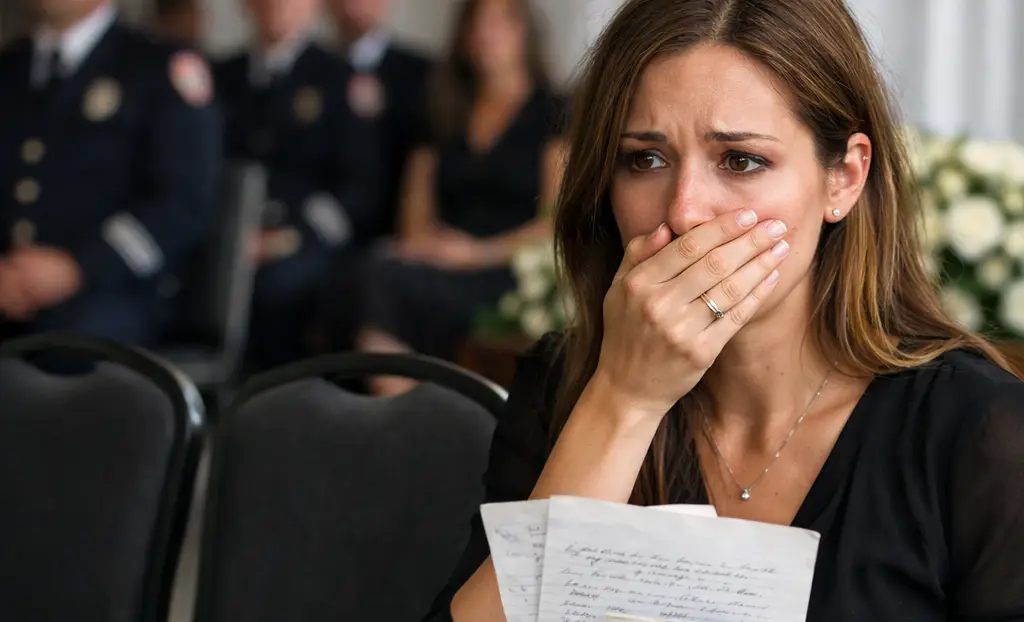
My name is Cassandra Mitchell, and at thirty-two years old, I found myself facing a nightmare I had never once entertained, even in my darkest moments. I stood in the somber quiet of the funeral service, looking out at the rows of seats. There, in the front row where my family should have been seated, three chairs stood starkly empty. My parents were not there. Neither was Stephanie, the woman I had called my best friend since we were children.
The very people who had sworn to stand by me, who had made promises of loyalty through sickness and health, had vanished the moment those vows demanded a sacrifice. What I unraveled on that sorrowful day fundamentally altered my understanding of family, the fragility of loyalty, and what it truly means to love someone.
To understand the magnitude of this abandonment, you have to understand the love story that preceded it. Bobby and I collided—quite literally—five years ago in a bustling coffee shop downtown. I was coming off a grueling double shift at the hospital, barely keeping my eyes open, when I rounded a corner and crashed right into him, sending my latte cascading all over his jacket.
Instead of an outburst of annoyance, he just chuckled, looking down at the mess.
“Well,” he said with a grin that reached his eyes. “That is certainly one way to warm up on a freezing morning.”
That was the essence of Bobby. He possessed a rare ability to find a glimmer of light in any situation, no matter how messy. He asked for my number right then and there, and to my own surprise, I gave it to him. There was something disarming about his warm brown eyes and the easy, unforced nature of his smile that made me feel instantly safe.
Our first date was a marathon conversation at a tiny, hole-in-the-wall Italian restaurant. He spoke with such passion about his work as a firefighter, confessing that he had wanted to save lives ever since he was a little boy pressing his face against the window to watch the engines race by. I opened up about my own path to nursing. Our shared dedication to serving others created an immediate, unbreakable tether between us.
The relationship moved with the momentum of something destined. Within six months, we were practically inseparable. Bobby proposed during a hike to our favorite lookout point, high above the city sprawl. The ring wasn’t an ostentatious rock; it was a simple solitaire that had belonged to his grandmother. To me, it was flawless.
“I don’t have a fortune,” he told me, his voice thick with emotion. “But everything I am is yours.”
My parents, however, did not share my joy. When I called to share the engagement news, my mother’s immediate inquiry wasn’t about my happiness, but about Bobby’s paycheck.
“Firefighting isn’t exactly a lucrative career path, Cassandra,” she said, her voice dripping with that specific tone of disapproval I had spent my life trying to ignore.
My father was even more blunt in his assessment.
“You could do better,” he stated.
They had always harbored visions of me marrying into prestige—perhaps a doctor from the hospital where I worked, or a successful lawyer. They wanted someone who could guarantee the upscale lifestyle they believed was my birthright. But Bobby provided something far more precious than status: he offered unconditional love. He was my rock while I studied for my critical care nursing certification, surprising me with flashcards and hot dinners during those endless nights of preparation. He had a gift for making me laugh when I felt like crying.
Stephanie, conversely, seemed supportive in the beginning. She stood beside me as my maid of honor at our intimate wedding ceremony, though she couldn’t resist a backhanded compliment. She mentioned she was “surprised” I had settled for such a modest venue when my parents had offered to bankroll something much more extravagant. She missed the point entirely. Bobby and I didn’t want a social statement; we wanted a celebration that reflected us.
After the honeymoon, we purchased a small craftsman-style house. It was a fixer-upper, but it had a wide front porch where Bobby promised we would sit together when we were old and gray, drinking coffee and watching the seasons change. We spent our weekends covered in paint and sawdust, refinishing floors and turning that house into a home, project by project. We talked about filling the spare rooms with children eventually, but we wanted to savor our time as newlyweds first.
Bobby would return from the firehouse with stories that had me alternating between hilarity and heartbreak. In turn, I shared the triumphs and tragedies of the ICU. We understood the weight of each other’s worlds in a way most couples cannot—the erratic hours, the emotional residue of trauma, and the way certain patients stay with you long after they are gone.
My parents maintained a relationship with us that could best be described as polite but frigid. They invited us to dinner periodically, but the air was always thick with formality. Bobby tried so hard to win them over, bringing thoughtful gifts and asking genuine questions about their hobbies, but they remained closed off, never truly letting him in.
Stephanie visited frequently in those early years, though I began to notice a pattern. She would drop subtle, stinging comments about our budget-conscious lifestyle or the dangers of Bobby’s job. It was during our second year of marriage that the first shadow fell over our happiness. Bobby began suffering from headaches—not normal tension headaches, but blinding spikes of pain that would wake him from a dead sleep.
He brushed them off, blaming dehydration or stress. It was typical of him to downplay anything that might cause me worry. But then came the afternoon he called me from the station, his words slightly slurring, admitting he felt “off” and was heading home early. For a man who never left a shift, I knew immediately that something was catastrophically wrong.
As the headaches intensified, he finally capitulated and agreed to see a specialist. Even on the drive to the appointment, he tried to lighten the mood.
“It’s probably just all those spicy wings coming back to haunt me,” he joked, squeezing my hand.
That was the last normal day we ever had. It was the cliff edge before our vows regarding “sickness and health” were put to the ultimate trial.
I was in the medication room at work, organizing supplies, when my phone buzzed. It was Captain Miller. My stomach dropped; a call during shift usually meant an accident.
“Cassandra, it’s Captain Miller,” his voice was tight. “Bobby collapsed during morning checks. The paramedics are rushing him to Mercy General right now.”
I don’t recall dropping the tray of vials. I don’t remember asking my supervisor for permission to leave. My next coherent memory is bursting through the emergency room doors, breathless in my scrubs, frantically scanning for my husband. By the time I arrived, they had already wheeled him back for a CT scan.
I paced the waiting room floor, wearing a path in the tile, while I made desperate calls to my family. I left frantic voicemails for my parents and Stephanie. Stephanie called back first, promising to race over. My parents eventually sent a text message saying they were tied up at an important dinner but were “sending prayers.”
When the neurologist finally approached me, the look in her eyes shattered my world before she spoke a single syllable. The scan had revealed a large mass. It was a glioblastoma, grade four. The most aggressive form of brain cancer. It was terminal.
“With aggressive treatment, we are looking at a timeline of perhaps twelve to fifteen months,” she said softly. “I am so incredibly sorry.”
The room seemed to tilt on its axis. Twelve to fifteen months. That was less time than we had spent renovating our kitchen. It was less time than we had been married. It wasn’t even enough time to try for the children we had dreamed of. I felt Stephanie’s arm drape over my shoulders as I sank into a plastic chair, but her presence felt miles away, as if this tragedy were happening to someone else.
Bobby took the death sentence with his signature bravery. When I was finally allowed into his room, his head wrapped in bandages from the biopsy, his first instinct was to comfort me.
“Hey, beautiful,” he whispered. “Don’t look so worried. We’ve got this.”
The weeks following the diagnosis dissolved into a blur of oncology appointments, radiation schedules, and insurance paperwork. We explored every avenue—chemotherapy, experimental trials, second opinions. Bobby attacked the cancer with the same determination he brought to fighting fires, researching every option and asking questions that left his doctors impressed.
In the beginning, Stephanie stepped up. She brought homemade casseroles that stocked our freezer and offered to sit with Bobby so I could grab a nap or a shower.
“That’s what best friends are for,” she said, pulling me into a hug. “You would do the same for me.”
My parents managed one stiff, awkward visit to the hospital. My mother visibly recoiled at the sight of the surgical staples running along Bobby’s scalp. My father, true to form, bypassed the emotional support and went straight to logistics.
“Insurance coverage, disability benefits, the mortgage—have you considered how you will manage all this financially?” he asked. It wasn’t said with malice, but with a cold pragmatism that defined him. “You might need to sell the house if this drags on.”
Even in his weakened state, Bobby reached out and firmly took my hand.
“We have excellent insurance through the department,” he said, his voice steady. “And I have always been careful with our savings. Cassandra won’t have to worry about money.”
I took a leave of absence from the hospital, burning through my accumulated vacation time and utilizing family medical leave to become Bobby’s full-time nurse. Our living room, once a place of relaxation, was transformed into a medical ward with a hospital bed, oxygen tanks, and a complex medication schedule taped to the fridge. I learned to administer his injections, manage his pain, and translate the doctor’s jargon for our friends.
The treatment was brutal. The radiation made him violently nauseous. The steroids prescribed to reduce the brain swelling caused his face and body to bloat until he barely looked like the fit, strong man I had married. Yet, through the indignity of it all, he remained unfailingly kind. He apologized every time he couldn’t make it to the bathroom or when the pain made him snap at me.
“You shouldn’t have to do this,” he whispered one night as I changed his linens for the third time. “You should be out living your life, not playing nurse to a dying man.”
I climbed carefully into the narrow bed beside him, careful of his IV lines.
“This is exactly where I want to be,” I told him, meaning it with every fiber of my soul. “For better or for worse, remember?”
However, the financial strain began to mount. Even with good insurance, the co-pays, specialized drugs not covered by our plan, and adaptive equipment drained our accounts. The Firefighter Brotherhood organized fundraisers, but the expenses were a bottomless pit.
One evening, Stephanie found me at the kitchen table, buried under a pile of bills, calculator in hand. She offered to help.
“I got that bonus at work last month,” she said. “Let me help. You can pay me back when things settle down.”
exhausted and grateful, I accepted her loan of $3,000. It was enough to cover a specialized pressure-relief mattress and some out-of-network consultation fees. It was the first time in our long friendship I had ever borrowed money from her, and despite my gratitude, something about the transaction settled uneasily in my stomach, though I couldn’t articulate why.
As the weeks stretched into months, I noticed a subtle shift in the atmosphere. Stephanie became harder to reach, her life suddenly filled with excuses—work stress, car trouble, family obligations. My parents called occasionally, but their questions remained fixated on practical matters rather than our emotional well-being.
Six months into the battle, we received the news we had been dreading. The tumor was growing. The treatment wasn’t working. His oncologist suggested a new chemotherapy protocol, but her eyes were void of hope. Bobby was determined to keep fighting, but I saw the dawn of realization in his expression; he knew we were running out of time.
That night, as he slept fitfully beside me, I allowed myself to weep silently for the future that was evaporating. I mourned the children we would never name, the anniversaries we would never celebrate, and the old age we would never reach. But what I didn’t yet understand was that cancer wasn’t the only thief in my life. The true betrayal was just beginning.
As Bobby’s condition deteriorated, our world shrank. The firefighters continued their steady stream of support—bringing food, mowing the lawn, fixing broken appliances—but our personal circle began to fray.
I first sensed something was wrong when I borrowed Stephanie’s phone to make a call because mine was dead. A text notification from my mother popped up on her screen:
Have you talked to Cassandra about what we discussed? Time is running out.
My finger hovered over the message. A sick feeling curled in my gut. I handed the phone back without opening the thread, telling myself I was being paranoid. Maybe they were planning a surprise to cheer us up? Maybe they were coordinating some practical help?
A week later, however, I overheard a conversation that shattered that comforting illusion. Stephanie had stepped onto our back porch to take a call, unaware that the kitchen window was cracked open.
“I’ve tried bringing it up,” she was saying, her voice hushed and urgent. “But it’s never the right time. She is completely devoted to him. No, I don’t think she is thinking clearly about the future at all. Yes, I agree she needs to start making plans for… after.”
After.
The word hung in the air like a guillotine blade. After Bobby died. They were already planning for his death, treating it as a foregone conclusion while we were still in the trenches, fighting for every breath.
That night, after settling Bobby, I logged into our joint bank account. Bobby’s personal savings, money he had been squirrelled away since before we met, had dwindled significantly. That was expected given the bills. But what stopped my heart was a series of withdrawals I didn’t recognize. Including one specific transaction: a withdrawal for the exact amount I had borrowed from Stephanie—$3,000—dated the very day after she had given me the money.
Had I made that transfer and forgotten in my sleep-deprived haze? It seemed possible. But a nagging, cold doubt began to take root.
The next day, Stephanie arrived with pastries and coffee, a gesture she hadn’t made in weeks. She seemed unusually inquisitive about our finances.
“Have you thought about what you will do with the house?” she asked casually, stirring her coffee. “It’s a lot of space for just one person to maintain.”
“Bobby is still here,” I snapped, my patience fraying. “We are not having this conversation.”
She backpedaled instantly. “Of course, of course. I just meant eventually. You know, practical considerations. Your parents mentioned you might move back home for a while… after.”
There it was again. After. And now I had confirmation that my parents were conspiring with her behind my back.
“My parents mentioned?” I echoed, staring at her. “Since when are you discussing me with my parents?”
She flushed a deep crimson. “We are all just concerned about you, Cass. We want to make sure you are taken care of when… if things don’t go well.”
Two days later, I went to Bobby’s desk drawer to find an envelope of cash—donations his colleagues had collected to help us with day-to-day expenses. It was gone. When I mentioned it to Stephanie, she suggested I must have misplaced it.
“Caregiver fatigue is real,” she said, offering a sympathetic smile that didn’t quite reach her eyes. “You are exhausted. Maybe it’s time to consider a care facility for Bobby? The insurance might cover it, and you could get your life back.”
Get my life back. As if my life with Bobby, even in the shadow of cancer, was a burden to be cast off rather than the most precious thing I possessed.