The next two days were peaceful, filled with small, precious moments. I read to Bobby from his favorite mystery novels, played the playlist from our wedding reception, and lay beside him, recounting stories about our happiest days together. His colleagues from the firehouse came in pairs to say their goodbyes. Each burly firefighter embraced me with genuine compassion before sitting beside Bobby’s bed to share memories or simply hold his hand in silence.
Bobby slipped away at sunrise on a Tuesday morning.
One moment he was there, his labored breathing filling the quiet room, and the next moment, the room was silent. He was gone. I was holding his hand, telling him about the brilliant red cardinal that had just landed on our windowsill—his favorite bird.
Maria, the hospice nurse, arrived shortly after I called. She helped me wash his body one final time—an ancient, intimate act of love and respect. When the funeral home staff arrived to take him, I kissed his forehead one last time.
“Thank you for loving me,” I whispered.
In the terrible, ringing silence that followed, I called my parents and Stephanie.
My mother answered, her voice perfectly controlled. “Oh, Cassandra, I am so sorry. Your father and I will help with the arrangements. Have you called the insurance company?”
“Not yet, Mom. He just died an hour ago.”
“Of course, dear. But these matters need prompt attention. We will come by this afternoon.”
Stephanie’s response was similarly focused on logistics. “I’ll be right over. Do you have the policy information? I can help you make the calls.”
Instead of accepting their offers, I called Bobby’s captain. He arrived within thirty minutes. He sat with me at the kitchen table, helped me make the necessary calls, and asked what Bobby had wanted for his funeral.
“A firefighter’s service,” I said. “At the Oak Tree Memorial Park, where we used to picnic.”
The department chaplain helped me arrange everything. Bobby’s colleagues created a beautiful plan—a service rich with traditions honoring fallen firefighters: a ceremonial bell, a final radio call, his boots and helmet displayed at the front. The funeral home provided chairs for fifty people. I carefully reserved seats in the front row for my parents and Stephanie.
That evening, alone in our house for the first time, the silence pressing against my eardrums, I opened the envelope Bobby had left for me. Inside was a letter and a stack of additional documents.
My dearest Cassandra, it began in Bobby’s careful script.
If you are reading this, I have gone ahead of you, which was always my greatest fear. Not death itself, but leaving you alone. But you won’t be alone for long. You have too much love to give and too bright a spirit to remain solitary.
There are things I need to tell you that I couldn’t say while I was still with you. I have been concerned about your parents and Stephanie for some time. When I was first diagnosed, I overheard a conversation between your mother and Stephanie about my life insurance policy—a conversation they shouldn’t have been having. I found Stephanie looking through our financial papers one day when you were napping. And the missing money you mentioned? I saw her take the envelope from my desk when she thought I was asleep.
I didn’t tell you because you needed their support, and I hoped I was mistaken. But as time passed, I became certain they were positioning themselves to benefit from my death. That is why I made changes to protect you.
The house is now paid in full. My life insurance names only you as the beneficiary, with specific instructions that prevent anyone from accessing it except you. I have arranged for a financial advisor, Sam Wilson—his card is enclosed—to help you manage everything.
I hate leaving you with this burden of knowledge, but I needed to protect you one last time. Trust your instincts about who deserves a place in your life going forward. You deserve people who love you for your beautiful heart, not for what they can get from you.
All my love, forever,
Bobby.
Attached to the letter were bank statements showing unauthorized access attempts to our accounts—attempts made using Stephanie’s email address. There were also printed copies of text messages between my mother and Stephanie, discussing the “substantial” insurance payout and how to guide Cassandra towards “smart investments” they could help manage.
As the truth of their betrayal crystallized, I also discovered Bobby’s personal journal. In an entry from just two months earlier, he had written:
Cassandra doesn’t see it yet, but they are circling like vultures. Her parents have called three times asking about my insurance. Stephanie keeps sizing up the house. They see her as an ATM they will be able to access when I am gone. I have to find a way to protect her without breaking her heart.
That night, I wept. I wept not just for Bobby’s death, but for the additional burden he had carried in silence—the knowledge that the people who should have supported us were plotting to exploit his death instead.
The following morning, I made coffee, sat on our front porch, and prepared for the funeral. And for the final betrayal that I now knew, with absolute certainty, was coming.
The day of Bobby’s funeral arrived with cruel perfection—spring weather, bright sunshine, and a gentle breeze that rustled the oak leaves above the gathering space in Memorial Park. I had spent the previous day in a fog of grief and preparation, coordinating with the funeral director and accepting food deliveries from neighbors and Bobby’s colleagues that filled our refrigerator and countertops.
I chose a simple black dress that Bobby had always liked, the pearl earrings he had given me for our first anniversary, and his wedding ring on a gold chain around my neck. The funeral director, Mr. Patterson, picked me up promptly at 9:30 AM, his kind eyes assessing my emotional state.
“Are any family members riding with you in the family car?” he asked gently.
“No,” I replied, staring straight ahead. “They will meet us there.”
At least, that was what I had been told. My parents had called the previous evening with assurances they would arrive early to help greet people. Stephanie had texted a simple: See you tomorrow. Stay strong.
We arrived at the park thirty minutes before the service. Firefighters in full dress uniforms were already setting up, arranging Bobby’s helmet, boots, and uniform jacket on a display table covered with a ceremonial flag. Captain Miller approached me immediately, enveloping me in a bear-like hug that smelled of starch and sadness.
“We are all here for you,” he said, his voice rough with emotion. “Whatever you need, today or any day.”
As the designated start time approached, I kept glancing toward the parking lot, watching for my parents’ silver Mercedes or Stephanie’s red hatchback. The chairs began filling with Bobby’s colleagues, hospital staff where I worked, and neighbors from our street.
The department chaplain checked his watch and approached me softly. “Shall we wait a few more minutes?”
I nodded, my hands trembling as I pulled out my phone to check for messages.
There was a text from Stephanie, sent just fifteen minutes earlier:
Emergency at work. Can’t get away. So sorry. Call you tonight.
My mother had left a voicemail:
Cassandra, your father’s car is making a strange noise on the highway. We are going to have to turn back. So disappointing. We have called a mechanic but won’t make it in time. Give us a call when you can.
No real emergency. No serious car trouble. Just excuses, thin as tissue paper, delivered at the last possible moment to avoid the “inconvenience” of my grief.
“We should begin,” I told the chaplain, slipping my phone back into my purse with a finality that felt like a door closing.
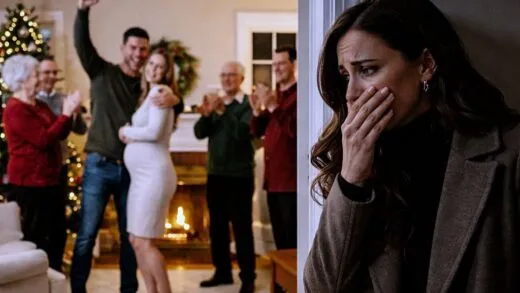
As I took my seat in the front row, the emptiness beside me felt like a physical presence. Three vacant chairs where my parents and best friend should have been. I could hear murmurs behind me—people noticing, wondering. The pitying glances were almost worse than the abandonment itself.
The service began with the ceremonial ringing of a bell—the tradition that marks a firefighter’s final call. Bobby’s captain spoke about his bravery, his commitment to service, and his unfailing kindness. Fellow firefighters shared stories that made me laugh through my tears—Bobby’s infamous chili that was so spicy it cleared the firehouse; his tendency to adopt stray animals until we could find them homes; his endless patience teaching new recruits.
I had prepared remarks, but I wasn’t sure I could make it through them without breaking down. When the time came, I approached the small podium on surprisingly steady legs.
“Bobby once told me,” I began, my voice stronger than I expected, “that love isn’t what you say. It is what you do. It is showing up. It is being present in the hard moments, not just the celebrations.”
I looked out at the sea of uniforms, at the people who had shown up consistently throughout Bobby’s illness and now in his death.
“Each of you demonstrated that kind of love to us during the hardest year of our lives.”
I spoke about Bobby’s courage, his humor that never failed even in his darkest moments, his complete lack of self-pity despite the terrible hand he had been dealt. I didn’t mention the empty chairs beside me. I didn’t need to. Their absence spoke volumes.
After the final prayer and the folding of the ceremonial flag, which Captain Miller presented to me with formal solemnity, people filed past to offer condolences. So many whispered variations of “if you need anything,” and I thanked them automatically, knowing that most well-intentioned offers of help would fade as normal life resumed.
As the crowd thinned, a man I didn’t recognize approached hesitantly. He had Bobby’s eyes and the same cleft in his chin.
“Cassandra? I’m Jason. Bobby’s brother.”
I stared in shock. Bobby had mentioned his estranged brother once or twice but said they hadn’t spoken in years due to a family conflict he never fully explained.
“I know this is strange,” Jason continued awkwardly, twisting a cap in his hands. “We weren’t in touch… but when I saw the notice, I had to come. He was my little brother.”
Tears filled my eyes as I embraced the stranger who carried pieces of Bobby in his face. “He would have been so glad you came.”
Jason glanced at the empty chairs in the front row. “Your family couldn’t make it?”
“They chose not to,” I said simply.
Understanding crossed his face. “Bobby always said you were the strongest person he knew. Now I see why.”
At the cemetery, the final goodbye was even more intimate. Just me, the funeral director, and a handful of Bobby’s closest colleagues. The department chaplain said a final prayer as Bobby’s ashes were placed in the simple niche we had chosen together during one of his lucid days. I placed a small carved firefighter’s emblem beside the urn, a gift from his rookie class.
The fire captain had arranged a reception at the station afterward, but I couldn’t face more sympathy, more questions about my absent family. Instead, I asked Mr. Patterson to drive me home.
“Is someone meeting you there?” he asked with genuine concern. “You shouldn’t be alone tonight.”
“I will be alright,” I assured him, though I wasn’t certain that was true.
As I climbed the steps to our empty house, I remembered Bobby’s words from early in his illness. We had been discussing people’s discomfort with his diagnosis, how some friends had already begun to disappear.
Some people can’t handle the hard parts of life, he’d said. They want the wedding but not the marriage. The birth but not the sleepless nights. The anniversary celebrations but not the daily work of loving someone. Don’t be too hard on them, Cass. Not everyone has your strength.
I had thought he was being generous. Now I wondered if he had been preparing me for exactly this moment—standing alone on our porch with the knowledge that the people who should have loved me most had failed the ultimate test of loyalty.
As I turned the key in the lock, I made a decision. This betrayal would not define me. I would honor Bobby by being exactly the person he believed me to be—someone strong enough to rebuild from ashes.