The wind howled like a wounded animal across the open plains, tugging at the old shutters on Abigail Monroe’s ranch house. The fog rolled thick and low, swallowing everything beyond the front porch. There were no stars, no moon—just white breath rising and the sharp crackle of frost under boot soles.
Abby stood at the wood stove in her kitchen, wrapping her worn shawl tighter around her shoulders. She hadn’t planned to be up this late, but something about the night felt off, restless, like the world was holding its breath. She reached for the kettle when the knock came.
Not a tap, not a polite visitor’s knock. Three heavy, desperate pounds. She froze.
No one came out this way after dark. The nearest neighbor was five miles north and didn’t ride after sundown. And no traveler with sense wandered these hills in November unless they were running from something or had nowhere else to go.
Abby stepped toward the front door and paused, grabbing the shotgun from behind the coat rack. Her heart pounded in her ears. With every step, the knock seemed to echo deeper in her bones.
Another knock, then a voice—hoarse, ragged, male. “Ma’am, I don’t mean no harm. We just need a place to sleep.”
Somewhere warm enough not to die. That stopped her cold. We.
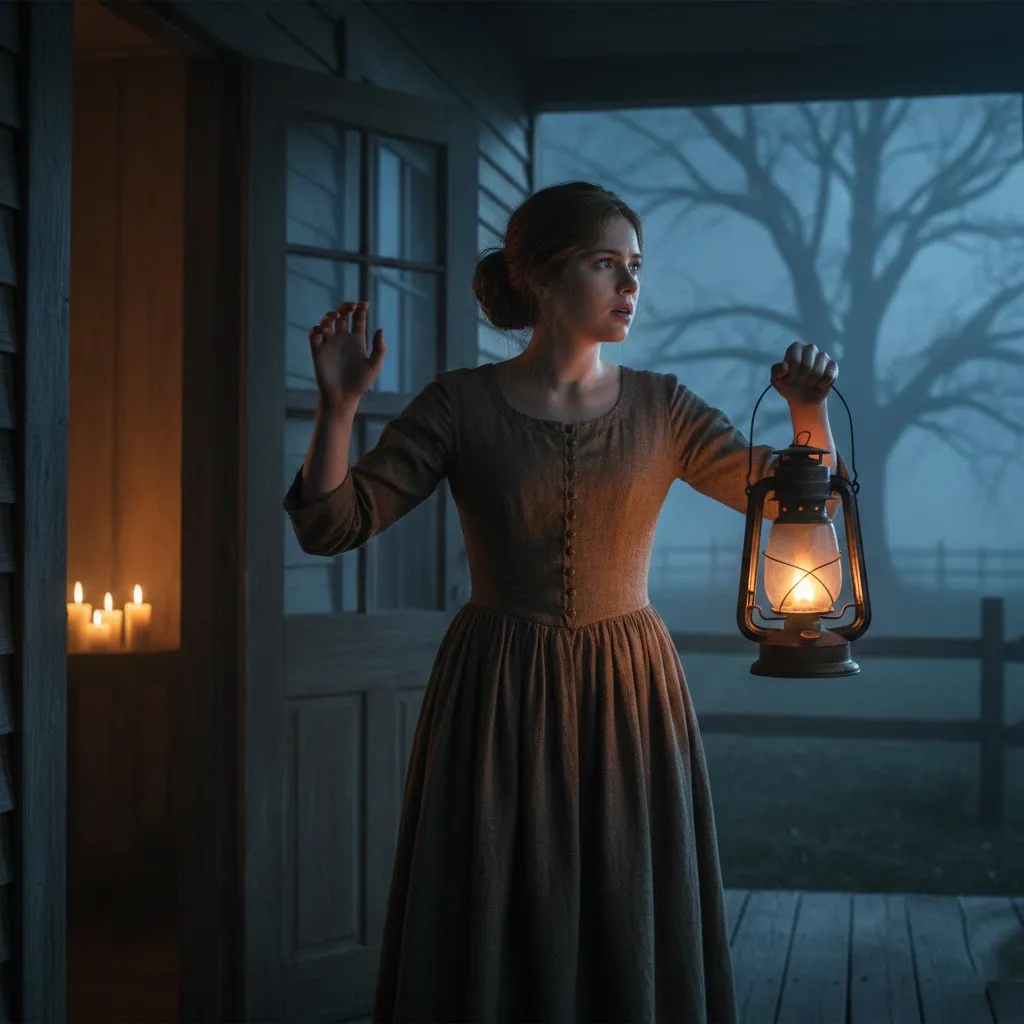
She pushed open the door slowly, barrel first, lamp in the other hand.
Fog spilled over the porch. Out of the white, a tall figure appeared, holding something—no, two somethings—tight against his chest. Bundles wrapped in blankets.
Infants. Abby’s eyes widened. The man removed his hat.
Beneath the dirt and stubble, he had hollow cheeks, tired eyes, and a look that said he hadn’t slept in days. The babies in his arms whimpered, tiny sounds swallowed by the wind.
“I’m sorry to come this late,” he said. “Walked all day. They’re freezing. I ain’t asking for charity. Just a place to lay them down till morning. A barn, a shed, anywhere off the wind.”
Abby glanced past him into the dark. No horse. No wagon. Just mud-caked boots and a worn satchel over his shoulder.
“What’s your name?” she asked, keeping the gun steady.
“Caleb. Caleb Walker. These are my boys, Luke and Levi.” He looked like a man used to hearing no but still praying for yes.
Abby’s mind raced. A stranger. Two children. Her ranch was isolated, and she lived alone. Her father had died two winters ago and her mother not long after. Folks already whispered about her being too proud to marry, too stubborn to leave, and now a desperate man wanted in her yard, her world, her silence.
She swallowed the lump in her throat. “The barn’s out back,” she said finally, voice even. “Dry straw and some wool blankets in the corner. I don’t let strangers in the house.”
Caleb’s shoulders dropped in relief. He didn’t argue. “Thank you, ma’am. I swear we’ll be gone by first light.”
He turned and disappeared into the fog, the faint sound of a baby coughing trailing behind.
Abby closed the door and leaned against it, gun still in hand. She didn’t move for a long time. That night, the silence of the house pressed in like a weight. The fire crackled, but it couldn’t warm the unease settling in her chest. She sat at the kitchen table staring at her chipped cup of coffee, her hands clenched around the ceramic like it could anchor her. She’d survived two winters alone, fought off wolves, patched fences in sleet, buried her own parents with no one but wind for company.
But those babies… those tiny cries.
She stood abruptly, grabbed her lamp, and walked to the window. The barn stood at the edge of the fog, its silhouette barely visible in the lantern glow. She imagined them inside on the ground, wrapped in thin blankets, cold creeping into their bones. Something about the way that man held them… She bit her lip.
No, she told herself. He’s a stranger. He could be dangerous. You can’t just—
A sharp gust rattled the window. She cursed under her breath.
Five minutes later, she was outside, boots crunching frost, coat over her nightdress, a wool shawl wrapped tight. Her lamp cast a pale halo through the fog as she reached the barn and opened the door with a creak.
Inside, the scene hit her like a kick to the chest. Caleb sat against the haystack, back to the wall, both babies curled in his arms beneath his coat. He was awake, rocking slightly, humming something faint and broken like a memory. His eyes met hers, startled.
“Ma’am?”
Abby stepped forward and extended her arms. “Give me the babies.”
He blinked.
“Ma’am?”
“I said give me the babies. You’re coming inside.”
He hesitated.
“I won’t sleep tonight knowing there’s two babies shivering out here.”
Caleb stared at her like she was something he couldn’t quite believe. He stood slowly, legs stiff, and passed Luke and Levi to her with the kind of care that made her throat tighten. She cradled them instinctively, one in each arm.
He followed her through the dark into the warmth of her kitchen, where the fire still glowed low in the stove. She laid the babies down on the thick quilt she spread out by the fire. Caleb sank to his knees beside them, hands hovering like he couldn’t stop protecting them even now.
Abby fetched another blanket, set out a kettle for hot water, and said quietly, “We’ll talk in the morning.”
Caleb nodded. “Thank you, ma’am. You don’t know what this means.”
She didn’t respond, just stared into the flames as the cold fog curled around the windows, held at bay by wood warmth and one strange twist of fate.
The fire still glowed in the hearth, throwing soft orange light against the worn floorboards. Abby sat at the edge of her kitchen table, elbows on the wood, eyes on the man stretched out on the braided rug beside the fire. Caleb lay on his side, one arm around his boys, their tiny chests rising and falling beneath a thick quilt. He didn’t move, not even as the old stovepipe popped and hissed behind them.
It was nearly three in the morning, but Abby knew there’d be no sleep tonight. Not with the wind still pushing at the corners of the house, not with her shotgun still leaning by the door, not with a stranger and his children asleep on her floor.
She rose quietly and walked to the kitchen sink, filled a tin mug with cold well water, and took a long sip. Her hands trembled, but she wasn’t sure if it was the chill or the weight of what she’d just done. This wasn’t like her. She was the kind of woman who said no more often than yes, who turned down marriage offers with a half-smile and didn’t explain herself, who spent three winters alone on her father’s land, ignoring every knock on her door unless it came from someone with tools or seed to trade.
And yet here she was, letting in a man she didn’t know, letting him sleep beside her fire, letting his babies breathe her air.
Abby walked to the fire and crouched down, careful not to wake them. Luke—she thought it was Luke—had a tiny fist bald near his cheek, dark lashes, specks of dirt dusted across red, round cheeks. He looked warm now, safe. She exhaled slowly.
I won’t sleep tonight knowing there’s two babies shivering out there. That’s what she’d told him. And it was true. Still true.
She adjusted the quilt, just slightly tucking it in tighter around the boys. Caleb stirred, eyes fluttering open, unfocused, then sharpening as they met hers.
“I’m sorry,” he whispered, sitting up halfway. “Didn’t mean to drift off like that.”
“They’re fine,” she replied, voice low. “You all are.”
He blinked slowly, then looked toward the stove as if the heat itself was too generous to believe in. “I meant what I said. We’ll be gone by sunrise. I appreciate what you’ve done, more than I can say.”
She shook her head and moved back to the table, grabbing her cup again. “You won’t go anywhere with those babies in the state they’re in. Not until you’ve eaten. Not until the frost breaks.”
He looked like he wanted to argue, but he also looked like he hadn’t eaten properly in days.
“You got a name, Mr. Caleb?”
“Caleb Walker.”
“And you weren’t lying about the boys.”
He smiled just a little. “No, ma’am. Luke and Levi. Six months old. Born under the last cold moon.”
She raised an eyebrow. “And their mother?”
His mouth twitched. Not quite a frown, not quite a grimace. “Past. Three months ago.”
Silence. Abby didn’t ask more. She could see the grief sitting behind his eyes like a loaded cart. Heavy, uneven, always there. She let the quiet fill the room as she set a small pot on the stove and scooped in oats from a barrel near the wall. She added milk and a pinch of salt, then stirred slowly. The kitchen smelled faintly of smoke, earth, and now oatmeal.
Behind her, Caleb watched but didn’t speak. He rocked slightly, calming one of the boys as they stirred, still half asleep. When the porridge was thick, she ladled it into two tin bowls and slid one toward him on the table.
“Eat. You look like a stiff wind would knock you over.”
Caleb hesitated for only a second before sitting across from her. He bowed his head slightly—not quite a prayer, not quite a thank you—then began to eat. Every few bites he paused, eyes flicking toward the twins as if checking they were still breathing.
“Where you headed?” she asked after a while.
“Anywhere that ain’t back.”
“That’s not an answer.”
He chewed slowly, then said, “North. Maybe Colorado. Maybe Montana. Somewhere I can find work. Raise them right.”…