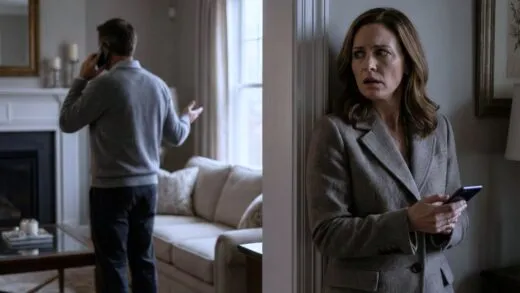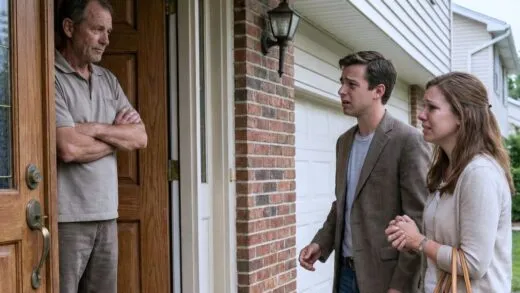
I stood up.
“You valued the idea of a successful family more than you valued me as a person.”
“We made a mistake,” Mom pleaded. “Can’t you forgive us?”
“Eventually, maybe. But not today. Not when you’re only here because you found out I’m worth billions. If Marcus hadn’t walked into this office, if he hadn’t told Rachel who I really am, you’d still think I was the family failure. You’d still be planning future holidays without me to protect Rachel’s image.”
Dad’s shoulders sagged.
“What can we do to fix this?”
“Figure out whether you want a relationship with me as I actually am, or whether you only want a relationship with the successful version that makes you look good.”
I checked my watch.
“Now, if you’ll excuse me, I have work to do.”
“Natalie…”
“David will show you out.”
They left without another word. That afternoon, I got a text from Rachel. “I hope you’re happy. You destroyed my relationship and turned Mom and Dad against me. You’ve always been jealous of me being the favorite, and now you’re using your money to punish us all.”
I didn’t respond.
Three days later, Mass General signed a $24 million pilot program contract. Dr. Williams sent a personal note: “Dr. Morrison, thank you for your professionalism during what must have been an incredibly awkward situation. Your integrity speaks volumes. Looking forward to saving lives together.”
New Year’s Eve arrived quietly. I spent it with my executive team at a company celebration in our conference room. We toasted our achievements: 2,400 lives saved in the past year, 300 employees supported, eighty-two hospitals using our technology.
At midnight, my phone buzzed. A text from Marcus: “Happy New Year, Dr. Morrison. Our pilot program starts Monday. Thank you for giving Mass General this opportunity.”
A text from Dr. Williams: “Thank you for building something that matters. Here’s to saving more lives in 2025.”
Then, a text from Mom: “Happy New Year, sweetheart. Your father and I are still hoping to talk when you’re ready. We love you. We’re sorry.”
I stared at Mom’s message for a long time. Then I typed: “Happy New Year, Mom. I need time. But I’m willing to talk eventually. On my terms.”
Her response came immediately: “Anything you need. We’ll wait.”
It wasn’t forgiveness. Not yet. But it was a beginning.
On January 2nd, Rachel called. I let it go to voicemail. She didn’t leave a message. On January 5th, she sent a text: “I’m sorry. Really sorry. Can we talk?” I replied: “Not yet. Maybe someday. But not yet.”
On January 8th, the New England Journal of Medicine published our latest outcome study. The headline read: “AI Platform Reduces Hospital Mortality by 34%: A Multi-Center Analysis.” That evening, my parents sent a card to my office. Inside, in Dad’s handwriting, it read: “We read the article. We’re proud of you. We always should have been. We’re sorry we didn’t ask sooner. Love, Mom and Dad.”
I put the card on my desk next to the Fortune cover.
On January 15th, I had coffee with Marcus at a cafe near BMC.
“How’s the pilot going?” I asked.
“Incredible. We’ve already caught three complications your AI predicted before clinical symptoms appeared. One patient would have died if we hadn’t intervened when we did.” He paused. “You’re saving lives, Natalie. Real lives.”
“That’s why I built it.”
“I wanted to apologize again. For not questioning Rachel’s story. For agreeing to a Christmas that excluded you. I should have known something was wrong.”
“You trusted your girlfriend. That’s normal.”
“I trusted someone who lied about her own sister to make herself look better. That’s not normal.” He took a sip of coffee. “For what it’s worth, I told my parents what happened. They were horrified. My mother asked me to invite you to dinner to apologize on behalf of my family for being part of the reason you were excluded.”
I smiled.
“That’s kind, but unnecessary.”
“She insists. She’s very traditional about family honor. She feels partially responsible.”
“Tell her I appreciate the gesture. Maybe in a few months.”
He nodded.
“Fair enough.”
As we stood to leave, he said:
“Rachel reached out last week. Asked if I’d reconsider.”
“What did you say?”
“I said no. I can’t be with someone who treats family as disposable when they’re inconvenient. That’s a character issue, not a misunderstanding.” He met my eyes. “You deserved better than how they treated you.”
“Thank you for seeing that.”
“Anyone who actually looked would have seen it.”
After he left, I walked back to my office. The January sun was setting over Boston, painting the harbor in shades of gold and pink. My phone buzzed. A text from David: “Dr. Morrison, Johns Hopkins wants to schedule a call. They’re interested in implementing CareLink across their entire system. 1,200 beds.”
I smiled and typed back: “Schedule it.”
That night, I sat in my penthouse—the one my family didn’t know about—looking out over the city. My city. The city where I’d built something that mattered. My phone buzzed one more time.
Text from Mom: “I know you need space. But I wanted you to know. I told everyone at my book club what you do. Really do. About your company and the lives you’ve saved. I should have been telling everyone years ago. I should have asked. I’m sorry I didn’t. So proud of you. Always have been, even when I didn’t show it right.”
I stared at the message for a long time. Then I replied: “Thank you, Mom. Let’s have coffee next week. Just us.”
Her response was immediate: “I’d love that. I’ll be there whenever you say.”
It wasn’t a full reconciliation. The hurt was still too fresh, the betrayal too recent. But it was a door opening slowly. Whether we walked through it together would depend on whether they could learn to value me for who I was, not what I’d achieved.
Outside my window, Boston glittered with possibility. Inside my office tomorrow, we’d keep saving lives. And that, more than anything my family could say or do, was enough.