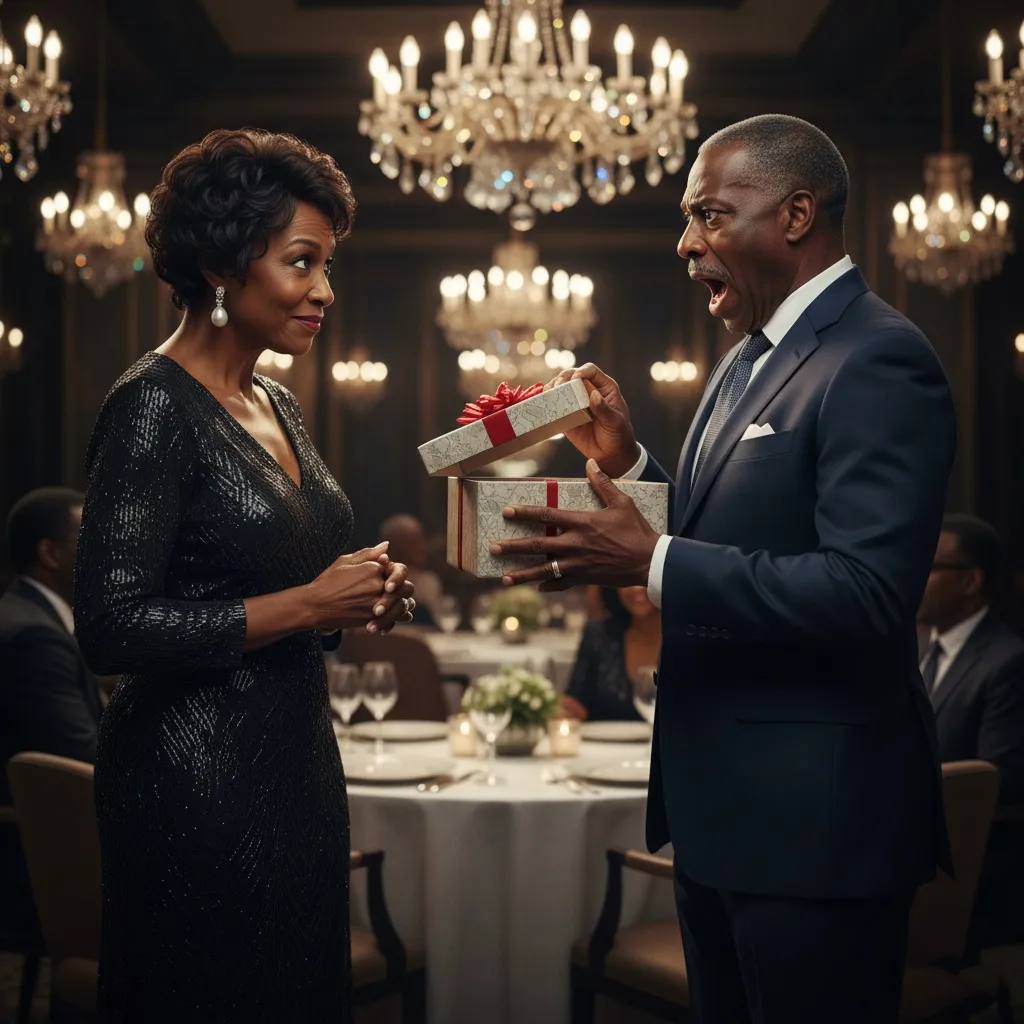
On my 73rd birthday, my husband stood another woman and two children next to me and told our guests, this is my second family, the one I’ve been hiding for 30 years. My daughters watched in horror, but I simply smiled, handed him a box and said, I knew, this gift is for you. He opened it and his hands began to tremble.
The morning of my 73rd birthday smelled of freshly brewed Ethiopian Yirgacheffe coffee and the petunias in my garden. I woke up as always without an alarm exactly at six o’clock. The sun had just barely touched the tops of the old pecan trees.
Its slanted rays drew long shimmering lines across the floor of the screened-in porch. I love this time. The silence is still thick, untouched by the day’s hustle.
In these moments, it feels like you can hear the grass grow. I sat at the table that Langston built about 40 years ago and looked out at my garden. Every shrub, every flowerbed, every winding path, all of it was imagined and cultivated by me.
This house, this getaway home on the outskirts of Atlanta, was my unrealized concert hall. A long time ago, in another life, I was a young, highly promising architect. I had the project of my dreams laid out before me, a new performing arts center in downtown Atlanta.
I was chosen, and I was given full funding. I remember the scent of the thick blueprint paper, the scratch of the graphite pencil drawing the lines of a future marvel of glass and concrete. Then came Langston, with his first genius business idea, imported high-end woodworking machinery that was supposed to make us rich.
We didn’t have the money, and I made a choice. I liquidated the inheritance meant for my dream, for my future, and gave him every dime. The business crashed and burned within a year, leaving behind only debt.
And I? I stayed here. Instead of a concert hall, I built this house, pouring everything I had into it, the remnants of my talent, all my strength, all my unspent love for form and line. This home became my quiet masterpiece, a masterpiece no one else save me considered it to be.
Ora, have you seen my blue polo? The one that looks best? My husband’s voice yanked me from my memories. Langston stood in the doorway, already dressed in slacks, frowning, focused only on himself. Not a word about my birthday, not a single glance at the festive linen tablecloth I had taken out of the hall closet yesterday.
Seventy-three years old. Fifty years together. For him, this was just another Thursday.
In the top dresser drawer, I ironed it yesterday, I replied calmly without turning around. I knew he wouldn’t notice the new tablecloth or the vase of peonies I cut at dawn. He stopped noticing such things three decades ago.
To him, I was part of the interior design, convenient, reliable, familiar, like that armchair, like this table. The foundation. He loved that word.
You are my foundation, Ora, he would sometimes say after his third snifter of cognac. He had no idea how right he was. The phone rang.
My elder daughter, Zora. Hey mom, happy birthday, of course. Listen, we’re stuck in dead stop traffic heading out to the house.
It’s awful. Could you start setting out the food, please? We don’t want to show up and nothing’s ready. And keep an eye on dad so he doesn’t drink too much before we get there.
You know how he is. She spoke quickly, sounding annoyed, as if my birthday were just another irksome obligation in her packed schedule. I wasn’t the birthday girl, I was the catering staff for the event held in my own honor.
It’s fine, Zora, don’t worry, everything will be ready. I hung up. There was no chill in my chest.
There hadn’t been for a long time. There was only a quiet, transparent emptiness, like the air after a late summer rain. By five o’clock in the afternoon, the house was full of guests, old friends, relatives, Langston’s business associates.
They all arrived. Everyone spoke warm words, offered flowers, and raved about my peach cobbler and my garden. I smiled, accepted congratulations, and poured sweet tea.
I played my part, the role of the happy wife, mother, and mistress of this big, welcoming southern home, a role I had written and rehearsed for half a century. Langston was in his element. He moved from group to group, patting men on the back, offering compliments to the ladies.
He was the center of this world, the man in charge. He spoke of his successes at work, the lucrative deal he was about to close. He’d say, my house, my trees, and no one contradicted him.
No one knew that this house, just like our condo and buckhead and all our savings, had been registered only in my name, at the insistence of my wise father. It was my quiet, invisible fortress, my final bastion. My younger daughter, Anise, arrived.
She was the only one who hugged me, not just for appearances, but truly tight. She looked into my eyes and quietly asked, Mom, are you okay? I’m fine, sweet pea. I smiled.
She nodded, but her gaze held a trace of anxiety. Anise always felt more than the others. For a long time, she had looked at her father with a quiet, cold disapproval that he, in his self-absorption, simply failed to notice.
Then the moment I had been waiting for, and dreading, for a whole year, finally came. Langston took a glass of champagne and tapped it with a knife, calling for silence. The guests fell silent, anticipating a toast.
He stood in the center of the lawn, tall, still handsome at seventy-five, with graying temples and the posture of a man convinced of his right to everything. Friends! Family! he began loudly, with a theatrical pause. Today we celebrate the birthday of my dear Ora, my rock, my faithful companion.
He looked at me, and in his eyes I saw nothing but self-satisfaction. But today I want to do more than just wish her well. I want to finally be honest with all of you, with myself and with her.
The guests exchanged glances. I stood motionless, feeling dozens of curious eyes on me. Anise was frozen beside me, her hand found mine.
Friends! Langston continued, his voice trembling with poorly concealed triumph. For thirty years I have lived two lives, and today I want to make things right. He gave a signal to someone standing near the gate.
A woman in her early fifties emerged into the circle of light, well-kept, with a hard, appraising look. I recognized her. Renata.
She had once been my subordinate at the architectural firm. Behind her stood two young people, a boy and a girl, with equally confused and defiant faces. Langston walked over to them, put an arm around Renata’s shoulders, and led her right up to me.
Ora has been such a stable foundation, he said, looking over my head at the guests. So stable that, as it turns out, I could build not just one, but two houses on it. This foundation has supported all of us.
So, please, welcome my true love Renata and our children Kion and Olivia. It’s time for all my successes to be shared by my whole family. He said this and physically positioned Renata next to me, so close I could smell her sharp perfume.
He placed her as if for a family portrait. My elder daughter Zora gasped. A knee squeezed my hand until my knuckles turned white.
Laughter and conversation froze mid-sentence. A ringing, unbelievable silence settled over the lawn. In that moment, I didn’t feel the ground vanish beneath my feet or my heart shatter.
No. I felt something else, something very calm and final. A cold, distinct click.
It was like the key in a heavy, rusted lock, which had resisted for so long, finally turned, and the massive steel door closed forever. And then it came. The thought was not loud, not panicked.
It was quiet and clear, like the chime of a solitary bell in freezing air. I stood between my husband and his woman like the central support of a bridge spanning the two shores of his lie. The world around us was paused.
I saw our neighbor, Marie, with a cocktail glass frozen halfway to her lips. I saw my son-in-law, Zora’s husband, turn pale and instinctively take a step back, as if afraid of being hit by the wreckage of a collapsing life. The silence was so dense it felt palpable.
It pressed on my ears, drowning out the sounds of summer, the chirping of crickets, the rustle of leaves. I slowly turned my head and smiled, not bitterly, not vengefully. I smiled that polite, slightly detached smile with which the lady of the house greets latecomers.
I scanned their stunned faces, pausing for a split second on each, letting them know that I saw them, that I was here, that I was fully conscious. Then I turned back to Langston. He was still holding Renata’s shoulders.
His face was glowing with self-satisfaction and the significance of the moment. He was waiting for my reaction, waiting for tears, hysterics, a scene. He was prepared to be the magnanimous victor calming the losing party.
I walked over to the small patio table where my gift for him lay, a single box tied with a dark navy silk ribbon. The wrapping paper was thick, ivory colored, and unadorned, strictly elegant. A year ago, when I first found everything out, I spent hours choosing that paper.
It was important to me that everything be impeccable. I picked up the box. It was light, almost weightless.
I returned to Langston, who was watching me with confusion. I knew Langston, I said. My voice did not tremble.
It sounded level and calm, perhaps a little quieter than usual. This gift is for you. I held out the box.
He hesitated for a moment. His script, so meticulously directed, had glitched. This part wasn’t in it.
He mechanically released Renata’s shoulder and took the gift from me. His fingers touched mine, warm, slightly damp. I pulled my hand away.
He looked at the box, then at me. Confusion flickered in his eyes, quickly replaced by a condescending smirk. He probably figured it was some pathetic gesture, an attempt to save face.
Maybe an expensive watch or cufflinks? A parting gift? He pulled at the bow. The silk ribbon slipped onto the grass like a dark snake. He tore off the paper.
His movements were less confident now, slightly more abrupt than necessary. Under the paper was a plain white cardboard box. He opened the lid.
I watched his face. Inside, in the emptiness where my heart used to be, nothing stirred. I was a front-row spectator at a play whose ending I knew by heart.
He looked inside. At the bottom of the box, resting on a white satin lining, was a single, simple house key. A standard American key, smelling of new paint, and next to it, a sheet of thick paper folded into quarters.
Langston took it out and unfolded it. I watched his eyes dart over the lines, first quickly, then slower, as if stumbling over every word. I knew those words by heart.
I had helped my lawyer draft them. Notice of termination of marriage due to long-term marital infidelity, based on documents of sole property ownership. We hereby give notice of the immediate freeze of all joint accounts and assets.
Order to cease and desist. Access to property located at the following addresses. One, Decatur Street, Atlanta, G.A., the house.
Two, the Buckhead Condo, Atlanta, G.A., the apartment. His left hand, the one holding the sheet, was the first to tremor, a fine, almost imperceptible shake that traveled up to his shoulder. Then his right hand began to tremble too.
The paper rustled in his grip like an autumn leaf in the wind. He looked up at me. The self-satisfaction was gone.
The triumph had vanished. Looking at me now was a confused, aging man with an ashen face. In his eyes was neither anger nor hurt, only pure animal bewilderment.
It was as if he had been walking on solid, reliable ground his whole life, and suddenly it opened up beneath his feet into a chasm. He tried to say something, opened his mouth, but only a quiet, hoarse gasp escaped. He looked at the paper again, then at the key, then back at me.
He searched my face for an answer, a hint, a sign that this was some sort of cruel, ridiculous joke. But my face was a mask, calm, impenetrable. I had spent 50 years learning to conceal my true feelings, 50 years building this façade, this foundation, as he liked to call it, and today that façade held.
Behind it, there was nothing, no pain, no love, no pity, only cold, ringing freedom. Renata, standing beside him, understood nothing. She looked nervously at Langston’s changing face.
Langston, what is it? What is that? she whispered, trying to peer at the document. He didn’t answer. He just stood there, staring at me, and his world, so comfortable, so secure, built on my life, my money, and my silence, was collapsing live in front of all his friends and family.
I held his gaze, and then slowly, very slowly, turned to Anise, my girl, my only true anchor. She was looking at me, and her eyes were filled with tears, not of pity, but of pride. She understood everything.
I gave her a small nod, and said just loud enough for her to hear, it’s time. She gripped my hand tighter. That was enough.
The show was over. Time to drop the curtain. Anise understood without words.
Her fingers on my forearm became hard as steel. She nodded, and without planning it, we turned and walked toward the house. We didn’t run.
We walked steadily, with dignity, away from the scene frozen on the lawn. Guests parted before us like water before an icebreaker, avoiding our eyes, mumbling under their breath. I felt their gazes on my back, a mix of shock, pity, and, let’s face it, malicious curiosity.
Langston remained standing in the center, the white sheet trembling in his hands, next to the woman for whom he had orchestrated this grand reveal, a reveal that had gone wildly off his script. He shouted something after us. My name, I think.
But the sound of his voice drowned in the thick, viscous silence that had fallen over my garden. He had no power over me anymore. Even his voice was alien.
We entered the house. I stopped in the living room and, turning toward the door leading to the porch, said loudly enough to be heard outside, Dear friends, thank you all for coming to share this day with me. Unfortunately, the celebration is over.
Please, feel free to finish the cobbler and have a drink. All the best. That was all.
A simple, polite announcement. No explanations, no drama. A quiet, hasty exodus began.
I heard muffled voices, hurried steps on the gravel, the sound of car engines starting. No one came in to say goodbye. No one dared to look me in the eye.
Ten minutes later, all that remained in the garden were abandoned plates, half-empty glasses, and trampled flowers on the lawn. I saw Langston, finally snapping out of it, grab Renata’s arm and drag her toward the gate. His movements were jerky, angry.
He practically hauled her and her confused children behind him, stumbling, looking back at the house with an expression of pure animal rage on his face. He was no longer the master of the house. He was an outcast.
When the last car drove away and the evening silence returned to the neighborhood, a niece came and hugged me. It’s all right, darling, I said, stroking her hair. Everything is exactly as it should have been.
Will you help me clear the table? And we began to clean. In silence. We collected the dirty dishes, folded the tablecloths, and took out the trash.
This familiar, monotonous work was calming. Every gesture was purposeful, every movement known. I washed the glasses, the same thin bohemian crystal ones we received as a wedding gift.
The water washed away the marks of strange lips, strange wine. I felt that along with the grime, something else was being washed away. 50 years of sticky web that I had mistaken for family ties.
A niece worked beside me, occasionally casting me worried glances. She was waiting for me to break down, to cry, to scream. But I was calm.
Inside me, it was quiet and empty. There was no pain, no resentment, only a massive cold relief. It was as if I had carried an unbearable weight on my shoulders my whole life, and now, finally, I had dropped it.
It was late when we finished. The house was clean and quiet again. Mine.
I brewed us some mint tea from the garden. We sat on the porch, wrapped in blankets, and watched the dark, star-studded sky. Then my cell phone, lying on the table, vibrated, sharp, jarringly disrupting the peace.
A niece picked it up. Langston’s name flashed on the screen. The call was dropped, and a second later, a new voicemail notification arrived.
A niece looked at me questioningly. I nodded. She switched on the speaker, and the voice shattered the night’s silence, distorted with rage, breaking into a rasp.
Ora, are you out of your mind? What kind of circus did you pull? You humiliated me in front of everyone. Is this your little tantrum, your petty revenge? Are you completely senile in your old age? I’m trying to pay for a hotel, and my cards are blocked. My cards.
Do you understand what you’ve done? He was choking on his fury. In the background, I heard Renata’s placating voice. Langston, calm down.
Don’t talk like that. Don’t talk like that, he shrieked. She left me penniless.
Ora, I don’t know what kind of midlife crisis you’re having, but I’m giving you until morning, until morning to turn everything back on. Call the bank and say it was a mistake, a ridiculous joke. Otherwise, I swear, you’ll regret it.
You hear me? You will bitterly regret this. Wise up before it’s too late. The message cut off.
We sat in silence for some time. Even the crickets seemed to have stopped. Anise looked at me.
Her face was tense. Mom. I slowly took my cup of cooling tea.
My fingers were steady. I took a sip. The mint taste was fresh and clean.
He still doesn’t understand, I said. He and Renata. They think this is a fit.
A woman’s tantrum. A silly comical bluff that will end by morning when I come to my senses. They didn’t see the plan, the preparation, or the cold fury that accumulated in me for a year and turned into ice.
They only saw what they wanted to see. An aging, wronged wife who dared to make a scene. They still consider themselves to be in charge.
I looked at Anise. Her eyes held the same question as Langston’s voice. What now? I set the cup on the table.
The sound of porcelain on wood was the only sound that night. I have a meeting with my attorney at ten o’clock tomorrow morning, I said quietly. I want you to come with me.
My voice was level. There were no doubts within me. My husband’s furious cry, recorded on my voicemail, didn’t frighten me.
It only strengthened my resolve. Just as a blacksmith plunges red-hot metal into cold water to make it harder, so his words turned my will into steel. The drive into Atlanta the next morning was silent.
Anise drove, gripping the steering wheel tightly, her gaze fixed on the road. I looked out of the window at the suburban Georgia scenery rushing past, but I didn’t see it. I only saw his face, bewildered, flushed with anger, contorted with incomprehension.
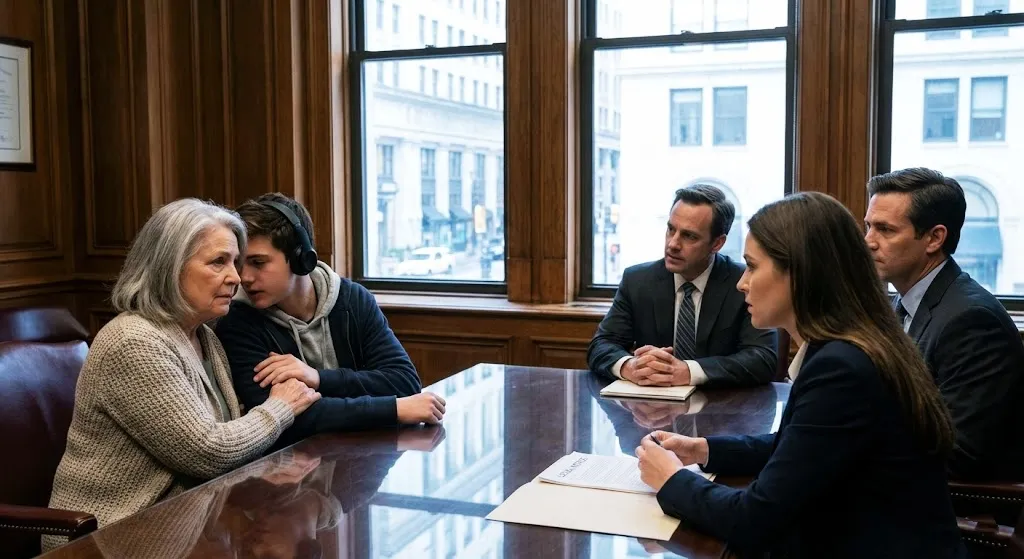
He still believed this was my blunder, something that could be canceled like a wrong order at a restaurant. He didn’t realize that yesterday was not the beginning, but the end, the final period I had been working toward for an entire year. Attorney Victor Bryant’s office was in an old Atlanta building off Peachtree Street, a heavy mahogany door, the scent of expensive cologne, and old books.
Victor Bryant himself was a man who suited his office. Solid, older, with an attentive and inscrutable gaze. He had worked with my father, which is why I sought him out.
I knew I could trust him. He met us at the door, led us to a large table, and offered us coffee. We declined.
Well, or a sade, he began when we were seated, speaking in a level, business-like tone. As we agreed, all initial notices have been sent and accounts and assets are frozen. The process has been launched.
Has Langston or his representatives contacted you? There was a voicemail. I replied calmly. Threats and accusations of hysteria.
Victor Bryant nodded as if this was exactly what he expected. That’s predictable. He hasn’t grasped the seriousness of the situation yet.
He’s still playing his familiar game where he’s the boss, but that will change soon. He paused, clasping his hands on the table. His gaze hardened.
Ora, we launched the standard procedures, but there’s something else. When you first came to me, out of old habit and respect for your father’s memory, I felt it necessary to conduct an additional deeper check, just as a precaution. I needed to understand what we were dealing with, and my fears, unfortunately, were justified.
Even more so. He pulled open a desk drawer and took out a thin file. He placed it in front of me.
There were no labels on the folder. I am obligated to inform you of something extremely unpleasant. This goes beyond his infidelity.
It speaks to a calculated, premeditated action directed personally against you. And he’s tensed, her hand resting on mine. I did not move.
I just stared at the folder. What is it? I asked. Victor Bryant opened the folder and slid several sheets toward me.
This is a copy of a petition filed by your husband two months ago with the county’s behavioral health unit. An official request for a compulsory psychiatric assessment regarding your competency. Time stopped.
I heard a niece gasp beside me, but I simply stared at the document. An official form, typewritten text, and below, Langston’s sprawling familiar signature. This is the first legal step.
The attorney’s dispassionate voice continued, sounding as if from a distance. Required to have a person declared incompetent and to obtain guardianship over them, and consequently, full authority to manage all of their assets. I picked up the top sheet.
It was a list of so-called symptoms my husband had allegedly observed. I began to read. Frequently misplaces personal items.
Cannot recall where she placed her glasses, keys, or documents, which suggests a progressive loss of short-term memory. I remembered searching for my reading glasses a week ago, only to find them on top of my head. A niece and I had laughed about it.
Exhibits disorientation in daily life. Confuses basic pantry items, such as salt and sugar, which may pose a danger to herself and others. I had once, distracted, put salt in the sugar bowl.
I noticed it a minute later and fixed it. Langston had joked, working too hard, mom. He wasn’t joking.
He was collecting. Shows signs of social isolation and apathy. Refuses to meet friends.
Spends long periods alone in the garden and converses with plants, which may indicate a detachment from reality. My garden, my only sanctuary, my quiet hours among the peonies and roses when I could breathe. He had turned even this into a symptom of illness.
A weapon against me. I read on. Every line was poison.
A grain of truth distorted beyond recognition, carefully mixed with blatant lies. Every innocent gesture, every moment of fatigue, every instance of age-related forgetfulness, all of it was inverted and presented as evidence of my insanity. My hands, resting on the polished surface of the table, did not shake, but I felt the warmth draining from my fingertips.
First one, then the other. The cold slowly crept up to my palms, my wrists. It was as if my blood was retreating, leaving behind an icy emptiness.
I looked up and out the window. Life was bustling beyond the thick glass. People hurried about their business, cars crawled in traffic, the sun shone.
But for one brief moment, all that noisy, bustling Atlanta day froze for me. The sounds vanished. An absolute vacuum-like silence fell, and in that silence, I understood.
This wasn’t just infidelity. Infidelity is about the betrayal of love. But this was about something else.
A complete, cold, calculated destruction. He didn’t just want to leave for another woman. He wanted to erase me.
To strip me, not only of my home and money, but of my mind, my name, my very self. To turn me into a voiceless shadow, locked within four walls, while he and his true love enjoyed everything I had created in my life. The last warm ember in my soul, which I had perhaps unknowingly saved for him, an ember of pity or shared memory, didn’t just go out.
It turned into a piece of ice. I slowly placed the documents on the table, stacking them neatly. I looked at Victor Bryant, then at Anise’s pale, frightened face.
Thank you, Victor, I said. My voice was just as level as before. But something in it had changed.
Something permanent. The picture is now complete. What are our next steps? Victor Bryant acted swiftly, with the cold, honed efficiency of a surgeon removing a tumor.
While Anise and I drove back to the house, his couriers were already delivering notices across Atlanta. His assistants were already calling the banks. The mechanism I had so long and painstakingly prepared was set in motion with a single nod in his office.
The first blow, as Victor later told me, found Langston where he least expected it, having breakfast in an expensive hotel. He and Renata were likely still discussing my ridiculous outburst, planning how they would magnanimously accept my repentance. At that moment, a man in a sharp suit approached their table and silently placed a thick envelope in front of Langston.
Inside were not just divorce papers. There was an official court order prohibiting him from approaching or contacting me, except through lawyers, and a separate mandate forbidding him from entering any property registered in my name. I can imagine him reading it.
How the condescending smirk slid from his face, replaced by angry crimson patches. He probably crumpled the paper, threw it on the floor, shouting about overreach, and how half of everything was his. He still believed it.
He believed that his 50-year presence in my life automatically entitled him to everything I had earned, built, and saved. The next step was a reality he crashed into like a wave against a rock. They drove to the Buckhead condo.
He probably intended to create a scene, break down the door, and prove who was in charge. Instead, he just stood on the landing, helplessly jabbing his key into the new shiny lock. His key no longer fit.
He could ring, knock, or shout. The door remained silent. That door, which I had chosen 30 years ago, upholstered in dark leather, was now alien to him, an insurmountable barrier.
I was at the house during this time. A locksmith arrived, an older, taciturn man. He worked quickly and silently.
With clang and scrape, he removed the old locks from the gate and the front door, the very locks Langston had keys to. I stood on the porch and listened to those sounds. Every turn of the screwdriver, every click of the new mechanism, was music, the music of liberation.
This wasn’t revenge. It was disinfection. I was cleansing my home of filth.
The last, most humiliating blow awaited him on the street outside the condo. As he, exhausted and angry, was about to drive off to concoct a new plan, he saw a tow truck pull up to his car, the gleaming black SUV I had given him for his big birthday three years ago. Two workers in orange vests efficiently hooked up the vehicle and began hoisting it onto the platform.
Langston rushed toward them, waving his arms, shouting something about private property. But the foreman silently handed him the paperwork, an official notice of the return of property to the lawful owner. My name was on the paper, Orissa Day Holloway, owner.
I imagine Renata’s face in that moment. She stood nearby on the sidewalk, watching as the symbol of their security, their status, slowly drove away into the unknown. Blocked cards are an inconvenience.
Divorce papers are a scandal. A locked door is an insult. But when your car is towed away right in front of you, when you are left standing on a sidewalk in Atlanta with no money, no home, and no transportation, that is when realization hits.
In that very moment, I am sure her condescension turned to fear. She looked at her man, who was helplessly shouting after the tow truck, and she understood. She understood that they were not dealing with an offended, weeping old woman, not with a victim who could be calmed and deceived.
They had run into something cold, silent, and absolutely methodical. A quiet executioner, who did not shout or threaten, but simply, step by step, severed everything that connected them to their familiar world. The panic, I assume, came later that evening.
That sticky animal panic of a person who suddenly realizes they have nothing. They were probably sitting somewhere in a cheap rented room at a distant relative’s place, and Langston was still raging, promising to sue everyone, to punish, to put things right. And she, more pragmatic, smarter, was just sitting there, putting two and two together.
The house is hers. The condo is hers. The accounts are hers.
The car is hers. Everything they were used to, everything they considered theirs by right, turned out to be a mirage, dust. They had built their lives for 30 years on her foundation, never bothering to check who that foundation belonged to.
Their shouting was probably heard by the neighbors, his full of rage and powerlessness, hers full of fear and accusation. You said everything was under control. You promised she couldn’t do anything.
We should have acted sooner, Langston, with the doctors, with the assessment. They didn’t lose yesterday, on my birthday. They lost two months ago, when he put his signature on that petition.
He handed me the weapon himself. He showed me himself that this was not about love or grudges. This was about survival.
And I accepted the rules of this war. A phone call from a niece late that night confirmed my thoughts. Her elder sister, Zora, had called her, completely in tears, hysterical.
Dad called. She sobbed into the receiver. He was screaming that Mom had gone crazy, that you’re manipulating her, that she kicked him out onto the street, left him with nothing.
A niece, what is happening? We have to do something. He’s our father. A niece answered her coldly and levelly.
Where were you, Zora, when he stood his mistress next to Mom on her own birthday? Where were you when he humiliated her in front of all the guests? Zora mumbled something incoherent about needing to talk. You can’t just do this. She, like her father, didn’t see the depth of it.
She only saw the disruption of the usual order of things. I took the phone from a niece. Zora, I said calmly, don’t worry.
Your father will be just fine. He’s simply learning to live independently. For the first time in 50 years.
I hung up the phone without waiting for her reply. I slept soundly that night, as I hadn’t for many years. I knew this wasn’t over.
I knew their panic would soon transition into a new stage, desperation. And a desperate person is capable of anything. I knew they would come.
They would try to breach the defenses. They would fight one last, dirtiest battle. And I was ready for it.
I was ready, but I wasn’t going to sit in a siege. The life I was reclaiming for myself wasn’t meant to be spent locked behind doors in fear. On the third day after the visit to the attorney, I decided I needed to drive to the little market near the commuter station.
I was out of fresh bread and milk. A niece offered to go herself, but I gently refused. This was my city, my life, and I wasn’t going to hide anymore.
The day was warm, smelling of dust and flowering jasmine. I walked unhurriedly, enjoying the simple things, the sun on my face, the weight of the light shopping bag in my hand, the feeling of solid earth beneath my feet. I bought everything I needed.
A loaf of sourdough, a carton of buttermilk, some goat cheese, nothing special, just food, just life. They were waiting for me by the exit. A car, old and battered, not theirs, apparently borrowed from an acquaintance, braked sharply right at the curb.
Langston practically fell out of it. Renata followed more slowly, but with the same predatory resolve. They looked awful.
Langston was wearing the same blue polo I had ironed for him on my birthday, but now it was crumpled, the collar soiled, dark circles were beneath his eyes. Renata was without her usual flawless hairstyle. Her face was pale and angry.
The polish was gone. All that remained was fatigue and poorly hidden panic. They stood in front of me, blocking the way.
Ora, Langston began. His voice was a mix of anger and pleading. We need to talk.
You can’t do this. You just can’t. I looked at him silently.
In my hands was the grocery bag. I didn’t feel fear, only a slight curiosity, like an entomologist examining a caught insect. You’ve cut off everything, everything.
How am I supposed to live? You threw me out like a dog after 50 years, 50 years of our life. Do you even understand what you’re doing? He waved his hands, trying to attract the attention of passersby. A few people turned around, but seeing a typical family quarrel, they immediately lost interest.
I continued to stay silent. I let him vent. I knew that beneath that torrent of anger was only fear.
He always did this. When he was scared, he started yelling. Seeing that his rage made no impression on me, he changed tactics.
His shoulders slumped. His voice softened. Pitiful, pleading notes crept into it.
Sweetheart, remember everything. Remember when we were young, when we built this house, how we raised our girls. Does none of that mean anything? Can you really wipe it all out in a single day? This is our life together, our history.
I, I made a mistake. Fine, I admit it. But is it worth destroying everything to the ground? Think about the children, the grandchildren.
What will we tell them? He tried to look into my eyes, searching for a spark of the old aura, the one who always forgave, the one who always understood, the one who always sacrificed herself for his comfort. But he was looking into a void. That aura was dead.
He had killed herself two months ago when he wrote those lying words about my insanity on paper. Renata stood next to him. She understood his pleas weren’t working and decided to enter the game.
She stepped forward. Her gaze was sharp and cold. Aura Sade, she began, trying to maintain dignity, but poorly concealed hatred slipped into her voice.
You can think whatever you want about me. You can hate Langston, but did you think about my children? What did they do wrong? My son just graduated from Morehouse. He needs to start his life.
My daughter was planning her wedding. You are destroying their future. Whatever your opinion of us, they are his children.
They have a right to his support. You’re not just taking everything from him. You’re taking it from them too.
Do you have a heart? She tried to appeal to pity, to guilt. This was their last card. They thought that I, like any normal woman, would be unable to remain indifferent to the fate of innocent children.
I listened to them patiently, without interrupting. I let them pour out everything, his rage, his pathetic memories, her hypocritical concern for her offspring. I looked at their faces, contorted with despair, and felt nothing.
No anger, no triumph, no pity. Only cold, crystalline clarity. When they finally fell silent, exhausted, a brief pause hung in the air.
I could hear the passing commuter train rattling, the nearby sound of children laughing. The world continued its usual life, oblivious to our small drama. I shifted my gaze from Renata’s face to Langston’s.
I looked him straight in the eyes, deeply, so he would know that I saw right through him. I saw all his cowardice, all his weakness, all his rot. And then I asked my question, quietly, almost a whisper, but every word sounded in the silence like a hammer striking glass.
Was it your idea or hers to have me declared incompetent? It wasn’t an accusation, it was just a question. But it hit them like a slap, a physical blow. I saw the blood drain from Langston’s face.
He turned deathly white. His mouth fell open, but he couldn’t utter a sound. He instinctively took half a step back, as if I had splashed acid in his face.
Renata froze. Her eyes widened in horror. The mask of the noble mother fell away instantly, revealing the predatory snarl of a caught thief.
They both stared at me with the same animal fear, the fear of exposure. In that moment, they stopped being a team. They looked at each other, and in their eyes was not trust, but suspicion.
Did you let it slip? Was it because of you, she found out? Their pitiful union, built on lies and calculation, cracked right before my eyes. I didn’t wait for an answer. The answer was written on their faces.
I simply walked around them, as one walks around two posts on the road, and continued toward my house. I didn’t look back. Behind me, I heard their deafening, ringing silence.
They remained standing on the sidewalk, crushed, destroyed by a single phrase. I walked home, tightly holding the bag of bread and buttermilk. And for the first time in many months, I felt like I was returning not to a fortress, but simply home.
Their desperation, as I had predicted, took on a new form. It turned into cunning, dirty, pathetic, but predictable. Two days later, Zora called me.
She was crying. Mom, I beg you, she sobbed into the phone. Dad is crushed.
He’s willing to do anything just to talk. Uncle Elias is here, Aunt Thelma. We’re all so worried.
Let’s meet at my place, all together, calmly as a family. Please, Mom, for my sake. I knew it was a lie.
The family meeting was their last bastion, their final attempt to stage a play where they were the victims, and I was the crazy old woman led astray by my greedy younger daughter. They were gathering an audience, a jury of relatives, whose opinions they could still influence. All right, Zora, I said, lovely.
Anise and I will come. What time? Relief was audible in Zora’s voice. She didn’t realize I was not coming for a negotiation.
I was coming for an execution. We arrived at Zora’s apartment exactly at seven o’clock. Her place, usually so loud and welcoming, greeted us with a tense, thick silence.
In the large living room, on the sofas and in the armchairs, sat relatives, Langston’s brother, Elias, and his wife, my cousin Thelma, and Zora’s family. They all looked at us with the same expression of awkwardness and anxious curiosity. Langston and Renata sat in the center, on the main sofa.
They were playing a tragedy. He was hunched over, his hands covering his head, like a suffering King Lear. She was next to him, with reddened eyes and a mournful expression, occasionally stroking his shoulder sympathetically.
They had already worked the room, telling their version. Now it was my turn. Anise and I sat in the armchairs opposite them.
I silently placed my handbag on the floor. Langston started. He lifted his head, and I had to credit his acting talent.
Genuine pain rang in his voice. Zora family, I gathered you all because a tragedy is unfolding. He spoke slowly, struggling to find the words.
A terrible tragedy with my wife, with our mother. I don’t know what happened to her. Lately, she’s become different, forgetful, suspicious.
She hides things, talks to herself. Her actions, they are devoid of all logic. What happened on her birthday, what she is doing now, it’s not her.
It’s an illness. He looked at me with such sympathy, that for a second, one could believe his sincerity. I understand.
It’s a shock. Renata chimed in with a quiet, trembling voice. Langston and I didn’t want to believe it ourselves.
We tried to help, but she won’t listen to anyone. Her paranoia is growing every day. And worst of all, she paused, casting a quick, venomous glance at my younger daughter.
Anise is taking advantage of this. She is turning her mother against everyone, against her father, against her sister. She is manipulating her to seize all the assets.
This account frees, the lock changes. Orisade herself would never have thought of this. It’s all Anise.
She has isolated her mother and is now doing whatever she wants with her. We are afraid for her. We just want to help her before it’s too late.
She finished and leaned against Langston’s shoulder, feigning complete helplessness. Silence hung in the room. Everyone looked at Anise and me.
Aunt Thelma stared with open pity. Langston’s brother Elias frowned, clearly bewildered. Zora looked at the floor, ashamed.
They were waiting for our reaction, waiting for excuses, tears, screams. I remained silent. I just looked at Anise, and Anise understood my look.
She didn’t raise her voice. She didn’t argue. She simply leaned over, took the thin folder from the handbag next to me, and placed it on the coffee table in the center of the room.
The sound of the paper lightly slapping the lacquered surface was deafening. Here, Anise said calmly and clearly, Aunt Thelma, Uncle Elias, here is the petition my father filed two months ago, a request to have my mother declared incompetent. It details how she talks to plants and confuses salt with sugar.
She opened the folder. The relatives leaned forward. Elias took the top sheet and began to read.
His face slowly lengthened. He handed the paper to his wife. Aunt Thelma put on her glasses.
Langston jumped up. That’s, that’s a forgery. Anise, what are you talking about? I did that out of concern.
I wanted to help her. Calm down, Dad, Anise said in the same icy tone. That’s not all.
She reached into her handbag again and took out a small digital recorder. She placed it next to the folder. You speak of paranoia and my manipulation.
I think it’s something else. For the last six months, knowing something wasn’t right, I sometimes turned on the recorder when my father came to visit us alone, supposedly to check on Mom. He talked a lot on the phone.
He thought no one could hear. She pressed the button. Langston’s face turned as white as the paper in the folder.
Renata clutched the armrest of the sofa. From the small speaker came a voice. His voice, slightly distorted, but absolutely recognizable.
Yeah, Renata, listen carefully. Tomorrow, when you talk to the doctor, be sure to mention the glasses. Say she looks for them three times a day, and the keys.
It’s classic. They fall for it. A pause, a lighter clicks.
No, don’t overdo it. The main thing is consistency. Not once, but constantly.
Say she’s become apathetic, uninterested in anything, that she sits in the garden all day. The more small, plausible details, the better. We need to create a complete picture of a personality collapse.
I saw Langston’s brother slowly lift his eyes from the document and look at him with a gaze one reserves for something vile. Then Anise fast-forwarded the recording a little and pressed play again. And that particular phrase rang out.
Renata’s voice, quiet, ingratiating. Langston, are you sure it will work? It’s taking so long. And Langston’s reply, tired, cynical, full of contempt.
Don’t worry. A couple more months and everything will be ours. The golden goose has finally stopped laying.
It’s time to pluck her. Anise turned off the recorder. The silence that followed was more frightening than any scream.
It pressed, ringing in our ears. It seemed even the clock on the wall stopped ticking. Langston stood in the middle of the room, opening and closing his mouth like a fish stranded on shore.
Renata looked at the recorder with such horror, as if it were a venomous snake about to bite her. Elias, his brother, was the first to break. He slowly stood up, threw the papers onto the table, and looked at Langston, not with malice, but with boundless, icy contempt.
You are no longer my brother, he said quietly and clearly. He took his wife’s arm, and without looking at anyone else, they walked toward the exit. Aunt Thelma took off her glasses, her hands trembling.
She looked at me, and her eyes were filled with tears of shame. I’m so sorry, Ora, she whispered. And she, too, walked to the door.
Their social world didn’t just crack. It evaporated, turning to ash in a single second, crushed by the weight of one short audio recording. They were left alone in the middle of the room, amidst the ruins of their lies.
Zora sat in the corner, silently weeping, her face buried in her hands. Anise and I also stood up. I picked up my handbag.
We didn’t say a word, just turned and walked toward the exit, leaving them alone with their shame. We stepped out of Zora’s building into the cool evening air. The door clicked softly behind us, sealing off the past.
We didn’t look back. We silently walked to Anise’s car, got in, and without a word, she started the engine. We drove through the lights of nocturnal Atlanta, and the car was silent.
But it was not the tense silence that had reigned in my daughter’s apartment. It was the silence of relief. As if after a long, exhausting illness, the fever had finally broken, and all that remained was weakness and purity.
There were no more calls from Langston or Zora. No one else tried to reason with us or save them. Their world, built on a lie, had collapsed, and we were no longer a part of it.
Six months have passed. My new condo is on the seventeenth floor, the windows face west, and every evening I watch the sun set behind the spires of the skyscrapers, painting the sky in incredible colors, from soft pink to fiery crimson. There is no old, heavy furniture here, holding the memory of other people’s tears and grudges.
Only bright walls, light bookshelves, and lots, lots of air. I sold the house quickly, and without regret. The buyer, a young tech professional with a family, was thrilled with the garden.
He said the house had a good soul. I smiled and thought he was right. The house indeed had a good soul.
It had just gotten tired of serving as a foundation and wanted to learn to fly. Selling the house was not a loss. It was a release.
I let go of my beautiful but too heavy masterpiece to start life anew. Now my days belong only to me. On Wednesdays, I go to a pottery studio.
I love the feel of the cool, pliable clay in my hands. I don’t try to create something perfect. I just allow the form to be born on its own.
The wheel spins, the clay obeys my fingers, and from a shapeless lump a cup or a vase emerges, or just some whimsical figurine. There is something healing in this process. You take dust, earth, and create something new, something whole from it.
Recently, I went to Symphony Hall in Midtown. I listened to the second concerto by Rachmaninoff. I sat in a velvet seat in the dim hall, and when the first powerful chords of the piano flowed out, I closed my eyes.
I once dreamed of building halls like this, designing spaces where the miracle of music is born. That life didn’t happen, but now, listening to this genius music, I felt no bitterness of loss. I felt gratitude, because I was finally sitting in that hall not as an architect, not as someone’s wife or mother.
I was simply a listener, a part of that miracle. And that was enough, more than enough. Anise and I see each other often.
She stops by after work. We drink green jasmine tea and talk not about the past, but about the books we’ve read, the movies we’ve watched, the funny incident that happened to her on the MARTA train. Her face is no longer clouded with worry for me.
She is calm. She sees that I am fine. One day, she brought me a small gardenia seedling in a pot.
So you can have your little garden here, too, she said. Now it sits on my windowsill, and its white, porcelain-like flowers fill the room with a subtle, sweet aroma. Sometimes, very rarely, I hear snippets of rumors about that other life, that Langston is living somewhere in a rented house out toward the Cape, that Renata left him and took the children, that he tries to borrow money from old acquaintances, but no one gives him any.
I listen without gloating, without interest, with the same detached feeling one has when reading a newspaper about events in a distant, foreign country. Those people have no relationship to me anymore. They are characters from a book I have closed and placed on the farthest shelf.
Revenge is too strong an emotion. It burns you from the inside, and I don’t want to burn anymore. I just want to live.
This morning, I woke up, as always, early. The sun was just rising, and its rays flooded my room with golden light. I brewed myself some coffee, stepped onto the balcony, and watched the city wake up.
Below, the first cars hummed. Tiny figures of people hurried somewhere, each with their own life, their own story. For 50 years, I was the foundation, reliable, strong, unseen.
Others built their lives on me. Their walls, their roofs stood on me. I took on all the weight, all the blows, all the storms.
I thought that was my purpose, but I was wrong. A foundation is only part of the building, and I am the whole building, with my own floors, with my own windows facing the sun, with my own roof over my head. A building I have finally started to construct for myself.
I took a sip of hot, aromatic coffee. The air smelled of freshness and a new day. There were no plans ahead, no obligations, no debt.
There was only silence, and in that silence, I finally heard myself. At 73, my life has just begun. Thank you for staying with me until the very end.
If this story touched you, please hit the like button and write in the comments which moment you remember the most. Subscribe to the channel so you don’t miss new stories. Be well and live authentically.
Did you like the story, and which city are you listening from? Let’s meet in the comments. If you liked the story, you can support me by sending a super thanks so I can keep bringing more stories like this. Thank you so much for your sweet support.
I’m looking forward to your comments on the story. On the screen, you can see two new life stories that I highly recommend. There’s so much more on my channel.
Don’t forget to subscribe. See you in the next life story with love and respect.