This wasn’t the full trial. This was a preliminary hearing on Chase’s motion for an injunction to stop Zara, Sophia, and Marcus from making more “defamatory statements.”
Judge Patricia Moreno entered. Latina woman, sixties, twenty years on the bench. She looked at Chase’s team, then at Zara, and something flickered across her face.
“Mr. Craft,” she said to Chase’s attorney. “You’re seeking an injunction against an eleven-year-old child?”
“Your Honor, the defendant’s age doesn’t negate the harm caused by her false statements.”
“Were they false?” Judge Moreno interrupted. “That’s the question.”
“The statements were made with malicious intent to destroy my client’s reputation.”
“The statements were made in response to your client publicly humiliating her on stage.” Diana Carter stood. “Your Honor, if I may.”
Judge Moreno nodded. Diana approached with a tablet. “I’d like to enter footage from the charity gala, unedited.”
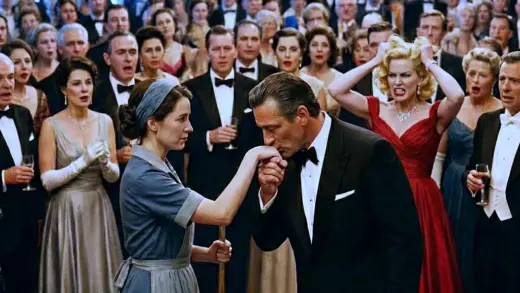
The courtroom watched Chase drag Zara onto the stage. Watched him whisper, “Don’t embarrass yourself, kid,” into a live microphone. Watched him fail to hit the note. When it ended, silence.
“Your Honor,” Diana continued. “The plaintiff didn’t summon this child because she lied. He summoned her because she told the truth, and it cost him money. That’s not defamation. That’s the consequence.”
Judge Moreno turned to Craft. “Do you have evidence that Ms. Williams’ statements were false?”
“Your Honor, the music industry commonly uses vocal enhancement…”
“That’s not what I asked. Did she lie? Yes or no?”
Craft shifted. “The characterization of my client’s use of standard practices as ‘fraud’ is defamatory.”
“Yes or no, Counselor?”
Silence stretched.
“We believe the context was misleading,” Craft finally said. “So no.”
Judge Moreno made a note. “Ms. Carter, do you have evidence supporting Ms. Williams’ claims?”
“Yes. I’d like to call Sophia Mitchell.”
Sophia took the stand and was sworn in. Diana walked her through the testimony. The contracts, the NDAs, the recordings proving her voice was on Chase’s albums. The emails explicitly instructing her never to claim credit.
“Ms. Mitchell,” Diana asked, “when you heard Zara Williams say Chase Hendricks couldn’t sing those notes, what did you think?”
“I thought, ‘Finally, someone said it out loud.'”
“And was she correct?”
“Yes. Completely.”
Diana sat. Craft stood for cross-examination, but Judge Moreno held up her hand.
“I’ve heard enough.” She looked at Chase directly. “Mr. Hendricks, I’m going to ask you something. You’re under oath, even not on the stand. Can you, right now, in this courtroom, sing the note in question?”
Chase’s face went pale. “Your Honor, I don’t see how that’s relevant.”
“It’s extremely relevant. You’re asking this court to silence people who say you can’t hit a note. Prove them wrong. Sing it.”
The courtroom held its breath. Chase looked at his lawyers, at the judge, at Zara.
“I… my voice isn’t warmed up. I can’t just perform on demand.”
“You performed on demand for fifteen years,” Judge Moreno said. “You sold tickets to live performances. Surely you can demonstrate it once.”
Chase’s mouth opened and closed; no sound came out.
“That’s what I thought.” Judge Moreno picked up her gavel. “The motion for injunction is denied. Furthermore, I’m sanctioning the plaintiff for bringing a frivolous suit intended to silence truthful speech. Mr. Hendricks, you don’t get to drag an eleven-year-old into court because she embarrassed you.” She looked at Zara. “Miss Williams, you’re free to continue telling your story. That’s called the First Amendment. It protects truth, even when truth is inconvenient.”
The gavel came down. The gallery erupted; reporters rushed for exits. Camera flashes went off. Chase Hendricks sat frozen, his lawyers already packing briefcases. Zara felt her mother’s arms around her, felt Ms. Johnson’s hand on her shoulder, heard Sophia crying with relief…