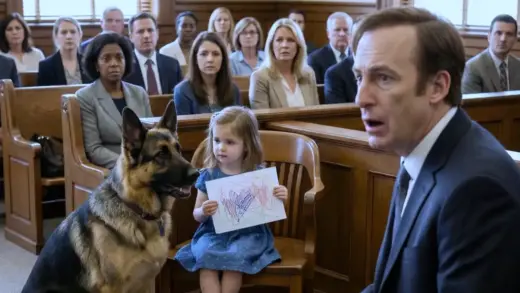
Outside the courtroom, Rachel Goldstein waited with her 60 Minutes crew. “Zara, how do you feel?”
“I feel like I can breathe again.”
That night, the 60 Minutes episode aired. Eighteen million people watched Rachel’s investigation. They saw contracts with session singers. They saw frequency analysis proving the voice wasn’t Chase’s. They saw musicians who’d been silenced by NDAs. They saw Chase, defensive and angry, claiming victim status. They saw him refuse to sing the note when Rachel asked.
And they saw Zara, eleven years old, in her small apartment, explaining what perfect pitch was, how she’d known, why she’d spoken. “I wasn’t trying to hurt him,” she said to the camera. “I was just telling the truth. I didn’t know the truth could be so dangerous.”
By the credits, Chase’s remaining sponsors had withdrawn. His label dropped him. His Vegas residency was canceled. The Grammy Committee announced they were reviewing his awards. His career, built on stolen voices and protected lies, was over. Ended by a child who’d simply refused to stay quiet.
Three months later, Chase Hendricks filed for bankruptcy. The class-action lawsuit settled; fifteen thousand ticket holders received refunds totaling twenty-three million dollars. His mansion went up for sale. His car collection, recording studio, music rights—all liquidated to pay debts. Both Grammy Awards were officially revoked. The Recording Academy cited “fraudulent representation of vocal performance”—a first in Grammy history.
Chase attempted a comeback tour six months later. “Unplugged and Unfiltered,” promising everything live, complete transparency. Eight dates in small venues. He sold eleven percent of the tickets. The reviews were brutal. “Hendricks’ voice, exposed without studio magic, reveals an unremarkable tenor with limited range. The emperor has no clothes.”
After the third show, he canceled the rest. Last anyone heard, he was teaching music business at an online for-profit college, making promotional videos nobody watched.
But this story isn’t about Chase’s fall. It’s about what rose.
Zara Williams received five major label offers. Her mother declined them all. “She’s eleven years old. She needs to be a child first.”
Instead, Zara signed with an independent label owned by Black musicians. The contract was unusual: no albums required until she was sixteen, creative control guaranteed, ownership of her masters, and fifteen percent of earnings went to a fund she created—Unbreakable Voices. The fund provided scholarships for young singers from underprivileged backgrounds. Free vocal training, music theory, and legal education about contracts and rights. Fifty scholarships the first year, two hundred by year three.
Zara recorded one single, “My Own Voice.” She wrote it with Sophia Mitchell. It was about finding courage, speaking truth, saying no when everyone expects silence. It went gold in six weeks. The video featured Zara singing in her church, her school, her apartment—places where her real voice was born. At the end, fifty scholarship recipients joined her. Every race, every background, all credited, all seen.
The industry changed. California passed Assembly Bill 2847, “Zara’s Law,” requiring disclosure when live performances used pre-recorded vocals. Tickets had to state it. Violation was consumer fraud. Twelve states adopted similar laws within eighteen months.
The Recording Academy overhauled credit requirements. All submissions needed detailed documentation of every vocalist. “Additional Vocals” was no longer acceptable; you had to name them. Spotify and Apple Music added credits tabs to every song. Session musicians invisible for decades suddenly had names attached to their work. A session musicians’ union formed, gaining two thousand members in the first year. They negotiated minimum standards, proper credit, royalty participation, legal protection. Forty-seven artists voluntarily updated liner notes, acknowledging uncredited session singers. Transparency became the new currency….