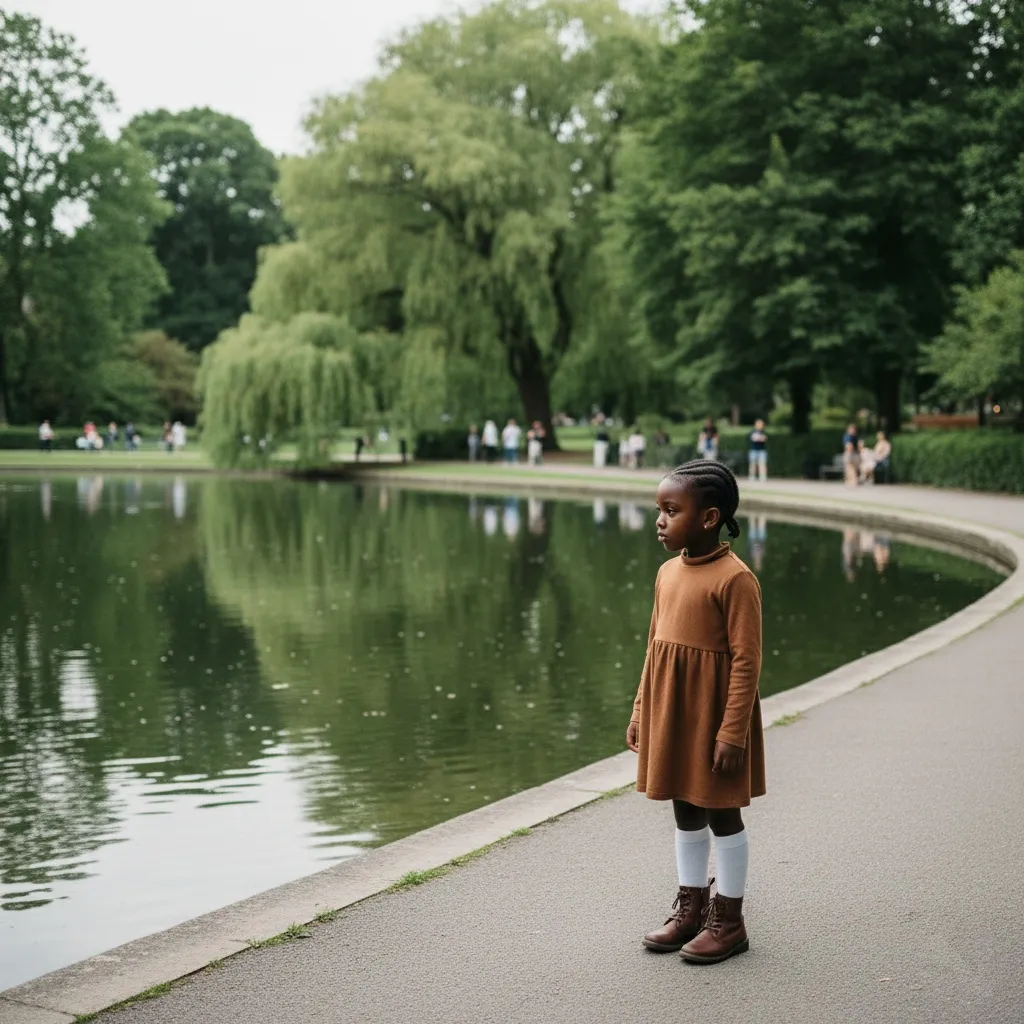
The sun beat down mercilessly on the small figure of Mary as she trudged along the pristine sidewalks of the wealthy neighborhood. A heavy plastic bag, filled to the brim with oranges, dug into her small hand. At just nine years old, she carried herself with a weary gravity that belonged to someone much older. Her feet ached from hours of walking, and a hollow emptiness had taken root in her stomach since morning. She never complained, though. Every painful step was for her mother, who lay feverish and weak in their tiny apartment, needing medicine they could never seem to afford. Selling these oranges was the only thing Mary could do to help.
She had gone from one imposing gate to the next, knocking timidly, hoping for a flicker of interest. Most of the time, she was utterly ignored. Sometimes, a dismissive voice would say “no” before the door was shut, the person on the other side never even granting her a second glance. But she refused to give up. Her mother had always told her to be strong, to never stop trying no matter how hard things got. It was this thought that gave her the courage to approach the largest gate she had ever seen. Behind it stood a vast mansion with gleaming white walls and towering windows, nestled within a lush garden of vibrant flowers and manicured trees. She stopped in her tracks for a moment, simply staring. It looked like a palace straight out of a storybook. Yet, there was a strange melancholy about the place, a profound stillness and silence that made it feel more like a museum than a home.
Gathering every ounce of her courage, Mary pressed the small button on the intercom. Seconds stretched out, and she was sure no one was home. Then, a crackle of static broke the silence. “Who is it?” a deep, male voice asked. Mary cleared her dry throat. “Um, hello, sir. My name is Mary. I’m selling oranges. Would you like to buy some? They’re very fresh and sweet.” A long silence followed, and Mary’s heart hammered against her ribs. She was just about to turn and walk away when the voice spoke again. “How much?” A spark of hope ignited in her chest. “Five oranges for two dollars, sir. Or ten for three. It’s a really good price.” Another pause hung in the air before the voice finally replied, “Wait there.”
Shifting the heavy bag from one sore hand to the other, Mary waited by the gate. Her arms felt like lead, and her throat was parched; she hadn’t had a drink of water in hours. But if this man bought her oranges, she could get her mother’s medicine today. That single thought was enough to keep her standing tall. After what felt like an eternity, she heard the sound of approaching footsteps. The gate buzzed loudly and swung open with a slow, heavy groan. A tall man stood before her, dressed in an expensive, crisp white shirt and perfectly tailored black pants. His shoes shone, and the watch on his wrist looked like it cost more than everything Mary and her mother owned. He was handsome, but his face was etched with a deep tiredness, his eyes shadowed by some heavy, private sorrow. His hair was peppered with gray, though he didn’t seem very old. This was Marcus, though Mary didn’t know his name yet.
He looked down at the little girl in her worn-out school uniform and scuffed shoes. For a brief instant, something unreadable flickered in his eyes—surprise, perhaps, or confusion. “Come in,” he said, his voice quiet. Mary hesitated, remembering her mother’s constant warnings about never entering a stranger’s house. But this man didn’t feel dangerous. He just seemed profoundly lonely and sad. “It’s okay,” Marcus said, noticing her apprehension. “I’ll buy all your oranges. You can stand right here by the gate if you’re scared.” “All of them?” Mary’s eyes widened in disbelief. She had twenty oranges in her bag. That would be six whole dollars—more than she usually made in three days. “Yes, all of them,” Marcus confirmed, pulling his wallet from his pocket. But then he stopped, his gaze softening as he looked at her more closely. “When did you last eat?” As if on cue, Mary’s stomach let out a loud, embarrassing growl. She felt her cheeks burn and looked down at her feet. Marcus’s weary expression melted into one of compassion. “Come inside. Let me get you something to eat first. Then I’ll pay you for the oranges.”
Mary knew she shouldn’t go in. But the gnawing hunger in her belly was a sharp, physical pain, and the man’s voice was so gentle, despite the sadness in his eyes. She gave a slow, hesitant nod and followed him through the gate. The garden was even more breathtaking up close, a riot of red roses, white lilies, and purple blossoms she couldn’t name. A smooth stone path led to the mansion’s grand front door. Everything was immaculate, like a picture from a magazine, but it felt sterile and empty, a garden without the sound of children’s laughter. Marcus opened the heavy door, and Mary stepped inside, her breath catching in her throat. The mansion was enormous, with a ceiling so high she had to tilt her head all the way back to see it. Everything gleamed—marble floors, crystal chandeliers, plush furniture that looked untouched. Elaborate paintings in gilded frames adorned the walls. Yet the house felt cold, not from temperature, but from a deep, pervasive loneliness. There were no comforting sounds of life—no cooking, no voices, no laughter or music. Just a heavy, unnerving silence.
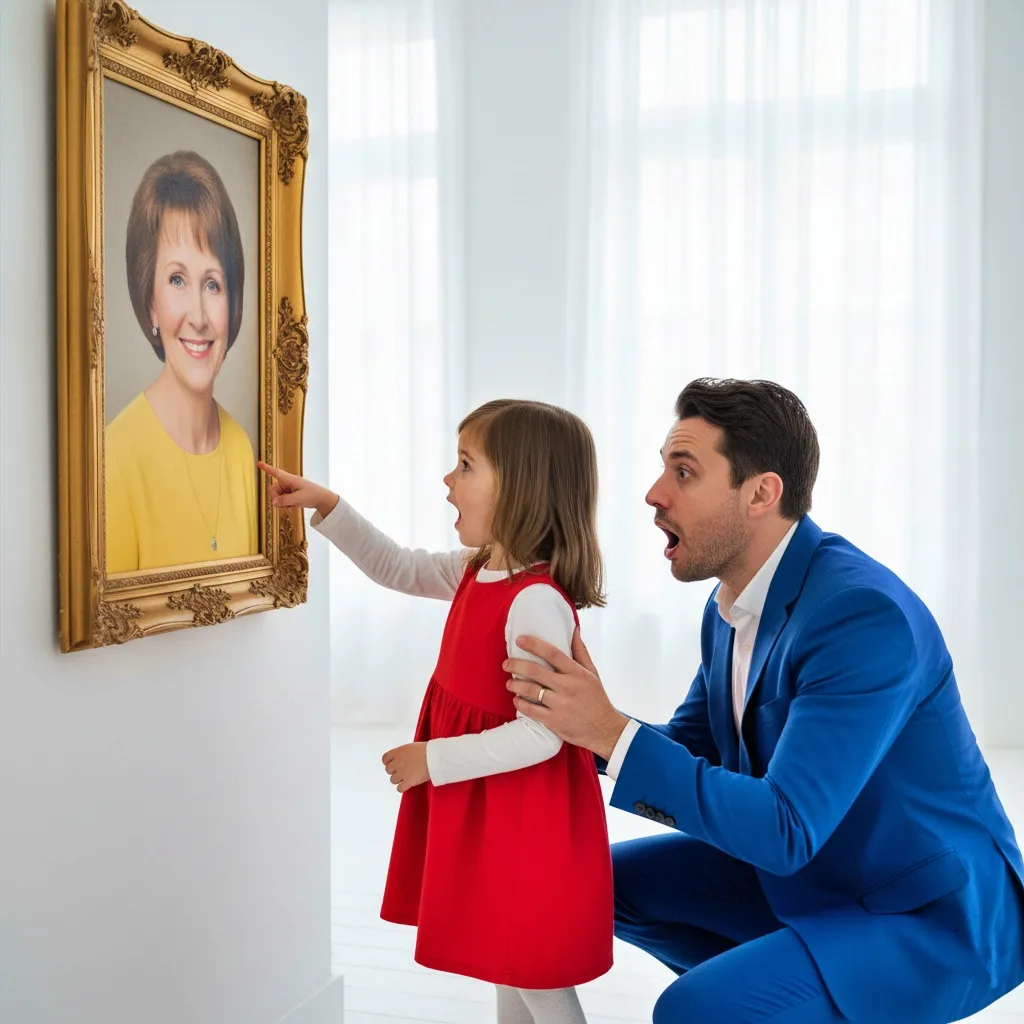
“Wait here,” Marcus said, gesturing to an ornate chair near the entrance. “I’ll bring you some food.” Mary sat down with extreme care, afraid her old clothes might soil the expensive fabric. Her eyes wandered around the room, taking in the sheer opulence. This was what being rich looked like. This man had everything anyone could ever want, so why did he seem so utterly sad? Why did his beautiful house feel so empty? Then her gaze fell upon it. On a small, elegant table near the staircase stood a photograph in a beautiful gold frame. The frame was lavish, but the picture inside was slightly faded with age. Drawn by an invisible force, Mary stood and moved closer. Her heart began to beat a frantic rhythm. She picked up the frame with both hands, which had begun to tremble. The woman in the photo was younger, glowing with health, and laughing at the photographer. She wore a pretty blue dress, her long, dark hair flowing over her shoulders, her smile radiant and full of a joy Mary hadn’t seen on her mother’s face in years. But Mary knew that face. She saw it every single day. It was her mother. It was Clara.
Mary’s hands shook as she clutched the frame tighter, her mind spinning with a torrent of questions. Why was her mother’s picture in this rich stranger’s house? Her mom never mentioned knowing wealthy people. In fact, she never spoke about her life before Mary was born at all. Any question about her father or the past was met with a wall of silence, a deep sadness in her eyes, and a quick change of subject. Mary stood frozen, staring at the photograph, the questions tumbling over one another like waves. How did this man know her mother? Why did he have this picture? And why did her mom look so happy in it, happier than Mary had ever seen her? The sound of footsteps made her jump and turn around. Marcus had returned, carrying a tray with a plate of sandwiches, cookies, and a tall glass of cold juice. But when his eyes landed on what Mary was holding, he stopped dead in his tracks. The tray shook violently in his hands. All the color drained from his face, as if he’d seen a ghost. His eyes were locked on the photograph, then darted to Mary’s face, then back again. For a long, heavy moment, neither of them spoke. The silence in the vast house became suffocating.
“That’s… that’s my mom,” Mary said, her voice barely a whisper. She held up the frame, though he was already staring at it, transfixed. “Why is my mom’s picture in your house?” Marcus’s mouth opened, but no sound came out. He looked as if he’d been struck by lightning. The tray in his hands trembled even more, making the juice ripple. He slowly, carefully set it down on a nearby table, moving as if in a daze, afraid his legs might give way. He turned back to Mary, his eyes wide with utter disbelief. “Your… your mother?” His voice cracked. “What’s your mother’s name?” “Clara,” Mary answered. “Her name is Clara.” Marcus took an unsteady step backward, his hand flying out to brace himself against the wall. His breathing became fast and shallow. He stared at Mary’s face now, studying her eyes, her nose, the shape of her face, as if searching for a ghost. “Clara,” he repeated, and the way he said the name made it sound like both a prayer and a desperate question. “Clara… she’s your mother?” Mary nodded, completely bewildered by his intense reaction. Why was he acting so strangely? Why did he look like he was about to cry? “Sir, are you okay?” she asked, now growing worried. “Do you know my mom?”..