The rain had stopped just before dawn, leaving the streets of Brookhaven glistening with a thin layer of silver light.
It was one of those mornings when the world felt hollow, as if it had been wrung dry of all color and sound. Lydia Moore stood on the cracked steps of her apartment building, clutching a wrinkled newspaper in her hands. Her breath came out in small clouds, dissolving into the chill.
The headline that caught her eye wasn’t one of tragedy or scandal. It was small, printed near the bottom of the classified section. Penthouse for Sale.
Large. Cheap. Urgent.
She almost didn’t read the address. Her life had been measured in a series of endings lately, and the idea of a beginning, any beginning, felt like an indulgence she didn’t deserve. Her husband had been gone for nearly two years now, taken in a car accident that also claimed her son and daughter.
The doctors said it was a miracle that she survived, but miracles, she had learned, often came at the wrong cost. Since then, she had lived like a shadow, moving from job to job, from one temporary room to another, collecting more silence than hope. That morning, something changed.
Maybe it was the way the light hit the wet pavement, or the ache of the empty apartment she could no longer afford, or maybe it was the word cheap. She circled the ad with a shaking hand and tucked it into her coat pocket, as if afraid it might vanish. The address led her to the industrial side of the city, a place most people forgot existed.
The streets there were wide and strangely quiet, lined with warehouses and crumbling brick buildings that leaned toward one another like weary old men. Her small car trembled as she drove over the uneven asphalt. It was there, behind a set of rusted iron gates, that she saw it for the first time, the house that everyone whispered about.
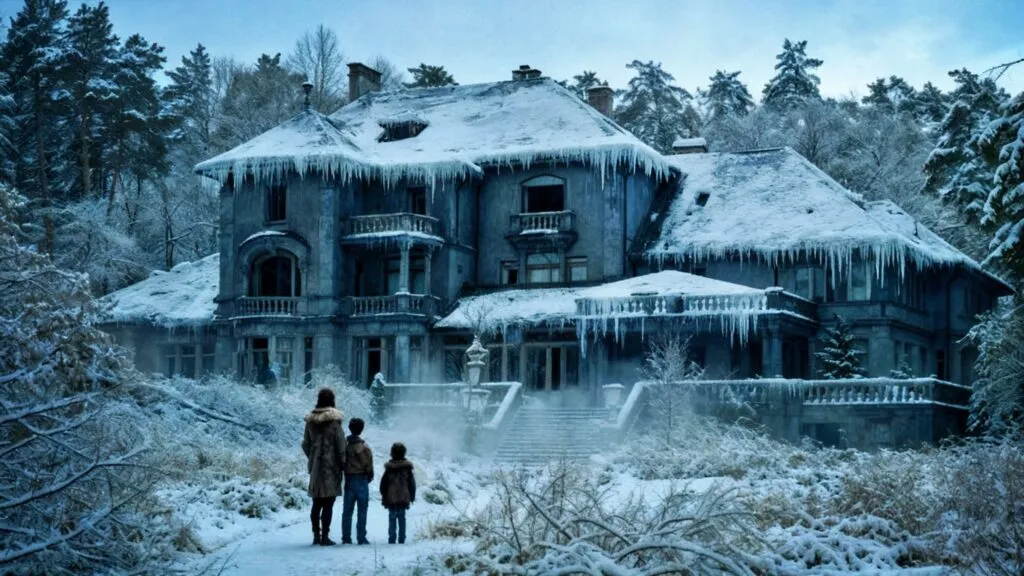
It rose from the ground like a sleeping beast, its stone walls wrapped in ivy, its tall windows black and lifeless. The penthouse once belonged to Domenico Rossini, a name that still made older residents lower their voices. He had been a man of myth and menace, a so-called King of the Northern Quarter, a figure both admired and feared.
Twenty years ago his empire had crumbled overnight. There were rumors of betrayal, of hidden vaults filled with money, of murders that were never solved. When Rossini disappeared, the city claimed the property, but no one ever dared to live there again.
The real estate agent who met her at the gate was a pale, anxious man who kept glancing at his watch. You’re serious about this one? he asked, forcing a smile that didn’t quite reach his eyes. I’ll warn you, ma’am, it’s been empty a long time.
Some people say it’s cursed. Lydia’s voice was calm, almost detached. I don’t believe in curses.
He nodded, though his expression said otherwise, and led her through the overgrown driveway. The air smelled of damp leaves and cold stone. When he pushed open the front doors, a wave of stale air rushed out, carrying the scent of dust and time.
Inside, the place was enormous, far larger than she expected. The main hall stretched upward into shadow, the marble floor cracked in places but still glinting faintly beneath the dirt. The chandelier above was missing half its crystals, and the staircase that wound upward seemed to disappear into the dark.
Yet even in its decay there was beauty. The faint remnants of gilded moldings, the hand-carved banisters, the frescoes barely visible beneath layers of grime, all whispered of a grandeur that refused to die. The agent spoke in short bursts, his voice echoing off the walls.
Fifteen thousand square feet. Three floors. There’s a lift, though it doesn’t work.
The plumbing’s functional. The roof was patched last year. You can make it livable with a bit of work.
How much? Lydia asked. He hesitated. Honestly, the city’s been trying to get rid of it for years.
It’s practically a donation at this point. You’d only need to cover the back taxes and paperwork. He looked at her again, uncertain.
No one wants it, Mrs. Moore. They say Rossini buried his sins in these walls. Lydia walked slowly through the hall, running her fingers over the cracked wallpaper.
She could almost feel the weight of the years pressing against her skin. Somewhere in her chest, a small ember of defiance stirred. No one wanted this place.
But she did. Two weeks later, the deal was done. Her last savings vanished into signatures and stamps, leaving her bank account nearly empty.
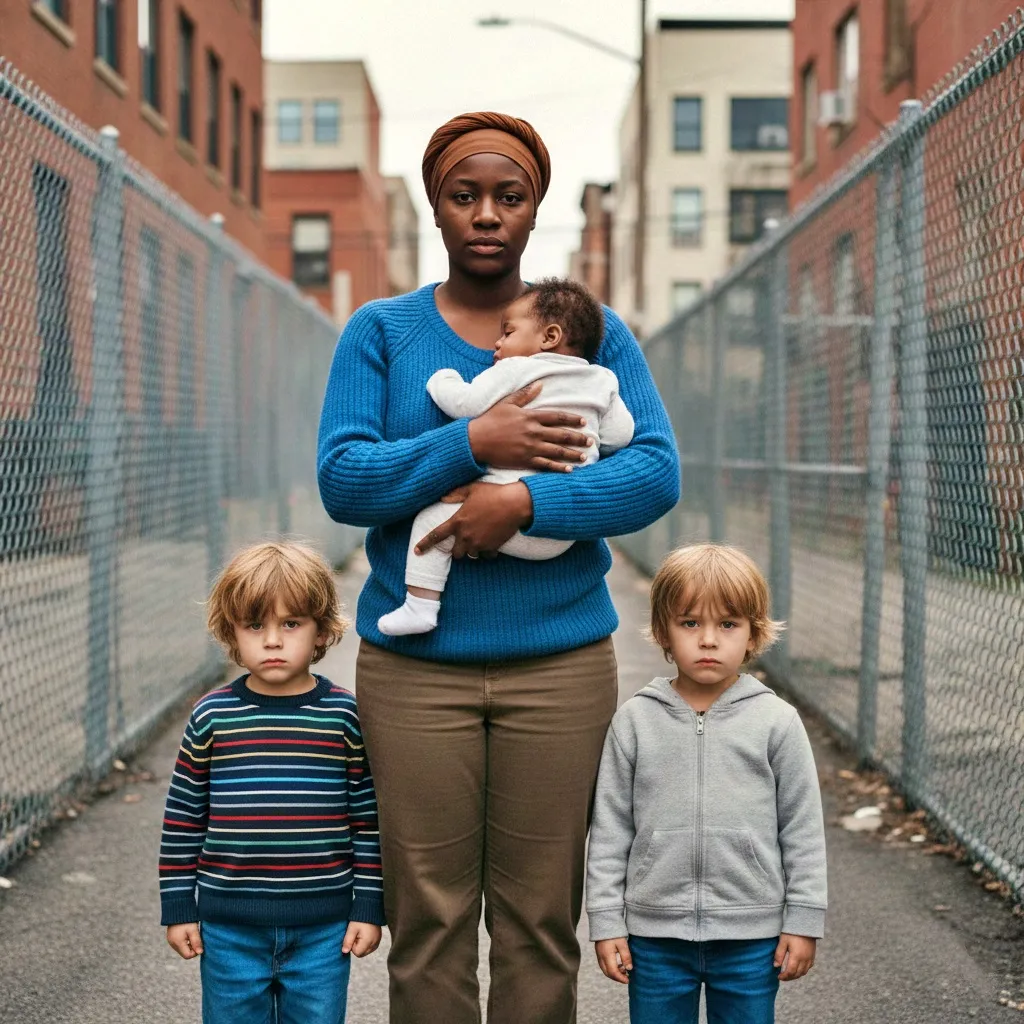
When she returned to the penthouse with her few belongings and the two children she’d begun fostering through a community program, quiet, wide-eyed twins named Jonah and May, she knew there was no turning back. They arrived at sunset. The iron gates groaned open with the sound of protest, and the tires of her car crunched over the gravel.
The house loomed ahead, bathed in orange light. Vines crawled across its walls like veins, and a crow perched on the roof, watching in silence. Jonah leaned forward from the back seat.
It’s huge, he whispered. May pressed closer to the window, her small hand gripping the glass. It looks sad.
Lydia smiled faintly, though her heart ached at the truth of it. Then we’ll make it happy again. They stepped out into the overgrown yard, surrounded by weeds taller than the children.
The air was heavy with the smell of earth and rust. Inside, dust rose with every footstep, catching the fading light like ash. Furniture covered in white sheets stood like ghosts, frozen mid-motion.
Somewhere in the distance, water dripped steadily, the only sound in the vast silence. The children stayed close as Lydia moved from room to room, opening shutters and letting the evening spill in. Each door creaked like a memory being disturbed.
In the grand hall, she found an old piano with its keys yellowed and broken, a cracked mirror that reflected her face in fragments, and a fireplace filled with cold ashes. She imagined the life that had once pulsed here, music, laughter, arguments, ambition, and how quickly it must have all turned to ruin. That night, they made beds on the floor in what must have once been the library.
The children fell asleep almost instantly, exhausted from the move. Lydia lay awake, listening to the sighs of the old house, to the groaning wood and the distant rustle of the wind through the broken windows. She wasn’t afraid.
There was something strangely peaceful in the emptiness, a promise that perhaps even a place like this could be reborn. In the early hours, she rose and walked through the hall again, her footsteps soft against the cold marble. The moonlight streamed through the tall windows, touching the faded murals of angels and vines along the ceiling.
In the reflection of the glass, she thought she saw a shadow move behind her, but when she turned, there was nothing there, only silence and the faint scent of old perfume. She stood for a long time at the foot of the stairs, gazing upward into the darkness. Somewhere above, the floors groaned, as though the house itself was shifting in its sleep.
Perhaps it was imagination, or perhaps something older still lingered here, waiting. But Lydia didn’t turn back. She placed her hand on the railing, feeling the smoothness of the wood beneath the dust, and whispered to the empty air, We’re home now.
Outside, the city slept, unaware that within the walls of the house everyone feared a spark of life had returned. The first lights in years flickered on behind cracked windows, faint and trembling, like the heartbeat of something waking after a long, cold silence. And though she didn’t know it yet, that decision, to step inside when everyone else turned away, would uncover a story buried beneath decades of lies.
A story that would change not only her life, but the very meaning of the name Rossini. The wind rose again, brushing the ivy against the walls like a whisper, and somewhere, deep within the house, a door clicked shut, as if acknowledging her presence. Morning came gray and silent, and the first light that slipped through the cracked shutters painted everything in pale gold.
The air inside the house was cold enough to see one’s breath. Lydia woke before the children, her back aching from the hard floor. She sat up slowly, brushing the dust from her coat, and listened to the creaking rhythm of the old penthouse settling into a new day.
Somewhere, deep within the walls, pipes clanged faintly, like a heartbeat beneath stone. The house was alive in its own way, old, stubborn, and full of secrets. When she stepped outside onto the terrace, the city stretched far below her in a haze of fog and sunlight.
From up there, the industrial quarter looked almost peaceful, but she knew what people were saying down there, beyond those streets. Rumors traveled faster than truth, and in small towns or forgotten corners of big cities, gossip had a life of its own. The news that a destitute widow and two foster children had moved into the Rossini mansion was already spreading like wildfire.
By noon, the laughter began. It started at the grocery store when she came to buy cleaning supplies. The cashier, a young man with too much time and too little compassion, grinned as he rang up her items.
You’re the lady who bought the murder house, right? he said, his tone bright with mock curiosity. The woman behind her in line snickered, whispering something about ghosts with Italian accents. Lydia kept her eyes on the counter and said nothing.
She had no interest in defending herself to people who had already decided what to believe. On the walk back, she passed two teenage boys filming on their phones near the gate. They laughed loudly, pointing toward the overgrown lawn.
One of them shouted, Hey, Miss Rossini, hear any screams at night yet? The other doubled over in laughter. She ignored them, though her face burned. She’d dealt with ridicule before, whispers about bad luck, about how tragedy followed her.
People always needed something to fear or mock. Now she had given them both. Inside the house, the children were exploring.
Jonah had found a cracked mirror in one of the upstairs bedrooms where vines had pushed through the open window and crawled across the walls like veins. May was sitting on the floor near an old trunk filled with yellowed linens and faded dresses. It smells like old flowers, she said softly.
Lydia smiled faintly. That’s exactly what it smells like, something that used to be alive. They worked together that day, clearing the main hall of debris.
Dust rose in thick clouds, dancing in the shafts of sunlight that cut through the dirty windows. Underneath the grime, the house began to reveal hints of its former grandeur. A carved banister with angels along the edges, a marble floor veined with blue and gold, and remnants of a mural above the fireplace, a woman holding a laurel wreath, her eyes half closed in sorrow.
It was beautiful, even in decay, but the laughter outside didn’t stop. Each day brought a new insult, a new visitor who came only to stare. A local paper ran a small column, widow moves into mobster mansion, bravery or madness.
Lydia read it once, folded it and burned it in the fireplace. The children saw her do it and said nothing. They seemed to understand that fire was sometimes the only proper answer.
Nights were the hardest. The house groaned as if remembering things it wished to forget. Some rooms stayed colder than others, as though time itself had frozen there.
Once in the kitchen, she found footprints in the dust that didn’t belong to any of them, small, bare prints as if a child had walked through sometime in the past. May refused to sleep alone after that. They moved their makeshift beds together in the library near the old piano, where the faint light from the hallway gave them a sense of safety.
Still, Lydia refused to be frightened. Fear, she thought, was a luxury of people who had something left to lose. What terrified her more was the idea of doing nothing, of giving up again, of drifting through another year without purpose.
The house, despite its decay and reputation, gave her something to hold on to. Each nail she hammered back into place, each window she cleaned, each corner she swept. It all felt like an act of defiance against the cruel indifference of the world.
She began to notice strange things among the remains of the Rossini family. In one of the bedrooms, hidden behind a wardrobe, she found a stack of black and white photographs. Weddings, christenings, holidays.
In the images, Domenico Rossini was not the cold-eyed criminal from the newspapers. He was a father, smiling as he lifted his little girl into the air, a man holding his wife’s hand at a summer picnic. The photos were dusty and brittle, but the joy in them was unmistakable.
That discovery stayed with her for days. She kept the photographs in a small wooden box and sometimes looked at them before bed, studying the faces, trying to see beyond the headlines. The more she stared, the less she could reconcile the man in the pictures with the monster people spoke of.
Perhaps, she thought, the truth had been more complicated. Perhaps all monsters were, once, just people who had lost their way. One evening, as she was scrubbing soot from the fireplace, Jonah came running into the room, holding something in his hands.
It was a torn piece of newspaper, yellowed with age. The headline read, Rossini Empire Falls. Authorities Seize Assets.
House Sealed. Beneath it was a photo of the mansion in its prime, the same grand staircases and chandeliers now buried beneath years of neglect. Lydia took the scrap and smoothed it carefully across the table.
What happened to him? Jonah asked. No one knows, she said quietly. Some say he fled the country.
Others say he was killed by his own men. The police never found a body. May’s voice was barely a whisper.
Do you think he was bad? Lydia hesitated, then shook her head. I think he was a man who made choices, some good, some terrible. But I think this house remembers the good ones too.
That night, after the children were asleep, she returned to the room where she had found the photographs. There were more boxes in the closet, letters, receipts, invitations. She sat on the floor, surrounded by the ghosts of another family’s life.
The letters were mostly in Italian, written in a flowing, elegant hand. She couldn’t read all of them, but a few had been penned in English. One line caught her eye.
They will never let me go, but I will find a way to leave them something pure. She read the line again and again, tracing the ink with her fingertip. Something inside her stirred, a quiet recognition, as if the words had been written for her.
The days grew colder. The laughter outside faded a little, replaced by curiosity. A few of the neighbors stopped by with cautious questions, peering through the open gate to catch a glimpse of her progress…