But if she could prove the authenticity of these documents, perhaps the trust could still be honored. Perhaps the dream he died for could finally live. She began making calls, timid at first, to the city’s archives and records office.
Most of the people she spoke to dismissed her immediately, assuming she was another scavenger chasing rumors of hidden mafia gold. But she persisted. One clerk referred her to an older attorney who had once handled property disputes for the state.
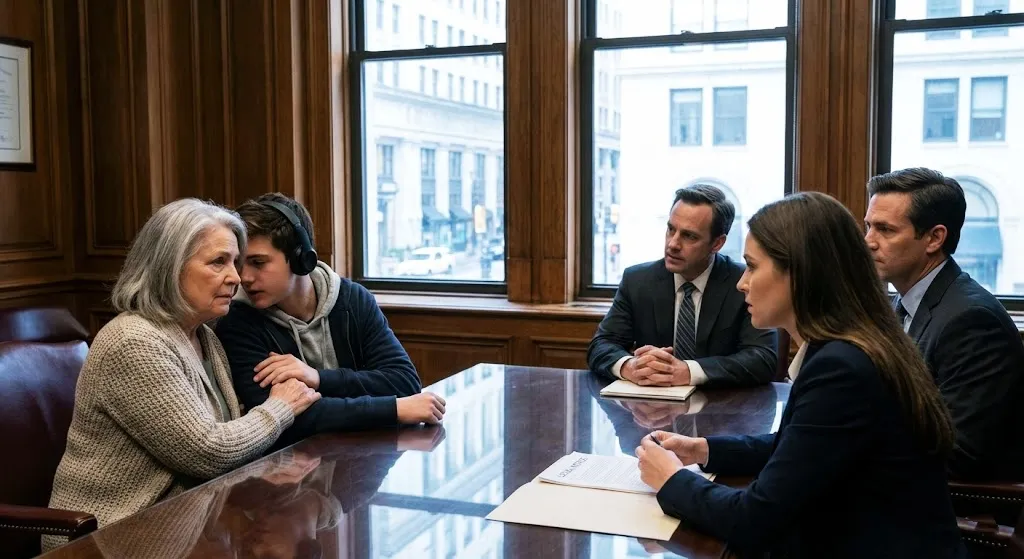
His name was Howard Caldwell, and his voice over the phone was dry but curious. If you’ve really got Rossini’s trust documents, Mrs. Moore, he said, that would be quite the story, but I hope you understand what kind of ghosts you’re waking. When she met him a few days later, she brought a small folder of copies.
Caldwell examined them with a magnifying glass, silent for a long time. Then he leaned back and said quietly, these are real, or very, very good forgeries. He paused, glancing at her.
If you’re serious about this, I can request an archival verification. It’ll take time, and the authorities won’t like being reminded of this case. I’m not looking for trouble, she said softly.
I just want to do what he couldn’t. He studied her for a long moment, then nodded. That’s what he said too, according to the papers.
The process that followed was slow and full of resistance. Weeks passed in a blur of signatures, stamps, and official suspicion. Some days she felt as though she were shouting into a void, watched by people who thought her naive or insane.
But she had found a strange new strength in herself. Every time she entered an office or sent another letter, she felt the weight of the mansion at her back, the silent approval of its unseen witnesses. One evening, while she was sitting by the fire sorting through yet another pile of documents, Jonah asked quietly, do you think they’ll give you the money? Lydia smiled faintly.
It isn’t for me, sweetheart. It’s for the house, for him, for everyone who was forgotten. May looked up from her sketchbook.
Then it’s like he’s helping us from heaven. Maybe, Lydia said, or maybe he’s just helping us from his past. The weeks stretched into months.
Winter faded, and the garden outside began to thaw. Birds returned to the eaves, and the air grew softer. Then, one morning in the early spring, a letter arrived bearing an official seal.
Her hands trembled as she opened it. The words blurred as she read them. The authenticity of the documents has been verified.
The trust, known as Casa de Luz, may be restored to its intended purpose under supervision of a designated trustee. Lydia sank into a chair, the letter pressed against her chest. The children crowded around her, their eyes wide.
What does it mean? Jonah asked. It means, she said slowly, smiling through tears, that we can finally finish what he started. That night, she placed the silver cross from the safe on the mantle beside the notebook.
The flames in the fireplace flickered brighter, casting their light across the hall. She could almost imagine the spirit of the house stirring, recognizing the fulfillment of a promise it had waited half a century to keep. The safe stood open in the wall, no longer a symbol of greed, but of redemption.
And in its emptiness, Lydia saw something that filled her with quiet awe, a space that had once held secrets now holding possibility. She didn’t yet know what the next step would look like, only that it would be difficult, that there would be opposition, disbelief, perhaps even danger. But she was no longer the frightened widow who had moved into a haunted mansion.
She had become the keeper of a legacy, the guardian of a man’s last hope for forgiveness. And as the firelight shimmered across the walls, it seemed to her that the entire house exhaled in relief, as though it, too, had been waiting for this moment to breathe again. Outside, the snow melted into rivulets that trickled down the old stone steps, carrying the winter away.
The mansion, long silent, had begun to awaken to life, and beneath the faint hum of the wind, Lydia thought she heard a voice, calm, distant, and filled with gratitude, whispering from the depths of the house, Thank you. Spring arrived shyly that year, hesitant and pale, as if the world itself were uncertain whether it should begin again. The heavy snow that had blanketed the streets for months melted into rivulets that ran down the curbs, filling the air with the scent of wet stone and thawed earth.
In the garden behind the mansion, tufts of green began to pierce through the frostbitten soil, and the ivy that clung to the outer walls stirred as if waking from a long sleep. Inside, the sound of hammers and brushes replaced the echo of silence. Workers moved through the halls, patching plaster, restoring wiring, and carrying out debris that had lain untouched for decades.
It was the first time in half a century that the house felt truly alive. Lydia stood in the foyer one afternoon, watching the light from the tall windows break into shards across the polished floor. The safe in the wall, now empty, remained open as if a wound had healed but left its scar visible.
The letter from the state rested in a frame on the mantle beside Rossini’s notebook and the silver cross she had found within the vault. Those objects had become her compass. Every decision she made now revolved around the promise they represented, to fulfill the dream that had died with him.
Word of the rediscovered trust spread quickly. What had begun as a curious story in a small-town newspaper soon grew into something larger. Reporters began calling, some from other cities, some from abroad.
They wanted to know about the widow who had moved into a Mafia mansion and uncovered a fortune meant for charity. They wanted photographs, interviews, sound bites. For every article that called her courageous, there were two that called her delusional.
The headlines varied between Widow Redeems Mob Legacy and Haunted House Hoax. At first she tried to ignore the attention. She refused to speak to the media, believing that the documents and the work ahead would speak for themselves.
But curiosity has a way of drawing light to the places that most wish to remain dim. Within a week cameras appeared at the gates and strangers loitered outside taking pictures through the iron bars. Children on their way to school stopped to stare, whispering to each other before running off.
Some days Lydia felt like an intruder in her own home again, as if the ghosts she had learned to live with were now joined by the ghosts of gossip and doubt. Then came the first anonymous letter. It arrived folded in an unmarked envelope with no return address.
The handwriting was uneven, pressed hard into the paper, the ink smudged by what looked like a thumbprint. It said only, Leave it buried, Mrs. Moore. You don’t know what you’ve touched.
There was no signature. She tore it in half and threw it into the fire, but her hands trembled as she did so. More letters followed.
Some were threatening, others pleading. A few were cryptic, filled with fragments of old names and warnings about debts that should never be reopened. One morning she found the words, You’re digging your own grave, scrawled in chalk on the gate.
The children didn’t see it. She wiped it away before they left for school, but it left a coldness in her that didn’t fade easily. Howard Caldwell, the lawyer, wasn’t surprised when she told him.
He sat back in his chair, folding his hands. Rossini’s enemies didn’t vanish, Mrs. Moore. They simply grew old.
Some of them had families, legacies. Money has a long memory, and people don’t like being reminded that their fortunes were built on corruption. I’m not after their money, she said quietly.
I just want to use what was meant to be used. He gave her a long, measured look. That’s exactly what makes you dangerous.
The city’s investigation into the Rossini Trust took months. Each week brought new paperwork, new demands, new interviews. Inspectors came to examine the property.
Reporters returned for follow-up stories, and bureaucrats combed through the files with suspicion sharpened by pride. It became clear that some in power would rather the story had stayed buried. The idea that a woman, an outsider, poor and widowed, could stumble upon something so significant offended the delicate hierarchy of those who thought history was theirs to control.
But not everyone opposed her. A quiet current of support began to form among the townspeople. The old woman from across the street who had once brought her bread came again, this time with flowers.
She told Lydia that she had known Rossini’s daughter when they were young. She used to say her father was a good man who made bad choices, the woman said softly. People forget that goodness can hide under terrible mistakes.
Volunteers began to appear, some curious, others genuinely moved by the story. They offered to help clean, paint, repair. Among them were former construction workers, students, even a retired carpenter who had once built furniture for the Rossini family.
It’s strange to be back here, he said as he sanded the banister. The boss paid well, treated us with respect. He wasn’t the devil they made him out to be…