And though Lydia did not see him, she felt certain that Domenico Rossini was somewhere within those walls, watching as his home at last began to become what he had always intended, a sanctuary, not a monument to sin, but a testament to what the heart can repair when it refuses to forget the light. The first true day of spring came with the sound of hammers and the scent of wet plaster. The mansion no longer echoed with emptiness, it throbbed with the rhythm of renewal.
The grand hall that had once seemed haunted now rang with laughter and the scrape of ladders as workers painted the tall walls with fresh coats of cream and pale gold. The chandeliers that had hung dim and lifeless were lowered, their crystals polished until they caught every glimmer of light from the afternoon sun. For the first time in decades, the Rossini mansion looked less like a tomb and more like what it had been meant to be, a home.
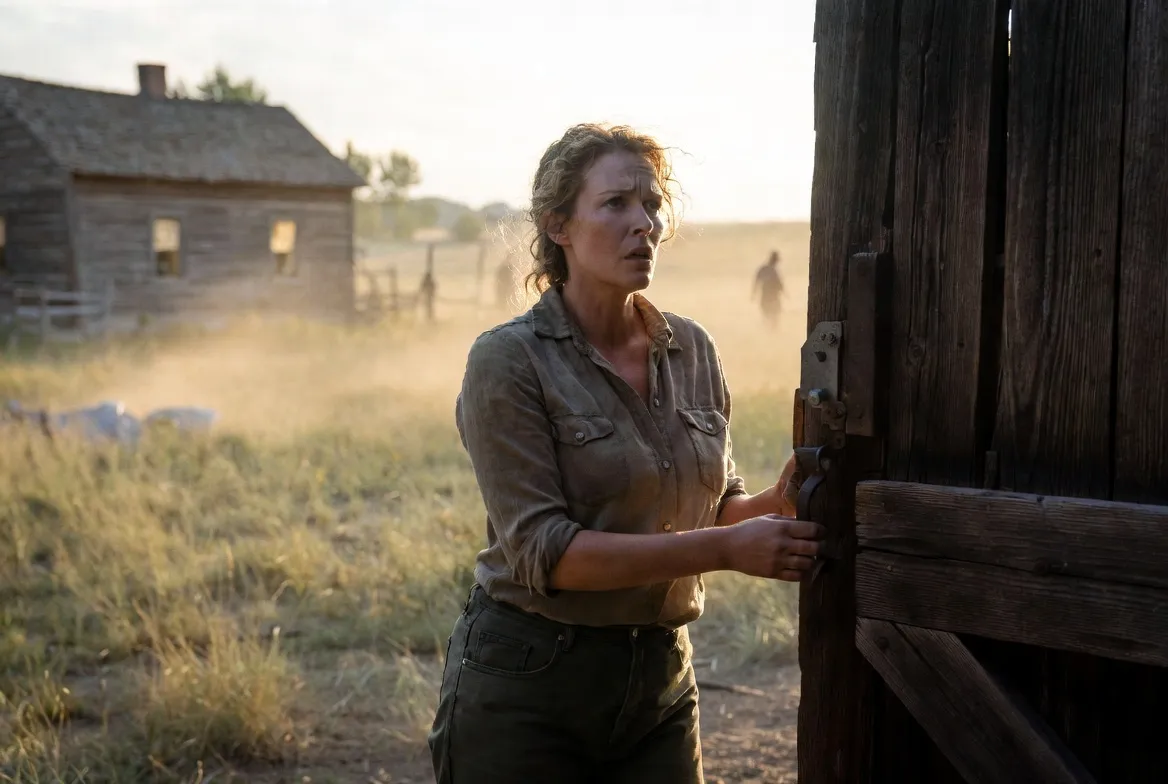
Lydia moved among the workers like a conductor among musicians, her hair tied back, her sleeves rolled, her hands streaked with paint. She gave directions, carried boards, wiped sweat from her forehead, and never once complained. To anyone who passed, she looked like a woman reborn, though only she knew how close she had come to giving up before all this began.
The letter that had arrived weeks before, confirming that part of the Rossini Trust had been released, still sat on her nightstand, its edges soft from being unfolded so many times. That piece of paper was more than permission, it was vindication. She had fought through laughter, through threats, through the doubt of strangers and the indifference of officials.
But now, as the walls were repainted and the floors restored, she saw the tangible result of every sleepless night. The children, Jonah and May, ran through the halls carrying buckets and brushes, pretending to be explorers in some lost palace. Their laughter filled the house, weaving through the noise of the workers, breaking the curse of silence that had hung here for half a century.
Each morning began with the same ritual. Lydia would open the tall front doors and let the sunlight flood into the foyer. She said it helped the house breathe.
Then she would walk through the rooms one by one, checking progress. The new glass in the windows, the polished banisters, the garden slowly coming back to life. The neighbors who once whispered now waved to her as they passed.
Some even offered to help. A retired mason came to repair the crumbling garden wall. A group of university students arrived on weekends to plant flowers.
What had been called a cursed place was slowly becoming a community effort, a shared redemption. By the end of April, scaffolding surrounded the outer façade, and the once-gray stone began to gleam again beneath a gentle layer of new paint. The workers uncovered details no one had noticed before.
The carved initials of the Rossini family etched into the arch above the main entrance, tiny cherubs hidden among the ivy design. Lydia traced the letters with her fingers, imagining the hands that had carved them. She could feel the presence of Domenico Rossini everywhere now, not as a ghost but as a silent witness, watching his dream return to life.
The first tangible transformation came in the library. The room had once been heavy with dust and decay. The shelves half-collapsed and the ceiling blackened by water damage.
Now it was the heart of the house. New wooden shelves rose from floor to ceiling, filled with donated books. The piano, carefully restored, stood by the window.
On warm days May would play scales, her small fingers uncertain but determined, and the sound drifted through the halls like sunlight on water. Sometimes, when Lydia stood listening from the doorway, she imagined another little girl sitting there decades ago, Rossini’s daughter, Julia, playing the same notes while her father listened from his study, dreaming of the same laughter that now returned to these walls. Outside, the garden blossomed into color.
Wildflowers sprouted where weeds had once ruled, and the fountain at the center of the courtyard, long silent, began to flow again. Lydia had found the broken water pipe herself in the basement, traced it, and ordered a new pump with funds from the trust. When the first jet of water rose and fell in a silver ark under the morning sun, she laughed aloud like a child.
The neighbors, who had gathered to watch, clapped and cheered. The fountain’s gentle music became the soundtrack of their afternoons. Still, even amid all the renewal, there were moments when the past reached out.
One day, as a worker removed an old panel near the back stairs, a small locked drawer was discovered behind it. Inside was a single item, a child’s wooden toy horse, its paint faded, one wheel missing. It was simple, handmade, the kind of thing a father might craft with his own hands.
Lydia kept it on the mantle beside Rossini’s notebook. It seemed fitting that something born of love, lost in the ruins of crime, should return to light at last. As the weeks passed, the city began to pay attention.
Officials, who had once dismissed her, came to inspect the property, and this time they nodded with approval. The paperwork for the establishment of the new charity foundation, the Casa di Luce Home, moved forward faster than anyone had expected. Lydia had chosen the name deliberately, keeping Rossini’s own dream intact.
The House of Light, she told the children, because light doesn’t erase the past, it makes it visible. By early summer, the first children began to arrive. They came quietly, shy and uncertain, some from temporary shelters, some from families too poor to care for them.
Lydia welcomed each one personally, kneeling to meet their eyes, assuring them that this was not another cold institution, but a home. She showed them their rooms, bright, simple spaces with new beds, clean linens and wide windows that let the morning pour in. Jonah and May took it upon themselves to act as guides, showing the newcomers where the kitchen was, where the library was, where the best hiding spots were when you wanted to be alone, but not too alone.
At night, when the halls quieted, Lydia often stood at the top of the stairs, listening. The murmur of voices, the rustle of blankets, the soft laughter that came from behind closed doors, it was the most beautiful music she had ever heard. Once, the only sounds this house knew were those of secrets and fear.
Now it breathed with life again. The transformation spread beyond the walls. The locals who had mocked her began to send donations, boxes of clothes, toys, books.
One man, whose father had once worked for Rossini, arrived with a van full of furniture. He wasn’t a saint, the man said gruffly as they unloaded tables, but he wasn’t the devil either. My father said he always paid on time, treated his workers with respect…