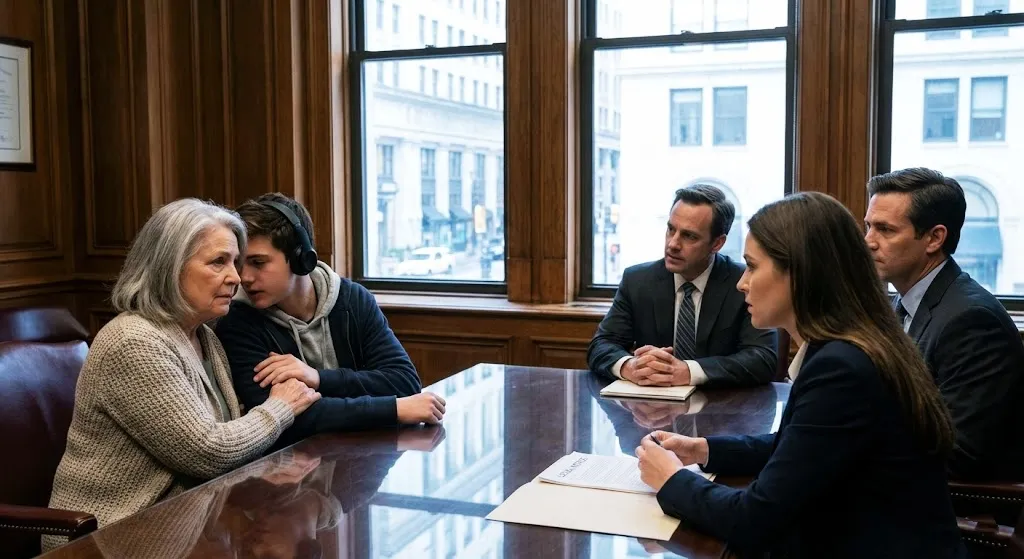
Five families never got answers. Let me see the letter first. After reading Adelaide’s confession, Frank’s professional detachment wavered slightly.
I remember these cases. I was a rookie then. The department shut down any questions about the mill deaths fast.
Too fast. It always felt wrong. I can open this.
But I want to be clear about something. If this contains what Adelaide Brennan claimed, it could be evidence in multiple homicides. It would need to be handled properly through official channels eventually.
We just want the truth, Margaret said firmly. Frank nodded and set to work with his tools. It took nearly 20 minutes of careful manipulation before the first lock clicked open.
The second followed more quickly. The third was the most stubborn, requiring a different approach and several attempts before yielding with a definitive click. Inside, neatly organized, were exactly the items Adelaide had described.
On top lay a leather-bound journal with T. Brennan embossed on the cover. Beneath it were folders labeled with dates, containing what appeared to be inspection reports, some original, some clearly altered. A separate folder held photographs of machinery with handwritten notes pointing out dangerous defects.
Financial ledgers showed discrepancies between funds allocated for repairs and those actually spent. But most damning of all was a small tape recorder with a cassette still inside and a typed note taped to it that read, Pritchett’s admission, the 12th of October, 2083. Office conversation recorded without his knowledge.
My God, Margaret whispered. He had everything. Dad had proof.
Frank handled each item carefully, examining the inspection reports with experienced eyes. These are clearly doctored, he confirmed. Original safety concerns completely removed from the final versions, and these financial records show Pritchett embezzled nearly $300,000 meant for equipment maintenance over three years.
What about that? Could we still hear what’s on it? Maybe. Cassette tapes degrade over time, but there are specialists who can restore old recordings. I know someone trustworthy.
As promised, the box also contained a thick envelope marked Deed Brennan Textile Mill, and a smaller envelope with First National Bank box, 891 written across it. Margaret opened the deed envelope with trembling hands. It’s still in Adelaide’s name, she confirmed after scanning the legal document.
The mill never left family ownership, which means it’s yours now, Frank finished. The weight of this revelation silenced them all. Taylor felt a strange twist in her stomach.
The mill, their current shelter, legally belonged to the woman sitting across from her, a woman who had no idea they were living there. Before she could decide whether to confess this, Frank’s head snapped up. Did you hear that? They all froze, listening.
The sound of a car engine came from outside, then headlights swept across the cafe’s papered windows as a vehicle pulled to a stop. Frank moved to the window, his body tensed. Black sedan, two men in suits.
They’re just sitting there, watching the building. Margaret’s face was drained of color. Pritchett’s people.
I recognized the car. It’s the same type that used to park outside our house after dad died. Frank moved quickly, gathering the evidence back into the toolbox.
Someone knew we were meeting here. Was your phone with you when you made arrangements? He asked Margaret. Yes, my cell was with me all day at school.
It could have been monitored. We need to split up, Frank decided. I’ll take the evidence to a lawyer I trust, Eliza Chen.
She specializes in corporate whistleblower cases, works independently, not connected to any of the big firms Pritchett might influence. What about us? Taylor asked. You three go out the back, Frank directed.
I’ll leave in my car, hopefully drawing them after me. Then you scatter. No phones, no credit cards until tomorrow.
Meet at Eliza’s office at 10 a.m. He scribbled an address on a napkin and handed it to Margaret. Frank collected the evidence, leaving through the front door deliberately visible with the toolbox under his arm. As predicted, the black sedan pulled away from the curb, following him.
Now, Margaret urged, leading them through the kitchen to a back alley. Outside, the February night had turned bitter cold. A light snow beginning to fall.
Margaret led them two blocks east, constantly checking over her shoulder before hailing a passing cab. Where to? The driver asked. Washington Heights, she decided, naming a neighborhood on the opposite side of town from where they actually needed to go.
Taylor realized what she was doing, creating a false trail. After the cab dropped them at a busy intersection in Washington Heights, they immediately walked to a bus stop and caught a crosstown bus. Are those men really following us? Iris asked.
Just being careful, sweetheart, Taylor assured her. The reality of what they discovered and the power of the man implicated was sinking in. Margaret sat across from them.
Where can you go tonight? Do you have family in town? Friends who could take you in? We’ve been staying at the mill. Your mill. The textile mill.
But it’s abandoned. Derelict. We’re homeless, Taylor said simply.
Have been for 18 months. The mill has a roof and walls. It’s better than the alternatives.
Of course. I’m sorry. I didn’t realize, she thought for a moment.
It might actually be the safest place tonight. Pritchett would never expect us to go there, of all places. And apparently, I own it now.
She attempted a small smile, but it faltered. I haven’t set foot in that building since I was 13, the week before Dad died. He used to take me there on Saturdays sometimes and show me how the looms worked.
The bus lurched to a stop. This is our transfer. Come on.
They changed buses twice more, taking a circuitous route back toward the east side of the city where the mill stood. All the while, Margaret kept a vigilant watch and Taylor noticed how she used reflective surfaces, bus windows, storefronts to check behind them without being obvious. My mother taught me this, Margaret explained.
After Dad died and the threats started, how to watch without seeming to watch? How to lose someone following you? It was nearly 11 p.m. when they finally reached the chain link fence surrounding the mill. The hole Taylor had been using was barely visible in the darkness. This way, she murmured.
It’s a tight squeeze, but it works. Once inside the mill’s cavernous main floor, Margaret stopped, her silhouette rigid in the dim light filtering through broken windows. Taylor could sense her struggle, the memories of the place in its vibrant past colliding with its current desolate state.
Dad’s office was up those stairs, Margaret said softly, pointing to a metal staircase. Second door on the right. He had a jar of jelly beans on his desk for me.
We’re staying in what was probably a supervisor’s office in the back. It’s, well, it’s not comfortable, but it’s safe. She led the way through the debris-strewn floor, iris holding tightly to her hand, Margaret following like a sleepwalker.
When they reached the office that had become their home, Taylor felt a stab of shame at its obvious poverty. The blankets piled on wooden pallets, the milk crate furniture, the camping stove, their few possessions neatly arranged to create an illusion of normalcy. I’m sorry, it’s not much, she began.
Don’t apologize, ever. Her voice was thick with emotion. You’ve done what few would do, lived with dignity in impossible circumstances, raised a child, and still found the moral courage to pursue justice when you could have ignored it.
The simple acknowledgement brought unexpected tears to Taylor’s eyes. For so long, she had carried the weight of failure, failure to provide a proper home for Iris, failure to maintain the middle-class stability they’d once had. Thank you, she whispered.
They settled in for the night, sharing the blankets and what food Taylor had, a can of beans, some crackers, a single apple divided three ways. Margaret insisted on taking the floor, giving Taylor and Iris the pallet bed. Will Frank be okay? Iris asked.
Frank knows what he’s doing, Margaret assured her. He was a detective for 30 years and he’s just taking evidence to a lawyer, not doing anything illegal. But her tone lacked conviction and Taylor knew they were all thinking the same thing.
Dale Pritchett had apparently ordered one murder and covered up five more. What would he do to prevent that truth from coming to light after all these years? At dawn, Margaret was already awake, sitting on a milk crate by the window, watching the sky lighten. I’ve been thinking, she said when she noticed Taylor stirring.
About what happens next, Taylor sat up carefully. What do you mean? Frank will take the evidence to Eliza Chen. She’ll advise us on legal options…