Lucas wasn’t just changing himself. He was starting to see others. The quiet girl who always ate alone in the cafeteria. The student who worked two jobs after school and was still never late. The teacher who delivered brilliant lectures but commanded no respect. And he realized something profound: once you learn to really see people, you start to notice how many of them are forced to be invisible.
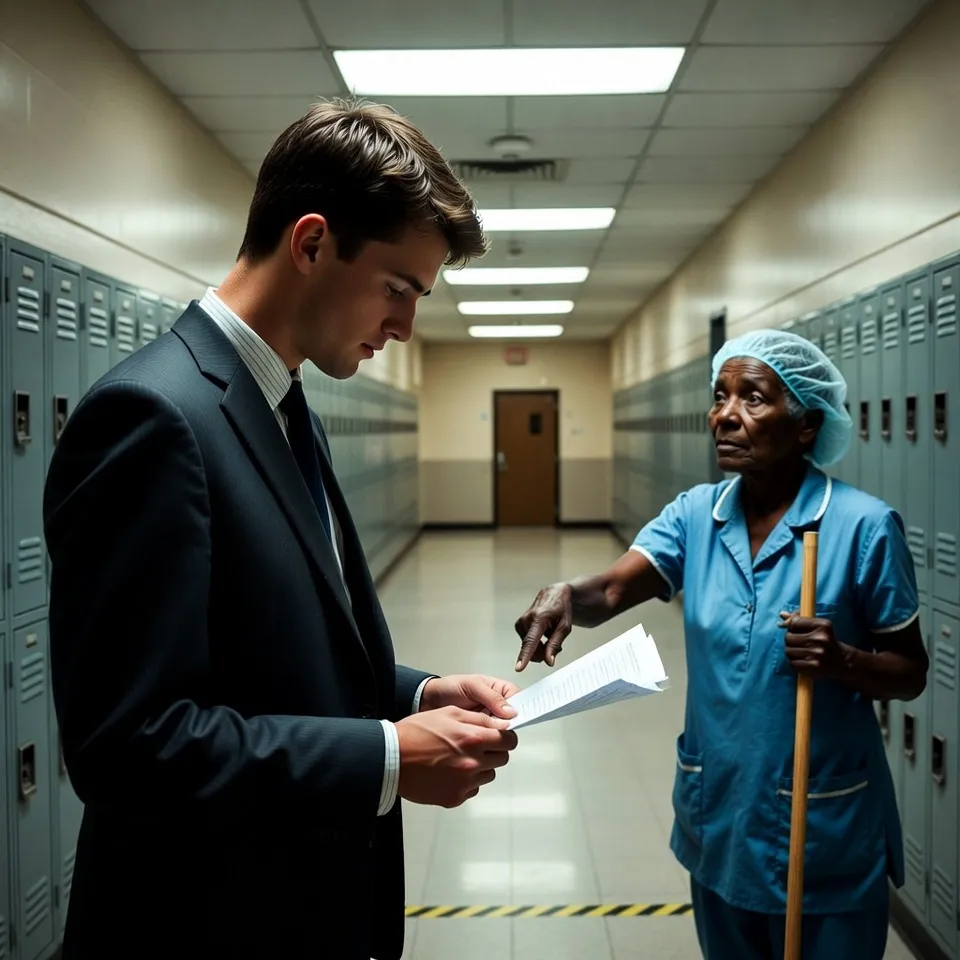
His daily routine with Evelyn continued like clockwork. Mornings were for deep questions. Evenings were for writing. He was building something. It wasn’t just better grades. It was a better self. His essays became more personal, more political, more powerful. Evelyn corrected them with a tough love. Red ink filled the margins with sharp notes. Don’t just say it. Mean it. This sentence is pretty but hollow. Rewrite it with your soul. Lucas rewrote. Again and again. He stopped caring what people thought. Not out of arrogance, but because he finally knew who he was becoming.
One afternoon, Lucas brought another classmate to their study session. Then another. And another. Soon, the abandoned library had become the headquarters of a quiet revolution. Evelyn found herself teaching circles of five, six, sometimes ten students after hours. They weren’t just learning to write. They were learning to think. Books that had once gathered dust became sacred texts. Quotes were shared like battle cries. “If you are silent about your pain, they’ll kill you and say you enjoyed it.” —Zora Neale Hurston. “The function of freedom is to free someone else.” —Toni Morrison. These weren’t just study sessions. They were awakenings.
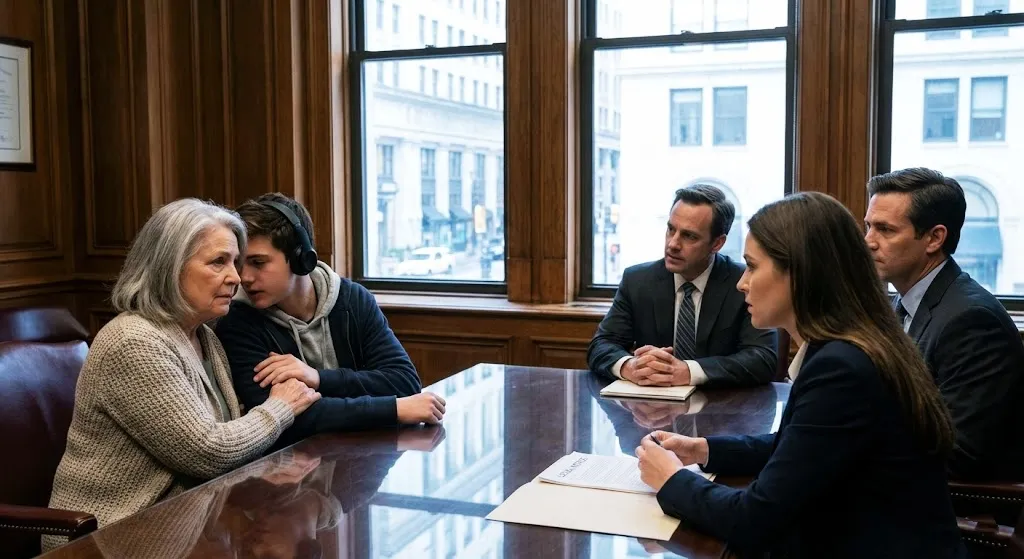
But not everyone was pleased. One rainy afternoon, Evelyn was pulled back into the office. “We’ve had complaints,” the assistant principal said. “You’re gathering students outside of official capacity.” “I’m teaching.” “That’s not your role.” “Maybe it should be,” Evelyn replied, her voice even. “Ms. Wallace, we’re going to have to ask you to stop.” She left the office without another word, but her back was straighter than ever.
The next morning, Lucas found out. “They’re shutting you down.” “They’re scared,” she said simply. “Of what?” “Of someone with no power teaching students how to have real power.” “I’ll speak out. I’ll go public. I’ll call my dad.” “No,” she said, placing her hand on his shoulder. “Not yet. Your voice needs to stand on its own. Not as a Reed. As Lucas.” He nodded, his jaw tight. But something inside him knew the storm was close. The change they had started… it couldn’t be hidden forever.
It happened faster than he thought. Lucas walked into the garage after school, soaked from the rain. He was gripping a paper with a bold, red ‘A’ at the top—the first one he had ever truly earned. The essay was titled, “The Courage to Unlearn.” His teacher’s comment: You found your voice. He wanted to show his father. Just once. Not for approval, but for truth. He found Charles standing beside a brand-new electric sports car, deep in a Bluetooth conversation about acquisitions…