Martha Halstead pressed the phone to her ear, her daughter’s voice sharp with frustration. Mom, this is insane. Why now? After 30 years, why dig this up? Martha stared out the window at the snow-covered fields of Millbrook, the town where she’d spent her entire life.
I need to know what really happened to your father. Dad fell. It was an accident.
That’s what the police said. What everyone said, I know what they said. Martha’s grip tightened on the phone.
I’m not sure I believe it anymore. Dr. Wilson’s words from that morning still echoed early-stage dementia. You have time, but eventually.
I’m losing my memory, Ellie, and before it’s gone, I need to know the truth about the night Ray died. The Halstead property emerges from the snowy landscape, the farmhouse looking smaller than she remembers. But it’s the structure behind it that draws her gaze.
The barn, its weathered silhouette a dark interruption against the white horizon. Martha parks, her boots crunching in the fresh snow as she approaches the house. Ellie is already there, leaning against her sensible sedan, arms crossed tight against her chest.
At 43, her daughter looks more like Ray every year, the same set to her jaw, the same furrow between her brows when she’s troubled. Beside her stands Clara, 18 and vibrant. Grandma.
Clara rushes forward. I’ve got everything set up. This is going to make an amazing podcast series.
Martha returns the hug over Clara’s shoulder. She meets her daughter’s eyes. I know you don’t understand.
You’ve avoided this place for 30 years, Ellie says. We rented it out to strangers rather than deal with it. And now suddenly you want to renovate the very spot where dad died? Of course I don’t understand.
Let’s go inside. It’s too cold to talk out here. The farmhouse is warm but musty with disuse.
Clara immediately sets up her recording equipment on the kitchen table while Martha puts on a kettle for tea. So this is for school? Martha asks, nodding toward Clara’s vintage recorder. Kind of.
I’m majoring in next fall and I’ve already started a podcast series. This will be my first real investigative story. Clara’s eyes shine with excitement.
I’m calling it What the Barn Saw. I still don’t think this is appropriate, mom. Dad died in an accident.
There’s nothing to investigate. Is that what you really believe, Ellie? An accident? Clara glances between her mother and grandmother, sensing the undercurrents. Because this town has whispered otherwise for 30 years, Martha continues.
And now I need to know before she stops, unsure how to proceed. Before what, grandma? I’ve been diagnosed with early stage dementia. The doctors say I have time, good time, but eventually I’ll start to lose memories.
I can’t let Ray be something else I forget. Mom, why didn’t you tell me? I’m telling you now. And that’s why this can’t wait.
Martha’s voice finds new strength. The kettle whistles, piercing the heavy silence. Clara, eyes wide with this new information, quietly turns on her recorder.
Episode one. She speaks softly into the microphone. The return.
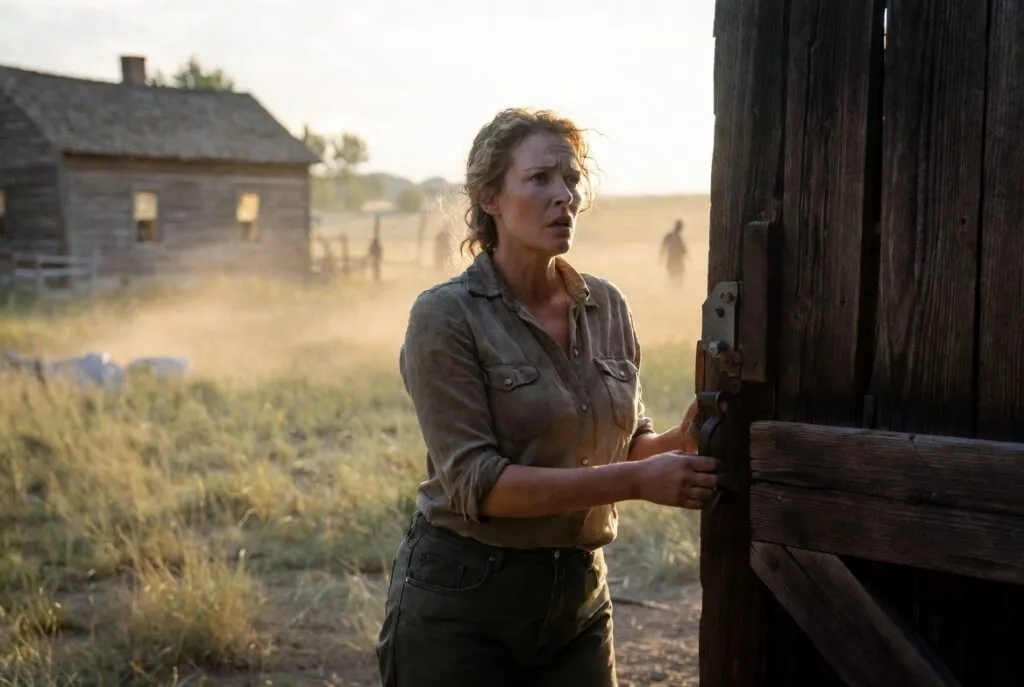
The next morning it dawns clear and cold. Martha stands before the barn, a set of rusted keys in her hand. The padlock is corroded from three decades of weather.
It takes three attempts before the key catches and the lock clicks open with a sound like ancient bones shifting. Need help with that? Martha turns to find a man approaching, mid-fifties, with steady hands and eyes that have seen much. Jameson Wright, he introduces himself.
The contractor you called. Recognition flickers across Martha’s face. Ray’s apprentice.
He nods. That was a long time ago, Mrs. Halstead. Martha? Please.
She turns back to the barn doors. Jameson says nothing to this, just sets down his toolbox and helps her pull the heavy doors apart. The space is both foreign and achingly familiar to Martha.
Ray had been building this barn when they first married and had shaped it with his hands and vision. The massive central beam still holds the roof aloft. The water damage mars one corner where the roof has begun to fail.
Tools hang on the far wall, undisturbed for thirty years. Now draped in cobwebs, the loft ladder leans at the same angle it always had. The same angle from which Ray supposedly fell to his death.
Clara enters behind them, her recorder already running. Wow, she breathes. It’s like a time capsule.
This whole place will need to be gutted, Jameson says. The structural integrity has been compromised. It would be cheaper to tear it down and start fresh.
No. Martha’s response is immediate and firm. We restore it.
Exactly as it was. As you wish. But it won’t be quick or cheap.
I don’t care about either. Martha withdraws a faded blueprint from her coat pocket. I found Ray’s original plans.
I want it exactly like this. As Jameson examines the blueprints, Ellie enters. The carpenters arrived, I see.
Jameson was Ray’s apprentice, Martha explains. He knows how Ray would have wanted things done. Jameson looks up at this.
It’s been thirty years, Martha. I’m not sure I remember exactly. You’ll remember enough, Martha interrupts.
Clara, ever observant, zooms in on this interaction with her recorder. So, Mr. Wright, you were here when my grandfather died? No, I wasn’t here that night. But you knew him well? I thought I did.
He turns away, moving deeper into the barn. Martha follows, running her fingers along the workbench where Ray’s tools still lie in neat rows. Something catches her eye.
A rotted panel behind the workbench. It’s corner curling away from the wall. Curious, Martha pulls at it.
The wood gives way easily, crumbling in her hands. There’s something here, she calls. Her fingers close around what feels like paper.
When she withdraws her hand, she’s holding a Polaroid photograph, its colors faded but still discernible. It shows Ray, younger than she remembers him now, his arm around a pregnant woman whose face is turned away from the camera. Who is that, Ellie asks.
Martha turns the photo over, written on the back in Ray’s distinctive handwriting. August 95, almost time. He died in August 1995.
I don’t know who she is, Martha says. Jameson steps forward, his face going pale as he glimpses the photo. Mrs. Halstead, you recognize her, Martha states.
Before he can answer, Clara takes the photo, examining it closely. This is our first real clue, she says, enthusiasm overwhelming. This isn’t a game, Clara.
Ellie snaps. That’s your grandfather in a compromising position. We don’t know that, Clara argues.
Maybe she was a relative or a friend, a friend he never mentioned? A pregnant friend he was embracing just before he died. Ellie’s voice rises. This is exactly why I didn’t want to disturb this place.
Some things are better left alone. No, Martha says firmly, tucking the photo into her pocket. Nothing is better left alone.
Not anymore. She turns to Jameson. We start restoration tomorrow, 8 a.m. sharp.
That evening, Clara sets up her podcast equipment in the farmhouse kitchen. Her enthusiasm is contagious. Episode 1, What the Barn Saw…
Clara speaks into her microphone. In 1995, my grandfather Ray Halstead died in a barn accident in Millbrook, or at least that’s the official story. But my grandmother has returned after 30 years to restore not just the barn, but the truth.
I’m Clara Halstead, and this is my investigation into what really happened that August night. She cuts the recording, looking up at her mother. What do you remember about Grandpa Ray? You were what, 13 when he died? I remember he was kind.
He taught me to fish, to identify different types of wood by smell. He had sawdust in the creases of his hands, no matter how much he washed. Do you remember the night he died? I was staying with a friend.
I wasn’t home. Martha looks sharply at her daughter. You told me you were at Jessica Tanner’s house.
I was. But Sheriff Kowalski said he saw you running down the driveway that night, crying. He was mistaken.
Ellie, if you know something, I don’t. Ellie’s voice is tight, controlled. Clara switches her recorder back on.
Interesting. Mom’s hiding something about that night. But what and why? Martha sighs.
Your mother never really recovered from losing Ray. She adored him. Did you? Adore him, I mean? We had a complicated marriage toward the end, Ray became.
Preoccupied with something. He was spending time away from home, coming back late. When I asked where he’d been, he’d say he was fixing something.
I assumed. You thought he was having an affair. Clara finishes.
It crossed my mind. But Ray wasn’t the type. At least, I didn’t think he was.
The next day, Clara begins her investigation in earnest. With a photograph as her starting point, she visits the Millbrook Historical Society, which doubles as the town’s library. The elderly librarian, Mrs. Decker perks up at the sight of her.
Clara Halstead. My goodness, you’ve grown. Mrs. Decker adjusts her spectacles.
I heard your grandmother’s back in town. Causing quite a stir, I must say. Is she? Clara feigns innocence.
Mrs. Decker lowers her voice conspiratorially. Well, dear. Reopening that barn after all this time.
People talk, you know. Especially about how your grandfather died. Clara seizes the opportunity.
What do people say about how he died? Well, the official story is that he fell from the loft, broke his neck. But she leans closer. Ray was fixing to leave Martha.
Everyone knew it. Leave her? For another woman? That’s what they say. He’d been seen around town with someone.
Very hush-hush. And then suddenly, he’s dead. Mrs. Decker’s eyes glitter with the thrill of gossip.
Such a tragedy. Do you know who the other woman was? No one ever saw her face properly. But there were rumors she left town right after Ray died, never to return.
Clara thanks Mrs. Decker and moves on to the town hall, where she hopes to find more records. Instead, she encounters former Sheriff Kowalski, now well into his 70s. Halstead’s granddaughter.
He identifies her immediately. I heard you’re making some kind of radio show about your grandfather. A podcast, Clara corrects.
Kowalski’s expression hardens. Fall from the loft. Case closed.
Stop stirring things. With all due respect, sir, if it was just an accident, why are you so defensive? Young lady, this town has moved on. Your grandmother should do the same.
Some questions are better left unanswered. That’s what people say when the answers might incriminate them. You watch.
Yourself. Your grandfather got himself killed poking into things that weren’t his business. History has a way of repeating itself.
As he storms off, Clara switches off her recorder, her heart pounding. That sounded distinctly like a threat. Her final stop is the Mill Tavern, Millbrook’s oldest establishment.
The bartender, a man in his 60s with forearms like tree trunks, is wiping glasses when she enters. I don’t serve minors, he says automatically. I’m not here to drink.
I’m researching my grandfather, Ray Halstead. Ray? Good man. Terrible what happened.
Did you know him well? Well enough. He’d stop now and then. More frequently toward the end.
The bartender sets down the glass, his expression thoughtful. In fact, he came in three nights before he died. Kept saying, they’re watching.
They know, I know. Who was watching? What did he know? Never said. He was pretty agitated though.
Left half his beer, which wasn’t like Ray. He was always careful with money. Back at the barn, Martha and Jameson have begun the arduous process of assessment.
Jameson moves methodically, examining each beam, each joint, taking measurements and making notes. You’re being very thorough, she observes. A structure this old, with this much damage, you have to be.
He runs his hand along a roof beam. This will need to be replaced entirely. Who is the woman in the photograph, Jameson? His hand stills on the beam.
I don’t know what you’re talking about. Don’t lie to me. I saw your face yesterday.
You recognized her. It’s not my story to tell, Martha. It became my story when my husband died in this barn, she counters.
Was he having an affair? They’re interrupted by Ellie, who enters carrying lunch. I thought you two might be hungry. The tension in the air is palpable, Ellie glances.
Did I interrupt something? Your mother was just asking about the structural integrity of the loft, Jameson lies. Yes, it seems everything needs more work than we anticipated. They break for lunch, eating sandwiches in silence.
Afterward, Jameson begins sanding some of the beams that will remain, removing decades of grime and weathering. As he works on one of the massive supporting timbers, his sander suddenly hitches. That’s strange, he murmurs, moving closer to examine the beam.
Martha approaches. What is it? Jameson runs his fingers over the wood, then takes a rag and wipes away more of the accumulated dirt. Beneath it, barely visible, are words burned into the wood.
There’s something written here, he says. Together, they clean more of the beam, revealing a message deliberately scorched into the timber. June 14, 1995.
The land deed doesn’t match. Someone changed it. Martha stares at the words.
Ray wrote this. Jameson’s face has gone ashen. We should stop.
Cover this up again. What? No. Martha moves to another beam.
There might be more. Ellie enters to find her mother and Jameson frantically cleaning beams, revealing more burned messages. Mom? What are you doing? Martha doesn’t look up.
Ray left messages. In the woods! Look! Ellie approaches cautiously, reading aloud. The 2nd of July, 1995.
Asked Martha about her father. She won’t answer. Her eyes fly to her mother.
What did Dad want to know about Grandpa Vincent? I don’t remember him asking anything specific. Vincent was already in the nursing home by then, his health failing. Jameson uncovers a third message on yet another beam.
The 10th of August, 1995. Found the box. If I don’t make it? Look in the— The message ends abruptly, as if the writer had been interrupted.
He knew. Martha whispers. He knew someone might hurt him.
These aren’t just notes. They’re evidence. Jameson backs away from the beam.
Martha, this is a mistake. We should seal up the barn. Leave it be.
Ray wouldn’t want this. Then why did he carve his last words into this barn? Why leave a record if not for someone to find it? Maybe he changed his mind. Maybe he realized some truths are too dangerous.
What do you know, Jameson? Martha demands. You recognize the woman in the photo. You’re afraid of these messages.
What are you hiding? Mom, calm down. Mr. Wright is just trying to help. Is he? Or is he trying to bury whatever Ray discovered? Martha’s voice rises.
Clara enters, holding up her phone triumphantly. I found her. The woman in the photo.
Her name is Iris Pemberton. The name lands like a stone in still water, sending ripples through the barn. Jameson drops his sander with a clatter.
Ellie’s face goes blank with shock. Pemberton? Martha repeats. She lives on the edge of town, Clara continues, in a trailer surrounded by no trespassing signs.
I found her through facial recognition and old yearbooks. She graduated from Millbrook High in 1975. Martha turns to Jameson.
You know her. I can see it in your face. Jameson picks up his tools.
I should go. It’s getting late. No.
Martha blocks his path. You’re going to tell me what you know. Who is Iris Pemberton, and what was her connection to my husband? Finally, he sighs heavily.
Iris was. Someone Ray was trying to help. That’s all I know.
He was a good man, Martha. Whatever he was doing, he had his reasons. That’s not good enough, Martha insists.
If you won’t tell me, I’ll go ask her myself. Grandma. I’ll go with you, Clara volunteers.
Ellie looks torn. Mom, maybe we should take a step back. Think about what we’re doing here.
I don’t have the luxury of time. Ellie. Martha…
Reminds her. And neither did Ray, apparently. We’re going to see Iris Pemberton.
Tomorrow. As they leave the barn, the sun is setting, casting long shadows across the property. Martha pauses to look back at the structure, seeing it with new eyes, not as the site of tragedy, but as a deliberate archive.
The next morning dawns gray and threatening, the kind of winter day that promises snow by afternoon. Martha dresses with particular care, as if preparing for a confrontation rather than a simple visit. When Martha descends to the kitchen, she finds Clara already there, equipment ready.
Ellie sits nursing a cup of coffee, her expression troubled. You’re sure about this? Ellie asks as Martha pours herself a cup. I’m sure I need answers, Martha replies.
They drive in silence to the outskirts of town, where mobile homes and modest dwellings gradually give way to more isolated properties. Iris Pemberton’s trailer sits at the end of a rutted dirt road, just as Clara described, surrounded by handmade, no trespassing signs. She’s an artist, Clara observes, pointing to a shed with windows that clearly serves as a studio.
Martha leads the way to the door, her heart hammering against her ribs. She knocks firmly. After a long moment, the door opens a crack, revealing a woman in her early sixties.
Her face is lined but striking, with sharp cheekbones and wary eyes. Mrs. Halstead, she says. Miss Pemberton, Martha acknowledges.
May we come in? I have some questions about my husband. I suppose it’s time. The interior of the trailer is modest but immaculate, every surface covered with paintings, all of the barns in various states of completion.
Martha stares at them, a chill running down her spine. Some depict barns in sunshine, others in storms, but all are missing something, a roof, a door, a wall. None are finished.
You paint a lot of barns, Ellie says. I paint one barn, over and over. I’ve never been able to finish it.
Martha studies the woman before her. Now that she’s looking, she can see why Ray might have been drawn to her. I found a photograph, Martha says, placing the Polaroid on the table between them, of you and my husband.
You appear to be pregnant. I was pregnant, but not with Ray’s child. Then who’s? My boyfriend at the time.
He’s long gone now. Iris’ hands, Martha notices, are artist’s hands, graceful but strong, with paint embedded in the creases. Ray was helping me.
Helping you how? He was going to give me part of the land, the Halstead property, not out of love, out of guilt. Guilt? For what? For what his father did to mine. Iris rises, moving to a small desk where she withdraws an old manila folder.
Ray discovered the truth in the summer of 1995, about the land your families built their lives on, about how my father was cheated out of his share. In 1968, Douglas Halstead, Ray’s father, and Vincent Monroe, your father, Martha, were business partners. They co-owned the land where the barn stands now.
Martha nods slowly. I knew that much. They bought it together to expand their lumber business.
What you didn’t know, Iris continues, is that my father, Thomas Pemberton, was supposed to be the third partner. He was a black farmhand who had worked that land for twenty years before your fathers ever saw it. He had a legitimate claim, backed by a handshake deal and a witness.
Clara has been recording everything. Iris’ face hardens. There was a barn fire in 1969.
My father was inside. They said he’d been smoking, fell asleep, the old barn burned to the ground, and Thomas Pemberton with it. That’s terrible, Martha murmurs.
After my father died, the deed to the land was conveniently lost. When a new one appeared, it listed only two names, Douglas Halstead and Vincent Monroe. My father’s claim, his life’s work, vanished like smoke.
That’s not possible. My father was a strict man, but he was honest. He would never.
Your father and Ray split the land between them, Iris interrupts, her voice tight with old anger. Ellie looks skeptical. And you’re saying my father discovered this? After all those years? Ray found documents at the county records office, misfilings that were actually deliberate attempts to hide the truth.
He came to me because he found my name as next of kin for Thomas. Iris’ expression softens. Your husband was a good man, Mrs. Halstead.
When he realized what his father had done, what both fathers had done, he was determined to make it right. But the pregnancy? Martha presses. Why pretend to be pregnant in the photo? I wasn’t pretending.
I was seven months along. My boyfriend was not a kind man. Ray was helping me escape, set up somewhere new.
The land share would have given me independence. Clara leans forward. So Grandpa was planning to return your family’s rightful portion of the land? That’s why he carved those messages in the barn? Carved messages in the beams, Martha explains.
Dates. Notes about land deeds being changed. He wrote that he found the box.
The box. Yes. Ray said he had evidence.
He told me he was hiding it somewhere no one would think to look. He said, Wood remembers. Wood holds truth better than people do.
He carved the truth into the barn because he knew no one would burn it down again. Clara realizes. Martha sits back, her world tilting on its axis.
The husband she thought might have been unfaithful had actually been trying to a historical wrong, one perpetrated in part by her own father. Did he tell anyone else what he’d discovered? I don’t know, Iris admits. He was careful, said people were watching him, that they’d do anything to keep the secret buried.
Ellie, who has been unusually quiet, suddenly pushes back from the table. I need some air, she mutters, fleeing to the porch. Martha watches her go with concern, then turns back to Iris.
Thank you for telling me this. I know it couldn’t have been easy. You really didn’t know, did you? Any of it? Ray tried to tell me something was troubling him that summer.
I dismissed it, told him to stop digging up old pain. Her voice breaks. I chose not to listen.
And now I’m left with pieces I can’t put together. Maybe you still can, Iris suggests. Ray left a record, you said in the barn.
Maybe there’s more to find. Outside, Clara has followed Ellie to the porch, where her mother stands gripping the railing so tightly her knuckles have gone white. Mom? Are you okay? I can’t do this, Clara.
I can’t be part of this. Why not? Don’t you want to know what happened to Grandpa? I already know, Ellie whispers. Back at the barn that afternoon, the snow has started, fat flakes drifting through the partially opened roof.
Jameson is already there, working alone, when Martha, Ellie, and Clara return. You saw Iris, he states. Not a question.
Yes, Martha confirms. She told us about her father, about the land. So now you know what Ray was trying to do.
Did you know? Martha challenges. Not all along, Jameson admits. Ray confided in me that summer, showed me some of what he’d found.
I told him to let sleeping dogs lie. His face twists with regret. Martha approaches one of the carved messages, tracing the letters with her fingertip.
He left a record because he knew someone might try to stop him. He knew he was in danger. Yet you claim his death was an accident, Clara points out.
Jameson doesn’t answer. Ellie, who has been hanging back near the door, suddenly steps forward. It wasn’t an accident, she says, her voice trembling.
I saw him. That night. What are you saying, Ellie? I’ve been carrying this for 30 years, Mom.
I was here. I heard shouting in the barn. I came to see what was happening, and I found Dad at the base of the loft ladder.
He was bleeding, barely conscious. The barn seems to hold its breath as Ellie continues, the words tumbling out now as if a dam has broken. His last words to me were, Tell your mother.
I’m sorry. The beam. Check the beam.
I ran to get help, but by the time the ambulance came. She shakes her head, tears spilling freely now. He was already gone.
Why didn’t you tell me this? All these years? Because I thought, Ellie chokes on a sob. I thought he was confessing, apologizing for loving someone else. For Iris.
I was just a kid, and all I could think was that Dad was leaving us. That he was saying sorry for betraying you. So I stayed quiet.
I let everyone think it was just an accident. Martha crosses to her daughter. Oh, Ellie.
You were 13. That wasn’t your burden to carry. If I’d told you what he said, maybe you would have found what he hid.
Maybe you wouldn’t have spent 30 years wondering. Clara, who has been recording everything, asks softly. What beam was he talking about, Mom? I don’t know…
He just said, the beam. It has to be the central support. Jameson interjects, pointing to the massive timber that runs the length of the barn’s ceiling.
The spine of the structure. Everything else could be replaced. But that beam is original to the first construction.
They all look up at the enormous beam that crowns the barn’s frame, at least 20 feet overhead. How do we get up there? Martha asks. I’ll need to bring in scaffolding, Jameson says.
He retrieves a ladder, setting it against one end of the beam where it meets the wall. Climbing carefully, he runs his hands along the timber, tapping occasionally. When he reaches a certain point, the sound changes, hollow instead of solid.
Here, he calls down. This section sounds different. With painstaking thoroughness, Jameson examines the beam.
This isn’t right, he finally declares. This section has been filled with concrete. That’s not structural.
That’s concealment. Clara voices what they’re all thinking. Grandpa hid something inside the beam.
Do we break it open? Ellie asks, her voice small. After all this time, do we want to know? I need to know, Martha says firmly. Clara, ever practical, is already looking around the barn.
We’d need some kind of drill or chisel to get through concrete. Jameson hesitates. I have a concrete drill in my truck.
But Martha, are you sure about this? Some secrets stay buried for a reason. I’m sure, Martha replies. While Jameson retrieves the drill, Ellie pulls her mother aside.
Mom, what if what we find changes everything? What if it’s worse than we imagine? Then we’ll face it together. But living with half-truths and whispers is no way to honor your father’s memory, or mine, when the time comes. When Jameson returns with the drill, Clara is already setting up her equipment to record.
This will be the centerpiece of her podcast, the moment of revelation after 30 years of silence. Episode 2, Buried Truths, she narrates into her recorder. What secrets did my grandfather seal away, knowing they might cost him his life? Jameson sets up the ladder, climbing carefully with the drill in hand.
I’ll start with a small hole, he calls down. The drill whines as it bites into the concrete, dust and small fragments raining down. After a minute, Jameson stops, peering into the hole he’s created.
There’s definitely something in there, he confirms. He continues drilling, creating a series of holes that weaken the concrete fill enough to begin chipping it away. Finally, after nearly an hour, Jameson has created an opening large enough to reach inside.
I can feel something, he reports. It’s wrapped in something, oilcloth, maybe. With infinite care, he extracts a package about the size of a shoebox, wrapped in oiled canvas and sealed with wax.
He descends the ladder slowly, cradling the parcel as if it might disintegrate. Martha, Ellie, and Clara gather around as he sets it on the workbench. For a moment, no one moves to open it.
You should do it, Grandma, Clara says softly. Martha nods, her hands steadier than she expected as she breaks the wax seal and unwraps the oilcloth. Inside lies a collection of items, each one a piece of the puzzle Ray had been assembling in the final weeks of his life.
A journal bound in leather, the pages yellowed with age. A hand-drawn deed dated 1969 bearing three signatures, Thomas Pemberton, Douglas Halstead, and Vincent Monroe. A series of photographs showing two men, clearly Douglas and Vincent, at what appears to be a county clerk’s office, their expressions grim and purposeful.
A legal document that appears to be a will, never filed, leaving one-third of the Halstead-Monroe property in trust for Thomas Pemberton’s heirs. And at the bottom, a cassette tape labeled simply, For Martha, play this first. We need something to play this on.
My equipment can handle it. Clara offers. I brought adapters for old media, figured we might find something like this.
They gather around as Clara connects the tape to her digital recorder. After a moment of static, a voice fills the barn. Ray’s voice.
Martha. The recording begins. If you’re hearing this, I’m probably gone.
I found out what our fathers did. Your father destroyed evidence. Mine profited from murder.
That fire wasn’t an accident. Thomas Pemberton was in that barn. They locked him in.
Martha sinks onto a nearby stool, the color draining from her face as Ray’s voice continues. I tried to make it right quietly, but Vincent found out. He’s threatened me, said the family’s reputation is worth more than one man’s truth.
I’m scared, Martha. Not of dying, of you hating me for exposing your father. But Iris deserves what’s hers.
Her son deserves to know his grandfather’s name means something. If something happens to me, it wasn’t an accident. Check the hollow beam.
And Martha. Ray’s voice softens, thick with emotion. I never stopped loving you, even when we grew apart.
Even when you chose your father’s version of the past over my questions about it. The tape ends with a soft click, leaving behind a silence so profound it seems to have physical weight. I chose silence, she whispers finally.
I chose my father’s reputation. Ray tried to tell me, and I, I told him to stop digging up old pain. Jameson stands apart from the family circle.
He tried to tell a lot of people. No one wanted to listen. Did he tell you about the threat from my father? Not specifically.
He said he was being watched, that powerful people wanted him to stop asking questions. Jameson’s shoulders slump. I should have taken it more seriously.
I thought he was being paranoid. My father was in a nursing home, Martha says. He was ill, bedridden.
How could he have threatened Ray? Vincent Monroe still had influence in this town, Jameson points out. People respected him, feared him, even. He didn’t need to be physically capable to be dangerous.
Clara picks up Ray’s journal, running her fingers over the worn cover. There might be more details in here. Names, dates, specifics about what Grandpa discovered.
Ellie nods. Ellie. We should read it together, all of it.
Martha rises from the stool. Yes, no more secrets, no more silence. It’s time we learned exactly what happened to Ray and to Thomas Pemberton.
As they prepare to leave the barn, Martha pauses, looking back at the hollow beam now exposed overhead. He hid the truth where he thought it would be safe, she muses. Wood remembers, Clara says softly, echoing Iris’s words.
Back at the farmhouse, a fire crackles in the hearth as Martha, Ellie, and Clara gather around the kitchen table. The items from the beam lie between them like artifacts from an archaeological dig, pieces of a past that seems both distant and suddenly, painfully immediate. Clara has her equipment set up, recording their examination of Ray’s hidden cache.
Episode 3, The Hollow Heart, she narrates. Tonight, we open a time capsule sealed away by my grandfather just before his death. Martha reaches for the journal first.
The pages inside are filled with Ray’s distinctive handwriting, neat, precise lettering that slants slightly to the right. She opens the first entry, dated the 3rd of June 1995. I’ll read it, she says.
Her voice is steady as she begins. The 3rd of June, 1995. I found something today that I can’t ignore, though God knows I’ve tried.
I was at the county archives researching property boundaries for the Miller Project when I stumbled across an old deed for our land. The Halstead Monroe property. But this deed had three names on it, not two.
The third, Thomas Pemberton. I’d heard rumors about Pemberton over the years, that he’d worked our land before Dad and Vincent bought it, that he died in a barn fire. But I never knew he had a claim to ownership.
This deed was misfiled, tucked into records from a different county altogether. Someone deliberately hid it. Martha pauses.
Your grandfather never mentioned any of this to me. Keep reading. Mom.
Ellie urges. Martha continues with the next entry. The 14th of June, 1995.
I asked Dad about Thomas Pemberton today. He got that look, the one where his eyes go flat and his jaw sets. Ancient history, he said.
Best left buried. When I pressed, showing him a copy of the deed I’d found, he tore it up. That document doesn’t exist, he told me.
And if you’re smart, you’ll forget you ever saw it. I’ve never seen my father afraid before. But today, I did.
So great-grandpa Douglas knew about the claim? Apparently. Martha murmurs, turning the page. Here’s more.
The 20th of June, 1995. I visited Vincent today at Pine Meadows Nursing Home. Martha thinks I’ve been distant lately.
She’s right. How do I tell my wife that her father might be implicated in fraud? Or worse? Vincent was lucid when I arrived, sharp as ever despite his physical decline. I showed him another copy of the deed.
Unlike Dad, he didn’t deny it existed. Instead, he laughed. Actually laughed.
Some lies hold families together, Ray, he said. You tear this open. You destroy Martha, Ellie, everything we built.
When I asked about the fire that killed Thomas Pemberton, he stared at me for a long time. Then pressed the nurse call button. I’m tired now, he said.
Don’t come back with these questions, son. For your own good. Martha’s hand trembles slightly as she reads, the implications of her father’s words sinking in…
She continues reading entries through July, as Ray documented his growing certainty that Thomas Pemberton’s death was no accident, and that both Douglas Halstead and Vincent Monroe had conspired to eliminate him and steal his rightful claim to the land. The 15th of July, 1995. I found Iris Pemberton today, Thomas’s daughter.
She’s living in a trailer on the edge of town, keeping to herself. She wasn’t surprised when I told her what I’d discovered. Everyone knows what happened to my father, she said.
But knowing and proving are different things. She showed me photographs of her father, a dignified man with kind eyes. She also told me something I didn’t know.
She’s pregnant, trapped in a relationship with a man who hurts her. I promised to help her any way I can. If I can restore her father’s claim, she’ll have means to start fresh.
It’s the least I can do to begin making amends for my family’s sins. So he was helping Iris escape an abusive situation? That explains why they were meeting secretly, and why the town might have misinterpreted their relationship, Clara adds. Martha nods, turning to the next page.
The entries grow more urgent as July turns to August. The 5th of August, 1995. Martha and I argued today.
I tried to tell her what I’ve found, that I need to make things right. She doesn’t want to hear it. Stop digging up old pain, she said.
What good will it do now? She doesn’t understand that this isn’t about the past. It’s about justice that’s long overdue. I didn’t tell her about the threatening note I found on my truck yesterday.
Drop it or regret it. I don’t want to frighten her. But I’m scared enough for both of us.
I remember that argument. I was so dismissive. I thought he was having some sort of crisis, questioning everything.
I never imagined. You couldn’t have known, Mom, Ellie says softly. But I should have listened, Martha insists.
Instead, I pushed him away when he needed me most. Clara, ever focused on the investigation, gently redirects them. What does he say about Jameson? He mentioned telling him about the plan.
Martha flips through more pages, finding the entry. The 12th of August, 1995. Told Jameson today what I’ve discovered.
Asked him to help me file the corrected deed and will on Monday. He begged me not to go through with it, said Vincent has powerful friends, that I’m putting myself in danger. You’re imagining things, he said, just like Martha did.
But I’m not. I can feel eyes on me everywhere I go in town. The sheriff follows my truck.
The bank manager suddenly needs to review my business loan. It’s a small town conspiracy of silence, and I’m threatening to break it. Jameson promised to think about helping, but I saw the fear in his eyes.
I may have to do this alone. So Jameson knew. He knew Ray was in danger and apparently didn’t help.
Clara says, her voice hardening. The final entry is dated the 18th of August, 1995, the day before Ray died. The 18th of August, 1995.
Tomorrow, I’m going to the county clerk at dawn. Tonight, I’m sealing this evidence where no one will think to look. If anything happens, the barn will tell the truth.
Wood holds memory better than people. I’ve carved messages into the beams as a map, if someone is brave enough to follow it. Martha, if you’re reading this someday, I’m sorry.
I never stopped loving you, even when we grew apart. I hope someday you’ll understand why I had to do this. This isn’t just about righting an old wrong.
It’s about who we are as people. I can’t live carrying my father’s sins. I won’t be complicit in this lie anymore.
The journal ends there. No entry for August 19, the day Ray died. Martha closes the book gently, her face etched with grief and regret.
He died trying to do the right thing, she says quietly. And all these years, I’ve been protecting the wrong legacy. We all were, mom.
The whole town was complicit. Clara, who has been examining the photographs from the beam, spreads them on the table. Look at these.
That’s the county clerk’s office. And those are definitely your father’s. Martha.
The images show Douglas Halstead and Vincent Monroe at what is clearly the county administration building, date stamped just three days after the barn fire in 1969. In one photo, Vincent is handing something to a clerk, papers of some kind. They were filing the new deed, Martha realizes, erasing Thomas Pemberton from the record.
And this will, Clara continues. Carefully unfolding the never filed document. Grandpa was going to leave one third of his inheritance to Iris as Thomas’s heir.
It’s all here, witnessed and signed by him. He just never got to file it. I want to speak to Jameson, Martha says finally.
He knows more than he’s telling us. I’ll call him, Ellie offers, reaching for her phone. No.
Martha stops her. I want to confront him at the barn, where Ray died. Where the truth is carved into the very bones of the building.
Early the next morning, they arrive at the barn to find Jameson already there, working alone. He looks up as they enter, his expression guarded when he sees their determined faces. You read the journal, he states.
Yes, Martha confirms. And now you’re going to tell us what you know about the night Ray died. All of it.
I’ve carried this for 30 years, Martha. It’s eaten me alive. Then put it down, she urges.
For Ray’s sake, for all our sake, Jameson nods slowly, gesturing for them to sit on a stack of lumber. Ray asked me to meet him here that night, August 19th, to help him gather everything for the county clerk the next morning. I agreed initially.
His voice catches. But then I got a phone call. Vincent Monroe.
He knew Ray had spoken to me, knew what we were planning. He offered me $10,000 to make sure Ray reconsidered. It was a fortune to me then, enough to start my own business, to get out from under Ray’s shadow.
You took a bribe from my father? I told myself I was just buying time, Jameson continues, that I’d convince Ray to approach things differently, more cautiously. But really, I was a coward. I took the money.
I didn’t show up that night. And Ray died, Ellie says. Jameson nods.
When I heard about the accident the next day, I knew. I knew it wasn’t an accident. And I’ve been living with that for 30 years.
Martha rises. Did you push him? Were you here after all? I swear to you, I never came to the barn that night. I was at home, drinking myself into oblivion, trying to forget what I’d done.
But I left him alone when he needed backup. That’s its own kind of murder. Clara, who has been recording everything, asks, If you weren’t here, how can you be so sure it wasn’t an accident? Because Ray was the most careful man I’ve ever known.
He respected heights. Respected the dangers of construction. He wouldn’t have fallen from that ladder by accident.
Not unless someone made sure of it. Martha stares up. Someone like my father? Vincent had the most to lose if Ray went public, Jameson acknowledges.
His reputation. His legacy. In 1969, he and Douglas were young men building their futures.
By 1995, they were respected pillars of the community. The truth would have destroyed everything they’d built. But my father was in a nursing home, Martha protests.
Though her voice lacks conviction now. He could make phone calls, Jameson points out. He could give orders.
People in this town still jumped when Vincent Monroe spoke, even from a hospital bed. Ellie suddenly speaks up. Did Dad have a security camera in here? I vaguely remember him installing something.
He was worried about tool theft. Yes, actually. A basic system, this was 1995.
So nothing sophisticated. Just a VCR connected to a couple of cameras. One in the loft.
One by the main door. Where would the recording be kept? Clara asks. There was a small cabinet built into the wall near the workbench.
Jameson recalls. They move en masse to the area he indicates. The cabinet is still there, nearly invisible unless you know to look for it.
A simple panel that blends with the surrounding wall. The keys would have been on Ray’s key ring, she says. The police returned it with his personal effects.
I know where it is, Ellie says, hurrying back to the house. While they wait, Martha turns to Jameson. Who else knew about Ray’s investigation? Who else might have wanted to stop him? Sheriff Kowalski was Vincent’s cousin by marriage.
The county clerk, Bill Henderson, received a land donation from Vincent in 1970. Prime Riverside property, supposedly for civic service. The bank manager, the mayor.
Vincent had connections throughout Millbrook. It wasn’t just two men covering up a crime. It was an entire town’s power structure protecting its own interests…
A conspiracy, Clara breathes. Ellie returns with a ring of keys. It takes several attempts before they find one that fits the cabinet lock.
Inside, layered with dust, sits an old VCR unit. August 18 to 19, 1995, is written on the label in Ray’s handwriting. The night he died, Martha whispers.
Clara examines the equipment. This is vintage, but I think I can get it working. Worst case, we can take the tape to be professionally restored.
They carefully extract the VCR and tape, bringing them back to the house, where Clara spends the afternoon connecting the ancient technology to modern equipment. The tape is degraded, the magnetic material deteriorating after 30 years in the unregulated temperature of the barn. But portions remain viewable.
That evening, they gather around Clara’s laptop as she plays what she’s been able to salvage. The footage is grainy, silent, and time-stamped. The 18th of August, 1995, 11 p.m. The camera angle shows most of the barn interior from its position in the loft.
Ray is visible, moving deliberately, sealing something inside the central beam, the evidence they’ve now recovered. He works alone, checking his watch occasionally, perhaps waiting for Jameson. At 11 p.m., another figure enters the barn.
The image is shadowed. The quality too poor to make out a clear identification. Ray turns, seemingly surprised.
Though there’s no audio, it’s clear from their body language that an argument ensues. Ray gestures emphatically. The figure remains still, posture rigid.
Ray backs toward the loft ladder, his hands raised in what might be a placating gesture. The figure advances. Then, in a moment so quick it would be easy to miss, Ray stumbles, or is pushed, backward.
The camera captures his expression of shock as he falls from view. The mysterious figure doesn’t call for help. Instead, they look around, then up, directly at the camera.
The image is blurry, but one detail is clear. A distinctive ring on the person’s right hand, catching the light as they raise it toward their face. Freeze that frame, Martha commands.
Clara complies, zooming in on the hand with the ring. That’s a family crest ring, Martha says. My father’s ring.
I buried him wearing it. Vincent Monroe, supposedly bedridden in a nursing home, was in the barn the night Ray died. But how? Ellie asks, bewildered.
Grandpa Vincent could barely walk by then. The nurses had to help him to the bathroom. Let’s find out, Clara says.
Pine Meadows Nursing Home still exists. They must keep records. A series of calls and one visit to the nursing home later, they have their answer.
Vincent Monroe signed himself out for a family emergency at 9 p.m. on the 19th of August 1995. He was picked up by Sheriff Kowalski and returned at 3 a.m. No questions were asked. After all, Vincent was a major donor to the facility, and the sheriff was law enforcement.
He could have done it, Martha says hollowly. Or at least watched him fall and done nothing, too. Help, Ellie adds.
Either way, it wasn’t an accident. And it wasn’t a random event. It was deliberate.
Martha sits by the fireplace. All these years, I’ve held my father’s memory sacred. Defended him.
Made excuses for his harshness, his rigid principles. And all along, he was capable of this. People can surprise you, Clara says.
I wonder if he ever regretted it, Martha muses. In those final years before he died, did he ever think about what he’d done? To Thomas Pemberton. To Ray.
To our family. We’ll probably never know, Ellie says. But we know what Dad was trying to do.
That’s something we can honor. Even now. Martha nods.
Yes. And the first step is giving Iris Pemberton what she’s owed. One-third of this land rightfully belongs to her family.
It’s time we make that right. After 30 years? Jameson asks. I don’t care, Martha states firmly.
Ray died trying to do the right thing. I won’t die having failed to finish what he started. Later that night, after Ellie and Clara have gone to bed, Martha sits alone with Ray’s journal in her lap.
She turns to the first page again, reading his words as if hearing his voice for the first time. I found something today that I can’t ignore. Though God knows I’ve tried.
I tried to ignore it too, Ray, she whispers to the empty room. For 30 years, I tried to pretend nothing was wrong. I’m sorry, but I’m listening now.
Finally, I’m listening. The morning brings clear skies and bitter cold, the temperature having plummeted overnight. Martha wakes early, her mind clearer than it’s been in months.
Perhaps years. Over breakfast, she outlines her plan to Ellie and Clara. First, we need to speak to a lawyer about transferring one-third of the property to Iris.
Then, we need to understand exactly what happened the night your father died. And who else was involved, Ellie nods. And we need to be prepared for pushback.
If the town’s elite were involved in covering this up, they wouldn’t want it exposed now. Especially since some of them are still in positions of power, Clara adds. Sheriff Kowalski’s son is now the sheriff.
Bill Henderson’s nephew is the current county clerk. The connections run deep. All the more reason to move quickly, Martha says.
I’ll call Iris and ask her to meet us at Lowell and Barnes this afternoon. They’re the most reputable law firm in the county. Clara’s eyes light up.
Can I record the meeting? For the podcast? That’s up to Iris. This is her story, too. Her father’s legacy.
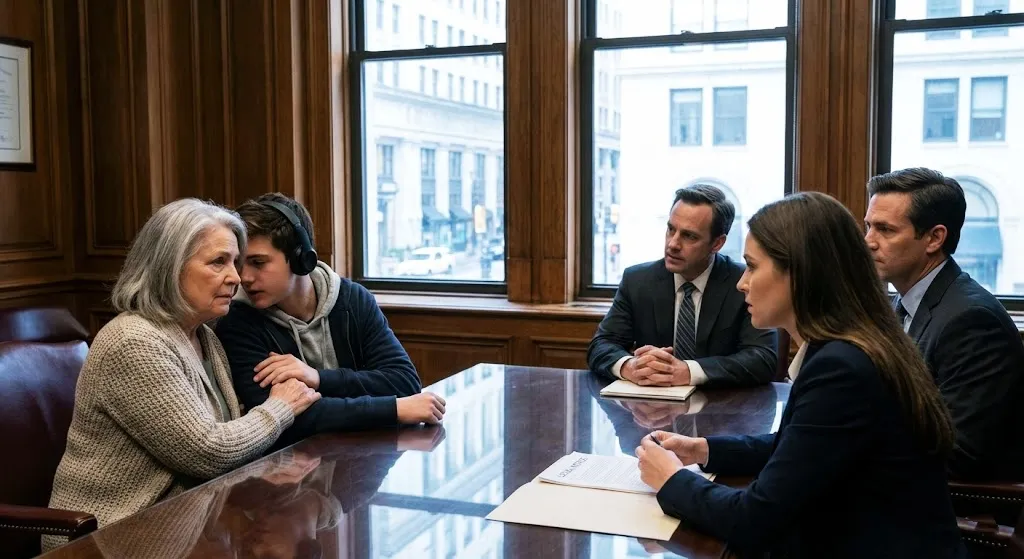
She should have a say in how it’s told. Iris agrees readily, both to the meeting and to Clara’s recording. By two o’clock, they’re seated in the wood-paneled conference room of Lowell and Barnes, explaining the situation to Gerald Barnes, a silver-haired attorney with shrewd eyes and a reputation for integrity.
Let me understand this, Barnes says. You want to transfer one-third ownership of the Halstead property to Miss Pemberton based on a handwritten deed from 1969 that was never officially recorded? Yes, Martha confirms, along with back compensation for 50 years of lost use and inheritance. Mrs. Halstead, while I sympathize with your desire to right this wrong, legally this will be complex.
The statute of limitations doesn’t apply to murder, Clara interjects. If Thomas Pemberton was killed to steal his land, and my grandfather was killed to keep that secret, then this isn’t just about property rights. It’s about homicide.
Those are serious allegations, young lady. Do you have evidence? Martha slides a folder across the desk, copies of everything they found in the beam, plus stills from the VHS footage showing the distinctive ring. My husband left this evidence before he died.
The original documents are secure. We have reason to believe he was killed, to prevent him from filing these papers. Barnes examines the materials..
This is disturbing. And you believe Vincent Monroe, your own father, was directly involved in both deaths? Yes, Martha says simply. Iris, who has been quiet until now, leans forward.
Mr. Barnes, I don’t care about money. I care about acknowledgement. My father worked that land for 20 years.
He had a legitimate claim that was stolen through violence and fraud. His name deserves to be cleared. I understand, and I’m willing to help.
But be prepared. This won’t be easy. You’re challenging powerful interests and long-established property rights.
It could take years. I don’t have years, Martha says. But I’ll use whatever time I have left to see this through.
As they leave the law office, Clara narrates into her recorder, Episode 4, Confronting the Past. Today marks the beginning of a legal battle 50 years in the making. But, as we’ll soon discover, some in Millbrook will go to great lengths to keep the past buried.
She’s proven right sooner than any of them expect. That evening, as they return to the farmhouse after dinner in town, they find the barn doors standing open, swinging gently in the winter wind. Inside, destruction awaits them.
Beams have been smashed. Rays carved messages partially destroyed. Tools scattered across the floor.
Spray painted across one wall in red. Let the dead rest. Martha stands amid the vandalism.
They’re scared, she observes. Good. They should be.
Ellie calls the sheriff’s office, though none of them expect much to come of it. Sure enough, when Sheriff Kowalski Jr. arrives, his cursory examination and dismissive attitude make it clear where his loyalties lie. Probably just kids, he suggests.
A lot of that is going around these days. I’ll file a report. But don’t get your hopes up.
After he leaves, Jameson arrives, summoned by Ellie’s call. He surveys the damage with a professional eye. The structural beams are intact.
They damaged the surface, but not the core. We can still continue the restoration. The restoration isn’t the point anymore, Martha tells him.
The barn is evidence now. Every carved message. Every hidden space.
It all tells Ray’s story. That night, Martha receives the first of what will become a series of anonymous calls. Stop the restoration or there will be consequences, a distorted voice warns before hanging up.
She doesn’t tell Ellie or Clara about the call, not wanting to frighten them. But the next day, when they drive to Iris’ trailer to update her on the legal meeting, they find emergency vehicles crowding the narrow dirt road. Iris’ trailer has been burned to the ground.
Iris herself sits on a neighbor’s porch, a blanket wrapped around her shoulders, her face smudged with soot, but otherwise unharmed. Clara runs to her while Martha speaks to the fire chief. Suspicious origin, he confirms grimly.
Accelerant was used. Miss. Pemberton says she woke to the smell of gasoline and managed to get out just in time.
Martha joins Iris on the porch. I’m so sorry. This is because of us, because of what we’re doing, Iris shakes her head.
No, this is because of what they did 50 years ago and what they’ve been doing ever since to keep it hidden. I lost my paintings, my photographs, everything. But I’m still here, and now I’m angry.
Clara’s podcast has gone viral locally, with residents of neighboring towns tuning in as well. Episode by episode, she lays out the evidence they’ve uncovered, carefully avoiding direct accusations while letting listeners draw their own conclusions. A town meeting is called, ostensibly to discuss community concerns, but really as a forum for the old guard to push back against the Halstead’s investigation.
The high school gymnasium fills with residents. The atmosphere tense as Mayor Wilson, a contemporary of Vincent Monroe, and clearly uncomfortable, calls the meeting to order. We’re here to address concerns about rumors circulating regarding the Halstead property and historical land ownership in Millbrook.
He begins, I want to remind everyone that unsubstantiated allegations can be harmful to our community’s reputation and… Unsubstantiated? Iris rises from her seat. My home was burned down two days ago. Is that unsubstantiated? That incident is under investigation, Miss Pemberton.
We shouldn’t jump to conclusions about, like the conclusions jumped to about my father’s death. Iris challenges. The convenient conclusion is that he accidentally burned to death in a barn while your friends divided his land.
Now, see here. Richard Kowalski Sr., the former sheriff, stands up from the town council table. These wild accusations are completely unfounded.
The Pemberton case was thoroughly investigated at the time. By you, Clara calls out. Vincent Monroe’s cousin by marriage.
Hardly an impartial investigation. Young lady, you’ve been spreading dangerous misinformation with that podcast of yours. The Halstead death was ruled an accident.
Case closed. Ellie stands now. My father’s death was no accident.
I was there that night. I heard his last words. A shocked silence falls over the gymnasium.
Ellie has never spoken publicly about this before. He said, tell your mother I’m sorry. The beam.
Check the beam. He was trying to tell us where he’d hidden the evidence. She unfolds a paper and begins to read.
From my father’s journal. The 12th of August, 1995. Vincent has powerful friends and I’m putting myself in danger.
I can feel eyes on me everywhere I go in town. The sheriff follows my truck. The bank manager suddenly needs to review my business loan.
It’s a small town conspiracy of silence and I’m threatening to break it. Mayor Wilson bangs his gavel. This is outrageous.
You can’t come in here and accuse respected members of our community based on some scribblings in an old journal. It’s not just the journal. Martha stands beside her daughter.
We have photographs. Documents. My husband’s voice on tape naming names.
And most damning of all, we have footage from the night he died. What footage? Sheriff Kowalski Jr. demands. Security camera footage from the barn.
Clara explains. Grainy, yes. Old, yes.
But clear enough to show someone confronting my grandfather just before he fell. Someone wearing a distinctive ring. A family crest ring belonging to the Monroe family.
Martha faces the crowd. My father, Vincent Monroe, was supposedly bedridden in Pine Meadows Nursing Home the night my husband died. But nursing home records show he signed himself out for a family emergency from 9 p.m. until 3 a.m., accompanied by then-Sheriff Kowalski.
All eyes turn to the former sheriff, who has gone deathly pale. I was just doing a favor for a friend, he blusters. Vincent wanted to go home for the night.
There’s nothing unusual about that. Except that my husband died during those hours, Martha counters. And my father’s distinctive ring is visible on the security footage.
The meeting dissolves into chaos after that, with shouting matches erupting throughout the gymnasium. Descendants of the town’s founding families, many of whom have benefited from land deals, business opportunities, and political appointments flowing from the Monroe-Halstead partnership, demand that Clara stop her podcast, that Martha cease her slander, that the whole matter be dropped for the good of Millbrook. But others in the crowd, particularly younger residents and those from families with less power in the town hierarchy, are vocal in their support of the investigation.
The divide is clear and growing. Iris stands again. You built your legacies on stolen ground and a dead man’s silence, she declares, her voice ringing through the gymnasium.
You’ve prospered while my family lost everything. You’ve held positions of respect while knowing your success was built on murder and theft. That ends now.
Martha moves to stand beside her. I’ve spent 30 years protecting a lie. My husband died trying to tell the truth.
I won’t dishonor him anymore. She turns to Iris. I’m giving Iris her rightful third of the land.
Legally, morally, finally. The announcement lands like a thunderclap in the stunned gymnasium. Mayor Wilson adjourns the meeting hastily.
But it’s too late. The story is out, captured on Clara’s recorder and dozens of cell phones throughout the room. By morning, it will be all over social media, spreading far beyond Millbrook’s borders.
The days that follow bring both progress and challenge. Barnes files the legal paperwork to transfer one-third of the Halstead property to Iris, triggering immediate opposition from a coalition of Millbrook’s elite families. They hire expensive lawyers from the city, arguing that the statute of limitations has long expired, that no clear proof of fraud exists, that Martha is acting under duress or diminished capacity due to her diagnosis.
This last argument particularly infuriates Martha. They’re using my illness against me, she fumes to Barnes. It’s a desperate tactic, he assures her, and one that will backfire.
The medical records show you’re in early stages, fully competent. Their argument actually draws more attention to why you’re doing this now, because you want to set things right while you still can. It makes their opposition look even more callous.
Clara’s podcast, meanwhile, has caught the attention of regional media. What The Barnes Saw is picked up by a true crime production company interested in developing it into a documentary series. For some lifelong residents, this scrutiny is unbearable.
Anonymous threats continue. Martha’s car is vandalized. Clara receives menacing emails.
Ellie finds her classroom at the local elementary school where she teaches Trashed one morning. But for every act of intimidation, there’s a counterbalancing show of support. Neighbors bringing casseroles.
Former students of raised carpentry classes offering to help with the barn restoration. Strangers sending encouraging messages from across the country. Through it all, Martha’s condition weighs on her mind.
Some days are crystal clear. Others bring moments of confusion. Names temporarily forgotten.
Details slipping away. She begins recording her own memories, determined that her testimony will remain intact even as her mind gradually betrays her. I remember the day Ray proposed.
She dictates into Clara’s recorder one evening. It was spring 1968. He built a miniature hope chest, perfectly proportioned, with dovetail joints so precise you could barely see the seams.
Inside was the ring. He said, I want to build a life with you, Martha Monroe. A life as solid as this box.
I thought I knew him then. I thought I knew everything about him. How wrong I was.
How much I missed. These personal recordings become some of the most powerful segments of Clara’s podcast, interwoven with the factual investigation. Listeners connect deeply with Martha’s journey from denial to discovery.
From comfortable silence to difficult truth. One morning, about three weeks after the town meeting, Ellie finds her mother sitting at the kitchen table, staring at an old photograph of Ray with a puzzled expression. Mom, are you okay? Why are we in the old house? I thought we sold it years ago.
We’re renovating it, remember? And the barn. For dad. Martha blinks.
Yes. Yes, of course. The barn.
Ray’s messages. She touches the photograph gently. I was just thinking about how young he was.
How much life he should have had ahead of him. These episodes are becoming more frequent, brief but unsettling lapses in Martha’s normally sharp memory. Each one is a stark reminder of why their work feels so urgent.
Jameson has continued the barn restoration despite the threats and vandalism, focusing particularly on preserving the areas where Ray’s carved messages remained visible. One afternoon, as he and Martha inspect the progress, he confesses something unexpected. I haven’t been entirely honest with you.
Martha, he says, making sure they’re alone. About that night, August 19th. What do you mean? Jameson runs a hand through his graying hair.
I told you I took Vincent’s money and stayed away. That’s true. But there’s more.
He takes a deep breath. Vincent asked me to do something else. To make sure Ray couldn’t get out the back way if things went wrong.
What did you do? Martha asks. I came by earlier that day while Ray was in town. I disabled the rear exit, jammed the door so it couldn’t open from the inside.
Shame colors his features. I told myself it was just insurance. That nothing would really happen…
That Vincent just wanted to scare Ray into dropping the investigation. You trapped him in here? I didn’t know Vincent was planning to. Jameson breaks off.
I thought at worst there’d be an argument. When I heard Ray had died, I- He shakes his head, unable to continue. Martha’s hand flies out, slapping Jameson hard across the face.
The sound echoes in the barn like a gunshot. Get out, she hisses. Get out and don’t come back.
Jameson doesn’t protest. He simply nods, gathers his tools, and leaves without another word. When Martha tells Ellie and Clara what Jameson revealed, their reaction is equally shocked.
He should be charged as an accessory, Clara insists. We’ll tell Barnes. Ellie agrees.
But first, we need to document everything. Mom, would you be willing to have Clara record you going through the barn, pointing out all the message locations? We should capture it now, while. She doesn’t finish the sentence, but Martha understands, while she still remembers, while she can still tell the story clearly.
Yes, she agrees. Let’s do it now. The resulting recording becomes the most powerful episode of the podcast yet.
Martha moves through the barn, pointing out each beam where Ray left his messages, recounting what they’ve discovered in a voice that occasionally trembles, but never wavers in its determination. This is where he wrote about the land. Deed, she says, touching one timber reverently.
And here, where he mentioned my father. I wish I’d seen these words when he was alive. I wish I’d believed him.
But Ray knew. He knew these messages would outlast him. Wood remembers.
That’s what Iris said, he told her. Wood holds memory better than people. He built this barn to last generations, Martha continues, looking up at the soaring rafters.
Just as he built our marriage, our family. With care, with patience. I failed him by not listening when it mattered most.
But I won’t fail him now. His truth will be heard. As winter gives way to early spring, their legal battle intensifies.
The opposing lawyers file motion after motion, trying to delay proceedings, to bury the case in paperwork and technicalities. But public opinion has shifted dramatically in Iris’s favor, putting pressure on the court to address the substance of the claim rather than procedural objections. Barnes calls with news one mild March day.
The judge has denied their motion to dismiss. We’re going to trial, Martha. And more importantly, he’s agreed to admit the evidence from the beam, the journal, and even portions of the security footage.
Martha sinks into a kitchen chair. Ray would be pleased. After all this time, his evidence will be heard.
There’s more, Barnes continues. Sheriff Kowalski Sr. has agreed to testify about the night Ray died. Apparently, his conscience has been troubling him since the town meeting.
He’s prepared to confirm that he transported Vincent Monroe to and from your property that night, and that Vincent insisted on going to the barn alone. This is the breakthrough they’ve been waiting for. A firsthand account from someone involved in the events of the 19th of August, 1995.
With Kowalski’s testimony, the connection between Vincent Monroe and Ray’s death will be established not just by circumstantial evidence, but by an eyewitness. As Martha hangs up the phone, she feels a sense of impending resolution, as if the truth, so long suppressed, is finally pushing its way into the light, like a spring flower through winter soil. That night, Martha dreams of the barn as it once was, newly built, smelling of fresh-cut lumber and promise.
Ray stands in the center, young and vital, looking up at the beams he’s just placed. It will last, he says, turning to smile at her. Long after we’re gone, it will remember.
The barn stands as Ray intended it to, a testament not just to his craftsmanship, but to his courage in facing difficult truths, no matter the cost. Martha has made a decision that surprised everyone except, perhaps, herself. As the restoration neared completion, she called a halt to the work, leave it unfinished.
She instructed the new carpenter they’d hired after Jameson’s dismissal. Ellie had protested, Mom, we’re so close. Ray never finished it, Martha explained.
And maybe that’s the point. Memory isn’t neat. Truth isn’t complete.
This barn is exactly what it should be, a witness to what was broken and never fully repaired. Now, standing in the barn’s dappled interior, Martha runs her hand along a beam where one of Ray’s messages remains visible. The legal proceedings continue with testimonies and counter-testimonies, expert witnesses and character assessments.
Clara approaches, camera in hand, ready for the dedication grandma. Martha nods. They’ve chosen today, April 15th, for the dedication of what they’re calling the Raymond Halstead Memorial Barn.
It would have been Ray and Martha’s 50th wedding anniversary. Outside, a small crowd has gathered, supporters from town, journalists covering the ongoing legal case, and at the center, Iris Pemberton. She stands straight and dignified in a yellow dress that catches the spring sunlight, a contrast to the dark months behind them.
The legal battle for Iris’ rightful third of the land continues, but public opinion has shifted dramatically in her favor. Sheriff Kowalski Sr.’s testimony proved pivotal, confirming that Vincent Monroe had indeed left the nursing home on the night Ray died, had insisted on visiting the barn alone, and had returned afterward agitated, demanding to be taken back to Pine Meadows immediately. He was different when he came out, Kowalski testified, shaken.
I asked if everything was all right, and he said, it will be now. I didn’t ask questions. You didn’t question Vincent Monroe.
This testimony, combined with the security footage showing the distinctive ring, has created a compelling case that Vincent was directly involved in Ray’s death, while the statute of limitations prevents murder charges from being filed posthumously. The civil case for Iris’ land claim has gathered significant momentum. Martha steps out of the barn to address the gathered crowd.
She’s noticeably thinner than she was months ago, the strain of the legal battle and her progressing condition taking a physical toll. Thank you all for coming, she begins. This barn has stood unfinished for nearly 30 years…
Today, we dedicate it not just to my husband Ray’s memory, but to the truth he fought to reveal. She gestures to a simple bronze plaque mounted beside the barn doors. It reads, The Raymond Halstead Memorial, Barn 1000, 965-1995.
He carved truth into wood so it couldn’t be burned again. Some of you might wonder why we’ve left the restoration incomplete, Martha continues. It’s because some things can never be fully restored.
The lives lost, Thomas Pemberton in 1969, Ray in 1995, can’t be brought back. The years Iris lost, the inheritance denied, the opportunity stolen, can’t be fully recovered. This barn with its open roof and exposed beams stands as a reminder that justice is always imperfect, always incomplete.
But that doesn’t mean we stop trying to achieve it. Clara records everything, the final episode of her podcast taking shape as Martha speaks. What began as a teenager’s school project has evolved into a nationally recognized investigation.
My husband believed that wood remembers, Martha says, her voice carrying across the attentive crowd, that it holds the imprint of the hands that shaped it, the secrets whispered in its presence. He trusted this barn to keep his evidence safe until someone was ready to find it. He was right to trust in the endurance of what he built.
Today, I’m formally announcing that regardless of the court’s final decision, I am transferring one third ownership of the Halstead Monroe property to Iris Pemberton, rightful heir to Thomas Pemberton’s claim. The papers have been filed. The transfer is underway.
What her father was denied in life, she will receive in his memory. Iris steps forward. I accept this recognition, not for myself alone, but for my father, whose name will finally be restored to the land he loved and for my son, who will now know his grandfather’s legacy.
She gestures to a tall young man standing at the edge of the crowd, Iris’s son, who has returned to Millbrook from the city where he’s been building his own life. He nods solemnly, acknowledging the weight of this moment in his family’s history. After the ceremony, Martha, Ellie, and Clara return to the farmhouse with Iris and her son, James.
The modest celebration feels like the closing of a circle that began decades ago with three men, Douglas, Vincent, and Thomas, whose choices set in motion consequences that would echo through generations. What will you do with your portion of the land? Martha asks Iris as they sit on the porch. Build, Iris replies simply, an art studio, a place to teach painting to children, and finally finish all those barn paintings.
Her smile holds decades of deferred dreams. I think I’ll be able to complete them now. In the weeks and months that follow, the Halstead case becomes a catalyst for change in Millbrook.
Other historical land disputes resurface. Other families come forward with stories of injustice buried beneath the town’s respectable surface. Jameson Wright, consumed by guilt, turns himself in to the district attorney, confessing his role in disabling the barn’s rear exit on the night Ray died.
He’s charged with obstruction of justice and receives a sentence of community service, hours he serves by volunteering to maintain the memorial barn, preserving Ray’s carved messages for future generations. Martha’s condition progresses more rapidly than expected. By summer, her good days come less frequently.
On her bad days, she sometimes doesn’t recognize Ellie, mistakes Clara for a younger version of her daughter, or asks when Ray will be home from work. The family physician adjusts her medication, but the underlying reality remains. Her memories are fading, just as she feared they would.
But on her good days, Martha visits the barn, runs her fingers along the beams where Ray’s words remain visible, and feels a sense of completion despite her deteriorating condition. Five years later, in the full bloom of summer, Clara stands in the memorial barn, recording the final update to her podcast series. Now an established investigative journalist specializing in cold cases involving land theft from marginalized communities, she has built a career on the foundation of the story that began here.
This is the final episode of What the Barn Saw. She narrates, her voice echoing in the space that remains deliberately unfinished. Five years have passed since we began this journey.
My grandmother, Martha Halstead, died peacefully last winter. Her ashes, at her request, were scattered here, in the barn where my grandfather’s truth was finally revealed. Iris Pemberton has rebuilt on her portion of the land a thriving art studio where she teaches painting to local children.
She’s finally completed her barn paintings, capturing this structure in all seasons, in all its imperfect glory. My mother, Ellie, now runs a non-profit helping families uncover hidden property claims, particularly those involving racial injustice. Jameson Wright, after serving his community service, continued to volunteer here.
The barn has become a museum of local history, The uncomfortable truths included alongside the town’s prouder moments. Clara pauses at the central beam, now reinforced, but still bearing the visible hollow where Ray hid his evidence. This barn taught us that structures hold memory, not just in the physical artifacts they contain, but in their very substance.
The wood remembers what happened here, both the injustice and the courage that finally exposed it, on the far wall. Ray’s most poignant carved message remains preserved behind clear acrylic. The 18th of August 1995, if anything happens, the barn will tell the truth.
Wood holds memory better than people. A school group enters the barn, led by a teacher pointing out the historical significance of the structure. This is what we call primary source evidence, she explains to the attentive children.
Words from someone who was there, telling us what happened in their own voice. A small girl traces the protected lettering with curious fingers. They won’t let me finish it, but someone has to know, she reads aloud.
Did he know he was going to die? We can’t know for certain, the teacher responds. But he knew the truth was in danger, and he made sure it survived, even when he couldn’t. Clara watches the children absorb this lesson, seeing in their solemn faces the impact of Ray’s courage reaching across decades.
This is his true legacy, not just the physical structure he built, but the moral example he set by refusing to be complicit in injustice, even at the cost of his life. As the sunlight streams through the deliberately unfinished roof, casting patterns of light and shadow across the barn’s interior, Clara completes her recording with the words that have become the podcast’s signature closing. Memory is fragile, wood is stronger, and the truth once carved doesn’t rot.