
Old Man Williams had amassed a significant fortune. His name was on deeds for houses, sprawling lands, luxury hotels, and a major corporation. But time catches up to everyone, and now, he felt the heavy weight of his age; he was growing frail.
One afternoon, while sitting in the profound quiet of his room, his gaze fell upon a family photograph. A troubling question surfaced in his mind: Who in this house genuinely loves me? Who would remain by my side if I were truly sick and utterly helpless? This thought spurred him to action. Williams summoned his most trusted confidants—his lawyer, Mr. John, and his personal physician, Dr. Maxwell—to his estate. Seated in his private study, he explained his plan in a low, determined voice. “I am going to feign a terrible illness. I must see which members of my family truly love me.”
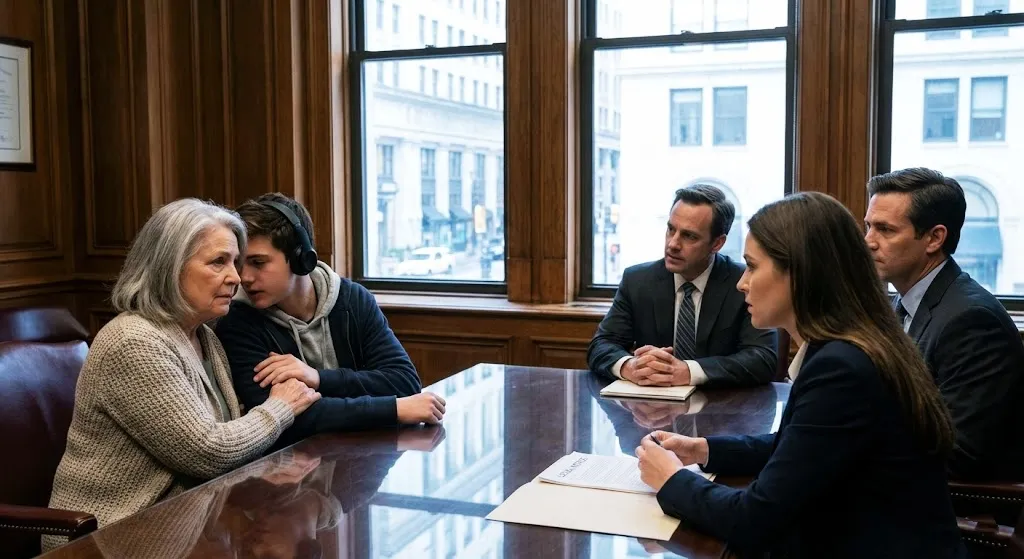
“Who,” he pressed, “will care for me when I am on my deathbed?” The lawyer, Mr. John, looked momentarily taken aback but then nodded in understanding. “That is a very shrewd idea, sir. But I insist we take a precaution. You must hide a portion of your wealth. I will establish a separate, discreet account and transfer half of your liquid assets. That way, if anyone is merely putting on a show, they won’t be able to get their hands on everything.” Williams managed a thin smile and gave his consent.
Dr. Maxwell also agreed to his role in the charade. “I will inform your family that you’ve been diagnosed with advanced cancer,” the doctor said gravely. “I’ll tell them you have six months to live, perhaps less. I will make my performance entirely convincing.”
And so, the elaborate deception began. The very next morning, Williams began to produce a deep, rattling cough. He confined himself to his bed and ceased all his usual outdoor activities.
He picked at his food, refusing to eat properly, and cultivated an appearance of extreme weakness. His wife, Agatha, and his children—Frank, the first son; David, the second son; Cynthia, the first daughter; and Rose, the second daughter—all gathered, their faces etched with worry. “We must call the doctor!” Cynthia shouted.
Soon enough, Dr. Maxwell arrived. He conducted a thorough examination of Williams in full view of the anxious family. Afterward, he gathered them together, his expression somber. “I am so sorry,” he began, “Your father is very, very ill. It’s cancer. He may not live longer than six months.”
A collective gasp filled the room. “What?” Rose cried out, her voice breaking. “No, Daddy, please don’t leave me!”
Even Frank and David appeared visibly shocked by the news. Agatha clutched her chest with one hand and slowly sank into a nearby chair. In the first few days, the entire family seemed to rally around him.
They brought him trays of food. They constantly checked in on him. They would sit beside his bed, offering sweet, comforting words.
But after a week, the facade began to crack. Agatha stopped visiting his room. “I just can’t bear to watch him suffer like this,” she explained to the others. “It simply breaks my heart.”
Cynthia claimed she was far too busy with her own affairs to stay for long periods. David announced he had to leave for an urgent business trip.
Frank, being the eldest son, began to display an entirely different kind of interest—one focused squarely on the company. One day, Frank walked into the study carrying a stack of papers. “Father,” he said, “I think you should just rest. Let me handle the company from now on.”
Williams looked at him, his gaze quiet and assessing, and gave a slow nod. Inwardly, he was observing everything, taking meticulous mental notes. Frank quickly established himself as the new public face of the corporation.
He immediately began redecorating the executive offices, threw lavish corporate parties, and started spending company money with reckless abandon. He purchased a brand-new luxury car and took several impromptu vacations.
Cynthia also helped herself to funds, acquiring expensive wigs and a new designer wardrobe. David began spending extravagantly on a young woman he had recently met online.
Meanwhile, Williams remained in his sickbed, skillfully pretending to grow weaker with each passing day. The only person who never left his side, who tended to him all day, was his youngest daughter, Rose.
Rose would patiently feed him, keep his room tidy, sing softly to him, and would often sleep on a small mat on the floor right beside his bed. “Daddy, I will never leave you. I’ll be right here by your side,” she wept one day, clutching his hand tightly.
One evening, Rose approached her mother, Agatha. “Mommy, let’s fly Daddy abroad. Maybe there’s a specialist, maybe there’s still hope.” But Agatha just shook her head dismissively.
“No, no. That’s far too expensive. And what if he passes away over there? We’ll have wasted all that money for nothing.”
Rose cried again that night, huddled by her father’s bed, holding his hand and gently wiping his brow. On the other side of the grand house, Frank was hosting another large party, boasting to his friends, “Soon, everything you see here will be all mine.”
But unknown to any of them, their father was still watching, still listening, and still masterfully playing his part.
Every morning, Chief Williams’ mansion was quiet, far too quiet. Upstairs, in his expansive bedroom, the old man lay on his soft mattress, the very picture of helplessness. His face was drawn and tired.
His chest rose and fell in a slow, shallow rhythm. His cough was a deep, dry hack, as if something inside him were splintering. His lips trembled as he whispered, “Ah, Rose. Thank you, my daughter.”
Rose, his youngest child, sat vigilantly beside him, holding his hand in hers. She offered him a smile, though her eyes were bright with unshed tears. “I’m not going anywhere, Daddy.”
She would gently wipe his sweaty face with a warm, damp cloth, help him sip water, and carefully feed him spoonfuls of pap. Sometimes, when his coughing fits seemed especially violent, she would gently rub his chest, turning her head to cry silently where he couldn’t see.
But what no one in that house knew was that Chief Williams was putting on a performance. He wasn’t truly dying. He was on a quest to find out who truly loved him, and who was simply counting the days until they could claim his vast wealth…