To Oliver, she had been more. She had been his partner, his home, the woman he had fought for, the woman he had trusted more than anyone else in the world. Now he wasn’t sure what had been real and what had been a carefully constructed illusion. Was love still love if it had started as a lie? He didn’t know, and he wasn’t sure he wanted to find out.
Days passed. Oliver worked because it was the only thing that made sense. The steel mill didn’t care about grief. It didn’t care that his wife was gone, that his world had shifted beneath his feet. It demanded the same thing every day—his sweat, his strength, his time. That, at least, was simple. But nothing else was. Not when he walked through the market and felt the weight of strangers’ eyes on him, their silent questions hanging in the air.
Not when he lay in bed at night and reached for her out of habit, only to find the sheets cold and empty. And not when he opened the drawer and saw the letter waiting for him, taunting him with the truth he wasn’t sure he was ready to face. One evening, after the children were asleep, he sat at the table and unfolded the letter again. There was no name, no address, just a single brutal fact. A son, out there, looking for answers.
And Oliver was the only one left to give them. He wrestled with it for weeks. What good would it do to look for this boy, this man, now? What did he owe a stranger who had never been a part of their lives? But then another thought came. What if it had been Isaac? What if someone had taken his son from him, erased him, made him a secret? Wouldn’t he want to know? Wouldn’t he deserve to?
And so, one morning, before the sun had fully risen, Oliver left the house. He walked to the post office, the letter clenched in his hand. And for the first time since Sarah’s death, he made a decision. He would find this boy. He would give him the truth that had been stolen from him, even if it hurt, even if it changed everything. Because the past had already taken too much, and Oliver wasn’t going to let it take anything more…
….The morning sun had not yet broken the horizon when Oliver stood before the small, battered sewing box. It sat on the high shelf in the corner of the bedroom, a quiet artifact of the hours Sarah had spent mending their lives together. He had avoided it for days, feeling that opening it would be an intrusion, a violation of the small, private world she had kept separate from him. But the letter—Your son is looking for you—burned a hole in his resolve. He needed a starting point, a thread to pull that might unravel the knot she had left behind.
His hands, large and trembling, lifted the lid. The scent of her rose, faint and dusty, wafted up, hitting him with a force that nearly buckled his knees. Inside, it was a chaotic jumble of colored threads, needles stuck into a red velvet cushion, and buttons of every shape and size. He sifted through the layers, his rough fingers brushing against the tools of her trade. At first, there was nothing but the mundane debris of a seamstress’s life. But as he reached the bottom, his fingertips grazed a loose panel.
It was subtle, a false bottom cut from thin wood, fit so perfectly that only someone looking for it—or someone desperate—would notice. He pried it open with the edge of a fingernail. Beneath the wood lay a single, yellowed business card, preserved in the dark like a secret.
Blackwood & Hayes, Attorneys at Law.
The address printed below the name made the blood drain from Oliver’s face. It was an address in her hometown, back in the deep South. Back in the place they had run from with their hearts in their throats all those years ago. These were the men her father would have used. Men who specialized in silence, in making inconvenient problems—and inconvenient children—disappear.
Oliver sank onto the edge of the bed, the card feeling like a lead weight in his palm. He had a name. He had a place. But the realization of what he had to do settled over him like a shroud. He had to go back. He had to return to the land that wanted him dead, to walk into a white lawyer’s office and ask questions about a powerful white family. It wasn’t just dangerous; it was a suicide mission.
But then he looked at the empty pillow beside him. He thought of the boy out there, the son who was looking for a mother he would never find. Sarah had carried this burden alone until it crushed her. Oliver refused to let the silence win.
The arrangements were made in a blur of necessity. Mrs. Petrov, their neighbor two doors down, was a woman carved from granite. She was a widow with a sharp tongue and eyes that missed nothing, but she had shown Sarah a quiet kindness during the worst of her illness. When Oliver knocked on her door before dawn, holding his hat in his hand, she didn’t ask for explanations. She looked at his travel bag, then at his face, and simply nodded.
“I watch them,” she said, her accent thick, her voice leaving no room for argument. “You go. Do what is needed. The children will be safe.”
Leaving Isaac and Margaret was the hardest thing Oliver had ever done. They were still asleep, their limbs tangled in the sheets, their faces peaceful in the morning light. He kissed their foreheads, his lips lingering on their warm skin, praying that this wouldn’t be the last time he saw them. He scribbled a note, leaving it on the kitchen table, telling them he had to go away for work, that he would be back soon, that he loved them. Lies, perhaps, but necessary ones.
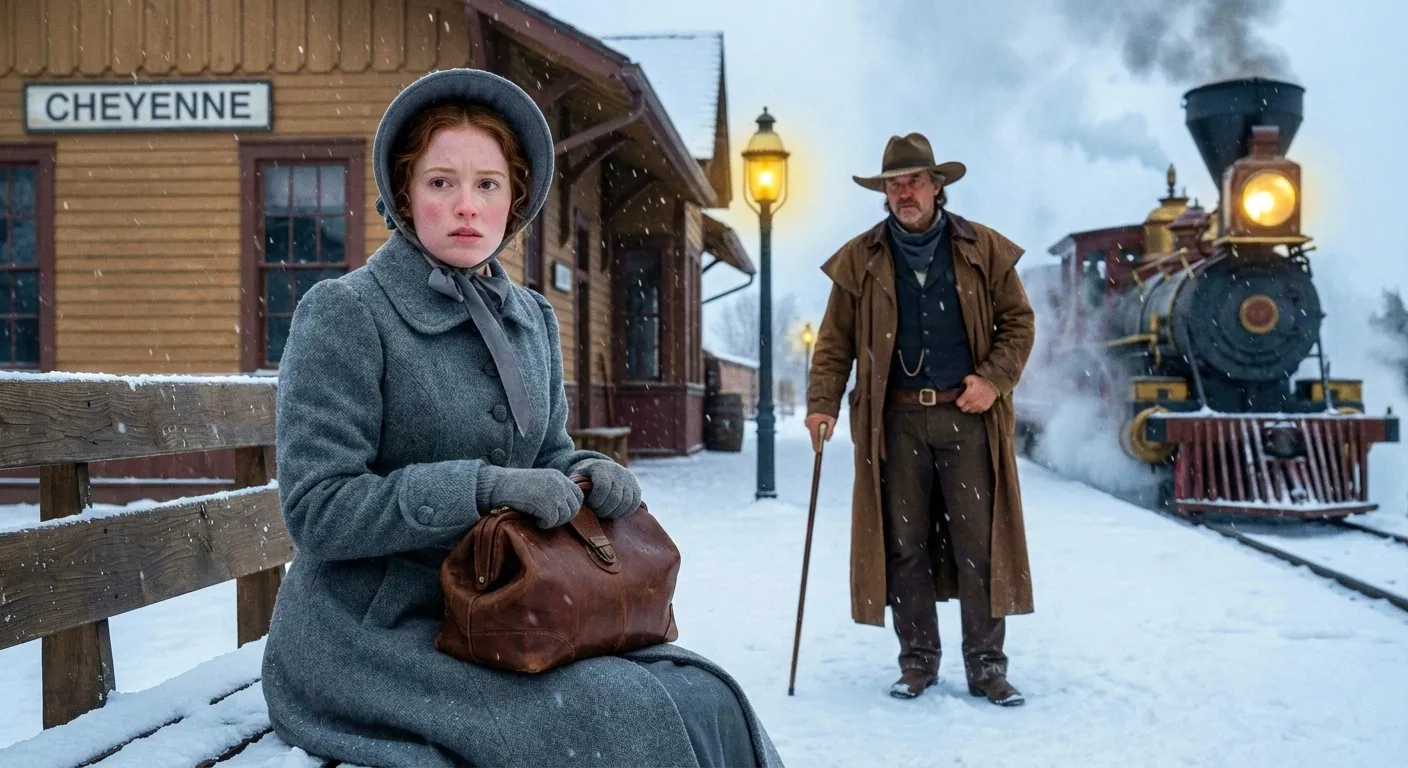
The train ride South was a descent into a nightmare he had spent decades trying to forget. In Illinois, he sat in a regular car, surrounded by tired travelers who paid him little mind. But as the train crossed the invisible line that severed the country in two, the conductor appeared, his face hard and unyielding.
“You know the rules,” the man said, pointing toward the front of the train.
Oliver stood up, his jaw tight, and gathered his bag. He moved to the “Jim Crow car,” the designated carriage for passengers. It was directly behind the coal engine, hot, soot-filled, and cramped. The air was thick with smoke and the smell of unwashed bodies and exhaust. The seats were hard wood, not the cushioned velvet of the cars behind them.
As the miles rolled by, the landscape changed. The industrial gray of the North gave way to the lush, suffocating green of the South. The heat rose, humid and heavy, pressing against the windows. Every time the train slowed at a station, Oliver felt the old tension coil in his gut. He saw the signs—White Only, Colored—hanging like warnings over water fountains and waiting rooms. He was walking back into the belly of the beast.
He arrived in Sarah’s hometown late in the afternoon. The station was exactly as he remembered it: dusty, oppressive, and divided. He kept his head down, his hat pulled low, making himself small, making himself invisible. He was a ghost in his own history. He found a room in a boarding house on the colored side of town, a place where questions weren’t asked, and cash was the only language spoken.
He barely slept. The next morning, he dressed in his only suit—black, well-worn, but clean. He brushed the lint from his jacket, polished his shoes until they shone, and stared at himself in the cracked mirror. He looked like a man going to a funeral. In a way, perhaps he was.
The office of Blackwood & Hayes was located in the center of town, near the courthouse. The building was brick, imposing, with white pillars that spoke of old money and older power. Oliver stood across the street for a long time, watching the door. White men in linen suits went in and out, laughing, shaking hands, comfortable in their ownership of the world.
Oliver took a breath that rattled in his lungs. He crossed the street.
When he opened the door, the bell chimed, a cheerful sound that felt violently out of place. The receptionist, a young white woman with pinned-up hair, looked up from her typewriter. Her smile vanished the instant she saw him. The silence that filled the room was absolute.
“Can I help you?” she asked, her voice icy, her hand hovering over the telephone.
“I’m here to see Mr. Hayes,” Oliver said, keeping his voice steady, respectful, but firm. He held his hat in his hands, squeezing the brim until his knuckles turned light.
“Mr. Hayes is busy,” she snapped, turning back to her typing. “And the delivery entrance is around the back.”
“I’m not here for a delivery, ma’am,” Oliver said. He reached into his pocket and pulled out the yellowed business card Sarah had hidden. He placed it gently on the edge of her desk. “I’m here about the Whitmore file.”
The typing stopped. The woman looked at the card, then at Oliver, her eyes widening. The name Whitmore still held weight in this town, even years later. It was a name that opened doors, or slammed them shut. She stared at him for a long moment, assessing the danger, the audacity. Finally, she stood up, snatched the card, and disappeared into the back office without a word.
Oliver waited. The ticking of the grandfather clock in the corner sounded like a hammer against an anvil. Minutes stretched into an eternity. He expected the sheriff to burst through the door. He expected to be dragged out.
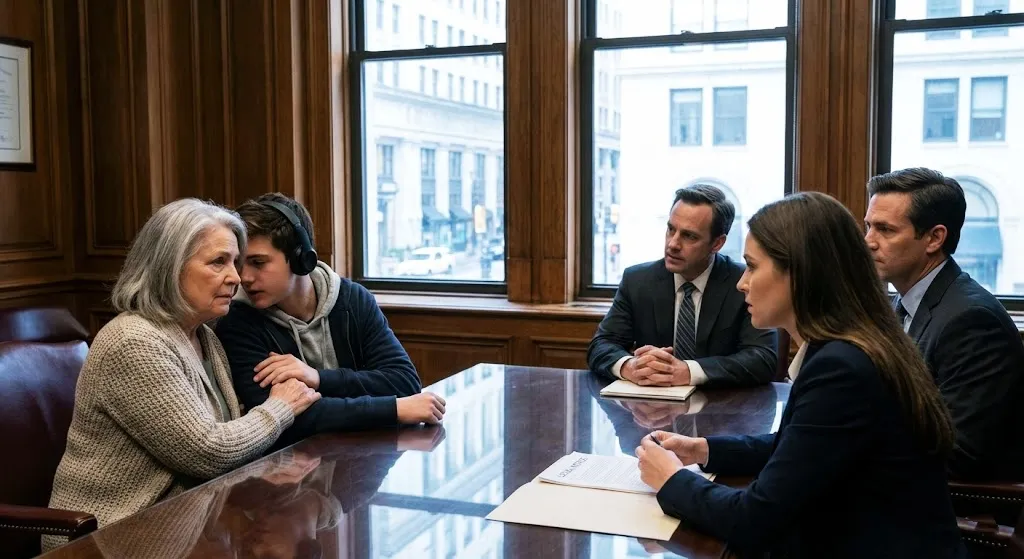
Instead, the heavy oak door to the inner office opened. An older man stepped out. He was bald, with a face that looked like crumpled parchment and eyes that were sharp and intelligent. He wore a suit that cost more than Oliver made in a year. This was Hayes.
He looked at Oliver, not with anger, but with a cold curiosity. “You’re brave,” Hayes said, his voice a dry rasp. “Or stupid. Come in.”
Oliver stepped into the office. It smelled of cigar smoke and leather. Hayes sat behind a massive desk, gesturing for Oliver to remain standing. He didn’t offer a seat. That was the rule.
“My secretary tells me you’re asking about the Whitmores,” Hayes said, leaning back, tenting his fingers. “Charles Whitmore has been dead for five years. His estate is settled. What business does a man like you have with a family like that?”
“I’m not here for Charles,” Oliver said. “I’m here about his grandson.”
Hayes didn’t flinch, but the air in the room shifted. The lawyer’s eyes narrowed slightly. “There is no grandson. Sarah Whitmore ran off and died in disgrace. That is the official record.”
“Sarah Whitmore was my wife,” Oliver said. The words hung in the air, heavy and undeniable. “She died two weeks ago. But before she passed, she told me about the child. The one Charles made her give up before she met me. The one your firm handled.”
Hayes stared at him, his expression unreadable. He reached into his desk drawer and pulled out a cigar, taking his time to cut the end and light it. The smoke curled around him, a shield against the truth.
“You’re playing a dangerous game, son,” Hayes said quietly. “Some secrets are buried for a reason. Charles Whitmore paid a lot of money to ensure that boy never existed on paper.”
“I have a letter,” Oliver lied, his voice gaining strength. “From the boy. He’s looking for her. He knows who she was. If he comes looking, and finds out you lied to him, or that you hid records… I imagine that wouldn’t be good for business.”
It was a bluff. A terrified, desperate bluff. But Oliver saw a flicker of hesitation in the lawyer’s eyes. Hayes was a practical man. He knew the world was changing, however slowly. He knew that secrets had a shelf life.
Hayes sighed, a sound of irritation and resignation. He stood up and walked to a wall of filing cabinets. He unlocked one with a key from his vest pocket and flipped through the folders with practiced ease. He pulled out a thin, manila file.
“The adoption was closed,” Hayes said, not turning around. “The records were sealed. But Charles… Charles was a man who liked insurance. He kept tabs. Just in case the boy ever became a liability.”
He turned and tossed the file onto the desk. It slid across the polished wood, stopping inches from Oliver’s hand.
“The family that took him moved North,” Hayes said. “Ironically enough. They wanted to escape the stigma of a child born out of wedlock. They changed his name. But the last known address is in there.”
Oliver reached for the file, his hand trembling. He had it. The ghost had a shape.
“One thing,” Hayes said, his voice sharp. “If you find him… don’t mention my name. I was never part of this conversation. And you were never here.”
“I understand,” Oliver said. He tucked the file inside his jacket, against his heart.
“And get out of town,” Hayes added, sitting back down and picking up his pen. “Before sundown. You’ve pushed your luck enough for one lifetime.”
Oliver didn’t need to be told twice. He turned and walked out of the office, past the stunned secretary, and into the blinding heat of the street. He didn’t look back. He walked straight to the bus station—the train was too slow, too public. He bought a ticket for the first bus heading North, not caring where it stopped, as long as it was away from here.
Only when the bus was miles out of town, speeding down the highway with the cotton fields blurring past the window, did Oliver dare to open the file.
Inside was a single sheet of paper, typed in formal script. It listed a birth date. A location. And a name.
Current Name: Daniel Miller.
Location: Detroit, Michigan.
Oliver stared at the name. Daniel. His wife’s son was named Daniel. And he was in Detroit. The realization hit him with the force of a physical blow. Detroit was only a few hours from where Oliver lived. All these years, the boy had been so close.
But as he read further down the page, his heart stopped. There was a handwritten note in the margin, dated only a few months ago. A note in handwriting that Oliver recognized from the threatening letters Sarah had received.
Subject has been making inquiries. He knows about the mother. He is coming.
It wasn’t just a search. It was a collision course. Oliver looked out the window at the passing world. He wasn’t just looking for a lost son anymore. He was racing against time to find Daniel before the past destroyed them all. He folded the paper, closed his eyes, and prayed that he wasn’t already too late.