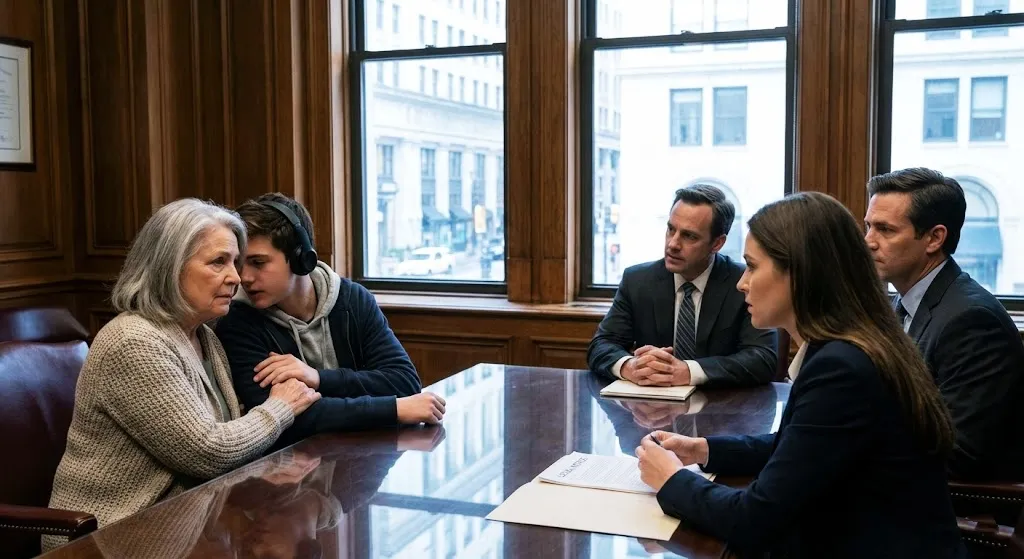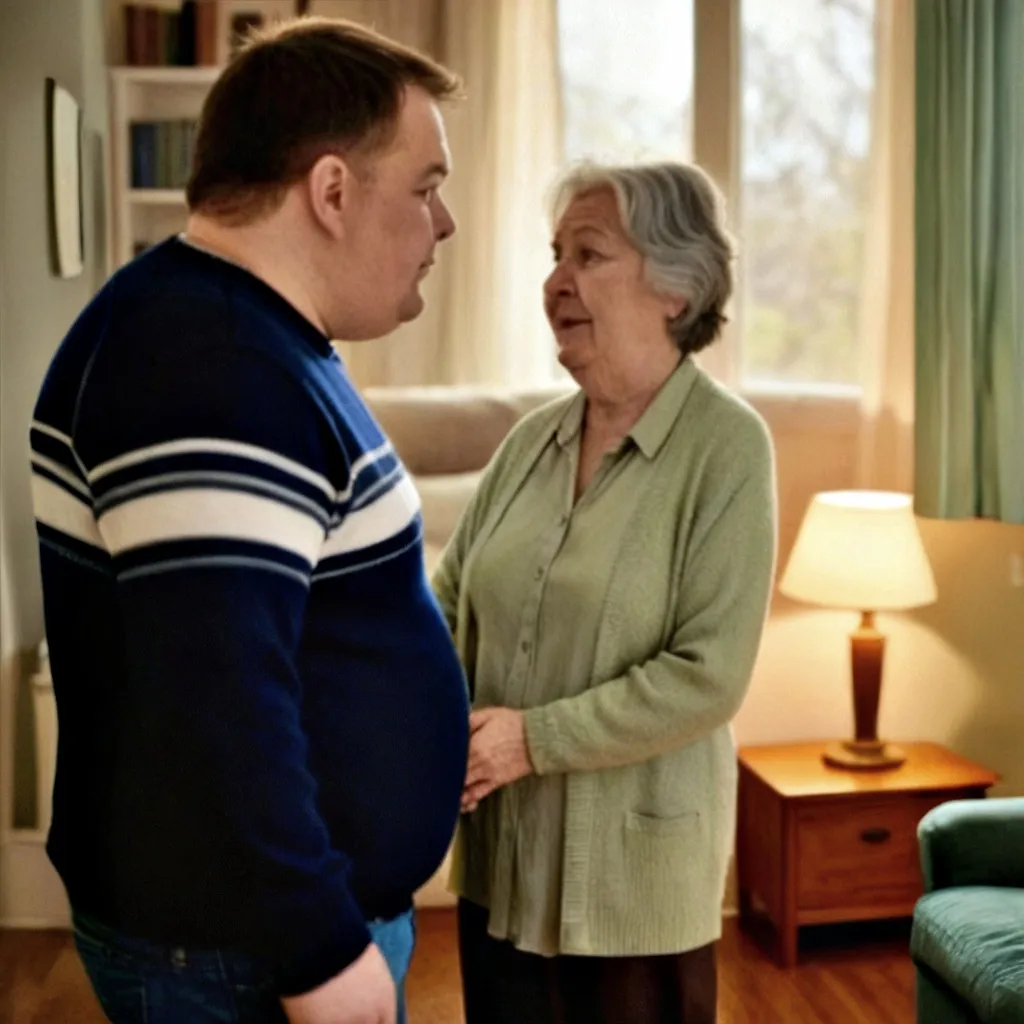

The phone felt warm in my hand, a stark contrast to the ice that suddenly filled my veins. I had only meant to ask my son, Max, about his wedding date. But it was Lena, my daughter-in-law, who answered with a pronouncement that shattered my world. She looked right at me, a cold, practiced smile on her lips, and said, “Oh, we took care of that. We got married yesterday.” She paused, letting the words hang in the air before delivering the final, deliberate blow. “It was a very small, intimate gathering. We only invited our most special people.”
Special people.
The phrase echoed in my head, each syllable a tiny hammer blow. I stood rooted to the spot in my own living room, the phone now a dead weight. I, who had faithfully written the $500 check for their rent every month for three years. I, who had bought every stick of furniture they owned, from the sofa Lena now lounged on to the bed they slept in. I, who had stocked their refrigerator time and again when their own cupboards were bare. To them, I was not special. I was convenient.
My eyes drifted from Lena’s smug expression to my son, Max, who was studying the floorboards with intense fascination. He couldn’t meet my gaze. Hanging uselessly in my closet upstairs was the pale pink dress I’d bought specifically for this day. I’d spent $200 on it, imagining how I would look standing beside my son, a proud mother in his wedding photos. Those photos would now be taken without me. The new shoes, the careful plans, the illusion of being a central part of my only child’s most important moment—all of it collapsed into dust with those four poisoned words.
For weeks, my life had been filled with happy anticipation. I’d been setting aside a little cash here and there, managing to save up $1,000 as a wedding gift for them. I’d called my sister, Diana, in Chicago, my voice bubbling with the good news. I’d even scrubbed my house from top to bottom, hoping they might want to come back here after the ceremony for a small celebration. All that preparation meant nothing now.
Max finally lifted his head, his voice sounding hollow and rehearsed. “Mom, it was just a tiny thing. Very last-minute. Just us and the two witnesses we needed by law.” It was a lie, and we both knew it. I had already seen the evidence on social media. I’d scrolled through pictures of Lena’s parents, their faces glowing with pride as they stood beside the newlyweds. I saw her siblings laughing, toasting with champagne flutes. I saw Lena in a beautiful white dress, a dress I’d helped pay for with the $800 I’d given her the previous month for “some personal expenses.” I saw the whole joyous celebration I had been explicitly excluded from.
Exactly one week later, to the day, the phone rang again. It was Lena, but her voice was unrecognizable. The cool, confident woman was gone, replaced by a trembling, desperate pleader. “Renate,” she began, her words rushing out in a panicked stream, “the rent is overdue. The landlord is putting so much pressure on us. He says if we don’t pay by Friday, he’ll start the eviction process. You… you must have forgotten to make the transfer this month.”
Her voice quivered with a theatrical fear. I said nothing for a long moment, remembering all the times I had dropped whatever I was doing to race to the bank. All the plans I had canceled for myself to ensure their stability. All the times I’d eaten simple meals of beans and rice so I could have more to give them for their wants and desires. And now, after so thoroughly shutting me out, they had the audacity to call me as if I were a negligent bank clerk.
“Lena,” I said, my voice so calm it surprised even me. “If I recall correctly, didn’t you recently explain to me that you only include special people in your life?”
The silence on the other end was so deep and absolute I could hear the faint hum of the phone line. The power dynamic had shifted. “Renate, I… I don’t understand,” she stammered, her composure fracturing. “We’ve always been special to you. You’ve always said I’m like a second daughter to you.”
They were empty words, coated in the fake honey she only used when she needed to extract something from me. It was the same tone she’d used to ask for money for her wedding dress, for the honeymoon, for the rings—all things I helped finance without knowing I would never see them used. For years, I had lived feeling like I was walking on a tightrope, carefully weighing every gift, every word, every gesture, hoping it would buy me a crumb of genuine affection from my own son. I had been the perfect, silent bank, the obliging mother-in-law who never protested when they treated me as if I were invisible. But that one phrase—only special people—ignited a fire inside me that had been smoldering for far too long.
I started to do the math in my head, calculating the cost of my own foolishness. The rent was $500 a month. Over thirty-six months, that came to $18,000. I estimated groceries and household supplies at around $200 a month, which was another $7,200. Birthday gifts, Christmas presents, anniversary checks—that had to be at least $3,000. Then there was the $800 for Lena’s medical emergency, the $2,500 car loan they never repaid, the $600 to fix their air conditioner, and the $1,200 for their living room set. The total was a staggering $33,400. Thirty-three thousand, four hundred dollars I had pulled from my retirement savings, from the inheritance my late husband left for my security, from the life savings I had built over decades of hard work. And what had it bought me? The privilege of being a stranger at my own son’s wedding.
That night, after I hung up on her, I sat on the edge of my bed and cried. But these were not tears of self-pity. They were tears of pure, unadulterated fury. I cried for all the times they had made me feel that my love was an imposition, my presence a nuisance, and my money my only valuable asset. I cried for the naive, foolish woman I had been, who had lost herself completely in a desperate attempt to make herself indispensable to people who clearly considered her entirely dispensable.
When I woke the next morning, a fundamental change had settled within me. It was more than just the pain of betrayal; it was a cold, hard clarity. I stood before the bathroom mirror and looked at the same tired eyes, the same wrinkles that told the story of a lifetime of giving more than I received. But there was a new glint in my gaze, a flinty determination that had been buried under years of compliance. I went to the kitchen and made my coffee, as I had for forty years. But this time, I did not think about calling Max to see how he had slept. I did not check my phone, hoping for an apologetic message. For the first time in a very long time, I was my own first thought of the day.
I sat at the kitchen table, the very spot where I had so often planned surprises for them, counted out bills for their expenses, and wept silent tears over their indifference. Now, this table would be the command center for my liberation. I pulled out my checkbook registers, my bank statements, and a notepad. I wanted to see, in black and white, the full, humiliating extent of my generosity. I wrote it all down: $500 x 36 months = $18,000. Food and supplies, approximately $200 a month, totaled $7,200. Gifts for all occasions came to at least $3,000. Lena’s medical bill was $800. The car loan was $2,500. The air conditioner repair was $600. The living room furniture was $1,200. The final number stared back at me: $33,400. That was the exact price of my love, quantified. It was money I had thrown away to keep two fully grown adults comfortable, two people who could not even pretend to respect me….