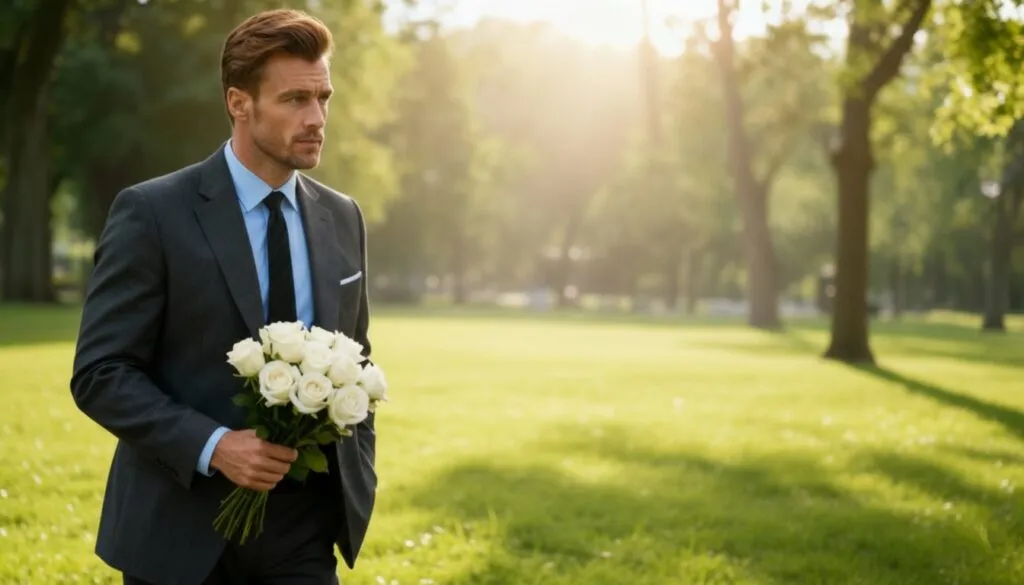
The summer heat hung heavy over the cemetery, thick with a humidity that clung to Jonathan Blake’s skin as he stepped out of the climate-controlled silence of his black sedan. The gravel crunched loudly beneath his polished oxfords, a harsh sound in a place demanding quiet. Above him, the sky was a piercing, cloudless blue, indifferent to the sorrow below. Tall oaks swayed lazily in the breeze, casting shifting shadows over the manicured grass, but they offered little relief from the stifling warmth of the afternoon.
Jonathan looked nothing like a man carrying a decade of regret. Dressed in a bespoke crisp blue suit with the jacket unbuttoned and his silk tie loosened just enough to suggest fatigue, he projected the image of a man in control. His chestnut hair was perfectly coiffed, and his brown eyes remained dry and stoic. But beneath the expensive wool and the practiced mask of a corporate executive, his stomach was churning with a nausea he couldn’t suppress. It had been over five years since he had last seen Emily. For five years, he had compartmentalized their history, burying it under mergers, hostile takeovers, and the sterile luxury of private jets.
But grief is a patient creditor; eventually, it comes to collect. He hadn’t known she was sick. The news hadn’t come via a frantic late-night phone call from a relative, but through a detached Facebook message from a former college classmate who had stumbled upon the obituary. She had been living quietly in the small town where they had once planned a future, back before ambition tore him in one direction and loneliness pulled her in another. He hadn’t attended the funeral. He told himself he couldn’t get away, but he knew it was cowardice.
Perhaps he thought that enough time had passed to insulate him from the pain. But the weight of her absence had settled on his chest weeks later, a suffocating pressure that refused to lift until he finally got behind the wheel. He told himself this three-hour drive was just for closure, a solitary ritual to say goodbye so he could return to his high-rise life. He walked through the rows of headstones, his eyes scanning the granite markers, feeling time compress. The last time he stood in this cemetery, they were choosing a plot for her mother. Now, he was walking alone toward the resting place of the woman to whom he had once pledged his life.
It wasn’t the fresh earth or the new headstone that made him freeze in his tracks, however. It was the sight of two small figures kneeling in the grass. He spotted them from twenty yards away—two little girls, identical in size, with matching chestnut hair pulled into low, messy pigtails. They wore red knitted sweaters that were far too heavy for the sweltering July heat, looking like tiny, misplaced drops of blood against the green lawn.
They were huddled close together, whispering in the secret cadence of children, wiping their noses on their wool sleeves. One clutched a wilted bouquet of wildflowers, the stems drooping in her small fist. The other held a piece of notebook paper, folded into a tight square. Jonathan hesitated, feeling like an intruder in a sacred space. But a magnetic pull, something deeper than curiosity, forced his feet to move. As his shadow fell over them, the girls looked up, their eyes widening in unison at the looming figure of a stranger.
The air left Jonathan’s lungs in a rush. Their eyes—large, round, and amber-brown—were terrifyingly familiar. They locked onto his with an intensity that made his knees weak. “Hi,” he managed to croak, his voice fracturing in a way he hadn’t expected. “Are you… are you here to visit someone?” The girl on the left nodded slowly, her gaze never leaving his face.
“This is our mommy’s grave,” she said. Her voice was fragile, like thin glass, but possessed a clarity that cut through him. “Her name was Emily.”
Jonathan felt the world tilt on its axis. The heat, the buzzing of cicadas, the distant traffic—it all blurred into white noise. “Emily Blake?” he asked, though the question was rhetorical. He already knew.
“Yes,” the other girl whispered, clutching the paper to her chest. “She was our mom.”
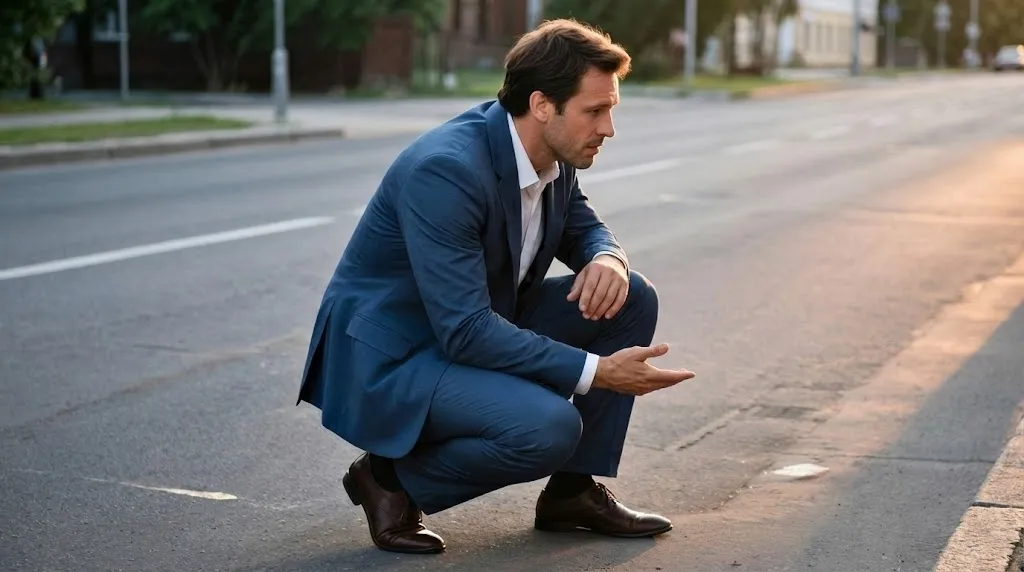
His heart hammered against his ribs like a trapped bird. It wasn’t possible. It couldn’t be. Emily had never mentioned a pregnancy. Their separation had been a whirlwind of shouting matches and silence, ending in a severance that felt more like a business transaction than a heartbreak. He had never once calculated the math, never considered that he might have left something—someone—behind. He dropped to one knee, heedless of the grass stains on his suit trousers, his legs suddenly unable to support his weight. “How old are you two?” he asked, dreading the answer.
“Five,” they replied in perfect harmony.
The number hit him with the force of a physical blow. Five. Five and a half years since the divorce. Five years since he walked out the door and never looked back. He scanned their faces, searching for a lie, but found only the undeniable truth in the curve of their chins and the shape of their brows. These weren’t just her daughters. They were his.
For a full minute, Jonathan couldn’t speak. The girls watched him with a mixture of curiosity and wariness, sensing the turmoil radiating from this strange man. His mind raced, trying to reconcile his reality with this impossible revelation. Emily had never called. Never wrote. How could she have kept this secret? But the darker question followed immediately: How had he been so blind? How deep was the silence he had enforced that she felt she couldn’t tell him?
He looked at the headstone properly for the first time. It was modest, gray granite engraved with her name and the epitaph: Beloved Mother, Brave Heart. No mention of a wife. No mention of him. The guilt was a physical weight, heavy and cold in his gut. A new, sharp fear pierced him—what did they know? “What are your names?” he asked, his voice trembling.
The girl with the flowers took a half-step forward. “I’m Sarah. And that’s my sister, Sophie.”
“Sarah and Sophie,” he repeated, tasting the names. They sounded like a prayer. “Those are beautiful names.”
“Mommy picked them,” Sophie said, gripping her folded paper tighter.
Jonathan gestured gently toward her hand. “What’s that you have there?”
“It’s a letter,” she said softly. “We wrote it to Mommy.”
“Would you mind if I sat with you for a minute?” he asked, humbling himself completely. The girls exchanged a quick, silent communication that only twins possess, then shrugged. It was permission enough. He sat on the concrete border of the grave, unsure what to do with his hands. The silence that stretched between them was heavy, laden with the ghosts of unspoken words.
“I knew your mom,” he finally said. “A long time ago.”
Sarah tilted her head, studying him. “You were friends?”
Jonathan swallowed the lump in his throat. “We were… more than that, once. We were married.”
Both girls’ eyes went wide. Sophie blinked rapidly. “You were our mommy’s husband?”
“Yes,” he whispered. “Before you were born.”
They fell silent, processing this information with the solemnity of adults. Then Sarah asked the question he had been fearing, the one that cut straight to the bone. “Why weren’t you with her?”
It was an accusation stripped of malice, born purely of confusion. He couldn’t tell them about the arguments, the career climbing, the ego. “It’s complicated,” he said, the inadequacy of the words stinging his tongue. “I made mistakes. Big ones. I didn’t know about you two. If I had…” He had to stop to steady his breath. “Things would have been very different.”
Sarah stared at her shoes, but Sophie looked up. “We don’t have anyone else,” she whispered.
Jonathan felt a chill that had nothing to do with the breeze. “What do you mean?”
Sophie glanced at her sister for reassurance before continuing. “Mommy got sick. She tried to be strong, but she got so tired. After she died, we stayed with Miss Diane, our neighbor. But she says she’s too old to take care of us much longer.”
Something inside Jonathan shattered. These weren’t just grieving children; they were children on the precipice of the system. “Where is Miss Diane now?” he demanded gently.
“She dropped us off,” Sarah explained. “She said she’d come back, but we’ve been waiting a long time.”
Jonathan scanned the cemetery. It was empty. The idea that two five-year-olds had been left unsupervised in a graveyard made his blood run cold. He stood up, fishing his phone from his pocket. “Can I call someone? Maybe Miss Diane?”
Sarah shook her head. “We don’t know her number.”
He crouched back down to eye level. “Would you feel okay coming with me? Just for a little while? We can find a phone and call her. I promise I won’t do anything without asking you first.”
The girls looked at each other, a silent council of two. Sophie nodded first, then Sarah followed. “Okay,” Sarah said.
He extended a hand to each of them. When their small, sticky fingers wrapped around his large ones, the trust felt unearned and overwhelming. Walking back to his car, Jonathan glanced over his shoulder at the grave one last time. The questions were piling up—why the secrecy? Where was the support system?—but one fact was absolute. Whatever happened next, he wasn’t leaving these girls behind. Not again.
Inside the car, the atmosphere was fragile. Jonathan buckled them into the back seat, checking the belts twice, his hands shaking slightly. As he pulled onto the road, he watched them in the rearview mirror. They stared out the window, their expressions far too somber for kindergarteners. He had no plan. He was operating on instinct and a terrifying sense of duty.
His first stop was a diner a few miles down the road. He needed to regroup, and they needed to eat. He ushered them into a booth, the waitress raising a skeptical eyebrow at the suit-clad man with two disheveled children. He ordered grilled cheese and apple juice for them, black coffee for himself. As they ate with the ravenous politeness of children who weren’t sure when the next meal was coming, Jonathan watched them. He realized he had missed everything. Their first steps, their first words, the nights they were sick. It had all happened in a universe parallel to his, one he had unknowingly forfeited.
“Can I ask you something?” he said as they finished their sandwiches. They nodded, wiping grease from their chins. “Did your mom ever talk about me?”
Sarah looked hesitant, but Sophie, seemingly the bolder of the two, spoke up. “She had a picture of you. In her drawer. Sometimes she’d look at it and smile, but mostly she’d cry.”
The knife in his heart twisted. “Did she say who I was?”
“She said your name,” Sophie whispered, staring at her empty cup. “She said you used to be her favorite person. She said you were gone, but not bad.”
Sarah added quietly, “She said maybe one day we’d meet you.”
Jonathan leaned back against the vinyl booth, fighting back tears. Emily hadn’t poisoned them against him. She hadn’t erased him. She had preserved a space for him, a ghostly possibility, even as she died. He paid the bill, his hands numb, and led them back to the car.
He drove to the address they gave him, a small, run-down neighborhood on the edge of town. The houses were tired, with peeling paint and overgrown lawns. It was no place for a dying woman to raise twins alone. He parked in front of a weathered bungalow and walked the girls to the door. A woman in her sixties, looking exhausted and worn, answered his knock. Her gray hair was pulled into a severe bun, but her eyes widened in recognition.
“Mr. Blake?” she gasped. “I never thought I’d see the day.”
“You know who I am?”
“Of course I do,” she said, looking at the girls. “You’d better come in.”
The house was clean but cluttered with the remnants of a life lived on the margins. Toys were stacked in corners; drawings covered the fridge. Miss Diane sat them down. “Why didn’t anyone tell me?” Jonathan asked, his voice tight with suppressed anger.
Diane sighed deeply. “Emily didn’t want to be a burden. She said you had your big life in the city. She was proud. Stubborn. But I think… I think she hoped you’d come.”
“Why didn’t she reach out herself?”
“She wrote you a letter,” Diane said. “Right before the end. I have it.” She retrieved a sealed envelope from a drawer. Jonathan took it, recognizing the loop of Emily’s handwriting instantly. Diane continued softly, “She loved them more than anything. She did her best. But it wasn’t enough. And now… well, they need a father.”
Jonathan tore open the envelope. The letter was dated weeks before her death. In it, Emily explained everything—finding out she was pregnant post-divorce, the fear, the pride that stopped her from calling, the hope that he was happy. She described the girls’ personalities, their quirks. The final line blurred before his eyes: If you find them, please love them. Even if you don’t forgive me.
He folded the paper, his resolve hardening into steel. He looked at Sarah and Sophie, who were curled up together on the worn sofa, half-asleep. “I want to take them,” he told Diane. “Not for a visit. For good.”
Diane’s eyes welled up. “I hoped you would say that.”
The next morning, Jonathan woke up on a lumpy guest bed in Diane’s house. The previous night had been a whirlwind of awkward arrangements, but he refused to leave the girls. Sunlight streamed through the blinds, illuminating his discarded suit jacket. The reality of his situation crashed down on him. He was a father. He had to build trust from scratch with two strangers who happened to share his DNA.
He walked into the kitchen to find Diane flipping pancakes. “They’re still asleep,” she said. “I think they’re in shock.”
“I know the feeling,” Jonathan muttered, running a hand through his messy hair. “I have the resources, Diane. Money isn’t an issue. But I don’t know how to be a dad.”
“You just show up,” she said, plating the food. “That’s half the battle. They need to know you aren’t going to disappear.”
When the girls emerged, rubbing sleep from their eyes, the atmosphere was tense but hopeful. Jonathan didn’t force affection. He simply said good morning and ate with them. After breakfast, Diane pulled him aside. “If you’re serious, you need a lawyer. You need to petition for custody. Technically, I’m their guardian right now.”
“I’m making the calls today,” he promised.
Jonathan canceled his entire calendar. He booked a suite at a local hotel—one with a kitchen and two bedrooms—and turned it into a temporary home base. He invited the girls over that afternoon, with Diane’s blessing. They watched a movie, ate popcorn, and existed in the same space. It was awkward, but necessary.
During the movie, Sophie shifted and curled up next to him. It was a small gesture, but it felt monumental. Sarah remained distant, sitting in a chair with her arms crossed, watching him with the scrutiny of a hawk. But when he laughed at a cartoon, he saw the corner of her mouth twitch.
When he dropped them back at Diane’s that evening, Sarah paused at the door. “Are you going to leave again?” she asked, her voice barely a whisper.
Jonathan crouched down, meeting her gaze. “No. I’m here now. And I’m not going anywhere.” She nodded once, satisfied, and went inside. It wasn’t total trust, but it was a start.
The following weeks were a study in patience. Jonathan, a man used to instant results, learned the slow art of parenthood. He learned to braid hair (badly), to make cereal, and to read the same book three times in a row because Sophie insisted. The hotel suite became a sanctuary, a bridge between their old life and the new one he was trying to build.
He introduced them to new ice cream flavors and bought them clothes that actually fit. He didn’t demand hugs. He offered invitations, not commands. Slowly, Sarah’s walls began to crumble. One afternoon, while they were painting on the balcony, she asked him to help her draw a cat. It was a small request, but to Jonathan, it felt like a victory.
The legal machinery was moving in the background. He had hired the best family law attorney in the state. Diane was cooperative, effectively an ally. But not everyone was supportive. Emily’s sister, Rachel, called him in a rage, accusing him of playing the hero after years of negligence. She lashed out with all the anger of a grieving sibling. Jonathan listened, taking the verbal beating without defense, because he knew he deserved part of it.
“Why do you think you deserve them?” Rachel spat.
“Because I’m their father,” he said calmly. “And because I love them. I won’t abandon them again.”
“Then don’t fail them,” she warned before hanging up.
That night, he took the girls stargazing on a hill outside town. As they lay on a blanket, pointing out imaginary constellations, Sophie asked, “Do you think Mommy can see us?”
“I think she’s watching all the time,” Jonathan said. “And she’s proud of you.”
Sarah turned to him. “Would she be proud of you?”
The question hung in the cool air. “I hope so,” he said honestly. “I’m trying to be someone she would be proud of.”
Just as they were finding a rhythm, the ground shifted. A letter slipped under his hotel door shattered the peace. It was a legal notice. Michael Carter, an ex-boyfriend of Emily’s who had briefly been listed as a temporary guardian during her illness, was filing for custody.
Jonathan remembered Michael—a man he’d met once, years ago. He was a drifter, someone who had moved in and out of Emily’s life. Diane confirmed that Michael had barely been around when Emily was dying, but now, perhaps seeing a chance for financial gain or driven by a misguided sense of ownership, he wanted the girls.
The fear of losing them was paralyzed. Jonathan hired a private investigator and doubled his legal efforts. But the stress bled into the hotel suite. The girls sensed the tension. Sarah started biting her nails; Sophie stopped talking in her sleep.
“Are we leaving soon?” Sarah asked one night as he tucked her in.
“Why would you think that?”
“Because good things don’t last,” she said, echoing her mother’s heartbreak.
“This is going to last,” Jonathan vowed, smoothing her blanket. “I promise.”
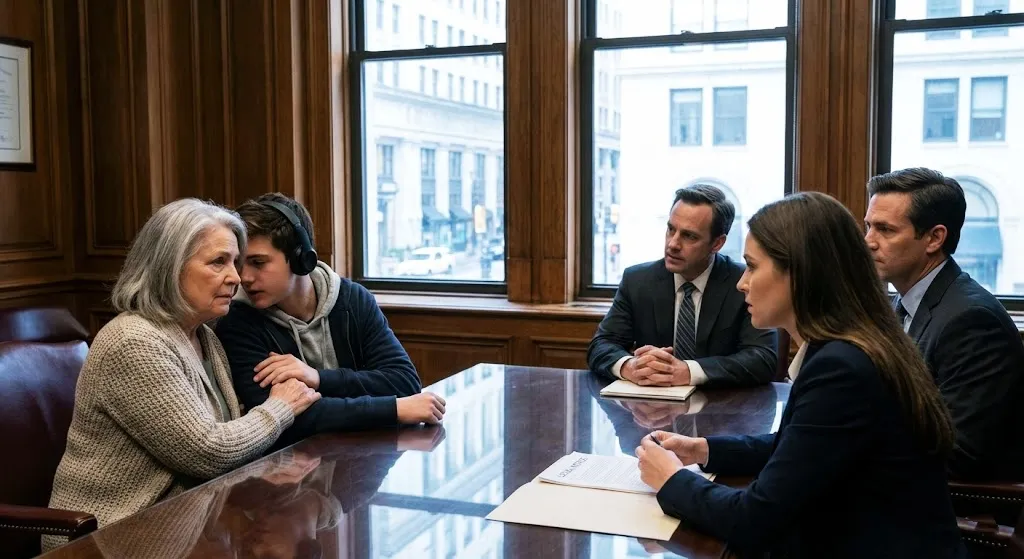
The court hearing was a grim affair. The room was beige and smelled of stale coffee. Sarah and Sophie were left with Diane to spare them the trauma. Across the aisle, Michael Carter sat in a cheap suit, looking uncomfortable. His lawyer argued that Michael had been a consistent presence, whereas Jonathan was a stranger who had abandoned the mother. It was a twisted version of the truth, but it stung because it contained kernels of fact.
Jonathan’s lawyer countered with DNA evidence, financial records, and the testimony of the social worker, Evelyn Marks, who had observed Jonathan with the girls. She spoke of the pancakes, the drawings, the genuine bond forming.
When Jonathan took the stand, he abandoned his prepared remarks. He spoke from the heart. He admitted his failures. He told the judge about the raisins Sarah hated and the way Sophie needed the nightlight on. He spoke not as a CEO, but as a father who had learned the hard way what actually mattered. “I wasn’t there when it started,” he told the judge, his voice breaking. “But I am here now. And I am staying.”
The judge, a weary woman who had seen too many broken families, took a recess. When she returned, her ruling was swift. She acknowledged Michael’s past presence but prioritized the biological bond and the stability Jonathan had clearly demonstrated. Full custody was awarded to Jonathan Blake.
He didn’t cry until he was alone in the hallway, slumping against the wall as the adrenaline left his body. It was over. They were his.
He picked them up from Diane’s house an hour later. They ran to him, sensing the shift in the universe. Sarah hugged him fiercely, burying her face in his coat. Sophie wrapped her arms around his leg. “Can we go home now?” she asked.
“Yes,” Jonathan said, tears finally spilling over. “Let’s go home.”
The new house was filled with light. It was in a quiet suburb, far from the noise of the city, with a big backyard and a kitchen that invited mess. Jonathan stood at the stove, flipping pancakes—better at it now—while the girls sat at the counter. Sophie was dropping blueberries on the floor for the sheer joy of watching him pick them up, giggling every time he ducked under the table.
It wasn’t a fairy tale. There were still nightmares. There were moments when they cried for Emily, and Jonathan could only hold them and let them weep. But there was also laughter. There was the sound of Sarah reading aloud and the scratch of crayons on paper.
Jonathan had started journaling again, trading stock projections for observations about insects and the way the girls said “goodnight.” He realized that he hadn’t just saved them; they had saved him. He had spent his life building an empire of money, only to find that his true wealth was sitting right in front of him, eating syrup-drenched pancakes in mismatched pajamas.
He walked over and kissed the tops of their heads. “I love you,” he said, easy as breathing.
“We love you too, Daddy,” Sophie chirped.
Sarah looked up from her book and smiled—a genuine, unguarded smile. And in that sunlit kitchen, Jonathan Blake knew he was exactly where he was meant to be.