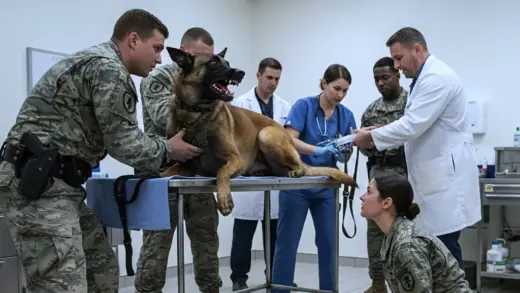
The boy the world said wouldn’t achieve anything was now commanding a team of 15 doctors. They were all older than him, all “normal,” and all looking at him with respect and admiration.
It was around that time he insisted on buying me a house. “That’s enough renting, Ma,” he said seriously. “You worked your whole life for me. Now it’s my turn to take care of you.”
I tried to refuse. I told him to save, to invest in his future. But Dante didn’t take no for an answer.
He bought a simple but comfortable house in a quiet suburb, furnished it completely, and forced me to stop working. “Your days of scrubbing floors are over, Mama,” he said, holding my calloused hands in his. “Now you are going to rest. You are going to take care of your health. You are going to enjoy life.”
In my 50s, for the first time since Dante was born, I didn’t have to worry about money. I didn’t have to get up at dawn to catch the bus. I didn’t have to scrub floors until my back screamed.
I could simply be a mom without having to be dad, mom, provider, and therapist all at the same time. My new routine was waking up without an alarm, eating breakfast calmly, walking in the park, and going to craft classes at the church. They were simple things I never had time to do.
Dante insisted on taking me to frequent medical checkups, caring for every detail of my health with the same zeal he cared for his patients. That’s how we discovered I had high blood pressure, type 2 diabetes, and the beginnings of osteoporosis—the bill for years of stress and hard labor.
Dante put together a complete treatment plan, handpicked the best specialists, and personally reviewed every test. “You took care of me my whole life,” he would say. “Now let me take care of you.”
And so the years passed, me recovering from a life of struggle, him building a brilliant career. Finally, we were at peace. Finally, we could breathe without the weight of survival crushing us.
Marcus remained a ghost of the past. 18 years went by without a single word, without a sign of life, until that Tuesday morning at General Hospital.
I was there because Dante asked me to come by to sign some papers for his medical insurance, where he had listed me as a beneficiary. I arrived early, took a number, and sat down to wait. I was flipping through a magazine when I heard the commotion at the entrance.
An older man ran in through the automatic doors, carrying a teenager in his arms. He was shouting for help. He was desperate.
I looked up, and my heart stopped. Although older, thinner, and more hunched over, I recognized that face. It was Marcus.
He didn’t see me at first. He was too focused on getting them to attend to the girl. But when the nurses took the girl into the ER, he turned around, and our gazes collided.
I saw the shock on his face, the delayed recognition, and then that smile I remembered too well. He walked toward me with clumsy steps, clearly shaken, but trying to maintain that arrogance of always.
“Bernice,” he said, and my name in his mouth sounded like poison. “What a surprise.”
I didn’t answer him. I just held his gaze. He was old, much older than 18 years should have made him. His hair was white, his skin sagging and spotted. He looked sick, fragile, and finished.
“Working here?” he asked with that mocking tone. “Cleaning the hospital toilets?”
“I’m just waiting for my son,” I answered calmly.
That was when he let out that bitter laugh and said those words. “Is that defective son of yours still alive, or did nature finally do the job?”
I didn’t let him finish. “Dante is doing very well, thanks for asking,” I told him with a firm voice, despite the anger burning me inside. “Actually, he works here.”
Marcus laughed harder. “Works here doing what? Washing the instruments? Pushing gurneys? Oh, Bernice, you were always good at making up stories to feel better about your failed decisions.”
At that moment, the ER doors opened. Out came Dante in his impeccable white coat, the Chief Resident badge hanging around his neck. He was followed by three residents writing down every word he said.
He was explaining something about a protocol using complicated medical terms with that natural authority of someone who knows what they are doing. The residents listened attentively, asking him questions that he answered with patience and precision.
Dante saw me at the reception desk, and his face lit up with that big smile that always melted me. He excused himself from the residents and walked toward me.
“Mama,” he said, hugging me. “Sorry for the delay. We had an emergency in pediatric intensive care, and they needed my assessment.”
It wasn’t until he let go of the hug that he noticed Marcus standing next to me, mouth open, pale as a ghost.
“Everything okay, Ma?” Dante asked, noticing my tension. “Is this gentleman bothering you?”
I was going to answer, but Marcus got ahead of me with a trembling voice. “Dante? My son?”
My son looked at the older man with a neutral, professional expression. There was no recognition there, only the automatic courtesy of a doctor dealing with a patient’s relative.
“Yes, I am Dr. Dante Vance. Are you a relative of the patient who was just admitted?” he asked, pulling out his tablet to check the file.
“I am your father,” Marcus said, his voice breaking.
The silence that followed felt eternal. Dante stopped typing on the tablet and looked up slowly to look at Marcus. His face remained neutral, but I knew my son.
I knew every gesture. I saw the old pain waking up, but I also saw the strength he had built over the years.
“No, Sir,” Dante said with a calm but firm voice. “You are not my father. My father died before I was born. You are just the man who abandoned my mother and me 18 years ago because I wasn’t perfect enough for you.”
Marcus recoiled as if he had been slapped. “Son, I…”
“Dr. Vance,” my son corrected. “And I am not your son. Now, if you’ll allow me, I need to know your relationship to the patient who just arrived so I can attend to her properly.”
Just then, a nurse approached with a chart. “Dr. Vance, the patient Imani, 12 years old, admitted with seizures and high fever. The father reported a history of seizures since six months of age. We need your assessment urgently.”
Dante grabbed the chart and started reading. I saw his face change, the professional expression giving way to real concern. He looked at Marcus.
“Are you Imani’s dad?” he asked.
Marcus just nodded his head, unable to speak.
“Come with me,” Dante said, walking toward the ER. “I need the complete history of her seizures. When did they start? How often do they happen? How long does each crisis last? What medicines does she take?”
I stood there watching them walk away. Marcus turned once looking for me, but I turned my back. He didn’t deserve even that from me.
I sat down again and waited. I knew Dante was going to take a while. He always took his time with every patient, especially if they were children.
I grabbed my phone and pretended to be busy, but my mind was racing at a thousand miles an hour. I was processing the absurdity of it all. The man who abandoned us now depended on the son he rejected to save the daughter he decided to love. The irony was so perfect it seemed like a movie script.
Two hours passed. Finally, Dante came out of the ER looking tired but satisfied. He sat next to me.
“How are you?” he asked quietly.
“I should be asking you that,” I answered, grabbing his hand.
He sighed deeply. “Imani is stable. It was a seizure caused by a high fever due to an infection. I prescribed antibiotics and anticonvulsants. She’s going to stay admitted for a few days for observation.”
“And him?” I asked without saying the name.
“He’s desperate,” Dante said. “His daughter has severe epilepsy. Apparently, they’ve hospitalized her a bunch of times. He showed me a folder full of studies and diagnoses from various specialists. It seems no doctor has managed to control the seizures entirely.”
I didn’t know what to feel. Part of me wanted to feel satisfaction. I wanted to see it as divine justice. The man who rejected a son for genetics now had a daughter with a serious neurological problem.
But the bigger part of me, the one Dante taught me to nurture over the years, only felt sadness for the innocent girl’s suffering.
“What are you going to do?” I asked him.
“My job,” he answered simply. “I am going to take care of Imani the best I can. She isn’t to blame for who her dad is, and I didn’t become a doctor to choose who I help based on grudges.”
My son was always so full of integrity, always so much better than any of us deserved.
In the following days, Imani remained hospitalized, and Dante handled the case personally. He ordered a complete battery of tests, consulted with other specialists, and reviewed the entire history. I knew he did it not for Marcus, but in spite of him.
Marcus tried to approach Dante several times. He waited for him in the hallways and tried to make small talk beyond medical stuff, but Dante maintained impeccable professional distance. He answered what was necessary about the treatment, and that was it.
It was on the fourth day that Dante made an important discovery. He was reviewing Imani’s old scans when he noticed something the other doctors had missed.
“Ma,” he called me that afternoon with an excited voice. “I think I found the root cause of Imani’s seizures. She has a small malformation in the temporal lobe that the others didn’t see because it only shows up on a specific type of MRI. If I’m right, there is a surgery that can eliminate the seizures completely.”
“That is wonderful,” I told him. “Are you going to tell him?”
There was a pause. “Yes, because it’s the right thing to do.”
That night, Dante summoned Marcus to his office. I wasn’t there, but Dante told me about it later. He showed him the scans, explained the finding, detailed the operation, and the chances of success.
Marcus listened to everything in silence, tears running down his face. When Dante finished, Marcus just said, “Why?”
“Why what?” Dante asked.
“Why are you doing this? After everything I did to you and your Mom, why do you care about helping my daughter?”
Dante told me he stayed quiet a moment looking for the words. Then he said, “Because I am not you. You abandoned a son because of a genetic condition. I am not going to abandon a patient because of who her father is. Imani deserves the best treatment, and I am going to give it to her. Not for you, but for her.”
Marcus tried to say more, to ask for forgiveness, but Dante raised his hand, stopping him cold.
“Mr. Thorne, I understand this is difficult, but I want to make it clear that our relationship begins and ends in this hospital with the treatment of your daughter. I don’t want your apologies. I don’t want you trying to reconnect. I have a wonderful mother who was dad and mom to me my whole life. I have a full and happy life. You are part of my DNA, but you are not part of my story. I hope you can respect that.”
They scheduled Imani’s surgery for the following week. Dante wasn’t going to operate—he was a pediatrician, not a neurosurgeon—but he would coordinate the entire team and be glued to the process.
I went to the hospital the day of the operation, not to see Marcus, but to support my son. I knew that no matter how professional he was, the situation shook him up.
I ran into Marcus in the waiting room, alone. He looked different: more hunched, more fragile, more scared. When he saw me, he stood up slowly.