Rain wasn’t tapping against the windshield; it was hammering against the roof of the rusted sedan, trying to get in. Inside, the air was stale, smelling of damp upholstery and the fast-food wrapper Ellie had been too ashamed to throw out in the church parking lot. She gripped the steering wheel, her knuckles white, even though the engine had been cold for an hour.
“Mom?” The voice from the back seat was groggy. Caleb shifted, his knees knocking against the driver’s seat. At sixteen, he was too big to be sleeping curled up like a dog, but they had run out of motel money three days ago….
“Go back to sleep, Cal,” she whispered, her voice rasping. She hadn’t drunk enough water today. Rationing.
“I’m cold.”
“Put the other towel over your legs.”
“It’s damp.”
“It’s what we have, Caleb. Just… please.” She snapped, then immediately regretted it. She closed her eyes, fighting the burn of tears. Don’t break. Not now.
A sudden, sharp rap on her window made her jump. Ellie’s hand flew to the door lock, checking it was down. Her heart slammed against her ribs. A figure stood outside, distorted by the rain and the streetlamp. A man. She cracked the window barely an inch.
“I’m leaving,” she lied, her voice tight. “Engine just needed a minute.”
“You’re not leaving anywhere with that flat rear tire,” the man said. His voice wasn’t hostile, just loud enough to cut through the storm. He bent down, revealing a face lined with exhaustion and a clerical collar peeking out from a heavy raincoat. “And this is private property. Reverend Clay Jensen.”
Ellie didn’t relax. “I didn’t know.”
“You’re Eleanor Harper?”
She froze. “Who’s asking?”
“I saw your application on the Whitmore hiring pile. Hard to miss—it was the only one written on motel stationery.” He squinted at her. “You didn’t leave a phone number.”
“Phone got cut off.”
Clay sighed, wiping rain from his eyes. “Look, I’m not the police. But you can’t stay here. The Whitmore estate is just up the hill. Thomas is… difficult, but he needs staff. Tonight.”
“I have a son,” she said defensively. “I’m not leaving him.”
Clay peered into the back seat, seeing the huddled shape. His expression softened, just a fraction. “Bring him. But warn him to be quiet. If you want this job, you need to look like you’re surviving, not drowning. Can you do that?”
Ellie looked at Caleb, then at her own trembling hands. She swallowed her pride. It tasted like bile. “Lead the way.”
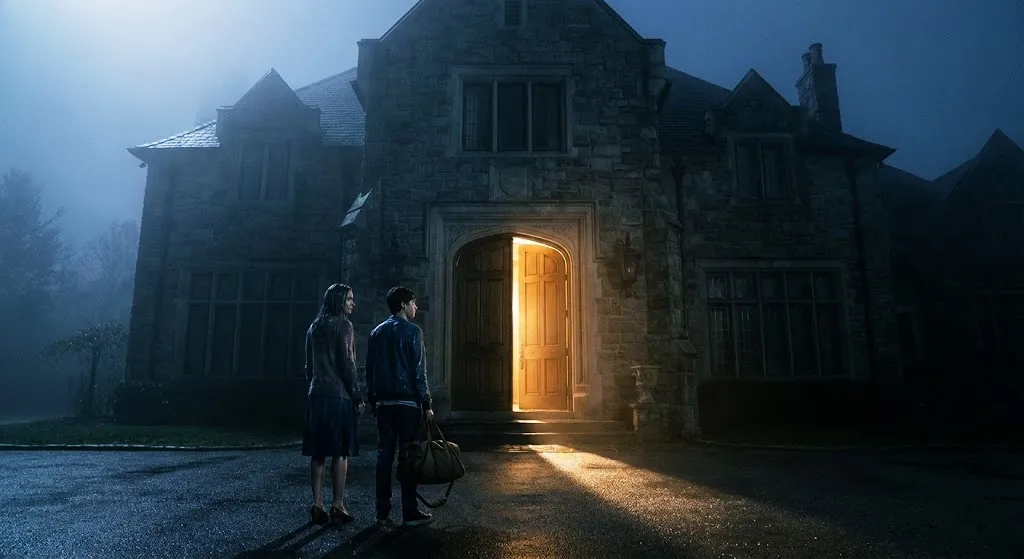
The Whitmore estate was less a house and more a fortress of grey stone, looming in the fog. It didn’t look welcoming; it looked like it was judging them. When the heavy oak door opened, warmth rushed out, hitting Ellie’s frozen face.
Thomas Whitmore stood in the foyer. He was younger than she expected—fifties, maybe—but he looked worn out. He wore an expensive sweater that had a small coffee stain near the hem. He didn’t smile. He looked at Ellie’s wet sneakers, her frayed coat, and then at Caleb’s messy hair.
“This is them?” Thomas asked the Reverend, ignoring Ellie.
“She has hospice experience, Thomas. Ten years.”
Thomas finally looked her in the eye. His gaze was cold, assessing. “My mother is impossible, Ms. Harper. She fired the last three nurses. One left in tears, the other threatened to sue. Why should I hire a woman living out of her car?”
Ellie stiffened. Caleb started to step forward, bristling, but she put a hand on his chest.
“Because I have nowhere else to go,” Ellie said, her voice steady. “People with options quit when it gets hard. I won’t. I can’t.”
Thomas held her gaze for a long, uncomfortable silence. “Nina will show you the servant’s quarters. East wing. Keep the boy out of sight. My mother hates noise.”
He turned his back and walked away before she could say thank you. She didn’t want to thank him anyway. The room they were given was small, but the sheets were dry. That was enough.
The next morning started at 5:00 AM. Ellie was up before her alarm, adrenaline overriding her exhaustion. She found the kitchen, where Nina—the housekeeper, a woman with posture like a steel rod—was already working.
“You’re late,” Nina said without looking up.
“It’s five.”
“Tea is at 7:15. But you look like a wreck. Fix your hair.” Nina pointed a knife at a reflection in the toaster. “Mrs. Whitmore smells fear. And desperation.”
Ellie splashed cold water on her face in the small bathroom. Survive, she told herself. Just get the first paycheck.
At 7:15 sharp, she knocked on the heavy bedroom door.
“Enter!” The voice was sharp, cracking like a whip.
Ellie walked in. Margaret Whitmore sat in a velvet armchair, looking like a queen in exile. She was frail, but her eyes were razor-sharp. She watched Ellie place the tray on the side table.
“You’re new,” Margaret stated. “You smell like cheap soap.”
“It’s just soap, ma’am,” Ellie replied, keeping her face neutral. “Earl Grey. One slice of toast, no butter.”
Margaret ignored the food. “Thomas hired a stray, didn’t he? He thinks I’m a charity case, so he hires charity workers.”
“He hired me because I’m qualified.”
“We’ll see.” Margaret reached for the tea, her hand trembling violently. Tea sloshed onto the saucer. She froze, humiliation flashing across her face.
Ellie didn’t coo. She didn’t say ‘it’s okay’. She simply reached out, steadied the cup, and placed a napkin over the spill.
“My hands shook too, the first time I drew blood from a patient,” Ellie said quietly. “It happens.”
Margaret snatched her hand away. “Don’t patronize me. Get out.”
“You need to eat.”
“I said get out!” Margaret swept the toast off the plate. It landed on the carpet.
Ellie looked at the toast. Then at the old woman. She felt a flare of anger—real, hot anger. She had slept in a car for weeks, starved so her son could eat, and this woman was throwing food because she felt old. Ellie didn’t leave. She bent down, picked up the toast, and wrapped it in the napkin.
“I’ll leave it here,” Ellie said, her voice hard. “If you get hungry, eat. If you want to starve to punish your son, that’s your business. But I’m not cleaning up crumbs again.”
She walked out, expecting to be fired. She wasn’t fired. But the war had begun.
For three days, the house was a minefield. Caleb was restless. He was a teenager trapped in a museum. “Don’t touch that,” Nina scolded when he looked at a vase. “Stay out of the hallway,” Thomas snapped when Caleb walked too loudly.
On the fourth evening, Ellie lost track of him. Panic spiked in her chest. She searched the kitchen, the garden, the halls. Then she heard it. A piano. It wasn’t a clumsy banging. It was hesitant, clumsy at first, then finding a rhythm. A melody she recognized. It was melancholy and raw.
She ran toward the parlor. She froze in the doorway. Caleb was at the Steinway. He looked small against the massive instrument. But his hands… his hands were flying. He was pouring every ounce of their frustration, their fear, their hunger into the keys.
But that wasn’t what stopped Ellie’s heart. Standing in the shadows of the room were Thomas and Margaret. Thomas looked furious, stepping forward to stop him.
“I told you—”
“Quiet!” Margaret hissed. She was leaning forward in her wheelchair, her eyes wide, glassy.
Caleb stopped abruptly, sensing the presence. He spun around, terrifyingly young, knocking the bench. “I’m sorry. I didn’t— I just—”
“Who taught you?” Margaret demanded. Her voice wasn’t angry. It was hungry.
“YouTube,” Caleb whispered. “And… school, before we left.”
Thomas looked at Ellie, then at Caleb. The anger drained out of him, replaced by a confused exhaustion. “My mother hasn’t allowed music in this house for twenty years,” he said, his voice low.
“Play it again,” Margaret commanded.
Caleb looked at Ellie for permission. She nodded, slowly. Play for your supper, baby. He played. And for the first time, the cold stone walls of the Whitmore estate didn’t feel quite so freezing.
Weeks bled into a month. The rhythm of the house shifted, but it wasn’t easy. It was a grind. Ellie worked herself to the bone. She scrubbed floors that were already clean and read to Margaret until her voice was hoarse.
Thomas watched her. He wasn’t kind, not yet, but he stopped looking at her like she was a thief. One rainy afternoon, he found her in the library, asleep in a chair, a duster still in her hand. He stood there for a long moment, looking at the dark circles under her eyes. He didn’t wake her. instead, he quietly closed the door to the hallway to drown out the noise of the vacuum cleaner Nina was running.
When she woke up an hour later, there was a cup of coffee on the table. It was cold, but it was there.
The thaw came in splinters. A shared laugh when the plumbing groaned. A nod of approval from Nina when Ellie fixed the stove without calling a repairman. Margaret didn’t become sweet, but she became manageable. She started asking for Caleb.
“Bring the boy,” she’d say. “The radio is nothing but static today.”
But the real test came with a knock on the door.
Ellie was polishing silver in the dining room when Nina walked in, looking pale. “There’s a man at the gate. Says he knows you.”
Ellie’s stomach dropped. “What does he look like?”
“Tall. Charming smile. Shifty eyes.”
Andrew.
Ellie walked to the front door, her hands clenched into fists. He was there, leaning against the gate like he owned the pavement. Caleb’s father. The man who had walked out three years ago because ‘family life was suffocating his creativity.’
“Ellie,” he said, flashing that boyish grin that used to make her knees weak. Now it just made her nauseous. “You look good. Domestic.”
“What do you want, Andrew?”
“I heard you landed on your feet. Big house. Rich boss.” He looked past her at the mansion. “Figured Caleb might want to see his old man.”
“You don’t get to say his name,” she hissed, stepping onto the porch. “You left us with nothing. We were sleeping in a car, Andrew. Where were you?”
“I was working on myself. I’m ready now.”
“No.”
“Mom?”
Caleb stood in the doorway behind her. He looked at Andrew, his face unreadable. Andrew’s smile faltered.
“Hey, kiddo. Wow. You got tall.”
Ellie wanted to scream. She wanted to push Andrew down the hill. But she felt a hand on her shoulder. Solid. Warm. Thomas.
“Is there a problem here?” Thomas asked, his voice deep and dangerous.
“Just a family reunion,” Andrew sneered, though he took a step back.
“He’s leaving,” Ellie said.
“I want to talk to him,” Caleb said quietly.
Ellie spun around. “Cal, no.”
“Just for a minute.” Caleb stepped past her. He walked down the steps to his father. They spoke for five minutes. Ellie watched from the porch, Thomas standing like a guard dog beside her. She saw Andrew gesture animatedly. She saw Caleb shake his head. She saw Andrew reach out, and Caleb step back.
Then Caleb walked back up the stairs. He didn’t look back.
“He wanted money,” Caleb said, his voice cracking slightly as he passed Ellie. “He thought you were rich now.”
Ellie closed her eyes. The rage was gone, replaced by a hollow ache for her son. Thomas looked at Andrew, who was still lingering at the gate.
“If you come back,” Thomas called out, his voice flat and calm, “I will have you arrested for trespassing. And I have very expensive lawyers.”
Andrew spat on the ground, turned, and walked away.
That night, Thomas found Ellie on the back porch. She was shaking. He didn’t say anything. He just sat on the bench beside her, leaving enough space so she wouldn’t feel trapped.
“You defended us,” she said after a long silence.
“You’re my staff,” he said, staring at the garden. “It’s practical.”
“It was more than that.”
He sighed, rubbing his face. “He reminded me of someone. Me. Before I grew up.” He looked at her. “You’re doing a good job, Ellie. With Caleb. With… everything.”
It was the first time he had used her first name.
Winter approached, and with it, the Foundation’s Annual Gala. The house was in a frenzy. Margaret, bedridden now, barked orders from upstairs.
“You have to go,” Ellie told Thomas as she ironed his shirt. “You’re the face of the family.”
“I hate it. A room full of vultures waiting for the Whitmore empire to crumble.” He poured himself a drink. It was only 4 PM. “I need a date. Protocol.”
“Call Bethany,” Ellie said, naming the socialite who had visited once, eyeing Thomas like a prize steak.
“Bethany talks too much.” Thomas set the glass down. He looked at Ellie. She was wearing jeans and a t-shirt, hair tied back, looking tired but steady. “Come with me.”
Ellie laughed nervously. “I’m the help, Thomas. I don’t have a gown. I don’t know which fork to use.”
“I don’t care about the forks. I need someone real. Everyone else there is wearing a mask. If I have to go, I want to stand next to someone who knows what it’s like to actually survive something.”
“People will talk.”
“Let them.”
She went. She found a dress at a thrift store—emerald green, simple. She fixed her own hair. When she walked down the stairs, Thomas stopped checking his watch. He stared. Not with lust, but with recognition.
The Gala was a blur of lights and noise. People whispered. Ellie held her head high, gripping her clutch like a weapon. When Thomas took the stage for his speech, he abandoned his note cards.
“My mother built this foundation on the idea of legacy,” he told the hushed room. “But legacy isn’t about stone walls or bank accounts. It’s about who stays when the rain starts.” He looked directly at Ellie in the back of the room. “I’ve learned more about dignity in the last three months from a woman who had nothing than I did in fifty years of having everything.”
He didn’t say her name. He didn’t have to. The way he looked at her said enough.
But life isn’t a fairy tale. There was no magical cure for Margaret.
Two weeks after the gala, Margaret Whitmore slipped into a coma. The house went quiet. Not the peaceful quiet of spring, but the heavy, suffocating silence of waiting.
Ellie sat by her bedside for three days. Thomas paced the hallway, unable to be in the room for more than a few minutes. He was terrified of the end.
“She was so hard on you,” Ellie whispered to the unconscious woman, wiping her forehead with a cool cloth. “But you loved him. You loved your son.”
Margaret passed at dawn on a Tuesday. No final words. No dramatic confessions. Just a breath that didn’t return.
Thomas walked in when Ellie came out to tell him. He saw her face and he knew. He crumbled. The stoic, cold man sank to the floor in the hallway, burying his face in his hands. Ellie didn’t hesitate. She sat on the floor with him and held him while he wept.
The funeral was grand, but the reception at the house was somber. When the last guest left, the house felt enormous. Empty.
Thomas found Ellie in the kitchen, washing dishes. She was scrubbing a plate so hard she might break it.
“You don’t have to do that,” he said.
“I need to keep my hands busy.”
“Ellie.”
She stopped. She turned to face him. Her bags were packed. They were sitting by the back door. She saw his eyes drift to them.
“The job is done,” she said, her voice trembling. “Hospice care. She’s gone. Clay said the position was… temporary.”
“Is that what you think?”
“It’s what it is. I can’t stay here, Thomas. People will say—”
“I don’t give a damn what people say!” His voice rose, echoing off the tiles. He stepped closer. “This house was a tomb before you got here. You and Caleb… you woke it up.”
“We’re not your family, Thomas. We’re your employees.”
“You were never just an employee.” He reached out, taking her wet, soapy hand in his. “Don’t go. Not because I need a housekeeper. But because I… I can’t imagine walking into that library and not seeing you.”
Ellie looked at him. She saw the fear in his eyes—the same fear she had felt in the car that rainy night. The fear of being alone in the storm.
“I’m messy,” she warned him. “I have a traumatized teenager. I have baggage.”
“I have a crumbling estate and emotional stuntedness,” he countered, a small, sad smile touching his lips. “We match.”
She didn’t promise him forever. She didn’t say ‘I love you’ right then. It was too soon, too raw. But she walked over to the back door, picked up her bag, and moved it away from the exit.
“I’ll make coffee,” she said.
Spring arrived late that year. The frost clung to the garden, but the ivy on the stone walls was turning green.
Caleb was playing the piano in the parlor with the windows open. It wasn’t a sad song anymore. It was something complicated, difficult, but beautiful. Thomas sat on the porch, reading a book, while Ellie worked in the garden, her hands in the dirt.
They weren’t perfect. They still fought. Thomas could be moody; Ellie could be stubborn. But they were there. Together.
Ellie stood up, wiping sweat from her brow, and looked at the house. It no longer looked like a fortress judging her. It looked like a place that had weathered the storm. It looked, finally, like home.